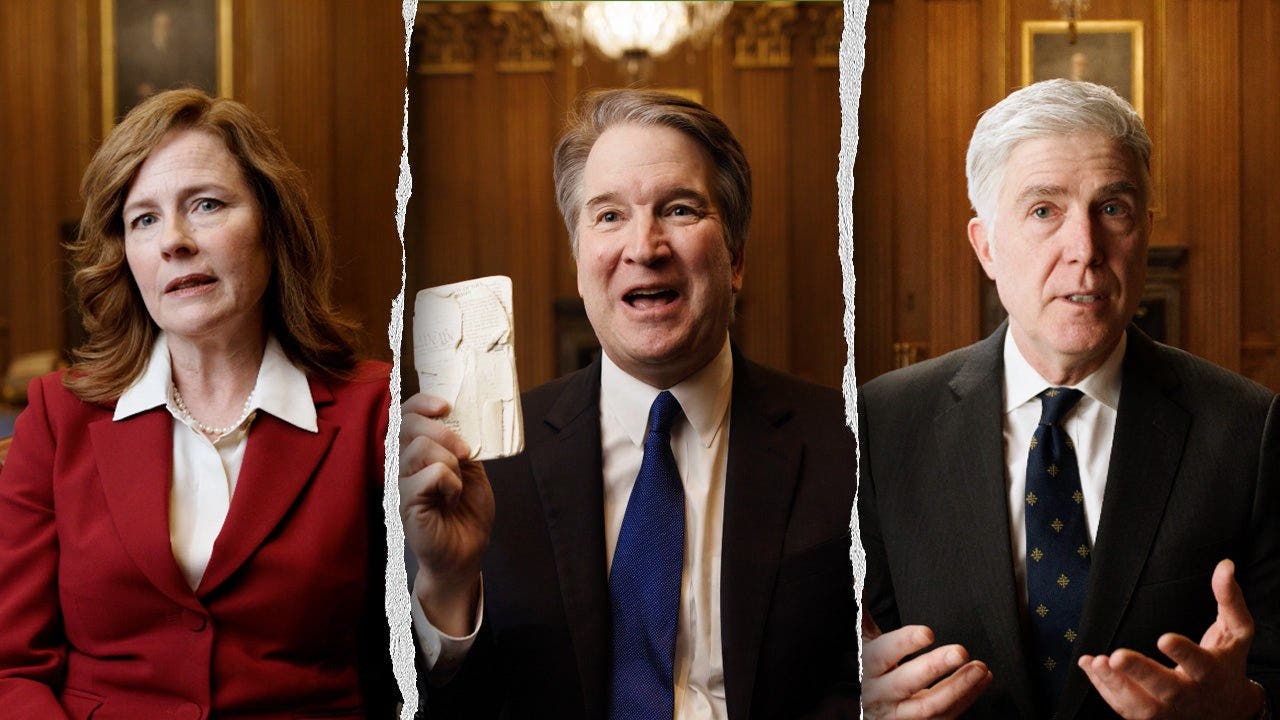
As America celebrates 250 years of independence this year, three conservative Supreme Court justices are warning that preserving the nation's founding freedoms for future generations depends on Americans understanding their history, embracing civic education and actively participating in their system of government.
asserted
Americans → celebrate → government
Justices Brett Kavanaugh, Neil Gorsuch and Amy Coney Barrett each implored Americans to familiarize themselves with their system of government and the history behind it to ensure that the nation’s legacy is preserved.
asserted
legacy → implore → it
Though the three conservative justices were united in their call for civic education, they each approached the topic differently in a series of interviews filmed by the Federalist Society and obtained by Fox News Digital.
asserted
they → unite → Digital
The videos come ahead of the Federalist Society's 2026 National Lawyers Convention this week, which spotlights "250 Years of American Exceptionalism."
asserted
which → come → Exceptionalism
Gorsuch, for instance, struck a distinctly religious tone.
asserted
Gorsuch → strike → tone
"I think it's very easy to take the rights granted in our Constitution and the ideals expressed in the Declaration for granted," he said.
asserted
he → think → Declaration
"They are, for us, a little bit like the air we breathe and the water a fish might swim in.
uncertain
fish → breathe → air
They seem natural to us, but they weren't in 1776.
asserted
they → seem → 1776
The ideas in the Declaration of Independence that all of us are created equal, that every one of us has God-given rights — they don't come from government, they come from God."
asserted
they → create → God
Gorsuch, who was appointed to the court by President Donald Trump in 2017 following the death of Justice Antonin Scalia, went on to describe the importance of historical study to the preservation of the American way of life.
asserted
who → appoint → life
"Our country is a blessing from God, and that we owe great thanks for it, and we have great responsibility for it," he went on.
asserted
he → owe → it
"The reason why our Constitution and Declaration have survived is because people choose it anew in every generation.
asserted
people → survive → generation
You need to know its history.
asserted
You → need → history
You need to know what you're preserving.
asserted
you → need → what
Daniel Webster said it took 6,000 years for us to generate a system of government like this.
asserted
us → say → this
Don't expect that to happen easily or again."
asserted
that → expect → ?
Kavanaugh, similarly, emphasized the importance of education.
asserted
Kavanaugh → emphasize → education
"I think our education system is absolutely fundamental to ensuring that in the next 250 years, we preserve this republic and improve upon this republic.
asserted
we → think → republic
So, teaching American history, teaching the values of this country, the history of this country, why this country exists, how this country has been preserved, how this country has been improved over time, for example, by our constitutional amendment process and otherwise," the justice, appointed to the bench following a tumultuous confirmation process in 2018, said.
asserted
justice → teach → 2018
"And I think all of us should be constantly striving to ensure civics education, not only for our youth, but for all of us, and that we constantly are learning and participating in our system of government," he continued.
asserted
he → think → government
The Federalist Society filmed its interviews ahead of its National Lawyers Convention, which will bring together minds from across the conservative legal movement to discuss matters deemed pressing.
asserted
which → film → matters
While not interviewed by the Federalist Society, Justice Sonia Sotomayor shared her thoughts on America's 250th anniversary during an event at Mount Vernon's Washington Library, taking a slightly darker tone than her conservative colleagues.
asserted
Sotomayor → interview → colleagues
During her talk, which centered primarily on civic engagement, Sotomayor argued that the United States is in a rough place at the moment and that it would take "some hard work" for it to get back on an "even keel."
asserted
it → center → keel
"There are some norms we may have lost forever," she said.
uncertain
she → be → ?
"But I don’t think that we will fail as a democracy.
asserted
we → think → democracy
But I think we’re going to have a hard patch figuring out what that means."
asserted
that → think → what
Barrett, meanwhile, focused on the Declaration of Independence and how she believes it should inspire civic participation today.
asserted
it → focus → participation
It is our project," she said.
asserted
she → say → ?
"I might suggest that people look at the last line of the Declaration of Independence.
uncertain
people → suggest → Independence
It ends with a mutual pledge in which the signatories to the document mutually pledge their lives, their fortunes and their sacred honor to the success of the American project.
asserted
signatories → end → project
And they made good on that promise.
asserted
they → make → promise
Some lost their fortune, lost their property to loyalists ... and they pledged with their honor not to deviate from the commitments that they had made in signing the Declaration of Independence.
asserted
they → lose → Independence
"
"Surely that's the kind of commitment that it takes to have it keep going forward," said Barrett.
asserted
Barrett → take → that
 The Aporia