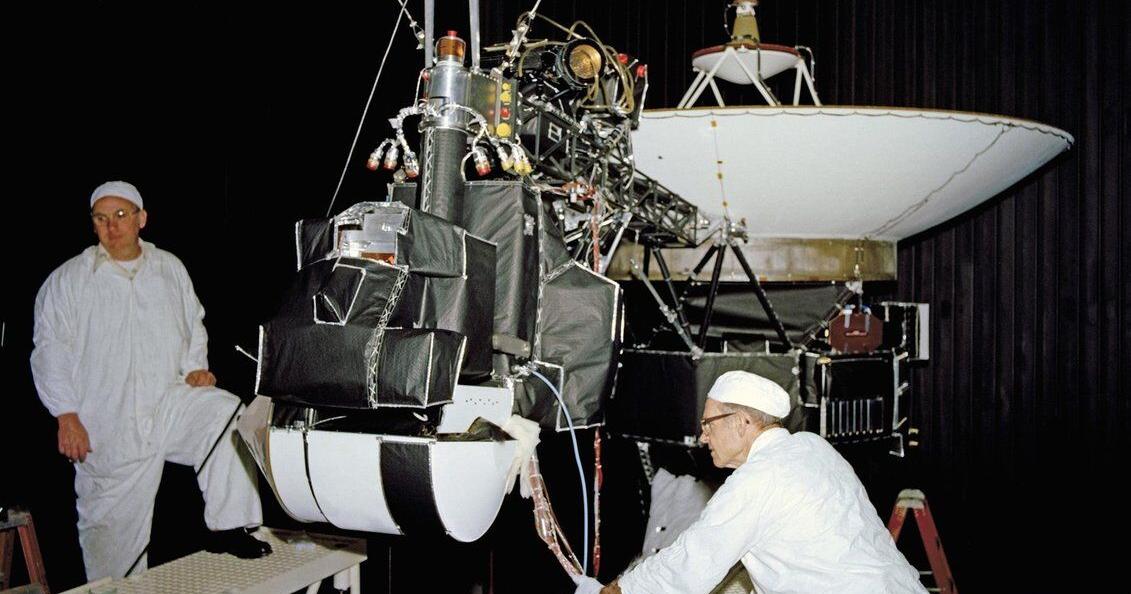
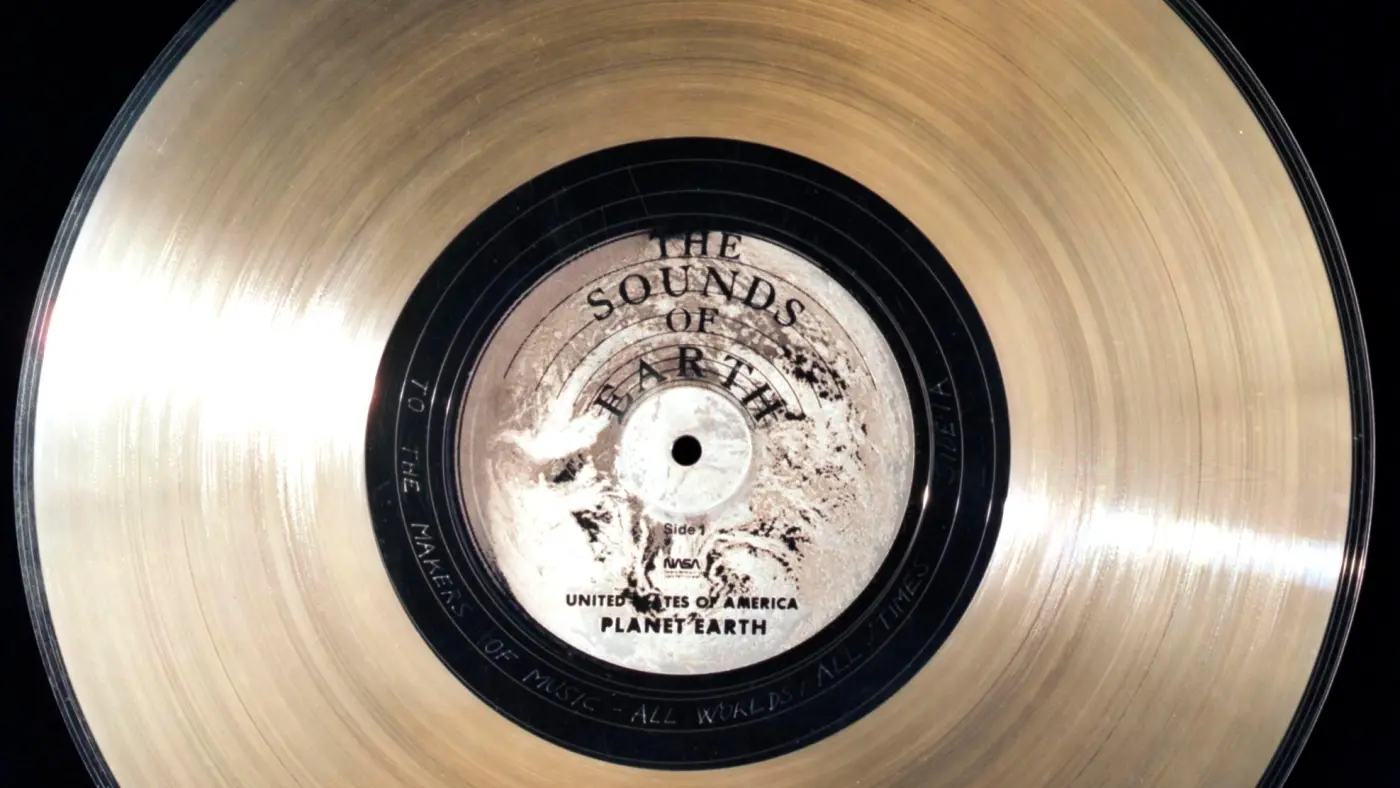
Photo via Al Jazeera

NASA’s Voyager 1 to hit new space distance record of one light-day

Read the original at Al Jazeera ↗
Cite

Al Jazeera Staff. (2026, November 14). NASA’s Voyager 1 to hit new space distance record of one light-day. Al Jazeera. https://www.aljazeera.com/news/2026/11/14/nasas-voyager-1-to-hit-new-space-distance-record-of-one-light-day?traffic_source=rss

Dated from the outlet's own feed. Check the original for its byline.

Share
Al Jazeera · collected 2026-11-14 · by Al Jazeera Staff

Quick Summary

NASA’s Voyager 1 probe is set to become the first human-made object to travel one light-day from Earth on Wednesday, covering a distance of 16 billion miles since its 1977 launch. The spacecraft, now in interstellar space, travels at about 36,000 miles per hour and is expected to take 18,000 years to travel a full light-year. Despite occasional technical issues, like a brief loss of communication in October, Voyager 1 continues to transmit valuable data back to Earth.
Written by AI on 2026-11-16, from this article's own text only (the story summary below draws on all the coverage).
See how they differ ↓

AI analysis

Story summary

NASA's Voyager 1 is set to become the first human-made object to reach a distance of one light-day from Earth on Wednesday, November 16, 2026. This milestone means the spacecraft will be more than 16 billion miles (26 billion kilometers) away from Earth, and its radio signals will take precisely 24 hours to reach Earth, given the speed of light. Launched on September 5, 1977, Voyager 1 continues to relay scientific data despite its advanced age, including measurements of magnetic fields, cosmic rays, and dust in interstellar space. To celebrate this achievement, NASA is inviting people worldwide to create a wave of golden light after sunset on Tuesday, November 15, using Morse code to spell out the spacecraft's call sign V-G-R.

Written for “Voyager 1 Hits New Space Distance Record” on 2026-11-16, grounded in this article and the 2 other(s) covering the same event.

How they differ

3 outlets covered “Voyager 1 Hits New Space Distance Record”.

What each outlet says

One AI summary per outlet of its latest article on this story, written from that article alone and checked against it. Open the article for the outlet's own words.

Al JazeeraThis outlet14 Nov

NASA’s Voyager 1 probe is set to become the first human-made object to travel one light-day from Earth on Wednesday, covering a distance of 16 billion miles since its 1977 launch. The spacecraft, now in interstellar space, travels at about 36,000 miles per hour and is expected to take 18,000 years to travel a full light-year. Despite occasional technical issues, like a brief loss of communication in October, Voyager…

NASA’s Voyager 1 to hit new space distance record of one light-day (this article)
Toronto Star14 Nov

NASA’s Voyager 1 is set to reach one light-day from Earth on Wednesday, marking a new distance record in interstellar space. Launched 49 years ago, the spacecraft will be over 16 billion miles away from Earth, and its radio signals will take exactly 24 hours to reach us. NASA project manager Suzanne Dodd considers Voyager 1 a "national treasure," and the organization is encouraging people worldwide to participate in…

NASA's Voyager 1 closes in on a light-day in interstellar space for a new distance record →

Compared with similar articles

This article reads unscored and hedges 0% of its claims. Each row says how that neighbour differs.
Toronto Star
Hedges 2 of 32 claims Outlet record 64/100
NPR
Hedges 1 of 22 claims Outlet record 60/100

Story

Voyager 1 Hits New Space Distance Record
Science · 3 article(s) covering the same event. See how they differ ↑
How this article was measured signals, leaning charts, publisher record, byline, topics and claims

Signals How these are calculated →

Claims extracted
13
sentences that state something as happening or true
Uncertain
0%
0 of 13 hedged ("reportedly", "may", "according to")
Leaning
not political
takes no side on a contested political question
Publisher signals
60/100
Al Jazeera's corrections and hedging, across everything collected from it. Not a measure of accuracy.
Outlets on this story
3
Science
Same framing elsewhere
1
articles that frame the event the way this one does
Analyzed 2026-11-16 · how these are computed

How this is being covered How these are calculated →

Article leaning vs. publisher reliability
Source leaning vs. consistency

Publisher

Al Jazeera · 5797 article(s) · 4 correction(s) detected
Running correction rate · 4 correction(s)

Who wrote this

Al Jazeera Staff
1101 article(s) here · 1 carrying a prediction
Recommended Stories list of 4 items- list 1 of 4Iranophobia: Netanyahu’s bid to transform fear into political survival - list 2 of 4Can Netanyahu launch a strike on Iran before he leaves? - list 3 of 4Will Democrats try to strip US-Israel initiative from Pentagon funding? - list 4 of 4Israel
For his part, Jensen Huang had long maintained that wider access to US technology would help Washington preserve its edge in the global AI race.
“If we don’t stop this outbreak now, it would be the worst Ebola outbreak that the world will have,” Jean Kaseya, director-general of the Africa Centres for Disease Control and Prevention (Africa CDC), told Reuters news agency on Sunday.
Estonia will close its border crossings with Russia, after an attack on an Estonian defence company that Tallinn blames on Moscow.
Reinforcements would also be sent to try to end the Houthis’ siege of Taiz, where fighting has been raging to the west of the city, the announcement added.
Tens of thousands of people have taken to the streets of the Czech capital to protest against proposed changes to the funding of public service media, which critics fear could weaken broadcaster independence.
Who: Germany vs Netherlands What: UEFA Nations League, Group A2 Where: Olympiastadion in Berlin, Germany When: Monday at 8:45pm (19:45 GMT) How to follow: Al Jazeera Sport will bring you all the build-up from 16:45 GMT before our live text commentary stream.
Israeli soldiers boarded the vessel early in the morning on May 31, 2010, firing at the civilian passengers.
Iranian minister says attacks justified Iran’s Ministry of Foreign Affairs spokesman Esmaeil Baghaei defended Tehran’s attacks and accused Gulf countries of aiding US strikes against Iran. “All the cases that indicate the role of the countries of the region in helping the US to attack Iran have been documented,” Baghaei said at a news conference on Sunday, adding that Tehran was taking diplomatic action and would “follow up on this issue seriously”.
The question of whether Mansour Abbas, the leader of Israel’s United Arab List (Ra’am), is willing to recognise the Palestinian group Hamas as a “terrorist” organisation may determine whether his party will play a role in the country’s next government.
Wire or desk byline, not an individual reporter.
Also by Al Jazeera Staff
Nothing else under this byline is closely related to this article, so these are simply their most recent.
All 1101 articles by Al Jazeera Staff →

Topics

3NASA 3SpaceX NASA Voyager 1 Voyager 2

Subjects

NASA ORG · 3× 3NASA ORG · 1× 3SpaceX ORG · 1× Bill Nye PERSON · 1× Suzanne Dodd PERSON · 1× The Associated Press ORG · 1× the Planetary Society’s ORG · 1×

Narrative

Recommended Stories list of 3 items- list 1 of 3NASA launches $4.3bn Roman Telescope to uncover universe’s hidden secrets - list 2 of 3SpaceX’s showpiece Starship rocket reaches orbit for first time - list 3 of 3Which countries have sent people to space?
framing: assertive · carried by 1 article(s) · first seen 2026-11-16
NASA has announced that its Voyager 1 probe will soon become humanity’s first object to travel one light-day from Earth.
2026-11-16 · Al Jazeera
NASA’s Voyager 1 to hit new space distance record of one light-day · assertive framing

Claims (13 extracted, 0 hedged)

NASA has announced that its Voyager 1 probe will soon become humanity’s first object to travel one light-day from Earth. asserted
probe → announce → Earth
On Wednesday, the robotic space probe will hit the milestone of travelling at least 16 billion miles since its launch in 1977, a distance equal to one light-day, or how far light can travel in 24 hours. asserted
light → hit → hours
Recommended Stories list of 3 items- list 1 of 3NASA launches $4.3bn Roman Telescope to uncover universe’s hidden secrets - list 2 of 3SpaceX’s showpiece Starship rocket reaches orbit for first time - list 3 of 3Which countries have sent people to space? asserted
countries → launch → space
The probe completed its Saturn flyby in 1980, the end of its primary planetary mission, and is currently travelling at roughly 36,000 miles per hour (58km/h) in interstellar space, the vast gap between stars. asserted
probe → complete → stars
NASA expects it to take 18,000 years to travel a full light-year, and double that before it nears another star. asserted
it → expect → star
Plutonium-powered Voyager 1 was launched shortly before another probe, Voyager 2. asserted
Voyager → power → probe
Both continue to relay data back to Earth daily, including readings on the strength and direction of the magnetic field as well as on the surrounding pressure, dust and galactic cosmic rays. asserted
Both → continue → pressure
Voyager 2 is expected to hit one light-day from Earth in 2035. asserted
Voyager → expect → 2035
Both are kept active by a skeleton team of NASA engineers who send commands roughly once a week, and more if the probe gets into trouble. asserted
probe → keep → trouble
In October, the team briefly lost communication with Voyager 1, and they have not yet figured out why. asserted
they → lose → Voyager
Voyager 1 project manager Suzanne Dodd described Voyager 1 as “a national treasure” and told The Associated Press news agency that the two probes’ activities are akin to that of weather satellites. The probe’s cultural impact has been significant. asserted
impact → describe → satellites
The famous “Pale Blue Dot” photo of Earth was taken by Voyager 1 in 1990. asserted
photo → take → 1990
“All of us — everyone on Earth — have been touched by these missions,” the Planetary Society’s Bill Nye said in a statement. asserted
Nye → touch → statement
Give feedback · no sign-in needed

No sign-in needed for now. Your note is sent without a name, so it cannot be answered.

History Support