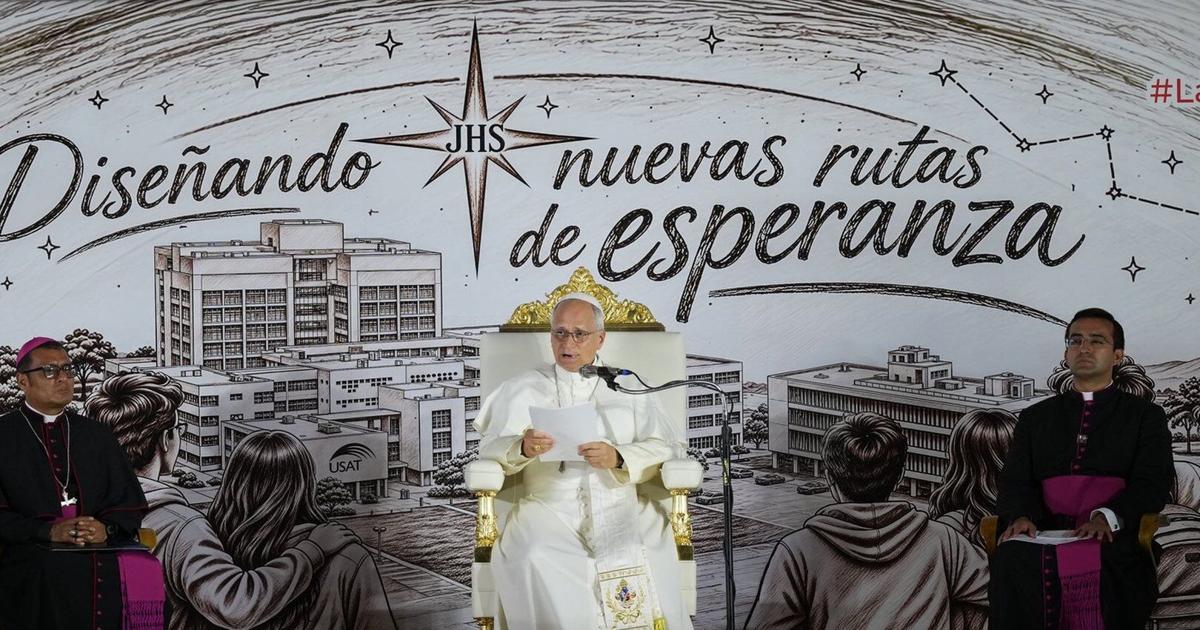
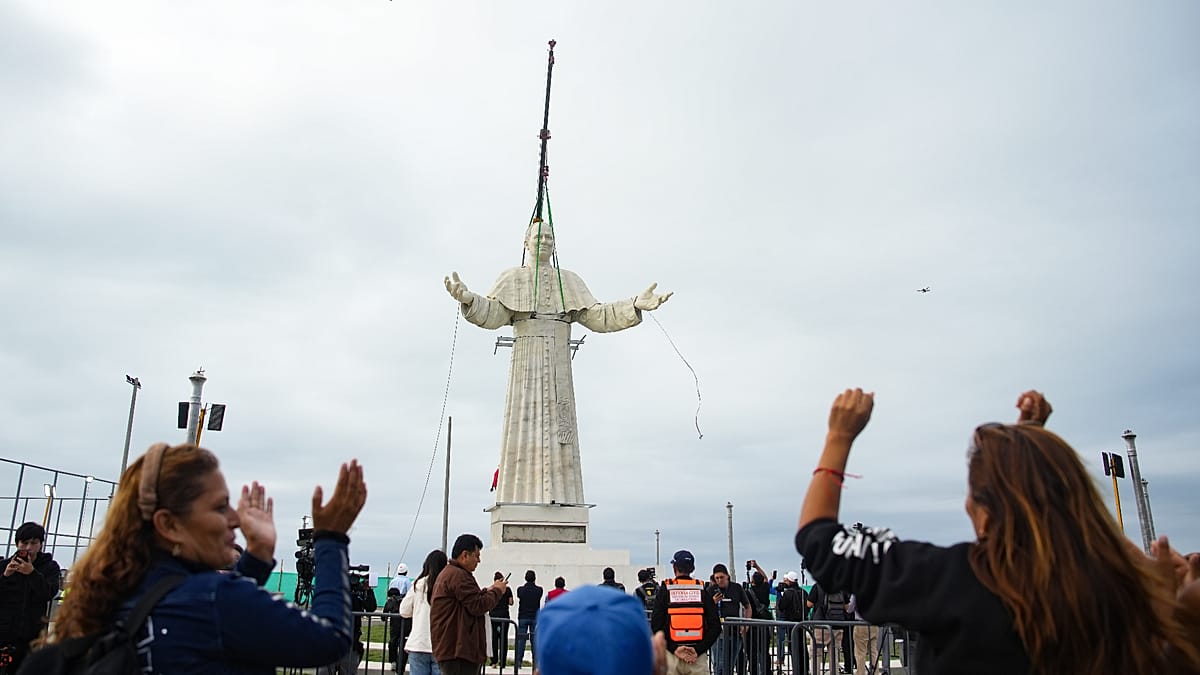
When Susana Baca, the Latin Grammy-winning Afro-Peruvian singer, serenaded Pope Leo XIV upon his arrival in Peru, it was a sign that the visit would provide an unparalleled spotlight on the culture that grew out of the African slave trade in this country.
asserted
that → win → country
Baca was also Peru’s first Black Cabinet minister, and she became a leading figure in the campaign to end the discrimination that has long made second-class citizens of Black Peruvians and Peru’s Indigenous peoples.
asserted
that → become → Peruvians
The U.S.-born Leo, whose own family tree includes enslaved people and slave owners, is expected to highlight Peru’s African-descended community when he visits the hub of Afro-Peruvian culture on Saturday in the city of Zaña.
asserted
he → include → Zaña
Leo will lead a prayer meeting at the sanctuary of St. Turibius of Mogrovejo in Zaña, where he often visited to pray while he was bishop of nearby Chiclayo.
asserted
he → lead → Chiclayo
He defended the rights of Indigenous and enslaved people and was known for having confirmed St. Martin de Porres, the first Black saint of the Americas and the patron saint of racial harmony, social justice and people of multiracial backgrounds.
asserted
He → defend → backgrounds
The pope has already apologized for slavery
In his first encyclical, “Magnificent Humanity,” Leo made a sweeping apology for the role of past popes in legitimizing slavery and failing to condemn it for centuries.
asserted
Leo → apologize → centuries
It was a reference to the series of 15th-century directives from the Vatican that authorized European sovereigns to conquer Africa and the Americas and enslave non-Christians.
asserted
that → authorize → Christians
“It is impossible not to feel deep sorrow when contemplating the immense suffering and humiliation endured by so many in stark contrast to their immeasurable dignity as persons infinitely loved by the Lord,” Leo wrote.
asserted
Leo → feel → Lord
“For this, in the name of the church, I sincerely ask for pardon.
asserted
I → ask → pardon
The estimated 100,000 African slaves brought to Peru after the arrival of Spanish conquistadores toiled in sugar plantations and silver mines, with some becoming urban artisans.
asserted
some → estimate → artisans
But they have struggled to advance in the more than 170 years since emancipation.
asserted
they → struggle → emancipation
The national census in 2017 reported that 1,311 people residing in Zaña identify as Afro-Peruvian, while in the entire Lambayeque region, the figure was 78,639.
asserted
figure → report → region
Baca feels a connection to Leo
Baca told The Associated Press that she felt connected to the pope because of the importance he has placed in asking forgiveness for injustices.
“I believe that one of the most important things in the history of Afro-Peruvians is that we did not remain submerged despite our history of suffering,” she said.
asserted
she → feel → suffering
“We are an Afro-Peruvian people who have learned to forgive.”
asserted
who → learn → ?
“And perhaps this is what connects me, in my conscience, to the pope.
asserted
what → connect → pope
I feel that in all his homilies and teachings, the pope emphasizes the importance of asking for forgiveness and forgiving — that the injustices of many moments in history are less painful if we have the capacity to forgive and to be forgiven.”
asserted
we → feel → capacity
She said she chose to sing “Canción de Fe” (“Song of Faith”) and “Si me quitaran totalmente todo” (“If Everything Were Taken From Me”) to the pope because they embody the same notion of faith that Leo shares.
asserted
Leo → say → that
Leo’s visit pays homage to Afro-Peruvian history
Zaña, a historic town of northern Peru located in the Chiclayo province, was recognized by UNESCO in 2017 as a “site of memory of slavery and African cultural heritage.”
asserted
Zaña → pay → slavery
Peru’s government says the recognition is the first of its kind granted to a Peruvian Afro-descendant community or comparable communities along South America’s Pacific Coast.
asserted
recognition → say → Coast
“There are communities capable of withstanding any blow — even seven ‘El Niño’ weather phenomena, or the even harsher, more perverse blows dealt by the darkest side of humanity, such as slavery,” former Culture Minister Salvador del Solar said during a ceremony in Zaña’s main square.
asserted
Solar → be → square
“Communities like Zaña can truly say that no blow has ever been strong enough to break them completely; they continue to reaffirm their Afro-descendant identity with pride.”
asserted
they → say → pride
The Afro-descendant community is celebrating the return of Leo, their former bishop, and is particularly proud of Baca’s performance before the first pope with Black roots.
asserted
community → celebrate → roots
“I’m so proud to see an Afro-Peruvian person singing to the pope, and to know that Black blood courses through his veins,” said Felipe Gutierrez, a local chef and a poet known as Frontado.
asserted
Gutierrez → ’m → Frontado
“That the pope has Afro-descendant blood is also a source of pride for Zaña because Zaña identifies with the Afros,” said Gutierrez, who writes and improvises the Peruvian art form known as “decimas.”
asserted
who → identify → decimas
All four of Leo’s maternal great-grandparents were “free people of color” in Louisiana based on 19th-century census records.
asserted
four → base → records
As part of the melting pot of French, Spanish, African and Native American cultures in Louisiana, the pope’s maternal ancestors would be considered Creole.
asserted
ancestors → melt → Louisiana
Zaña is home to an Afro-Peruvian museum, which features a rich collection of historical photographs, plantation carts and percussion musical instruments of African origin from Peru, Cuba and Brazil.
asserted
which → feature → Peru
It also stores documents of enslaved people and some of the shackles used to restrain them.
asserted
It → store → them
One of its walls has photos of Leo during visits to the town when he was bishop.
asserted
he → have → town
“We pay homage to them here in Zaña,” Gutierrez said during a recent visit to the museum, wearing a Chicago Bulls shirt with Michael Jordan’s iconic number 23 on the back.
asserted
Gutierrez → pay → back
Chicago is where Leo was born.
asserted
Leo → bear → ?
“They show us how someone who is Black as we are in Zaña became a president and we’re proud because we all deserve the same rights,” Gutierrez said.
asserted
Gutierrez → show → rights
___
Winfield contributed from Chiclayo, Peru.
asserted
Winfield → contribute → Chiclayo
 The Aporia