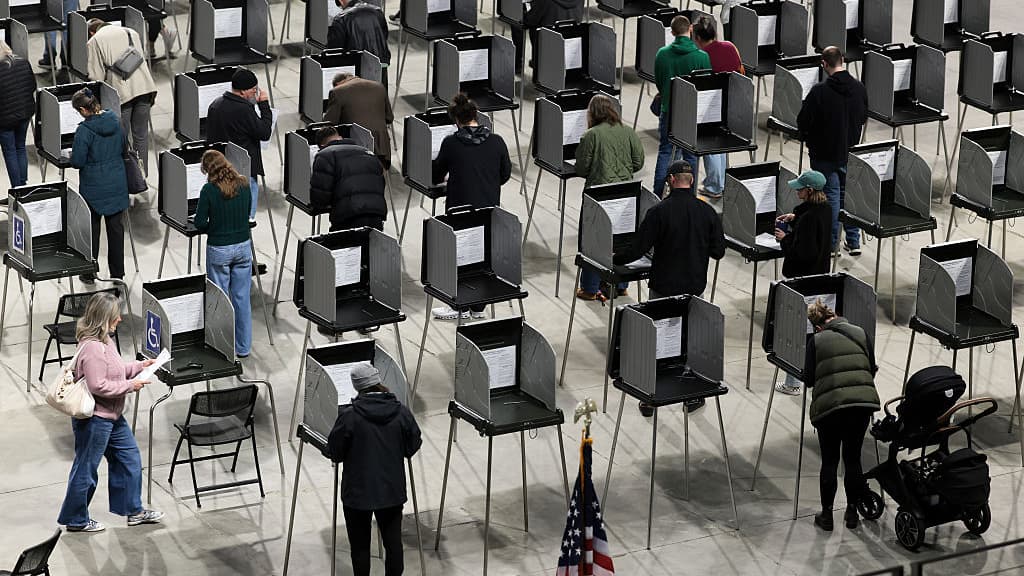
Ahead of the midterms, Republicans in states across the U.S. redrew congressional maps in the hopes of increasing their chances of beating out Democrats come Election Day.
asserted
Republicans → redrew → Day
But those efforts failed to stem the tide on Tuesday as a slew of Democratic victories, including in deep-red states, propelled the party to wrest control of the House from the GOP.
asserted
slew → fail → GOP
Congressional maps are traditionally redrawn once a decade to adjust for population and demographic changes after national census data is released.
asserted
data → redrawn → population
In the summer of 2025, however, President Donald Trump pressed state Republicans to break with that tradition and redistrict mid-cycle—a push that multiple GOP-led states ultimately joined.
asserted
states → press → that
The party had hoped to gain as many as 10 additional seats nationwide as a result of the new maps.
asserted
party → hop → maps
But political experts tell TIME that although redistricting can have a large impact on elections, in this instance it was no match for the challenge Republican candidates faced amid Americans’ historically low approval of Trump and his Administration ahead of the midterms, which they say soured many Americans toward the Republican party by the time Tuesday’s elections rolled around.
asserted
elections → tell → time
“There's only so much that redrawing the boundaries can do if your party is or your President is exceptionally unpopular,” Mark Jones, a professor of politics at Rice University, tells TIME.
asserted
Jones → be → TIME
“One of the lessons was redrawing the maps was not enough to save Republicans in these districts.”
asserted
redrawing → redrawe → districts
Here are some of the places where Democrats prevailed despite maps that were redrawn to favor Republicans—and why experts believe those maps failed to help the GOP add seats as they were intended to.
asserted
they → prevail → seats
The mid-cycle redistricting battle started last year in Texas, where Republican lawmakers redrew the state’s congressional maps with the aim of netting the GOP up to five additional seats.
asserted
lawmakers → start → seats
When Election Day came, however, Democrats won in several redrawn districts.
asserted
Democrats → come → districts
Jones says that redistricting in Texas ultimately failed to produce the hoped-for results because it was based on the preferences of a key voting population from two years ago.
asserted
it → say → population
Many of the districts have high populations of Latino voters, who contributed to Trump’s victory in the 2024 presidential election but appear to have shifted notably toward Democrats in the midterms.
asserted
who → have → midterms
“Virtually the entire Texas redistricting plan was based on the premise that Latino voters, in particular, and other voters in general, would behave … like voters in 2024,” Jones says.
asserted
Jones → base → 2024
He notes how much has changed since 2025 to make the President more unpopular, citing the war in Iran, Trump’s tariffs, his handling of the economy, and his aggressive immigration crackdown.
asserted
President → note → economy
These policy points, “combined with the president's combative nature and polarizing rhetoric and actions,” Jones says, “simply alienated a large number of independent voters who, in 2024, here in Texas, voted for the President.”
asserted
who → combine → President
Jones says that Texas’ 9th District, which he describes as having been “created virtually out of whole cloth" into a new district for Republicans, exemplifies the impact of voters’ widespread disapproval of Trump.
asserted
he → say → Trump
Democrat Leticia Gutierrez ultimately beat out Republican Alex Mealer in the race for the open seat, the AP called on Wednesday.
asserted
AP → beat → Wednesday
“This highlights the fact that while redistricting can potentially give one party an advantage, voters at the end of the day are the ones that render the verdict,” Jones says.
asserted
Jones → highlight → verdict
Alvaro Corral, a professor of political science at the University of Texas Rio Grande Valley, tells TIME that in many newly redrawn districts in southern Texas—such as the 15th, where well-known Tejano musician Bobby Pulido flipped Republican Rep. Monica De La Cruz’s seat, and the 34th, where Rep. Vicente Gonzalez secured re-election for a sixth term—voters were confused about which candidates represented them as a result of the newly drawn maps.
asserted
candidates → tell → maps
As a result, he contends, many Texans in those areas voted blue based on their enthusiasm for popular, celebrity-like Democratic candidates beyond their districts, or even their ballots.
asserted
Texans → contend → districts
These candidates included James Talarico, who has been elected the state's first Democratic Senator since 1994; Pulido, who has won two Latin Grammys in his music career and is a “major local celebrity,” Corral says; and Gina Hinojosa, who hails from the Rio Grande Valley and took down Gov. Greg Abbott in the state's gubernatorial race.
asserted
who → include → race
With “generational talents” like those candidates boosting overall support for Democrats, on top of low approval for the Trump Administration, Democratic enthusiasm shone through in multiple districts, Corral says.
asserted
Corral → boost → districts
Ohio
Ohio, which was required under state law to redraw its maps ahead of the 2026 elections, enacted new district lines that reshaped two districts in Republicans’ favor.
asserted
that → require → favor
But the Democratic lawmakers representing both districts won re-election despite the change, the AP has called.
asserted
AP → represent → change
“The biggest failure on the Republicans' part in Ohio was their choice of districts,” David Niven, a professor of politics at the University of Cincinnati, tells TIME.
asserted
Niven → tell → TIME
Republicans zoned in on Districts One, which includes part of Cincinnati, and Nine, which encompasses most of the northwestern portion of the state.
asserted
which → zone → state
Niven argues that in District One, Republicans lost a “tremendous amount of ground” with affluent Republicans in suburban counties who have disassociated from the party as a result of Trump and his policies.
asserted
who → argue → Trump
“These used to be the Republican base, and it's slipping on them,” Niven says.
asserted
Niven → use → them
“It shows some dangerous signs for Republicans that they've lost their grip on those ring counties.”
asserted
they → show → counties
In District Nine, meanwhile, Niven asserts that incumbent Democrats were well liked and Republicans failed to produce a competitive candidate.
asserted
Republicans → assert → candidate
“They went to the trouble of redrawing the map, and then didn't go to the trouble of finding a viable candidate,” he says.
asserted
he → go → candidate
“You can draw a favorable district, but you can't make a candidate run for it.”
asserted
candidate → draw → it
Rep. Greg Landsman ultimately held onto his seat in the 1st District, and Rep. Marcy Kaptur held onto hers in the 9th.
asserted
Kaptur → hold → 9th
Niven contends that in addition to Trump’s actions, including the war in Iran and his hold on the economy, Ohioans also strayed from Republicans in those redrawn districts because GOP candidates failed to align with voters on the topic of data centers.
asserted
candidates → contend → centers
“In a lot of these districts, data centers are regarded as a clear and present danger,” he says.
asserted
he → regard → danger
“Republicans were on the losing side of that conversation in Ohio, where Democrats were much more associated with fighting for the community's interest.”
asserted
Democrats → associate → interest
“If you're looking for an example of Republican overreach on redistricting backfiring, North Carolina is probably Exhibit A,” Asher Hildebrand, a professor of political science at Duke University, says to TIME.
asserted
Hildebrand → look → TIME
North Carolina’s GOP-controlled legislature approved new maps last year that redrew the state’s 1st District, represented by Democrat Don Davis, to improve Republicans’ chances of flipping the seat.
asserted
that → control → seat
But Davis has defeated Republican Laurie Buckhout in the district to clinch another term, the AP has called.
asserted
AP → defeat → term
…and 38 more, not listed.
 The Aporia