Photo via TIME

Are Democrats’ Stunning Midterm Upsets in Deep-Red States a Blip—or Is Their Map Expanding?

Read the original at TIME ↗
Cite

Lee, C. (2026, November 9). Are Democrats’ Stunning Midterm Upsets in Deep-Red States a Blip—or Is Their Map Expanding? TIME. https://time.com/article/2026/11/09/democrats-2026-midterm-elections-deep-red-states/

Dated from the outlet's own feed. Check the original for its byline.

TIME · collected 2026-11-09 · by Chantelle Lee

Quick Summary

The article discusses surprising Democratic victories in traditionally Republican-dominated states like Texas, South Carolina, and Kansas during the recent midterm elections. Democrats secured majorities where they hadn't won Senate seats for decades or even centuries, flipping seven U.S. Senate seats overall and gaining control of many state legislatures and governorships. Political analysts are debating whether these wins represent a long-term shift in voter sentiment against President Trump's administration or if it’s an anomaly reflecting specific election conditions.
Written by AI on 2026-11-09, from this article's own text only (the story summary below draws on all the coverage).

AI analysis

Story summary

In the 2026 U.S. midterm elections, Democrats won control of Congress, marking a significant shift in power from Republicans. The Democratic victories included surprising wins in traditionally Republican strongholds like Texas and South Carolina. In Texas, Democrat James Talarico defeated incumbent Ken Paxton, while in South Carolina, Democrat Annie Andrews narrowly edged out Republican Darline Graham. These results weakened President Donald Trump's influence but did not strip him of his executive powers entirely, as he can still veto Democratic bills. The election outcomes reflect broader changes in American political demographics and the increasing appeal of diversity and inclusivity to voters across the country.

Written for “US Midterm Election Results Impact” on 2026-11-09, grounded in this article and the 1263 other(s) covering the same event.
Why this leaning score
The article's own words the score was based on. Each is quoted verbatim and was checked against the article text before being stored, so you can find it in the original.
Reading Leans left (beta estimate) Confidence high 1 quote(s) discarded as not found in the article
Leaning: leans left for article 138257 (high confidence, 2 verified quotes) · logged 2026-11-09

Story

US Midterm Election Results Impact
Politics · 1264 article(s) covering the same event. Compare every outlet's account →

Compared with similar articles

This article reads leans left and hedges 8% of its claims. Each row says how that neighbour differs.
Mother Jones
Leans left Hedges 2 of 8 claims Outlet record 60/100
TIME
Leans strongly left further left than this Hedges 12 of 80 claims Outlet record 59/100
Zeteo
Leans left Hedges 1 of 10 claims
The Hindu
Leans strongly left further left than this Hedges 0 of 6 claims Outlet record 78/100
CBS News
Outlet record 68/100
“Article A focuses on specific Senate races in Texas, Michigan, and Maine, while Article B discusses broader Democratic successes across multiple states including Texas, South Carolina, and Kansas.”
BBC News
Hedges 0 of 48 claims Outlet record 66/100
“Article A focuses on Adam Hamilton's specific victory in Kansas, while Article B discusses broader Democratic gains across multiple deep-red states including Kansas but does not describe the same singular event.”
Mother Jones
Leans strongly left further left than this Hedges 6 of 55 claims Outlet record 60/100
“Article A reports on Utah electing a Democrat to Congress, while Article B discusses multiple states across the country sending Democrats to the Senate and mentions a broader blue wave in the midterms.”
Washington Examiner
Leans left Hedges 5 of 13 claims Outlet record 68/100
“While both articles discuss Democrats winning Senate races in the 2026 midterms, they describe different aspects of the broader election event. ARTICLE A focuses on the overall outcome and control implications, while ARTICLE B discusses specific upsets in deep-red states.”
The Guardian
Leans left Hedges 1 of 53 claims Outlet record 65/100
“While both articles discuss Democratic victories in traditionally Republican states during the 2026 elections, they do not describe the exact same specific incident or moment.”
ABC News (AU)
Hedges 3 of 65 claims Outlet record 67/100
“While both articles discuss the unexpected election of Democrats in traditionally Republican states, they refer to different times and aspects of the event: Article A covers the overall outcome of the midterm elections on November 9, while Article B focuses specifically on Texas's shift prior to Election Day on November 4.”
How this article was measured signals, leaning charts, publisher record, byline, topics and claims

Signals How these are calculated →

Claims extracted
76
sentences that state something as happening or true
Uncertain
8%
6 of 76 hedged ("reportedly", "may", "according to")
Leaning
Leans left
of the writing, not the subject · beta estimate
Publisher signals
59/100
TIME's corrections and hedging, across everything collected from it. Not a measure of accuracy.
Outlets on this story
1264
Politics
Same framing elsewhere
1
articles that frame the event the way this one does
Analyzed 2026-11-09 · how these are computed

How this is being covered How these are calculated →

Article leaning vs. publisher reliability
Source leaning vs. consistency

Publisher

TIME · 894 article(s) · 2 correction(s) detected
Running correction rate · 2 correction(s)

Who wrote this

Chantelle Lee
31 article(s) here · 1 carrying a prediction
Now, all three will be sending Democrats to the upper chamber, shattering decades of Republican dominance in the deep-red states.
Democratic socialists will soon be running three major U.S. cities, now that progressive Nithya Raman has defeated Los Angeles’ incumbent mayor.
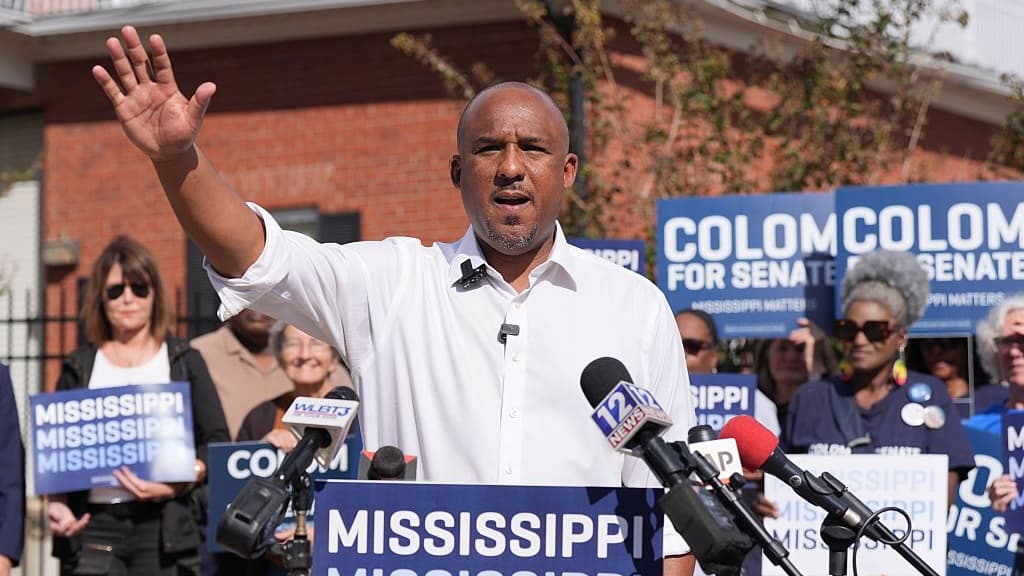
It’s a stunning nail-biter of a race that, in the weeks leading up to Election Day, polls had suggested would likely be won by the Republican incumbent by a narrow margin.
2026-11-05 · assertive framing · How the Mississippi Senate Race Became a Nail-Biter
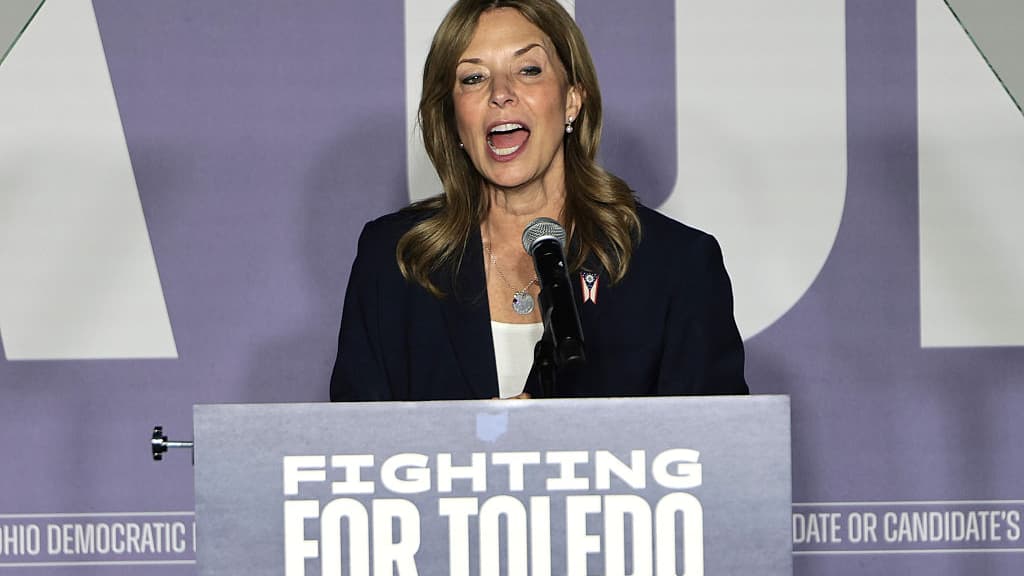
Dr. Amy Acton will be Ohio’s next governor, defeating her Republican opponent Vivek Ramaswamy in a heated race that has gained national attention in recent weeks over a controversial attack-ad against the Democrat.
In the weeks leading up to Election Day, polling indicated that the battle, which months ago was expected to be a win for Republicans, had become a toss-up.
Less than 24 hours before Election Day, President Donald Trump railed against the Democratic Party and contended that if his supporters show up to the polls, Republicans “will win in a landslide.”
Polling by the New York Times/Siena, released last week, found that likely voters in South Carolina are essentially evenly split over whether they would vote for the Republican nominee, who was appointed by the state governor to finish the remainder of her late brother’s term after he died in July and later announced that she would run for the seat in the midterms, and Dr. Annie Andrews, a pediatrician who won the Democratic primary in June.
Because imagine the power and the influence that act could hold.”
Those issues could be critical ones for voters as they go to the polls.
The clocks in most of the U.S. will fall back an hour this weekend as Daylight Saving Time once again comes to an end.
Also by Chantelle Lee
Nothing else under this byline is closely related to this article, so these are simply their most recent.
All 31 articles by Chantelle Lee →

Topics

Democrat Democrats Republican Texas the U.S. Senate

Subjects

Democrats NORP · 9× Republican NORP · 7× Texas GPE · 4× Democrat NORP · 3× GOP ORG · 2× Republicans NORP · 2× South Carolina GPE · 2× the U.S. House ORG · 2× the U.S. Senate ORG · 2× Kansas GPE · 1×

Narrative

“There are differences across states and how deep it went and whether it was one race or multiple races, but what we definitely saw is a move away from the Republican Party—that’s the way I would express it, less a movement to the Democratic Party, more a movement away from the Republican Party—because voters are frustrated and they’re mad and it’s very clear who’s responsible.”
framing: assertive · carried by 1 article(s) · first seen 2026-11-09
Now, all three will be sending Democrats to the upper chamber, shattering decades of Republican dominance in the deep-red states.

Claims (76 extracted, 6 hedged)

Before Tuesday, the last time Texas voters elected a Democrat to the U.S. Senate was in 1988. asserted
voters → elect → 1988
Now, all three will be sending Democrats to the upper chamber, shattering decades of Republican dominance in the deep-red states. asserted
three → send → states
In the weeks leading up to Election Day, polling had indicated that voters were more likely to support Democrats over Republicans in this year’s midterms. asserted
voters → lead → midterms
But the polls ultimately underestimated the magnitude of the blue wave—what some have dubbed a “blue tsunami”—that swept over the country on Tuesday. asserted
some → underestimate → Tuesday
It’s typical for the sitting President’s party to lose seats in midterm elections. asserted
party → ’ → elections
The scope of Democrats’ victories this cycle stands out even in the context of that historical trend, though—while not all the races have been called yet, the party is expected to secure the largest majority in the U.S. House since it won 257 seats in the 2008 presidential election, and has flipped seven seats in the U.S. Senate so far. asserted
it → stand → Senate
Many political pundits have characterized this year’s midterm results as a “repudiation” of President Donald Trump. asserted
pundits → characterize → Trump
The President has a historically low approval rating, driven in large part by Americans’ dissatisfaction with how he has handled the economy and foreign affairs, particularly the war in Iran. asserted
he → have → Iran
Democrats’ wins went deeper than one-off races James Talarico has emerged as a rising star of the Democratic Party in this election cycle. asserted
Talarico → go → cycle
Polls released ahead of Election Day indicated that the Democrat had a slim lead over Republican Ken Paxton in the race to represent Texas in the U.S. Senate. asserted
Democrat → release → Senate
He ended up defeating Paxton by about 12 percentage points, breaking a nearly four-decade-long streak of the state sending a Republican to the upper chamber. asserted
state → end → chamber
In a stunning political upset, Gina Hinojosa unseated Republican incumbent Gov. Greg Abbott, who has held the office for more than a decade. asserted
who → unseat → decade
His loss came as a surprise to many political experts, who thought heading into Tuesday that the probability of Hinojosa emerging victorious in the race was relatively low, though polling suggested that this fight was more competitive than Abbott’s past re-election bids. uncertain
fight → come → bids
And the blue wave swept over other state races too; Democrats won the majority in the Texas state House, bringing an end to more than two decades of Republican control in the chamber, as well as scoring victories in every statewide contest on the ballot this year and flipping multiple U.S. House seats to boot. asserted
Democrats → sweep → seats
Kirby Goidel, a professor of political science at Texas A&M University, says that all this suggests that Tuesday was not just a one-off. uncertain
Tuesday → say → University
“It wasn’t limited to a single race, it wasn’t limited to a single office—it was across the board,” Goidel says. asserted
Goidel → limit → board
“I don’t think it’s just a blip because of the scope and the depth of the wins.” asserted
it → think → wins
And while Texas was the most dramatic example of Democrats’ success in a red state, others also saw races that were more competitive than many had anticipated. asserted
many → see → races
In South Carolina, Democrat Dr. Annie Andrews’ victory over GOP Sen. Darline Graham “was the beacon,” says Shannon Bridgmon, a political scientist at the University of South Carolina. asserted
Bridgmon → say → Carolina
But Bridgmon says that there are other contests that are also notable in the state. asserted
that → say → state
In the race to represent South Carolina's 1st District in the U.S. House—to succeed GOP Rep. Nancy Mace—Democrat Nancy Lacore defeated her Republican opponent, Jenny Costa Honeycutt, by a 1.1-point-margin. asserted
Lacore → represent → margin
Another race, for the 2nd District, has not yet been called by The Associated Press, but is extremely tight, with the Republican incumbent ahead by 1% as of Sunday evening. asserted
incumbent → call → evening
In the state legislature, Democrats broke Republicans' supermajority in the South Carolina House. asserted
Democrats → break → House
“These numbers are much more competitive than people had expected,” Bridgmon says, though she acknowledges, “I’m not going to say South Carolina is on the level of Texas right now because they really just blew the top off in every way.” asserted
they → expect → way
Democrat and megachurch pastor Adam Hamilton defeated Republican incumbent Sen. Roger Marshall in Kansas for a seat in the upper chamber. asserted
Hamilton → defeat → chamber
And, like in South Carolina, Democrats also had some success in the Kansas state House, shattering the Republican supermajority, which has dominated the state legislature for 16 years, says Alexandra Middlewood, an associate professor and department chair of political science at Wichita State University. asserted
Middlewood → have → University
She adds that even with some statewide races that Republicans won, “Democrats still did significantly better in those races than they have in the past.” asserted
they → add → past
“Now, that is to say, there are still three members of the [U.S] House that are Republican from Kansas. asserted
that → say → Kansas
All three of those incumbents maintained their seats. asserted
three → maintain → seats
[Republicans] are still obviously a majority in the Kansas House,” Middlewood says. asserted
Middlewood → say → House
“But the fact that Democrats were able to mobilize such significant shifts to the left is a really big deal.” asserted
Democrats → mobilize → left
Political scientists attribute much of Democrats’ success in many of these races to a “perfect storm” of issues that coalesced in this year’s election cycle. asserted
that → attribute → cycle
Much of it, they say, is because of anger at the Republican Party and Trump over the Administration’s handling of the economy and affordability issues, as well as the Iran war and his immigration crackdown. asserted
they → say → issues
Costas Panagopoulos, a professor of political science at Northeastern University, says that, in addition to frustration with national Republican leaders, the specific candidates on the ballot likely also played a role in some of these races. asserted
candidates → say → races
Paxton, for instance, was widely viewed as a weak candidate for Republicans in the Texas Senate race; his campaign was bogged down by past controversies, including infidelity allegations and an impeachment trial (he was ultimately acquitted of all the charges he was facing), among others. asserted
he → view → others
In South Carolina, for instance, Bridgmon says that the late Sen. Lindsey Graham’s death fundamentally changed the Senate race. asserted
death → say → race
Before his unexpected death in July, the late Senator was widely expected to be re-elected in this year’s midterms. asserted
Senator → expect → midterms
At the same time, there are long-term dynamics that have been brewing in many of these states that played into what happened on Election Day, according to Panagopoulos. uncertain
what → be → Panagopoulos
For instance, “the South has experienced tremendous population growth” in recent years, he says, which in turn has led to many of those states becoming more diverse and is having “ripple effects” on their elections. asserted
many → experience → elections
Goidel says that “there were lots of pieces that were falling into place” this year. asserted
that → say → place
…and 36 more, not listed.

Give feedback · no sign-in needed

No sign-in needed for now. Your note is sent without a name, so it cannot be answered.

History Support