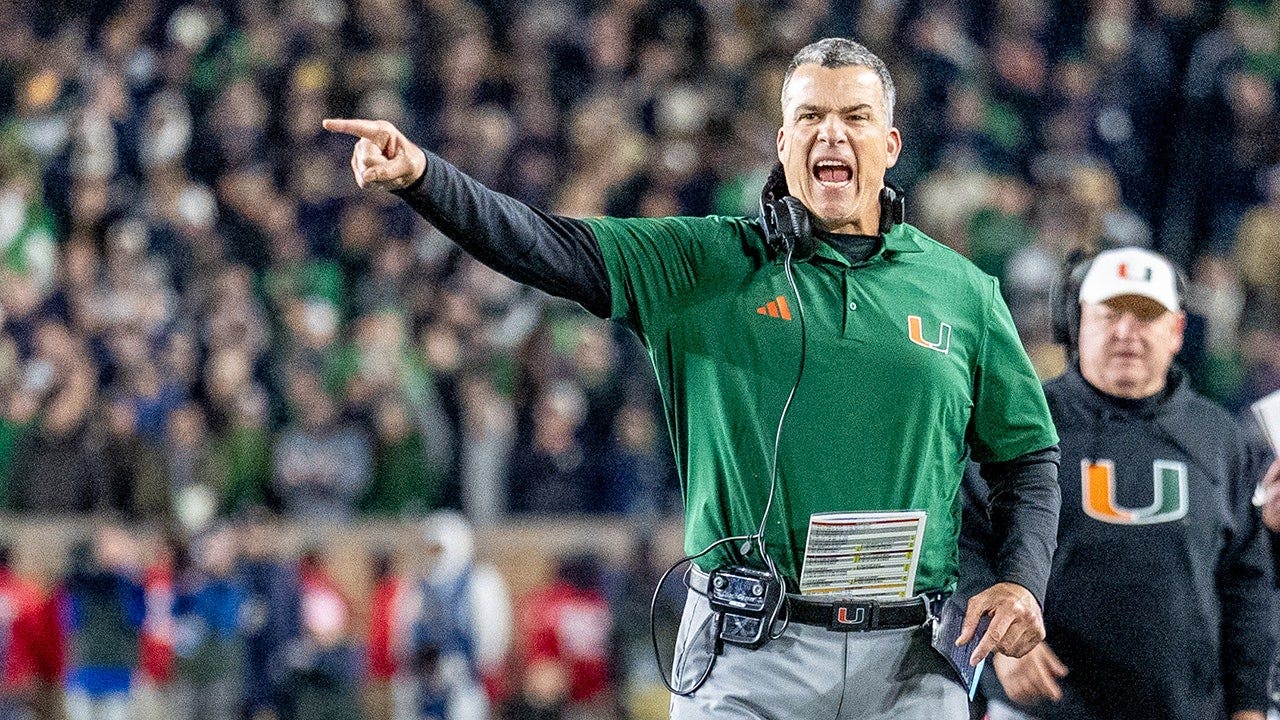
What the selection committee values, playing in one conference, and what fans and other analysts value, seems to be two very different things.
asserted
fans → value → what
There are any number of rankings that are controversial, confusing, or downright inexplicable.
asserted
that → be → rankings
And committee chair Hunter Yurachek's attempted explanations during the post-release interview have only served to make things worse, rather than provide clarification for their thinking.
asserted
things → attempt → thinking
But it's easy to complain, subjectively, saying that one ranking or another doesn't make sense or isn't consistent with prior thinking.
asserted
ranking → complain → thinking
What though, would be the best system for putting teams in order?
asserted
What → put → order
Or at least, a significantly better one that doesn't overly rely on the often-misleading "eye test" and inherent biases from committee members.
asserted
that → rely → members
Fortunately, some outside analysts have come up with their own way of comparing a more objective set of rankings to the committee's uh, heavily influenced poll.
asserted
analysts → come → poll
ESPN's Bill Connelly created a blended set of metrics to better evaluate important performance metrics.
asserted
Connelly → create → metrics
Essentially using an 80/20 combination, with the 80 side being resume rankings, strength of record, the "football power index," and the 20 side being forward-looking ratings.
asserted
side → use → record
These are opponent adjusted, and focus more heavily on underlying efficiency on offense, defense and special teams.
asserted
These → adjust → offense
That's a better methodology for predicting how teams perform moving forward, considering wins and losses are noisy and often influenced by fluky outcomes.
asserted
wins → predict → outcomes
So how does it look?
asserted
it → look → ?
Well, you'll be stunned to hear that, once again, a specific conference has received a tremendous benefit of the doubt that they do not deserve, and that the Miami Hurricanes can feel especially aggrieved with the treatment they received after taking their first loss.
asserted
they → stun → loss
Here's the list, with the arrows representing the position these teams are in Connelly's rankings, relative to the playoff poll.
asserted
teams → represent → poll
- UCLA (9-0) ↓ 3
- Texas (7-2) ↓ 2
- Wake Forest (8-1) ↑ 4
- Tennessee (7-2) ↓ 2
- Texas Tech (8-1) ↑ 1
- Ohio State (6-3) ↑ 8
- LSU (6-3) ↑ 8
- Iowa (7-2) ↑ 1
- Boise State (8-1) ↑ 9
- BYU (7-2) ↓ 6
- Oregon (6-3) ↓ 1
- Houston (7-2) ↓ 4
- USC (7-2) ↓ 1
- Ole Miss (6-3) ↓ 1
- Kentucky (7-2) ↓ 10
- Arizona (7-2) ↑ 1
- New Mexico (8-1) ↑ 3+
- SMU (7-2) ↑ 2+
- South Carolina (6-3) ↓ 8
Pretty impressive for there to be just one spot that matches!
asserted
that → match → State
This is just one set of rankings, not necessarily definitive, and others have different outcomes, but it's an indication of how the committee values things that they shouldn't, while ignoring things they should care about.
asserted
they → have → things
Unsurprisingly, Kentucky is the biggest "miss" by the committee, as the Wildcats are still getting an immense amount of credit for their "SEC" schedule, ignoring that their performances don't warrant it.
asserted
performances → get → it
South Carolina is eight spots too high in the committee poll, again, given a tremendous amount of deference to simply existing in the SEC.
asserted
Carolina → give → SEC
On the other hand, Boise State is nine spots too low, because the committee is incapable of appreciating performances against teams that do not play in the SEC.
asserted
that → appreciate → SEC
Indiana and Wake Forest are underrated, Alabama is overrated, surprise, surprise, and Miami's six spot drop after losing to Notre Dame looks even more absurd.
asserted
drop → lose → Dame
What might be a surprise though, and what would create some controversy, is the rankings for Ohio State and LSU.
uncertain
what → create → State
The Buckeyes and Tigers both now have three losses, but computer-driven metrics give them credit for how they've played, while being unaware of Julian Sayin's injury.
asserted
they → have → injury
Efficiency-driven systems are much slower to react to losses to good teams than humans are, and the Buckeyes' three losses have been to Texas, USC and Oregon, while their win over Indiana and dominance against other opponents like Iowa still pushes them into the top-15.
asserted
win → drive → top-15
Similarly, LSU gets credit for playing well in losses to Ole Miss and Kentucky, putting them higher than the committee's ranking.
asserted
LSU → get → ranking
Seven of them are higher than they'd be using an objective metric.
asserted
they → use → metric
Missouri sits at No. 28 in Connelly's rankings, and No. 22 in the poll.
asserted
No → sit → poll
On average, even including LSU at -8 spots, the average miss per SEC team was 2.5 spots higher than their performance-based ranking.
asserted
miss → include → ranking
That is the problem; the SEC has spent years building itself up through concerted marketing efforts, the people that run the sport believe them, for some reason, and then teams are rated based on inaccurate assumptions.
asserted
teams → spend → assumptions
There are tens of millions of dollars and jobs at stake, and the committee's obsession with rewarding SEC mediocrity is jeopardizing all of it.
asserted
obsession → be → it
If, by some miracle, the committee corrected for this bias moving forward, the SEC fans, boosters and commissioner Greg Sankey would be livid.
asserted
fans → correct → bias
Until they got their way again anyway.
asserted
they → get → way
Once you get used to privilege, it's hard to give it up.
asserted
it → use → it
 The Aporia