Photo via Euronews

Russia’s ‘unfriendly countries’ list now targets property, child custody and debts

Read the original at Euronews ↗
Cite

Papoyan, K. (2026, November 10). Russia’s ‘unfriendly countries’ list now targets property, child custody and debts. Euronews. https://www.euronews.com/2026/11/10/russias-unfriendly-countries-list-now-targets-property-child-custody-and-debts

Dated from the outlet's own feed. Check the original for its byline.

Euronews · collected 2026-11-10 · by Knarik Papoyan

Quick Summary

Russia has expanded its list of "unfriendly countries," originally established in March 2022 following its invasion of Ukraine, to cover areas beyond foreign economic policy, including domestic courts and family law. The current list includes nations such as the US, UK, Canada, Japan, South Korea, Switzerland, Australia, New Zealand, and EU member states. Recently, Moscow has nearly doubled import duties on spirits from these countries to 35%, and Russian courts have cited the unfriendly designation in child custody disputes. Additionally, a proposed bill would allow vehicles stolen or illegally exported from unfriendly nations to be registered in Russia, despite international agreements against such practices.
Written by AI on 2026-11-10, from this article's own text only (the story summary below draws on all the coverage).

AI analysis

Story summary

Russia has expanded its designation of unfriendly countries beyond economic policy into domestic areas like child custody, property rights, and financial obligations. The list, first established in March 2022 as a form of retaliation during Russia's invasion of Ukraine, now includes major powers such as the US, UK, Canada, Japan, South Korea, Switzerland, Australia, New Zealand, and all EU member states. Russian courts have begun applying this designation in cases involving these countries, affecting matters like returning children to their home nations or resolving property disputes. For instance, a recent Supreme Court ruling cited the unfriendly status of France in a child custody case, arguing it could harm the child’s interests. This expansion extends the list's impact beyond trade and economics into personal and legal aspects of citizens' lives.

Written for “Russia's Unfriendly Countries List Expands” on 2026-11-10, grounded in this article and the 0 other(s) covering the same event.
Why this leaning score
The article's own words the score was based on. Each is quoted verbatim and was checked against the article text before being stored, so you can find it in the original.
Reading Leans right (beta estimate) Confidence high
Leaning: leans right for article 142039 (high confidence, 3 verified quotes) · logged 2026-11-10

Story

Russia's Unfriendly Countries List Expands
Politics · 1 article(s) covering the same event.

Compared with similar articles

Nothing to compare against. No article is close enough to this one for the pipeline to have linked or judged the pair.
How this article was measured signals, leaning charts, publisher record, byline, topics and claims

Signals How these are calculated →

Claims extracted
18
sentences that state something as happening or true
Uncertain
6%
1 of 18 hedged ("reportedly", "may", "according to")
Leaning
Leans right
of the writing, not the subject · beta estimate
Publisher signals
60/100
Euronews's corrections and hedging, across everything collected from it. Not a measure of accuracy.
Outlets on this story
1
Politics
Same framing elsewhere
1
articles that frame the event the way this one does
Analyzed 2026-11-10 · how these are computed

How this is being covered How these are calculated →

Article leaning vs. publisher reliability
Source leaning vs. consistency

Publisher

Euronews · 1329 article(s) · 1 correction(s) detected
Running correction rate · 1 correction(s)

Who wrote this

Knarik Papoyan
4 article(s) here · 1 carrying a prediction
Russia's Supreme Court cited the unfriendly countries designation in a child custody dispute, ruling that returning a child to France could run counter to her interests in part because France appears on the list.
The reduction is even sharper compared to last year: the programme received 148.5 billion roubles (€1.5bn) in 2025, meaning federal spending on cancer control would have fallen roughly 38-fold in two years if the budget passes as proposed.
Russia's Transport Minister Andrey Nikitin said no significant disruptions to civil aviation would be allowed, yet operational data contradict his statement.
Also by Knarik Papoyan
Nothing else under this byline is closely related to this article, so these are simply their most recent.

Topics

France Moscow Russia Russian Ukraine

Subjects

Russia GPE · 9× Russian NORP · 6× France GPE · 3× Canada GPE · 2× Moscow GPE · 2× Ukraine GPE · 2× Australia GPE · 1× Japan GPE · 1× South Korea GPE · 1× Switzerland GPE · 1×

Narrative

Russia’s application of a foreign-policy designation to those areas departs from norms in conventions it has ratified, among them the 1980 Hague Convention on the Civil Aspects of International Child Abduction, which obligates signatory states to return children removed across borders without consent.
framing: assertive · carried by 1 article(s) · first seen 2026-11-10
Russia's Supreme Court cited the unfriendly countries designation in a child custody dispute, ruling that returning a child to France could run counter to her interests in part because France appears on the list.

Claims (18 extracted, 1 hedged)

Moscow’s list of states it deems unfriendly was set in March 2022 for foreign economic policy, but decrees and court rulings now apply it to child custody, vehicle registration and debt repayment. asserted
decrees → deem → custody
Russia's designation of "unfriendly countries" has expanded beyond foreign economic policy into domestic courts, family law, property rights and financial obligations, with a string of decrees and rulings extending its reach to individuals. asserted
string → expand → individuals
The list of states Moscow considers unfriendly was formalised as a form of retaliation in a government order in March 2022, weeks after Russia launched its full-scale invasion of Ukraine. asserted
Russia → consider → Ukraine
It covers the US, the UK, Canada, Japan, South Korea, Switzerland, Ukraine, Australia, New Zealand and EU member states, all of which have pushed back against Russia's war of aggression. asserted
all → cover → aggression
This autumn, the Russian government nearly doubled import duties on spirits from unfriendly countries, raising the rate from 20% to 35%, primarily affecting European and North American producers. asserted
government → double → producers
Kremlin spokesman Dmitry Peskov said the placement of foreign companies' Russian assets under temporary administration was directly linked to those companies' home countries being on the list. asserted
countries → say → list
The measure has affected the Russian operations of Nestlé, Auchan, FM Logistic, Leroy Merlin, Metro Cash & Carry, Tarkett, Japan Tobacco International (JTI) and others. asserted
measure → affect → Nestlé
Russia's Supreme Court cited the unfriendly countries designation in a child custody dispute, ruling that returning a child to France could run counter to her interests in part because France appears on the list. uncertain
France → cite → list
In March 2025, Russian citizen Alexei Ermakov took his daughter on a two-week holiday to Turkey and Slovakia with the consent of her mother, Ukrainian citizen Anna Tishkova, then brought the child to Russia in April. asserted
Ermakov → take → April
He subsequently arranged Russian citizenship for the girl. asserted
He → arrange → girl
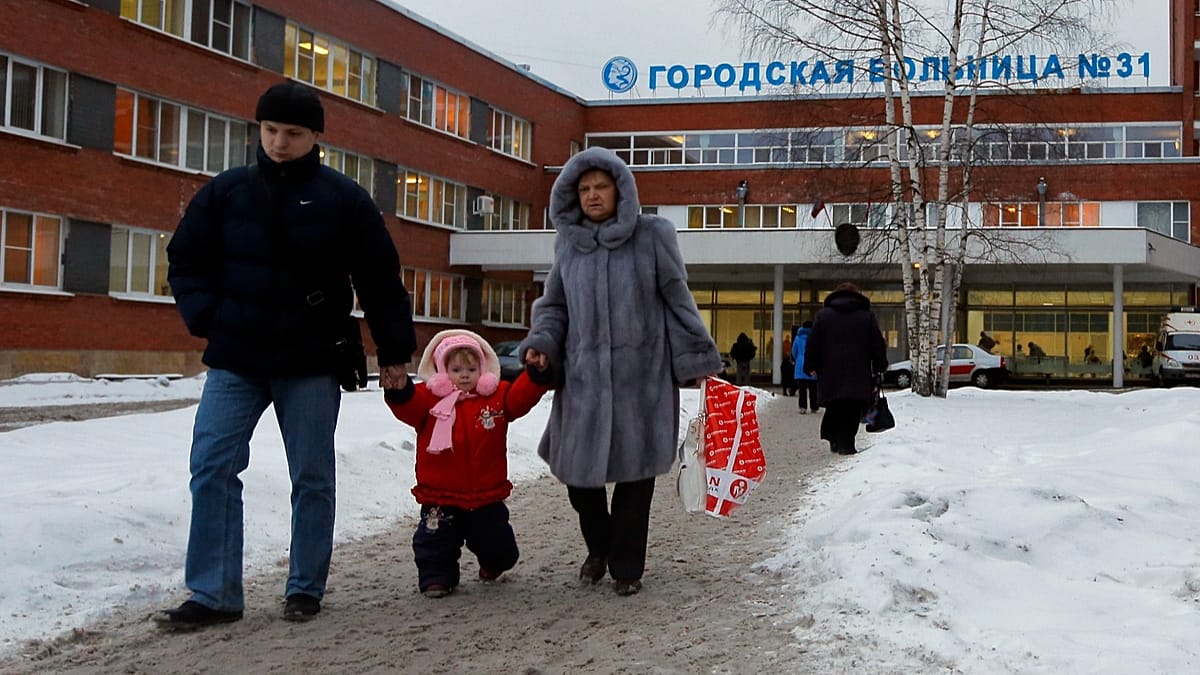
Despite international agreements on returning children to their country of habitual residence, the court declined to order her return to France. asserted
court → return → France
Property and vehicles under threat A bill supported in the State Duma would allow vehicles stolen or illegally exported from unfriendly countries to be registered in Russia. asserted
vehicles → support → Russia
Supporters say it addresses legal gaps caused by the breakdown in cooperation with Western states; opponents say it would weaken property protections for owners in those countries. asserted
it → say → countries
In a separate case, the Supreme Court ordered the Interior Ministry to register a vehicle flagged in an international database at Canada's request, ruling that listing in an international stolen vehicles register is not in itself sufficient grounds to refuse registration in Russia. asserted
listing → order → Russia
Putin signed a decree this autumn under which individuals who cannot prove citizenship of Russia or a friendly state or produce a residency permit are automatically treated as persons from unfriendly countries. asserted
who → sign → countries
A further decree allows Russian debtors to withhold payment from creditors in unfriendly countries, departing from the standard principle of equal treatment of parties to contracts. asserted
debtors → allow → contracts
Standard principles of private international law require courts to resolve contracts, custody matters and property disputes on their legal merits, regardless of the nationality or political status of the parties. asserted
principles → require → parties
Russia’s application of a foreign-policy designation to those areas departs from norms in conventions it has ratified, among them the 1980 Hague Convention on the Civil Aspects of International Child Abduction, which obligates signatory states to return children removed across borders without consent. asserted
which → depart → consent
Give feedback · no sign-in needed

No sign-in needed for now. Your note is sent without a name, so it cannot be answered.

History Support