'The days of safety are over': Russian airports face record closures

Euronews · collected 2026-09-10 · by Knarik Papoyan
Read the original at Euronews ↗

Summary

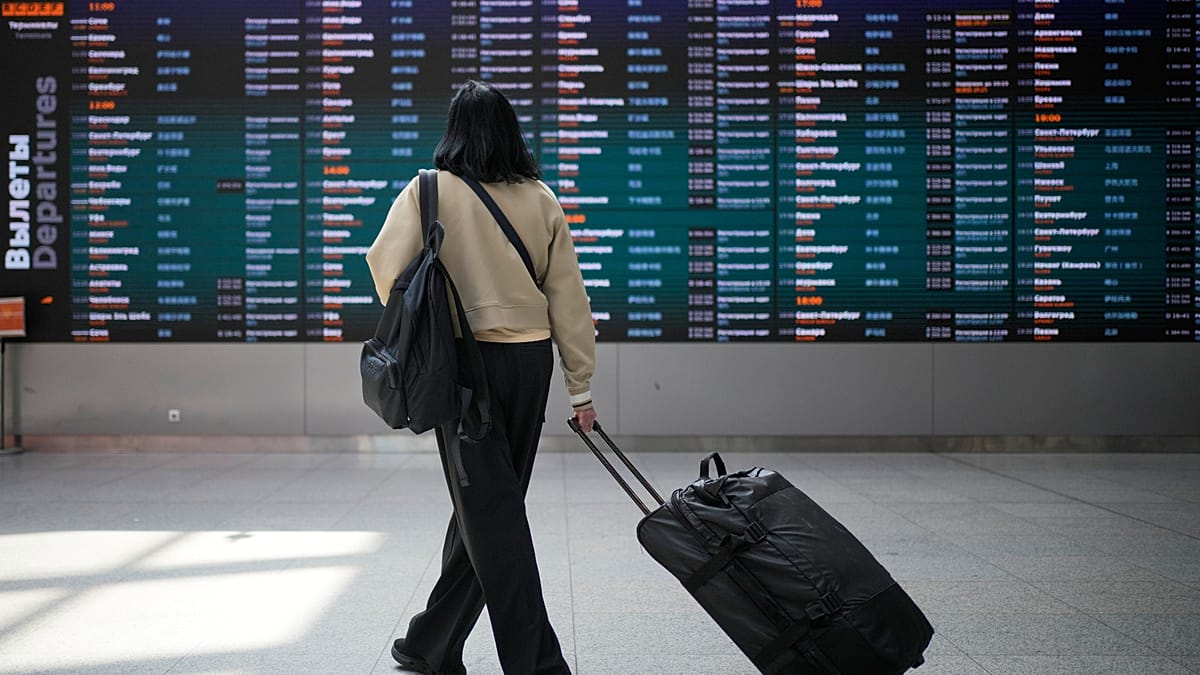
Ukrainian drone operations forced 32 Russian airports to close an average of 32 times a day in August, with summer totals already exceeding all of 2025, according to industry data from Osprey Flight Solutions. The closures, which have been the most disruptive month for Russian civil aviation since its invasion of Ukraine began in early 2022, were due to the activation of Russia's "Kover" air defence protocol. Ukrainian President Volodymyr Zelenskyy warned that Russia's airspace is becoming "completely unsafe" for civil aviation, stating that "the days of safety in Russia's skies are over." Over 2,182 airport closures were recorded in August, with an average of 86 flights per day being cancelled in the first three days of September.
Written by the local model on 2026-09-10, using this article's own text rather than the other coverage of the same event (that is the story summary below).

Signals How these are calculated →

Claims extracted
26
claim-shaped sentences
Uncertain
8%
2 of 26 hedged
Leaning
withheld
no quote in the article backed the model's score
Publisher trust
95.2
red-flag proxy, not a credibility rating
Outlets on this story
9
World
Narrative spread
1
articles carrying this framing
Analyzed 2026-09-10 · how these are computed

AI analysis (generated at analysis time, not now)

Story summary

Here are the summaries of the 8 news articles in 6-9 sentences each:

Article 1: How Ukraine’s deepest attack in Russia, on Arctic gas, signals new reach

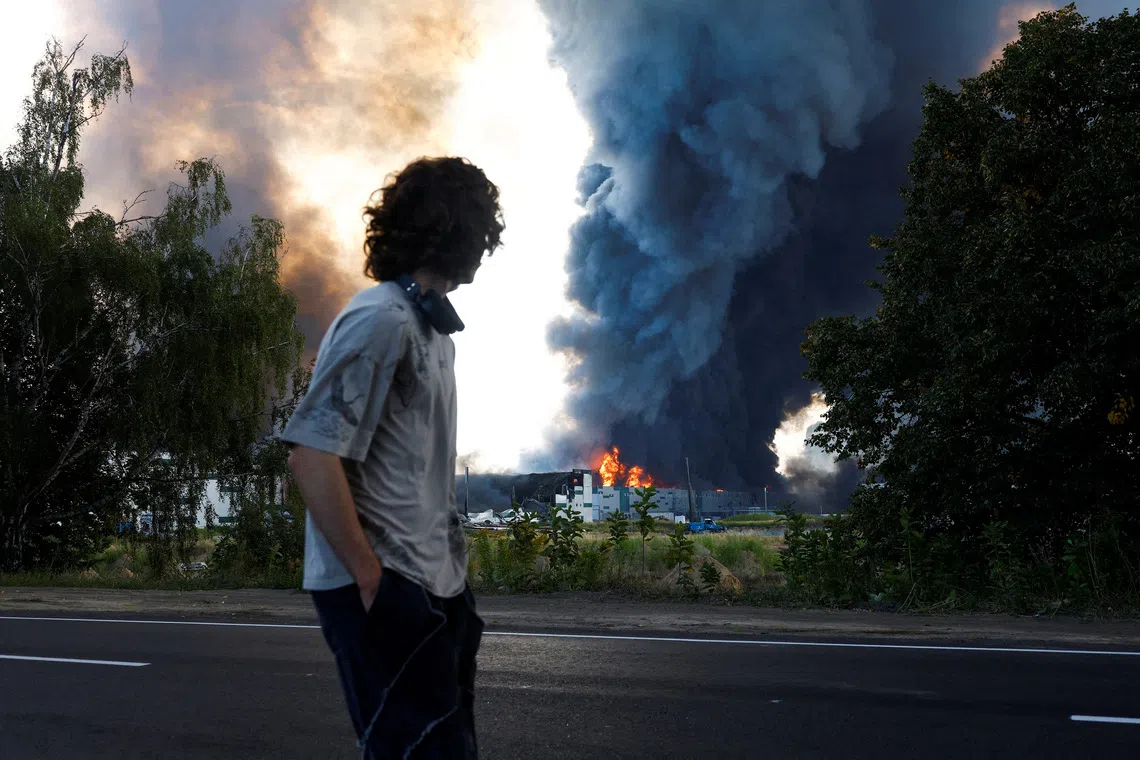
Ukraine launched its deepest-ever attack into Russia, targeting two Arctic gas condensate facilities 3,000km (1,865 miles) from its border. The attack was carried out by drones and caused large clouds of smoke and fire at the Novy Urengoy plant in western Siberia. This marks a significant escalation of Ukraine's military capabilities, which have been increasingly targeting Russia's energy infrastructure and logistical hubs. Since the start of the war, Ukraine has dramatically increased its capacity for mass-producing low-cost drones. The attack comes as Ukraine is trying to bring the war to Russia and cause economic disruption. There have been no reports of deaths or injuries from the attack. This marks a new level of reach for Ukraine's military, which could potentially unleash more damage on Russia's economy. The ability of Ukraine to target deep into Russian territory highlights its growing military capabilities.

Article 2: 'The days of safety are over': Russian airports face drone attacks

Russian airports have been facing increasing threats from drones, with several incidents reported in recent weeks. Drones have been shot down at airports in Moscow and St. Petersburg, causing disruptions to air travel. The use of drones by Ukraine is part of its broader strategy to cause economic disruption and disrupt Russia's military operations. The attacks are also causing concern among airlines, which are having to take precautions to protect their aircraft from drone strikes. Russia has responded by increasing security measures at airports, including deploying additional personnel to detect and intercept drones. The use of drones is becoming increasingly common in the conflict between Ukraine and Russia. The escalation of drone warfare is forcing a rethink from militaries and governments around the world.

Article 3: How cheap drones are upending the big business of defence

The use of cheap drones has transformed the nature of warfare, with Ukraine's military using them to devastating effect against Russian targets. Drones have become an essential tool for militaries, offering a cost-effective way to conduct surveillance and attack enemy positions. The production of drones is becoming increasingly decentralized, with smaller companies and even individuals able to produce high-quality drones at low cost. This has disrupted the traditional defence manufacturing industry, which has been dominated by large primes such as Lockheed Martin and Boeing. Economists are describing this shift as a revolution in drone economics, where new business models and financing structures are being developed.

Article 4: ‘Overnight we all became war correspondents’: Ukraine’s local newspapers face battle to stay alive

Local journalists in Ukraine have been forced to adapt quickly to the changing circumstances of the conflict. Many have taken on additional roles as war correspondents, using their skills to report on the impact of the conflict on their communities. The Association of Independent Regional Press Publishers of Ukraine (AIRPPU) has been providing support and training for local journalists to help them cope with the demands of reporting on the conflict. Despite the challenges, many local newspapers have continued to publish, despite being forced to move online or adopt new formats due to the destruction of their print facilities.

Article 5: How escalating attacks are upending daily life in Kyiv

The ongoing conflict between Ukraine and Russia has brought constant drone attacks to the streets of Kyiv. The city's residents are having to adapt quickly to the changing circumstances, with many schools and businesses forced to close due to the frequent air raids. Vitaliia Poliakova was driving near a bridge when a jet-powered drone struck the road nearby, causing significant damage. Despite the disruption, many residents remain defiant, determined to maintain some sense of normality in the face of ongoing conflict.

Article 6: Lithuania training civilians to defend against a Russian invasion

Lithuania is taking steps to prepare its citizens for the possibility of a Russian invasion. The country's military is training ordinary people how to use drones and shoot them down, as well as teaching survival skills such as first aid. Lithuania has a small professional military, but it recognizes that it may not be able to defend against a full-scale invasion by Russia. As a result, the government is taking steps to prepare its citizens for the possibility of war.

Article 7: How Ukraine's drone campaign is causing economic disruption

Ukraine's military is increasingly using drones to target Russian energy infrastructure and logistical hubs. This has caused significant economic disruption, with many Russian cities facing power outages and disruptions to supply chains. The use of drones is becoming an essential part of Ukraine's military strategy, as it seeks to cause maximum economic damage to Russia. The impact of these attacks is being felt across the continent, with many European countries worried about the potential for escalation.

Article 8: Lithuania training civilians to defend against a Russian invasion

Lithuania is preparing its citizens for the possibility of a Russian invasion by teaching them survival skills and how to use drones. The country's military is also embracing new technologies pioneered in Ukraine, including networks of sensors and drones that can be used to slow down an invading force. Lithuania has a small professional military, but it recognizes that it may not be able to defend against a full-scale invasion by Russia. As a result, the government is taking steps to prepare its citizens for the possibility of war.

Written for “Escalating Conflict in Ukraine” on 2026-09-10, grounded in this article and the 8 other(s) covering the same event.
Why this leaning score
The model judged this article politically coded and scored it -0.35, but none of the 3 quote(s) it offered could be found in the article text, so the score is not published.
Written under an earlier scoring contract, which gave a paragraph rather than checkable quotes. Re-analysing this article replaces it.
Leaning score withheld for article 7569: no verified evidence · logged 2026-09-10

Story

📰 Escalating Conflict in Ukraine
World · 9 article(s) covering the same event. This is the one the site leads with.

How this is being covered How these are calculated →

Article leaning vs. publisher reliability
Source leaning vs. consistency

Compared with similar articles

This article reads unscored and hedges 8% of its claims. Each row says how that neighbour differs.
Al Jazeera
⚖️ Leans left 🔴 19% hedged 5 of 27 📰 publisher trust 96
“Both articles report on the same incident involving Ukrainian drone attacks causing disruptions to Russian airports, with similar details and dates.”
The Straits Times
⚖️ Leans left 🔴 3% hedged 1 of 38 📰 publisher trust 94
“Article A describes drone attacks on Kyiv, while Article B reports on Ukrainian drone operations forcing airport closures in Russia”
CBC News
⚖️ leaning not scored 🔴 6% hedged 3 of 49 📰 publisher trust 95
“Both articles discuss a large number of Ukrainian drone attacks on Russian airports, resulting in a high number of closures, with Article A mentioning 'another night of deadly strikes' and Article B stating 'Ukrainian drone operations forced repeated airspace shutdowns'”
The Straits Times
⚖️ leaning not scored 🔴 0% hedged 0 of 8 📰 publisher trust 94
“Article A describes an investigation into four specific Ukrainian drones entering Finnish airspace, while Article B reports on a broader trend of Ukrainian drone operations affecting Russian airports”
Al Jazeera
⚖️ Leans left 🔴 0% hedged 0 of 46 📰 publisher trust 96
“The articles cover related events, but seem to be reporting on different aspects and consequences of the Ukrainian drone campaign against Russian airports and Russian shelling in Ukraine.”
The Hindu
⚖️ Leans left 🔴 3% hedged 1 of 35 📰 publisher trust 96
“Article A refers to a specific pause in strikes on Kyiv ordered by Putin, while Article B discusses general airport closures and drone operations across Russia”
The Independent
⚖️ Leans left 🔴 2% hedged 1 of 54 📰 publisher trust 59
“Article A describes a meeting between Zelensky and Trump's envoys, while Article B refers to a drone campaign by Ukraine that has forced repeated airspace shutdowns in Russia”
The Guardian
⚖️ Leans left 🔴 19% hedged 7 of 36 📰 publisher trust 94
“Article B describes a continuation of drone operations and their impact, whereas Article A announces plans to launch 1,000 drones per night, suggesting they are not reporting on the exact same occurrence”

Publisher

Euronews · 159 article(s) · 0 correction(s) detected
No corrections detected for this publisher. That may mean careful reporting, or simply that nothing has been checked.

Who wrote this

Knarik Papoyan
1 article(s) here · 1 carrying a prediction
🔮 Russia's Transport Minister Andrey Nikitin said no significant disruptions to civil aviation would be allowed, yet operational data contradict his statement.
The only article under this byline in the corpus.

Topics

Moscow Russia Russian Ukraine Ukrainian

Subjects

Russian NORP · 8× Russia GPE · 7× Moscow GPE · 5× Ukraine GPE · 4× Ukrainian NORP · 4× St Petersburg GPE · 3× Zelenskyy PERSON · 2× Osprey Flight Solutions ORG · 1× The Insider ORG · 1× Volodymyr Zelenskyy PERSON · 1×

Narrative

The investigative outlet Agentstvo has noted that the aviation disruption overlaps with pressure on other parts of the Russian economy, including declining oil refining capacity, higher logistics costs and interruptions to warehouse operations caused by Ukrainian drone strikes on industrial facilities.
framing: assertive · carried by 1 article(s) · first seen 2026-09-10
🔮 Russia's Transport Minister Andrey Nikitin said no significant disruptions to civil aviation would be allowed, yet operational data contradict his statement.
2026-09-10 · Euronews
'The days of safety are over': Russian airports face record closures · assertive framing

Claims (26 extracted, 2 hedged)

Ukraine's drone campaign forced an average of 32 airport closures a day across 32 Russian airports including Moscow and St Petersburg, with summer totals already exceeding all of 2025, as Zelenskyy warned airlines and insurers that "the days of safety in Russia's skies are over." asserted
days → force → skies
Russian airports temporarily closed 993 times in August — an average of 32 times a day — as Ukrainian drone operations forced repeated airspace shutdowns across the country. asserted
operations → close → country
Industry data shows it was the most disruptive month for Russian civil aviation since its full-scale invasion of Ukraine began in early 2022. asserted
invasion → show → 2022
Figures from aviation security firm Osprey Flight Solutions state that restrictions were imposed at 32 airports in August, including Moscow and St Petersburg. asserted
restrictions → state → Moscow
Over the summer as a whole, 2,182 closures were recorded — already exceeding the full-year total for 2025. asserted
closures → record → 2025
The Insider, an investigative Russian outlet, calculated that the August closures reached more than six times the 2025 monthly average. asserted
closures → calculate → average
Ukrainian President Volodymyr Zelenskyy warned airlines and insurers on 1 September that Russian airspace "is becoming completely unsafe" for civil aviation. asserted
airspace → warn → aviation
"We in Ukraine do not want innocent lives to be lost. asserted
lives → want → Ukraine
That's why we are warning our partners: the days of safety in Russia's skies are over," Zelenskyy said. asserted
Zelenskyy → warn → skies
Andriy Zagorodnyuk, a former Ukrainian defence minister, said the goal was not to attack civilian aircraft but to create lasting uncertainty. asserted
goal → say → uncertainty
"Ukraine is not seeking to shoot down civilian aircraft, but it is making Russia's skies unsafe for flying," he said in last week's comments to Ukrainska Pravda. asserted
he → seek → Pravda
The trigger for airport closures is the activation of what Russia calls the "Kover" — Russian for "carpet" — protocol, an air defence procedure designed for rare emergencies that grounds or redirects all civil aircraft when a drone threat is detected in the area. asserted
threat → call → area
Military analyst Mykhailo Samus, of the Centre for Army, Conversion and Disarmament Studies, said airport closures were part of a broader strategy of economic exhaustion, alongside rising insurance premiums, the withdrawal of foreign carriers and reduced domestic mobility. asserted
closures → say → carriers
"Airport closures are the new reality for Russian aviation," he said. asserted
he → say → aviation
Russia's Transport Minister Andrey Nikitin said no significant disruptions to civil aviation would be allowed, yet operational data contradict his statement. asserted
data → say → statement
In the first three days of September, an average of 86 flights per day were cancelled in Russia, according to FlightRadar24 — a level comparable to August's worst periods. uncertain
average → cancel → periods
On the most severe nights around Moscow, between 77 and more than 100 flights were delayed or cancelled in a single overnight period. asserted
flights → delay → period
Passengers have documented the disruption in detail on social media and in regional news feeds. asserted
Passengers → document → feeds
"We've been sitting on the plane for an hour, Vnukovo has been closed, nobody is explaining anything," one traveller wrote on Telegram. asserted
traveller → sit → Telegram
"Pulkovo won't let the flight depart, Moscow won't receive it." asserted
Moscow → let → it
another posted. asserted
another → post → ?
A third passenger said, "The online board is all red, it's impossible to take off or land." asserted
it → say → ?
Some foreign carriers that had continued to fly to Russia after the full-scale invasion have since adjusted routes or suspended operations. asserted
that → continue → operations
Changes have affected Pegasus, Flydubai and Air India, according to industry media. uncertain
Changes → affect → media
Passenger numbers on the Moscow-St Petersburg route have fallen by 20-23%, while rail demand has risen by roughly 20% in response. asserted
demand → fall → response
The investigative outlet Agentstvo has noted that the aviation disruption overlaps with pressure on other parts of the Russian economy, including declining oil refining capacity, higher logistics costs and interruptions to warehouse operations caused by Ukrainian drone strikes on industrial facilities. asserted
disruption → note → facilities

💬 Give feedback
🕘 History 🎫 Support