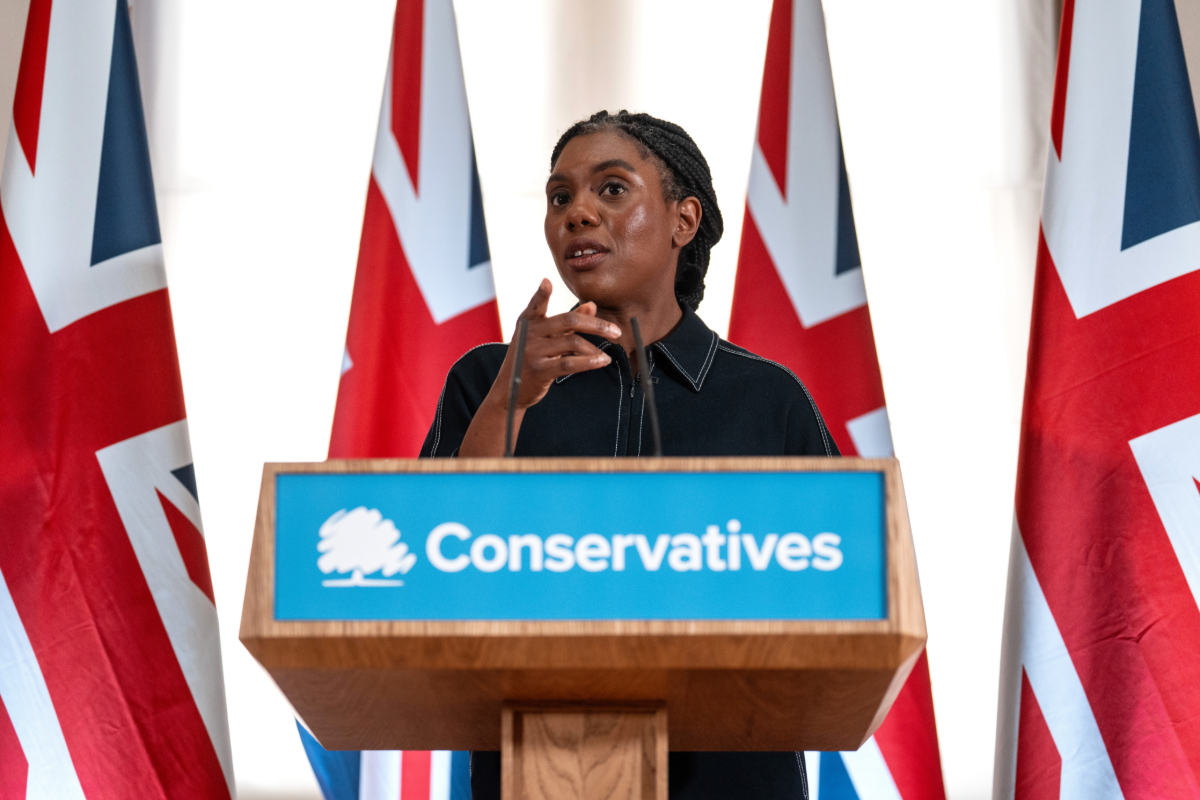
Photo via The Guardian

Badenoch lays out £36bn in Tory welfare cuts and defends plans to slash disability benefits – UK politics live

Read the original at The Guardian ↗
Cite

Sparrow, A. (2026, November 10). Badenoch lays out £36bn in Tory welfare cuts and defends plans to slash disability benefits – UK politics live. The Guardian. https://www.theguardian.com/politics/live/2026/nov/10/badenoch-conservative-welfare-cuts-disability-benefits-burnham-politics-latest-news-updates

Dated from the outlet's own feed. Check the original for its byline.

The Guardian · collected 2026-11-10 · by Andrew Sparrow

Quick Summary

Labour criticizes the Conservative Party for planning £36 billion in welfare cuts, arguing that Conservatives exacerbated issues within the benefit system during their previous term. Shadow minister Kemi Badenoch defends these proposed cuts by asserting they are necessary to prevent an economic crisis caused by working-age benefits and emphasizes transparency with voters about future policy changes.
Written by AI on 2026-11-10, from this article's own text only (the story summary below draws on all the coverage).

AI analysis

Story summary

As of November 10, 2026, Kemi Badenoch, the Conservative leader, unveiled plans to cut £36 billion from Britain's welfare bill annually. The plan includes ending sickness and disability benefits for people with low-level mental health conditions and back pain, affecting around 2.5 million individuals. Additionally, the proposal would bar foreign nationals outside the EU from claiming benefits in the UK and reinstate a two-child benefit cap scrapped by Labour. Shadow work and pensions secretary Helen Whately criticized these measures, arguing they could lead to a "lifetime on benefits" for children with mild disabilities or ADHD. The Labour party further accused the Conservatives of creating welfare problems during their previous tenure and questioned their ability to solve issues they helped create.

Written for “Tories Plan Welfare Cuts” on 2026-11-10, grounded in this article and the 4 other(s) covering the same event.

Story

Tories Plan Welfare Cuts
Politics · 5 article(s) covering the same event. See how they differ ↓

Compared with similar articles

This article reads leans left and hedges 13% of its claims. Each row says how that neighbour differs.
Daily Mail
Leans right further right than this Hedges 1 of 31 claims Outlet record 69/100
“Article A describes Kemi Badenoch's plan announcement and details, while Article B focuses on Labour's response to the announced cuts without detailing the original plan itself.”
BBC News
Hedges 4 of 22 claims Outlet record 66/100
“The articles cover related but different aspects of Tory welfare plans, with Article A focusing on a broader £36bn cut to disability benefits and Labour's response, while Article B specifically addresses the pledge to save £2.8bn by cutting Disability Living Allowance for children with milder cases of ADHD.”
City AM
Leans strongly right further right than this Hedges 5 of 25 claims Outlet record 94/100
“Article A is a response from Labour regarding planned cuts, while Article B describes the Conservative Party's publication of their plans. Though related, they describe different stages of the event.”
How this article was measured signals, leaning charts, publisher record, byline, topics and claims

Signals How these are calculated →

Claims extracted
47
sentences that state something as happening or true
Uncertain
13%
6 of 47 hedged ("reportedly", "may", "according to")
Leaning
Leans left
of the writing, not the subject · beta estimate
Publisher signals
65/100
The Guardian's corrections and hedging, across everything collected from it. Not a measure of accuracy.
Outlets on this story
5
Politics
Same framing elsewhere
1
articles that frame the event the way this one does
Analyzed 2026-11-10 · how these are computed

How this is being covered How these are calculated →

Article leaning vs. publisher reliability
Source leaning vs. consistency

Publisher

The Guardian · 3203 article(s) · 7 correction(s) detected
Running correction rate · 7 correction(s)

Who wrote this

Andrew Sparrow
29 article(s) here · 1 carrying a prediction
Further reforms will follow the Milburn and Timms Reviews.
But Nigel Farage, the Reform UK leader, will be holding a press conference, which means reporters will have the chance to ask him why his eve-of-poll “I don’t go with the consensus that Trump is going to get smashed” prediction turned out to be so wrong.
Donald Trump is still president for the next two years, and none of the chaos he has caused for Britain and other European allies is going to go away; conceivably, he could end up even more disruptive.
- Mahmood appeared to accept that her U-turn could cost billions.
Shabana Mahmood, the home secretary, will this afternoon unveil the final version of her plans to make foreign workers wait longer before they can apply for indefinite leave to remain, and we know relatively little about what she will say.
The prime minister said he hoped to have all four UK nations moving at the same pace on devolution, particularly on efforts outlined in Wednesday’s budget to give mayors in England more powers over tax revenues.
Burnham admits he would have liked more radical first budget Andy Burnham has admitted his first budget as prime minister was not as radical as he would have liked because of the economic uncertainty facing the country, Kiran Stacey reports.
As Rowena Mason reports, one of the top lines was Healey saying he would cut welfare spending before the election.
He said he asked the chancellor if there would be a support scheme to help people with energy bills from January, when costs are set to rise sharply.
A week today John Healey, the chancellor, will be doing a media round defending the budget he is presenting on Wednesday next week.
Also by Andrew Sparrow
Nothing else under this byline is closely related to this article, so these are simply their most recent.
All 29 articles by Andrew Sparrow →

Topics

Conservatives Labour Tories Tory the Labour party

Subjects

Labour ORG · 5× Badenoch PERSON · 4× Tories NORP · 4× Tory NORP · 2× Conservatives NORP · 1× Kemi Badenoch PERSON · 1× Ken Clarke PERSON · 1× Milburn PERSON · 1× Timms PERSON · 1× the Labour party ORG · 1×

Narrative

In fact, this is a misleading caricature of Labour thinking on welfare; the government is about to publish a report from Alan Milburn that will be 100% dedicated to making the system more focused on what young people “can do, not what they cannot”.
framing: assertive · carried by 1 article(s) · first seen 2026-11-10
Further reforms will follow the Milburn and Timms Reviews.

Claims (47 extracted, 6 hedged)

Labour says Tories can't be trusted to solve welfare problems 'they created in first place' asserted
they → say → place
Here is the statement the Labour party released overnight in response to the advance briefing about the Tory plans to cut benefits by £36bn. asserted
party → release → 36bn
A Labour spokesperson said: The Tories let the welfare bill soar on their watch. asserted
bill → say → watch
Now they have the audacity to pretend it was nothing to do with them. asserted
it → have → them
You can’t trust them to solve problems they created in the first place. asserted
they → trust → place
The Conservatives designed and implemented this benefit system, which has driven large numbers of people to be signed off and written off. asserted
numbers → design → people
In the Tories’ last year in government, the welfare bill rose by a record £33bn. asserted
bill → rise → record
Labour is tackling the collapse in face-to-face assessments, bringing in personalised employment support for sick and disabled people and spreading opportunity to young people through the Youth Guarantee. asserted
Labour → tackle → Guarantee
Further reforms will follow the Milburn and Timms Reviews. asserted
reforms → follow → Reviews
Badenoch says 'double amputees run marathons' as she defends plan to slash disability benefits as part of £36bn welfare cuts Good morning. asserted
she → say → cuts
It is quite easy for politicians to declare that they will cut the welfare bill by X amount – but much harder when they have to explain exactly who will lose out. asserted
who → declare → amount
This is summed up by a good anecdote about a former chancellor (Ken Clarke, according to some versions, but it could have been any of them), who gave this reply when asked for cuts that would save £1bn: uncertain
that → sum → 1bn
So, do you want one million people to lose £1,000 each, or 10 million people to lose £100 each? asserted
people → want → 100
Today Kemi Badenoch is giving a speech to launch a policy document, Welfare That Works, explaining how the Tories would cut welfare by £36bn. asserted
Tories → give → 36bn
That’s 36 million people losing £1,000 each, according to the logic of our notional chancellor, although of course it is not quite as simple as that. uncertain
it → ’ → that
All of these cuts are ones that the Conservative party has proposed already, but what we are getting today is a bit more detail about how some of them would be implemented in practice, and a big overall argument defending them. asserted
some → propose → them
Here is a page from the document summarising where the cuts would fall. asserted
cuts → summarise → document
I will post more on the detail in the document later. asserted
I → post → document
According to extracts from her speech released in advance, Badenoch will say that she is publishing these proposals now so that voters do not get any “nasty surprises” if they elect a Tory government. uncertain
they → accord → government
It is too late to work out what you think once you’re in government. asserted
you → work → government
If you want to change this country, you need to know exactly what you want to do and how you’re going to do it … asserted
you → want → it
We’re telling people what we are going to do now so that there will be no nasty surprises from us such as cutting your winter fuel payment, the jobs tax or the family farm tax once we get into government. asserted
we → tell → government
Badenoch will also claim that spending on working-age benefits is “crushing our economy”. uncertain
spending → claim → economy
More than a third of her proposed savings would come from cuts to sickness and disability benefits, and Badenoch will claim there is a “fundamental difference” between Conservative and Labour thinking on this issue. uncertain
Badenoch → propose → issue
She will say: Labour MPs think cutting welfare is always cruel. asserted
cutting → say → welfare
They believe the kindest thing you can do for someone who is struggling is to tell them it’s okay not to look after themselves. asserted
it → believe → themselves
And if you don’t think very hard about it, I can see why you might believe that is kind. uncertain
that → think → it
Of course, there are people who genuinely cannot work. asserted
who → be → ?
People who need time to recover. asserted
who → need → time
We must have a safety net for those people. asserted
We → have → people
But the reality is that millions of people can and do contribute to our economy to their families to their communities even when they face serious challenges. asserted
they → contribute → challenges
Double amputees run marathons. asserted
amputees → run → marathons
People who are housebound do wonderful creative work from home. asserted
who → do → home
People with autism run some of the biggest tech companies in the world. asserted
People → run → world
If you tell a young person that their ADHD means they are defective and will never amount to anything, that mindset is likely to be more destructive to their future than the condition itself. asserted
mindset → tell → condition
That is what our welfare system is currently doing. asserted
system → do → what
Conservatives believe in a system that looks at people through the lens of what they can do, not what they cannot. asserted
they → believe → what
In fact, this is a misleading caricature of Labour thinking on welfare; the government is about to publish a report from Alan Milburn that will be 100% dedicated to making the system more focused on what young people “can do, not what they cannot”. asserted
they → think → what
But, as is often the case with Badenoch’s rhetoric, it crystalises an argument and makes for a good headline. asserted
it → crystalise → headline
Andy Burnham chairs a political cabinet. asserted
Burnham → chair → cabinet
…and 7 more, not listed.

Give feedback · no sign-in needed

No sign-in needed for now. Your note is sent without a name, so it cannot be answered.

History Support