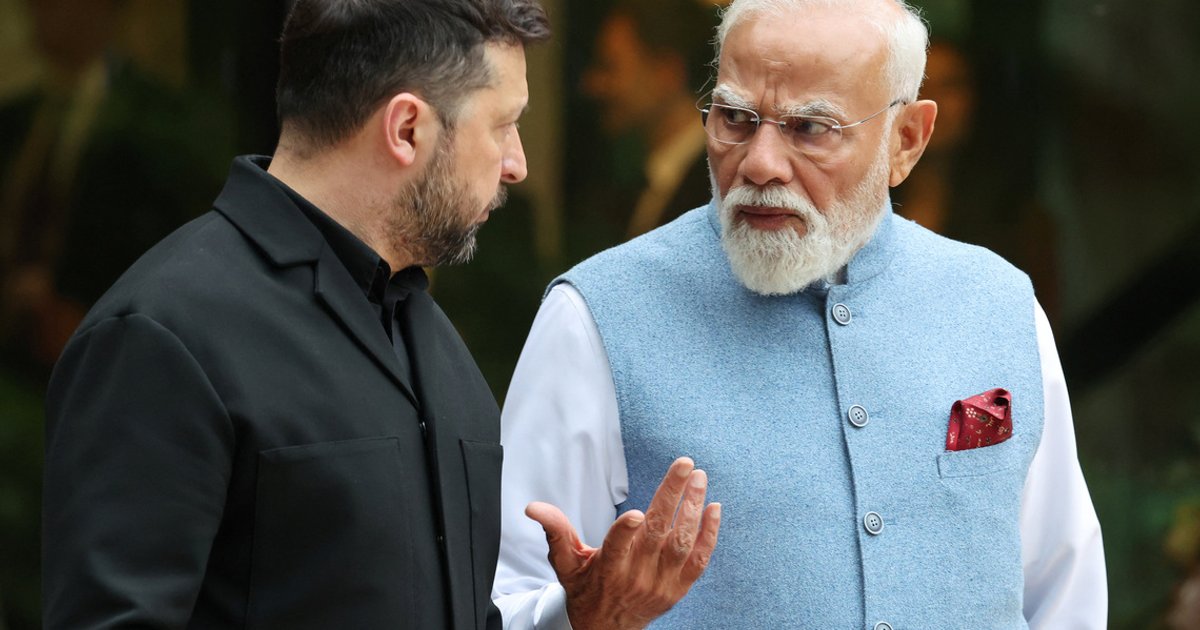
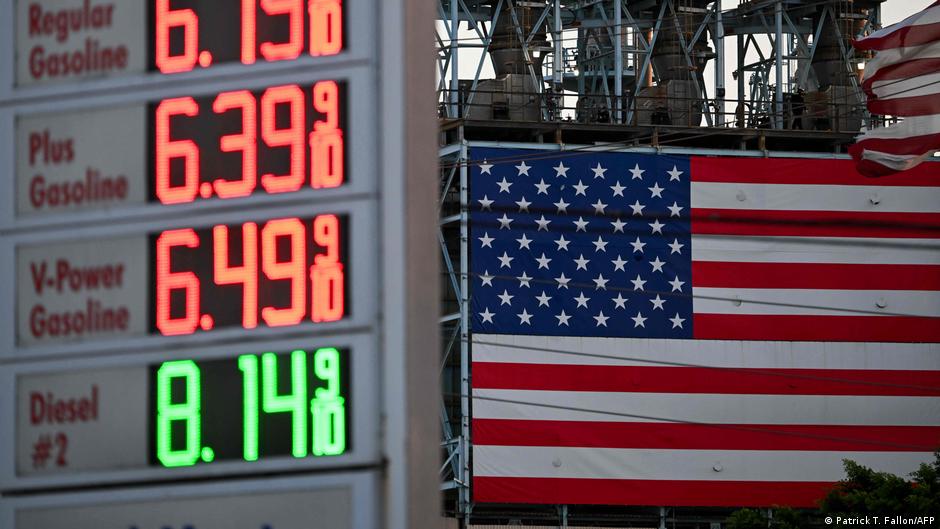
Photo via Deutsche Welle

New trilateral talks on Ukraine war in Abu Dhabi: What to expect?

Read the original at Deutsche Welle ↗
Cite

Rzheutska, L. (2026, November 9). New trilateral talks on Ukraine war in Abu Dhabi: What to expect? Deutsche Welle. https://www.dw.com/en/new-trilateral-talks-on-ukraine-war-in-abu-dhabi-what-to-expect/a-79905734?maca=en-rss-en-world-4025-rdf

Dated from the outlet's own feed. Check the original for its byline.

Deutsche Welle · collected 2026-11-10 · by Liliia Rzheutska

Quick Summary

Trilateral talks on the Ukraine war are set to occur in Abu Dhabi from Tuesday to Wednesday, involving representatives from Russia, Ukraine, and the United States. The discussions will focus on post-war security arrangements, humanitarian efforts, and de-escalation steps toward peace, as outlined by US special envoy Steve Witkoff. Ukrainian President Volodymyr Zelenskyy emphasizes topics like security guarantees and prisoner exchanges. European representatives will observe but are unlikely to formally participate in negotiations aiming for a potential peace deal, according to security studies director Hanna Shelest at the foreign policy network Ukrainian Prism.
Written by AI on 2026-11-10, from this article's own text only (the story summary below draws on all the coverage).

AI analysis

Story summary

As of November 10, 2026, negotiators from Russia and Ukraine are set to meet for peace talks brokered by the United States in Abu Dhabi. Kyrylo Budanov, head of Ukraine's Presidential Office, expressed "restrained optimism" about progress toward an eventual meeting between Volodymyr Zelenskyy and Vladimir Putin. European officials will also participate, defying earlier Kremlin objections; French Foreign Minister Jean-Noël Barrot confirmed Europe’s representation at the talks aimed at ending the Ukraine war.

The discussions come as Ukrainian President Zelenskyy claims battlefield successes, including heavy recent Russian losses and effective long-range strikes on targets inside Russia, particularly oil facilities. Despite some optimism, Moscow and Kyiv remain far apart on key issues such as control of eastern regions postwar. U.S. officials note that both sides are showing "a little bit of flexibility," but significant obstacles still exist in achieving a durable peace agreement.

Written for “Ukraine Peace Talks Resume” on 2026-11-10, grounded in this article and the 19 other(s) covering the same event.
Why this leaning score
This article does not take a side on a contested political question, so it has no leaning score. That is an answer rather than a gap: a match report or a rescue can be warmly or critically written without being left or right, and scoring it anyway is how approval of a subject gets recorded as a political position.
No political leaning scored for article 140315 · logged 2026-11-10

Story

Ukraine Peace Talks Resume
Politics · 20 article(s) covering the same event. Compare every outlet's account →

Compared with similar articles

This article reads unscored and hedges 16% of its claims. Each row says how that neighbour differs.
The Hindu
Hedges 3 of 42 claims Outlet record 78/100
BBC News
Hedges 6 of 35 claims Outlet record 66/100
Al Jazeera
Leans left Hedges 10 of 68 claims Outlet record 60/100
Toronto Star
Leans left Hedges 3 of 43 claims Outlet record 64/100
The Independent
Leans left Hedges 3 of 43 claims Outlet record 59/100
Semafor
Hedges 0 of 3 claims Outlet record 68/100
Al Jazeera
Hedges 2 of 30 claims Outlet record 60/100
The Hindu
Leans left Hedges 1 of 16 claims Outlet record 78/100
Times of India
Hedges 5 of 61 claims Outlet record 59/100
The Straits Times
Hedges 0 of 6 claims Outlet record 66/100
How this article was measured signals, leaning charts, publisher record, byline, topics and claims

Signals How these are calculated →

Claims extracted
25
sentences that state something as happening or true
Uncertain
16%
4 of 25 hedged ("reportedly", "may", "according to")
Leaning
not political
takes no side on a contested political question
Publisher signals
95/100
Deutsche Welle's corrections and hedging, across everything collected from it. Not a measure of accuracy.
Outlets on this story
20
Politics
Same framing elsewhere
1
articles that frame the event the way this one does
Analyzed 2026-11-10 · how these are computed

How this is being covered How these are calculated →

Article leaning vs. publisher reliability
Source leaning vs. consistency

Publisher

Deutsche Welle · 633 article(s) · 0 correction(s) detected
No corrections detected for this publisher. That may mean careful reporting, or simply that nothing has been checked.

Who wrote this

Liliia Rzheutska
3 article(s) here · 1 carrying a prediction
When announcing the new trilateral talks last week, US special envoy Steve Witkoff said the discussions would focus on "post-war security arrangements, de-escalation, humanitarian efforts, and next steps toward peace."
He says the main reason will be high fuel prices.
Could Ukraine go offline?
Also by Liliia Rzheutska
Nothing else under this byline is closely related to this article, so these are simply their most recent.

Topics

European Russia Russian Ukraine the United States

Subjects

Russia GPE · 7× Russian NORP · 5× Ukraine GPE · 4× European NORP · 3× the United States GPE · 3× Ukrainian NORP · 2× Abu Dhabi GPE · 1× Davyd Arakhamia PERSON · 1× Steve Witkoff PERSON · 1× Volodymyr Zelenskyy PERSON · 1×

Narrative

"Simply the fact that trilateral talks are being resumed can be counted as a success." Who is sitting at the table? Witkoff will be joined by US President Donald Trump's son-in-law, real estate developer Jared Kushner, who serves as special envoy. The Kremlin has sent Vladimir Medinsky, an aide to Russian President Vladimir Putin, to act as chief negotiator, along with a delegation including high-ranking Russian military and intelligence officials.
framing: assertive · carried by 1 article(s) · first seen 2026-11-10
When announcing the new trilateral talks last week, US special envoy Steve Witkoff said the discussions would focus on "post-war security arrangements, de-escalation, humanitarian efforts, and next steps toward peace."
2026-11-10 · Deutsche Welle
New trilateral talks on Ukraine war in Abu Dhabi: What to expect? · assertive framing

Claims (25 extracted, 4 hedged)

A new round of trilateral talks between Russia, Ukraineand the United States are scheduled to take place in Abu Dhabi on Tuesday and Wednesday, months after a flurry of US-mediated peace talks earlier this year in January and February went nowhere. asserted
flurry → schedule → January
When announcing the new trilateral talks last week, US special envoy Steve Witkoff said the discussions would focus on "post-war security arrangements, de-escalation, humanitarian efforts, and next steps toward peace." asserted
discussions → announce → peace
Ukrainian President Volodymyr Zelenskyy has named security guarantees, an energy ceasefire, unblocking the Black Sea, extended prisoner exchanges, and preparations for a meeting of the leaders of Ukraine, the United States and Russia as his key topics. asserted
Zelenskyy → name → topics
Lawmaker Davyd Arakhamia, a member of Ukraine's delegation, told DW he was not expecting quick progress. asserted
he → tell → progress
"I don't think there will be a breakthrough, after there was such a long break in the negotiation process," he said. asserted
he → think → process
"Simply the fact that trilateral talks are being resumed can be counted as a success." Who is sitting at the table? Witkoff will be joined by US President Donald Trump's son-in-law, real estate developer Jared Kushner, who serves as special envoy. The Kremlin has sent Vladimir Medinsky, an aide to Russian President Vladimir Putin, to act as chief negotiator, along with a delegation including high-ranking Russian military and intelligence officials. asserted
Kremlin → resume → officials
The Ukrainian delegation will be led by Rustem Umerov, head of Ukraine's Foreign Intelligence Service, along with Arakhamia, and diplomatic and military officials. asserted
delegation → lead → Arakhamia
Europe joins in asserted
Europe → join → ?
Separate formats are planned with several European representatives. asserted
formats → plan → representatives
These include Günter Sautter, German Chancellor Friedrich Merz's foreign and security policy adviser, Emmanuel Bonne, head of the Elysee Palace's diplomatic service and Jonathan Powell, the UK's national security advisor, and Fabrizio Saggio, diplomatic adviser to Italian Prime Minister Giorgia Meloni. asserted
These → include → Meloni
Björn Seibert, Chief of Staff for the President of the European Commission, Ursula von der Leyen, and Geoffrey van Leeuwen, Chief of Staff for NATO Secretary-General Mark Rutte, will also attend. asserted
Seibert → attend → Rutte
It's doubtful, however, whether European representatives will be formally involved in talks on a potential peace deal. asserted
representatives → involve → deal
Hanna Shelest, a security studies director at the foreign policy network Ukrainian Prism, told DW she believed they'd play "an observing role, at best." She added that, until now, Russia had been reluctant to have European representatives at the table to uphold the impression that talks were "a matter between two superpowers" — namely, Russia and the United States — and to increase pressure on Washington. " asserted
talks → tell → Washington
I doubt the Russian delegation will let the Europeans have a say," she told DW. asserted
she → doubt → DW
"Experience from the past years has taught us that as soon as Medinsky heads negotiations, the point becomes demonstrating to the US that Russia is willing to talk, but in reality, they won't reach an agreement," she explained. asserted
she → teach → agreement
However, she said Moscow sending high-ranking intelligence officers as part of the delegation was a "fairly positive aspect" of Russia's intentions. asserted
sending → say → intentions
She believed that additional negotiations were possible at this level. asserted
negotiations → believe → level
This could include over prisoner exchanges or humanitarian pauses in villages near Oleshky, a town in the Russian occupied Kherson region in Ukraine's south, where US First Lady Melania Trump was credited with arranging a temporary truce in late October that secured humanitarian aid and allowed civilians to evacuate. uncertain
civilians → include → aid
But despite these "positive signals," Shelest cautioned against hoping for concrete results, and suspected Russia was using the talks to stall. Oleshky truce as a template for wider ceasefire? Late last week, Trump spoke of a "big beautiful agreement," after speaking with Russian envoy Kirill Dmitriev, "that might involve all of Europe." uncertain
that → caution → Europe
This new security architecture, Kushner later clarified on social media, would be centered around "permanent security consultations, reliable crisis communications, greater military transparency, reciprocal measures to reduce escalation risks, and an enduring framework for long-term European security and stability. asserted
Kushner → clarify → security
These points "don't contain anything the Russians haven't been talking about since 2009," Shelest said. asserted
Shelest → contain → 2009
Ivan Us, chief consultant and economic diplomacy expert at Ukraine's National Institute for Strategic Studies, pointed out that negotiations with people who are not decisions-makers could be simply for show. uncertain
who → point → show
But he agreed with other expert observers that negotiators in Abu Dhabi might try to use the temporary truce brokered for Oleshky as a model for other limited humanitarian ceasefires in the region. uncertain
negotiators → agree → region
But while Us said he saw cause for optimism, he also cautioned that Russia had continued attacks in Ukraine during the Oleshky truce, and had used the pause to fortify its positions around the town. asserted
Russia → say → town
This article originally appeared in Ukrainian. asserted
article → appear → Ukrainian

Give feedback · no sign-in needed

No sign-in needed for now. Your note is sent without a name, so it cannot be answered.

History Support