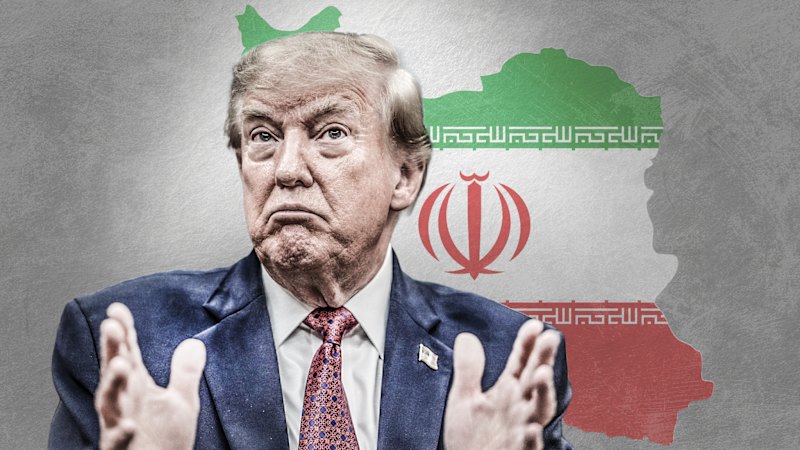
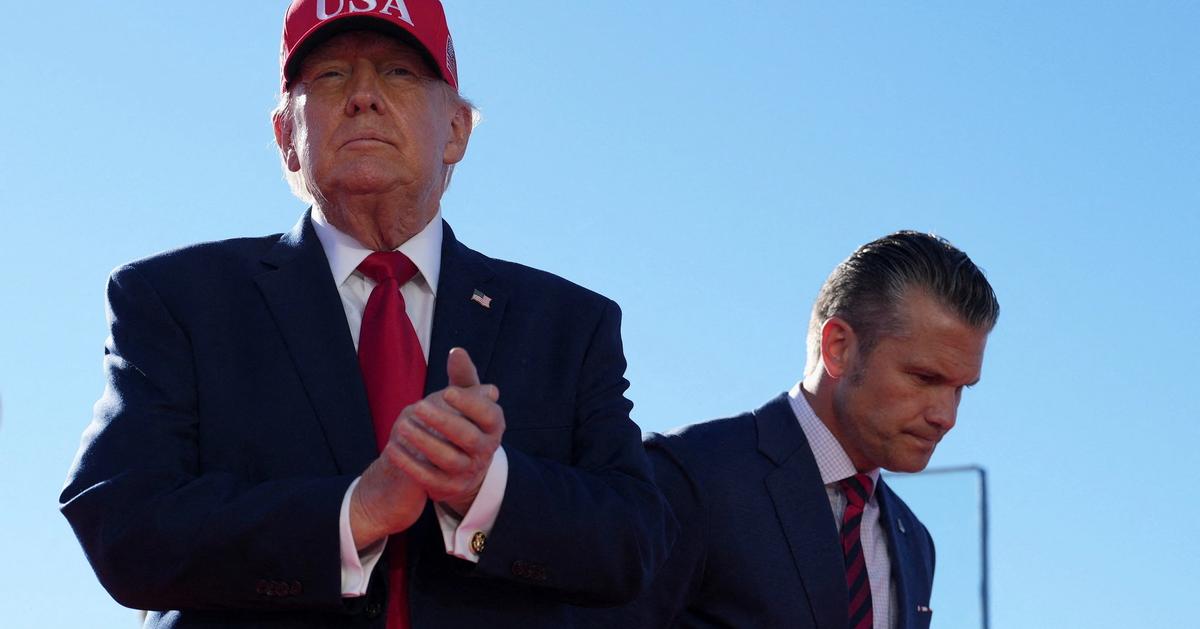
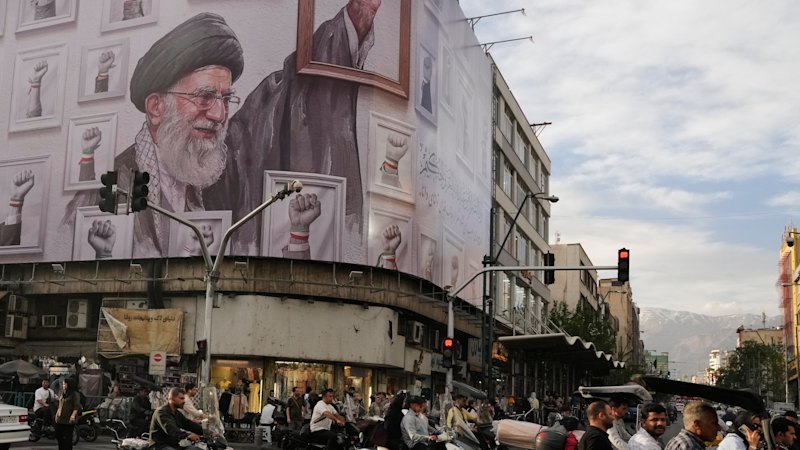
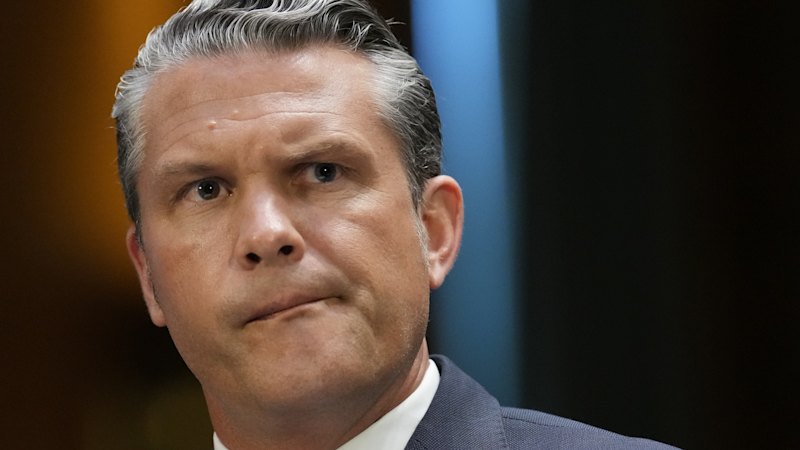
The public split last week between Vice President JD Vance and Defence Secretary Pete Hegseth over whether the conflict with Iran is a worthwhile expenditure of US resources and power is now permeating an urgent question: How does the Trump administration get out?
asserted
administration → permeate → question
The debate over the war inside the administration has hardly been a state secret since it started more than eight months ago.
asserted
it → start → administration
Vance privately expressed scepticism about a full-scale military operation; Hegseth, fresh from the capture of president Nicolás Maduro in Venezuela, was among the most gung-ho.
asserted
Hegseth → express → ho
Last Wednesday (Washington time), after the Republicans’ broad defeat in the midterm elections, Vance was unsparing: “The reason we lost is the war.”
asserted
we → lose → elections
He added: “If you’d like to argue it was worth it, that losing the Senate for the next six years was worth it, then do so.”
asserted
losing → add → years
Hegseth responded with a defiant, self-promoting video that seemed to be an argument for full-speed ahead.
asserted
that → respond → video
With the US military again massing a major force near Iran, Hegseth argued to “fight, fight, fight”.
asserted
Hegseth → mass → Iran
Now the US president must decide where he will come down as he weighs whether to launch a renewed attack in the coming days.
asserted
he → decide → days
Just as Donald Trump cited a jumble of objectives as the war began – collapsing the Iranian government, dismantling the remnants of its nuclear program, restricting the country’s missile arsenal and ending Iranian help to proxies in the region – he is struggling to articulate how much more the United States should expend in the deeply unpopular conflict.
asserted
States → cite → conflict
Last Wednesday, the president said it was “largely true” that Republicans lost badly in the midterms because the conflict had driven up petrol prices, as Vance said.
asserted
Vance → say → prices
But he added that he would make the same decision to go to war again.
asserted
he → add → war
“The Iran thing, we had to do,” he said, “and we continue to do it.”
asserted
we → have → it
Like presidents Harry S. Truman and Dwight D. Eisenhower in Korea, Lyndon B. Johnson and Richard Nixon in Vietnam, and the four presidents who tried to extract themselves from Iraq and Afghanistan, Trump is discovering that every escalation plan and every negotiating strategy is rife with trade-offs.
asserted
plan → try → offs
Tempting as it may be to declare victory and leave, history will assess whether he stopped the Iranian nuclear program or ended up bolstering Iran’s determination to obtain a weapon, and whether he eviscerated the hardline leadership or cemented it in place.
uncertain
he → declare → place
The choices are made all the more vexing for Trump by his new, lame-duck status.
asserted
choices → make → status
The Iranians will be calculating that he has been weakened; before the election, Congress had authorised no supplemental funds for a war the Pentagon conservatively estimates has already cost $US47 billion ($68 billion), not counting the hundreds of billions of dollars in higher gas and oil prices.
asserted
Pentagon → calculate → prices
They may be calculating that time is on their side.
uncertain
time → calculate → side
“The concern is that Trump will conclude that he is facing his worst nightmare for the next two years: going down in history as a loser,” said William F. Wechsler, senior director of the Atlantic Council’s Middle East programs and a former top Pentagon counterterrorism policy official.
asserted
Wechsler → conclude → programs
“The only way out of it, he may therefore conclude, is to win the war.
uncertain
he → conclude → war
That could lead to a decision to restart major combat operations, if not immediately, then in the months to come.”
uncertain
That → lead → months
Hegseth and General Dan Caine, chair of the Joint Chiefs of Staff, have presented the president with a menu of military options that Admiral Brad Cooper, commander of US Central Command, developed in recent months.
asserted
Cooper → present → months
It is unclear which way Trump will go: he has approved resuming a major campaign against Iran several times recently only to pull back from the operations just hours before they were to begin.
uncertain
they → go → operations
On Sunday (Washington time), Trump told CNN it was “highly unlikely” the US would have to renew strikes if negotiations were successful.
asserted
negotiations → tell → strikes
“They’re withering away financially,” he added.
asserted
he → wither → ?
“We’ve hit them militarily.
asserted
We → hit → them
We could finish them off.”
uncertain
We → finish → them
At the core of the problem, according to people engaged in the debate, is a fundamental issue: Trump and his aides still cannot agree on what they are trying to accomplish.
uncertain
they → accord → what
The most ambitious option that the US and Israeli militaries have developed calls for a short but intensive operation of several days the targets of which would probably include Iran’s energy infrastructure, nuclear facilities and missile and drone arsenals, according to several US officials who spoke on the condition of anonymity.
uncertain
who → develop → anonymity
But they stressed that they had no expectations that a few days of battle would collapse the government; for that, US officials are relying on continued economic pressure.
asserted
officials → stress → pressure
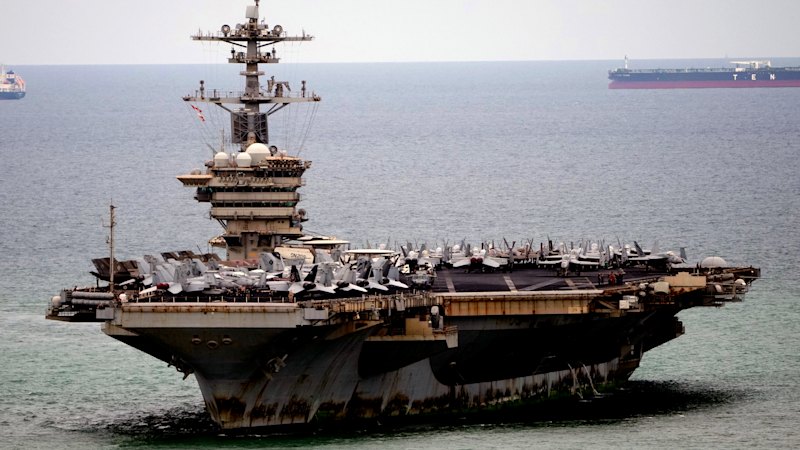
Any option that involves major combat operations would include strikes from attack planes aboard two aircraft carriers now in the region (a third carrier is expected in about two weeks); fighter jets at land bases in the Middle East, as well as US-based, long-range B-1 and B-2 bombers.
asserted
carrier → involve → East
In total, scores of fighters, bombers and other support planes would join the fight.
asserted
scores → join → fight
More than 50,000 troops in the region, Europe and the US are assigned to the overall Iran mission, as are more than a dozen warships.
asserted
warships → assign → mission
In recent weeks, the US and Israeli militaries have stepped up exercises, flying planes over Iraq to practise strike manoeuvres.
asserted
militaries → step → manoeuvres
The Pentagon and State Department have withdrawn personnel from bases and facilities in the region as a precautionary measure.
asserted
Pentagon → withdraw → measure
The US also recently delivered an additional Patriot anti-missile battery to Israel, military officials said.
asserted
officials → deliver → Israel
Trump has often spoken about targeting Pickaxe Mountain, the American name for a deeply buried nuclear site that Iranians call Kuh-e Kolang.
asserted
Iranians → speak → that
Trump has said he is considering using a 22,000-pound MOAB bomb, the largest non-nuclear weapon in the US arsenal, against the site.
asserted
he → say → site
But weapons specialists say the MOAB explodes above ground, producing a wide blast, and would probably not destroy an underground site such as Pickaxe, which is composed of granite.
asserted
which → say → granite
And it is far from clear that it is worth the effort: while Iran has reportedly stored many of the advanced centrifuges that could purify uranium, the nuclear material to manufacture a bomb is still untouched, under the rubble of a June 2025 attack.
uncertain
material → store → attack
A days-long campaign would inflict more damage on Iran’s already degraded missile and drone arsenal.
asserted
campaign → inflict → arsenal
…and 45 more, not listed.
 The Aporia