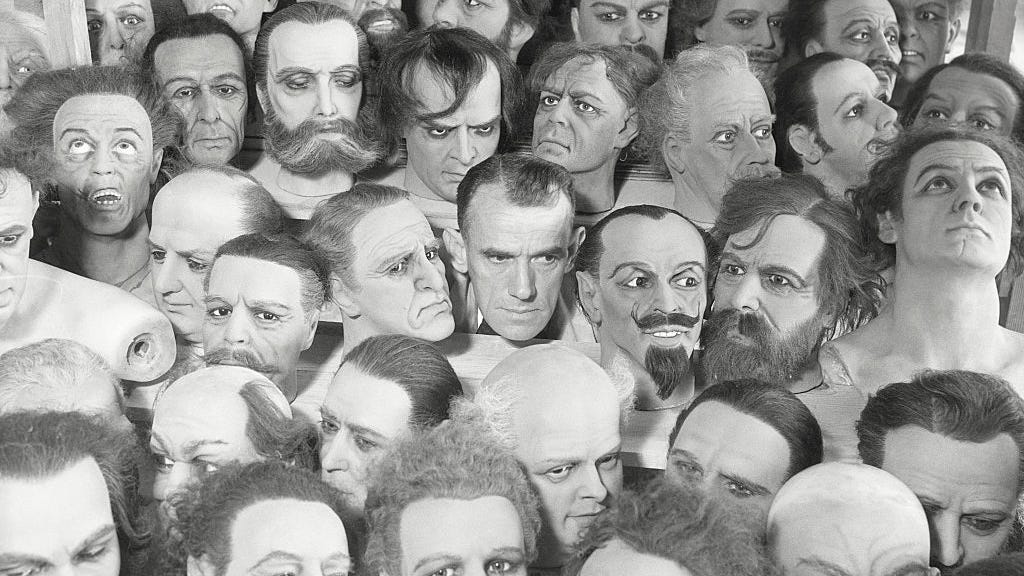
Photo via The Free Press

A 2,400-Year-Old Explanation for the Republican Midterm Disaster

Read the original at The Free Press ↗
Cite

Klavan, S. (2026, November 6). A 2,400-Year-Old Explanation for the Republican Midterm Disaster. The Free Press. https://www.thefp.com/p/a-2400-year-old-explanation-for-the-midterm-disaster

Dated from the outlet's own feed. Check the original for its byline.

The Free Press · collected 2026-11-06 · by Spencer Klavan

Quick Summary

This article uses Aristophanes's ancient Greek comedy "Clouds" to draw parallels between contemporary American politics and the historical context of Athens after its victory over Persia. The author argues that just as Athens lost its political momentum due to overreach and internal conflict, the Republican Party similarly faltered in recent midterms, with the article suggesting that both cases stem from leaders claiming virtue while engaging in self-serving behavior.
Written by AI on 2026-11-08, from this article's own text only (the story summary below draws on all the coverage).

AI analysis

Story summary

The Republican Party suffered significant losses in the recent midterm elections, a defeat that some view as both tragic and comical. To provide context, historian Spencer Klavan draws parallels between modern America and ancient Athens. In his analysis published on November 6, 2026, Klavan references Aristophanes's "Clouds" from around the late 5th century BCE, a period when Athens was transitioning from its golden age to decline following overreach in military conflicts, particularly the Peloponnesian War with Sparta. Similarly, he argues that post-World War II America’s cultural and political dominance has been undermined by internal partisan divisions and unnecessary military engagements, much like what befell ancient Athens.

Written for “Republican Midterm Disaster Explained” on 2026-11-09, grounded in this article and the 0 other(s) covering the same event.

Story

Republican Midterm Disaster Explained
Politics · 1 article(s) covering the same event.

Compared with similar articles

This article reads leans left and hedges 8% of its claims. Each row says how that neighbour differs.
Zeteo
Leans strongly left further left than this Hedges 0 of 13 claims
“The articles discuss different aspects of the Republican midterm elections outcome; Article A uses a historical perspective to comment on the events, while Article B directly reports and analyzes the election results.”
The Dispatch
Hedges 0 of 20 claims Outlet record 61/100
“The articles discuss different aspects of the Republican midterm election outcomes; Article A provides an historical perspective while Article B describes a podcast episode analyzing various factors.”
The Bulwark
Leans strongly left further left than this Hedges 9 of 64 claims
“Article A discusses the Republican performance and actions leading up to midterm elections, while Article B provides a historical perspective on the election's outcome using an ancient Greek comedy.”
Fox News
Leans right further right than this Hedges 2 of 61 claims Outlet record 67/100
“Article A discusses recent midterm elections and historical GOP performances, while Article B uses a Greek comedy as an analogy for current political events without referring to any specific occurrence.”
The Sydney Morning Herald
Leans left Hedges 3 of 38 claims Outlet record 61/100
“While both articles discuss the Republican Party's performance in the midterm elections, they describe different aspects and times of analysis.”
The Free Press
Hedges 0 of 6 claims Outlet record 97/100
“The articles discuss different times and contexts: Article A uses historical context to comment on recent Republican midterm losses, while Article B reports directly on the immediate aftermath of those elections.”
Washington Examiner
Leans left Hedges 1 of 5 claims Outlet record 68/100
“The articles discuss the midterm elections but focus on different aspects and do not describe the same specific incident or occurrence.”
The Guardian
Leans left Hedges 2 of 45 claims Outlet record 65/100
“Article A discusses Susan Collins's political downfall during a Democrat 'blue wave' election, while Article B provides a historical perspective on the Republican midterm disaster through ancient Greek comedy.”
How this article was measured signals, leaning charts, publisher record, byline, topics and claims

Signals How these are calculated →

Claims extracted
13
sentences that state something as happening or true
Uncertain
8%
1 of 13 hedged ("reportedly", "may", "according to")
Leaning
Leans left
of the writing, not the subject · beta estimate
Publisher signals
97/100
The Free Press's corrections and hedging, across everything collected from it. Not a measure of accuracy.
Outlets on this story
1
Politics
Same framing elsewhere
1
articles that frame the event the way this one does
Analyzed 2026-11-08 · how these are computed

How this is being covered How these are calculated →

Article leaning vs. publisher reliability
Source leaning vs. consistency

Publisher

The Free Press · 458 article(s) · 0 correction(s) detected
No corrections detected for this publisher. That may mean careful reporting, or simply that nothing has been checked.

Who wrote this

Spencer Klavan
4 article(s) here · 1 carrying a prediction
Depending on your perspective, the Republicans’ recent belly flop in the midterm elections might seem like a tragedy, a farce, or a bit of both.
It would be cruel to say that Michele is typecast, but she certainly brought her own obnoxious, try-hard energy to the role.
2026-10-30 · assertive framing · ‘Glee’ Was Better When It Was Mean
You may not have heard of Anne Carson before she was awarded the Nobel Prize in Literature on Thursday.
2026-10-09 · mixed framing · Anne Carson and the Beauty of the Unsaid
I think I can!’ she said”—and of course it’s The Little Engine That Could, the classic folktale made famous by Arnold “Watty Piper” Munk.
2026-08-27 · assertive framing · Dolly Parton Thought She Could, and She Did
Also by Spencer Klavan
‘Glee’ Was Better When It Was Mean
2026-10-30 · The Free Press
Anne Carson and the Beauty of the Unsaid
2026-10-09 · The Free Press
Dolly Parton Thought She Could, and She Did
2026-08-27 · The Free Press
Nothing else under this byline is closely related to this article, so these are simply their most recent.

Topics

America Athens Greek Peloponnesian War Republicans

Subjects

Athens GPE · 4× Aristophanes PERSON · 3× America GPE · 2× Greek NORP · 1× MAGA PERSON · 1× Persia GPE · 1× Republicans NORP · 1× Sparta GPE · 1× Turks NORP · 1× the Democratic Party ORG · 1×

Narrative

Just as America’s postwar energies largely dissipated into partisan infighting and foolhardy military expeditions, Athens found its golden-age glow quickly fading away as chronic overreach brought it into conflict with its rival Sparta in the disastrous Peloponnesian War.
framing: assertive · carried by 1 article(s) · first seen 2026-11-08
Depending on your perspective, the Republicans’ recent belly flop in the midterm elections might seem like a tragedy, a farce, or a bit of both.
2026-11-08 · The Free Press
A 2,400-Year-Old Explanation for the Republican Midterm Disaster · assertive framing

Claims (13 extracted, 1 hedged)

Depending on your perspective, the Republicans’ recent belly flop in the midterm elections might seem like a tragedy, a farce, or a bit of both. uncertain
flop → depend → both
Hysteria and ecstasy have been easy to come by. asserted
Hysteria → come → ?
Wisdom, it must be said, has not. asserted
it → say → ?
At moments like this, when panic and fanaticism reign in the present, I find it helpful to take a break from the fracas of the news feed and look for enduring insights from the past. asserted
it → reign → past
Right now, in particular, I’m getting a lot out of an ancient Greek comedy: Aristophanes’s Clouds. asserted
I → get → comedy
When Clouds was first produced in the late 5th century BCE, Athens was just beginning to lose its grip on the sprawling naval empire it gained in the wake of a stunning victory against Persia a generation before. asserted
it → produce → Persia
A little like America after the World Wars, Athens emerged from the Persian Wars as a freshly minted world leader, flush with cultural and political confidence. asserted
Athens → emerge → confidence
Just as America’s postwar energies largely dissipated into partisan infighting and foolhardy military expeditions, Athens found its golden-age glow quickly fading away as chronic overreach brought it into conflict with its rival Sparta in the disastrous Peloponnesian War. asserted
overreach → dissipate → War
All of this sets up Clouds to be remarkably informative about the question of how the MAGA movement, in just a few short years, ceded its extraordinary momentum to the young Turks of the Democratic Party. asserted
movement → set → Party
Let’s back up to set the scene. asserted
’s → let → scene
Clouds’ playwright, Aristophanes, had a long-standing feud with various Athenian political leaders—especially Cleon, a general in the ongoing Peloponnesian War and a blustering populist hawk (not entirely unlike Donald Trump in his later years). asserted
playwright → have → years
But Aristophanes was no revolutionary itching to tear down the system and bring on anarchy. asserted
Aristophanes → itch → anarchy
Rather, his plays bitterly savage Athens’s leaders not because they represent law and order, but because, in his view, they misrepresent it by thundering about virtue while indulging their own vices. asserted
they → savage → vices
Give feedback · no sign-in needed

No sign-in needed for now. Your note is sent without a name, so it cannot be answered.

History Support