Photo via ABC News (AU)

Australians urged to reconsider fast fashion as workers fight for better pay

Read the original at ABC News (AU) ↗
Cite

Wallen, S. (2026, November 6). Australians urged to reconsider fast fashion as workers fight for better pay. ABC News (AU). https://www.abc.net.au/news/2026-11-06/garment-workers-protest-bangladesh-australian-reaction/107343132

Dated from the outlet's own feed. Check the original for its byline.

ABC News (AU) · collected 2026-11-06 · by Scout Wallen

Quick Summary

Garment workers in Bangladesh have staged protests over working conditions and wages, resulting in injuries to both protesters and police. A human rights expert highlighted that global supply chains contribute to exploitative practices within the garment industry, with many workers struggling to earn a living wage. Australians are being encouraged to support clothing brands that demonstrate ethical supply chain practices, as part of a broader pushback against fast fashion's impact on worker rights globally.
Written by AI on 2026-11-06, from this article's own text only (the story summary below draws on all the coverage).

AI analysis

Story summary

Garment workers in Bangladesh have been protesting over their working conditions, particularly wages, leading to clashes with police. The protests have affected 4 million workers, who supply global brands like H&M and Zara. Over 80% of Bangladesh's export earnings come from the garment industry. Protests have resulted in dozens of injuries, including police officers. A human rights expert highlighted that global supply chains often exploit workers at the bottom, leading to this frustration. In response to the unrest, which shut down hundreds of factories, the government has formed a wage board to review the situation but has not yet announced any changes, delaying an expected decision until December. Australians are being urged to support clothing brands with ethical supply chain practices in light of these issues.

Written for “Australians Reconsider Fast Fashion” on 2026-11-06, grounded in this article and the 0 other(s) covering the same event.

Story

📰 Australians Reconsider Fast Fashion
World · 1 article(s) covering the same event.

Compared with similar articles

This article reads leans strongly left and hedges 11% of its claims. Each row says how that neighbour differs.
The Hindu
Hedges 2 of 17 claims Outlet record 78/100
“The articles describe related protests and concerns in Bangladesh's garment industry but occur on different dates, with Article A focusing on factory reopenings after closures due to wage demands while Article B discusses a broader call for ethical consumption based on ongoing worker protests.”
Al Jazeera
⚖️ Leans left further right than this Hedges 0 of 1 claims Outlet record 60/100
“While both articles discuss protests by Bangladeshi garment workers over low pay and working conditions, Article A reports on a specific clash with police in Dhaka, while Article B provides a broader overview of the situation including past weeks' actions.”
Al Jazeera
⚖️ Leans left further right than this Hedges 2 of 53 claims Outlet record 60/100
“The articles discuss related issues but describe different aspects: Article A focuses on the struggles and wages of individual garment workers, while Article B covers broader protests and calls for ethical supply chain practices.”
The Hindu
Hedges 0 of 29 claims Outlet record 78/100
“While both articles discuss garment worker protests in Bangladesh, Article B refers to the broader context and aftermath rather than reporting on the exact ongoing protests detailed in Article A.”
South China Morning Post
⚖️ Leans left further right than this Hedges 0 of 2 claims Outlet record 62/100
“While both articles describe protests by Bangladeshi garment workers over wages and working conditions, they refer to different time periods and levels of detail. Article A reports on a specific protest that took place on Monday with clashes and blocked highways, while Article B discusses a broader movement over the past week without specifying particular incidents.”
Dawn
⚖️ Leans left further right than this Hedges 2 of 21 claims Outlet record 72/100
“Article A describes a specific clash between garment workers and police on November 2nd, while Article B discusses a broader context of protests over several years culminating in recent actions, without specifying the same event.”
BBC News
⚖️ Leans left further right than this Hedges 3 of 21 claims Outlet record 66/100
“While both articles discuss protests in Bangladesh by garment workers demanding better wages and conditions, they describe different aspects or stages of a broader issue rather than the exact same incident.”
Al Jazeera
Hedges 2 of 15 claims Outlet record 60/100
“The articles describe protests by garment workers in Bangladesh over wages and working conditions but cover different aspects and timeframes, with one focusing on an announcement and ongoing protests while the other discusses a broader call to reconsider fast fashion.”
Times of India
⚖️ Leans left further right than this Hedges 1 of 17 claims Outlet record 59/100
“Article A describes violent protests and clashes in Bangladesh on specific dates, while Article B provides a broader context about Australians being urged to reconsider fast fashion due to ongoing worker issues in Bangladesh without specifying the same event.”
Dawn
⚖️ Leans left further right than this Hedges 2 of 23 claims Outlet record 72/100
“The articles describe wage protests by garment workers in Bangladesh but are reporting on different days of protest, with Article B specifying a fourth day whereas Article A is less precise about timing.”
How this article was measured signals, leaning charts, publisher record, byline, topics and claims

Signals How these are calculated →

Claims extracted
28
sentences that state something as happening or true
Uncertain
11%
3 of 28 hedged ("reportedly", "may", "according to")
Leaning
Leans strongly left
of the writing, not the subject · beta estimate
Publisher signals
67/100
ABC News (AU)'s corrections and hedging, across everything collected from it. Not a measure of accuracy.
Outlets on this story
1
World
Same framing elsewhere
1
articles that frame the event the way this one does
Analyzed 2026-11-06 · how these are computed

How this is being covered How these are calculated →

Article leaning vs. publisher reliability
Source leaning vs. consistency

Publisher

ABC News (AU) · 5066 article(s) · 11 correction(s) detected
Running correction rate · 11 correction(s)

Who wrote this

Scout Wallen
8 article(s) here · 1 carrying a prediction
🔮 The board reached an agreement yesterday regarding raising the minimum wage, but said it would not announce the result until December.
🔮 The ABC is considering legal action, but would need to work in conjunction with the intellectual property owner Ludo studios.
🔮 A student has told the ABC she hopes this will be a turning point for the university.
🔮 "Their concerns were not only that they wouldn't be believed, but that there may be retaliation from police in relation to other aspects of their life,"she said.
🔮 A strategic policy specialist says increased fuel storage in the regions could help mitigate supply risks.
🔮 "They're feeling the pressure of having many years throughout their adolescence, those real formative years, of being online, and are very aware that that might have skewed worldview and what's important and what's not important," she said.
🔮 In short: Researchers from Flinders University and the University of Melbourne have analysed thylacine skull structure They found their long, deep jaw would have been able to subdue small prey with powerful snapping bites.
2026-08-31 · assertive framing · Thylacine incomparable to any animal alive, study finds
🔮 The Labor opposition is concerned the review will make it significantly harder for workers to claim long-term compensation, including for psychological injuries and post-traumatic stress disorder.
Also by Scout Wallen
Nothing else under this byline is closely related to this article, so these are simply their most recent.
All 8 articles by Scout Wallen →

Topics

Australia Australians Bangladesh H&M Zara

Subjects

Bangladesh GPE · 6× Goldman PERSON · 4× Australia GPE · 3× Nolan PERSON · 2× Australians NORP · 1× Dhaka GPE · 1× Gap ORG · 1× H&M ORG · 1× University of New South Wales ORG · 1× Zara ORG · 1×

Narrative

"For those people who actually want to make sure that their purchases are ethical … throughout the supply chain, the workers in the factories are being paid the correct amount, they're being paid super, their rights are respected in terms of the hours that they keep, and that they have freedom of movement," he said.
framing: assertive · carried by 1 article(s) · first seen 2026-11-06
🔮 The board reached an agreement yesterday regarding raising the minimum wage, but said it would not announce the result until December.
2026-11-06 · ABC News (AU)
Australians urged to reconsider fast fashion as workers fight for better pay · assertive framing

Claims (28 extracted, 3 hedged)

In short: Garment workers in Bangladesh have protested over their working conditions, including wages. asserted
workers → protest → wages
A human rights expert said global supply chains created an exploitative apparel industry. What's next? Australians are being urged to support clothing brands that have proved their products come from an ethical supply chain. asserted
products → say → chain
Garment workers in Bangladesh have walked off the job in the past week in the pursuit of better wages and stronger working conditions. asserted
workers → walk → wages
It is the culmination of years of frustration, which human rights experts said was a consequence of global supply chains putting workers at the bottom of the pecking order. asserted
chains → say → order
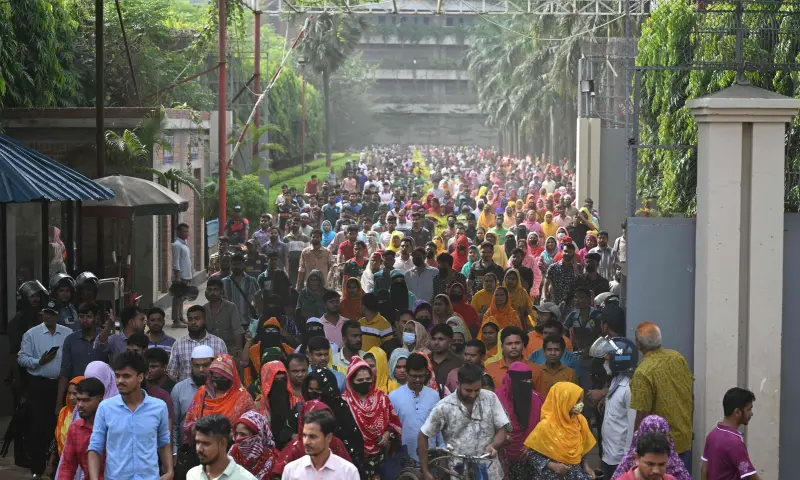
The garment industry employs about 4 million workers, supplies global brands such as H&M, Zara and Gap, and accounts for more than 80 per cent of the country's export earnings. asserted
industry → employ → earnings
What is happening in Bangladesh? asserted
What → happen → Bangladesh
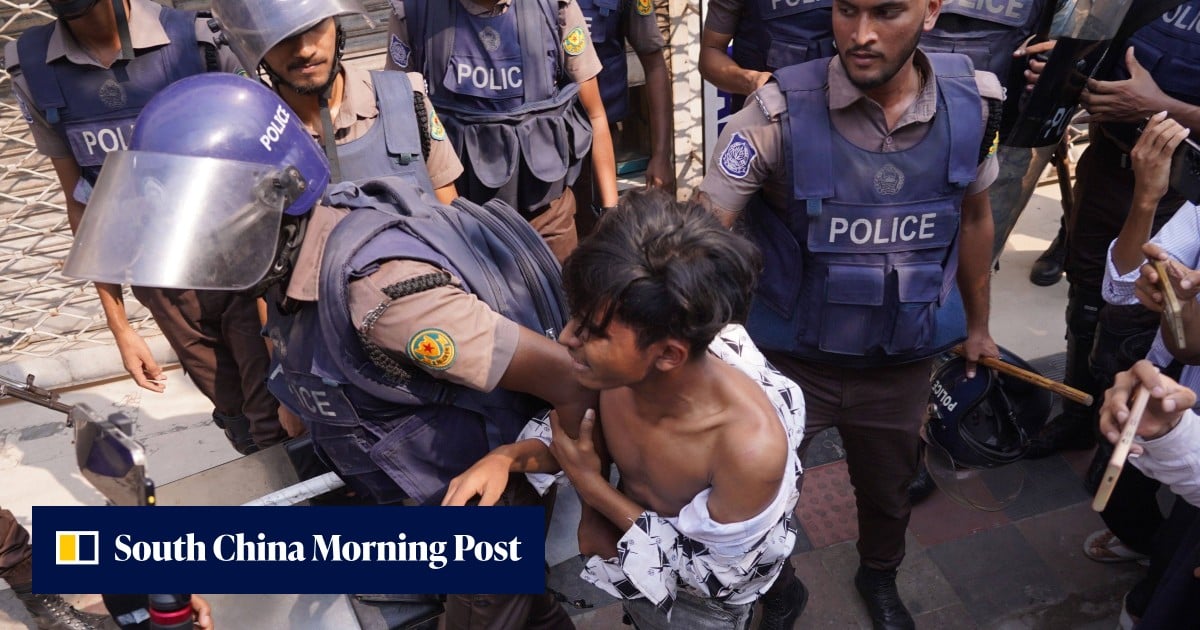
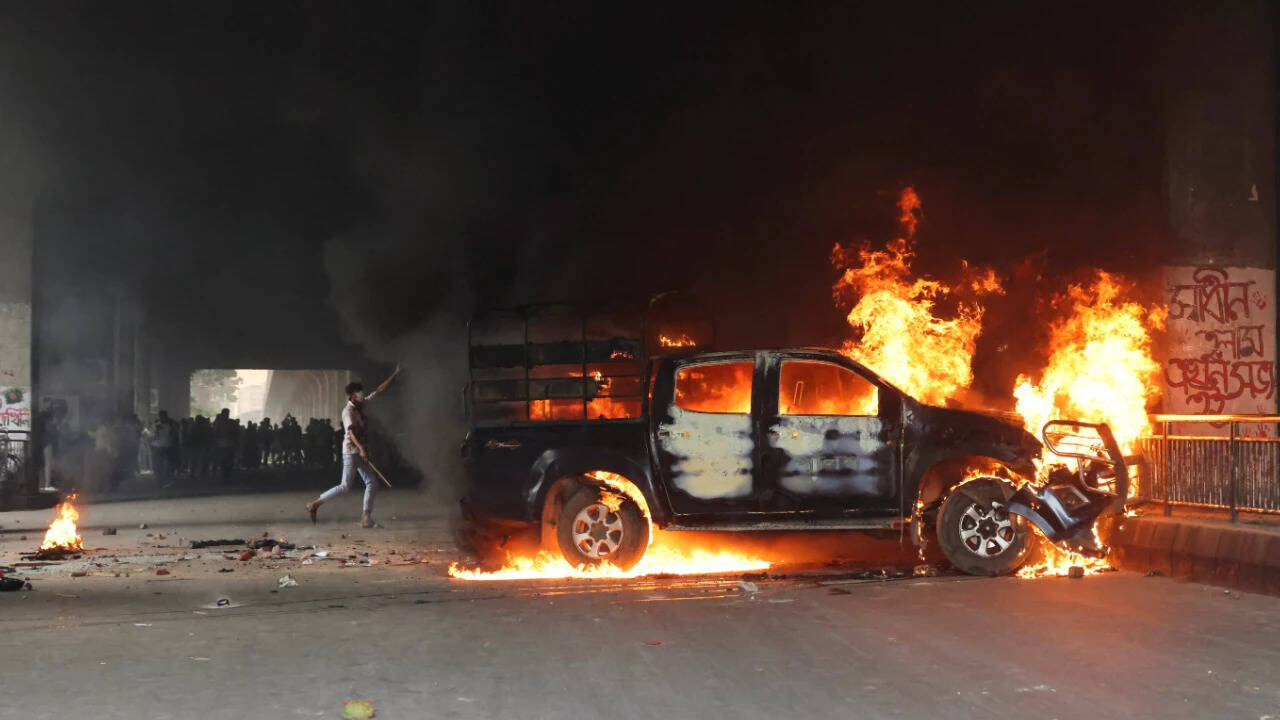
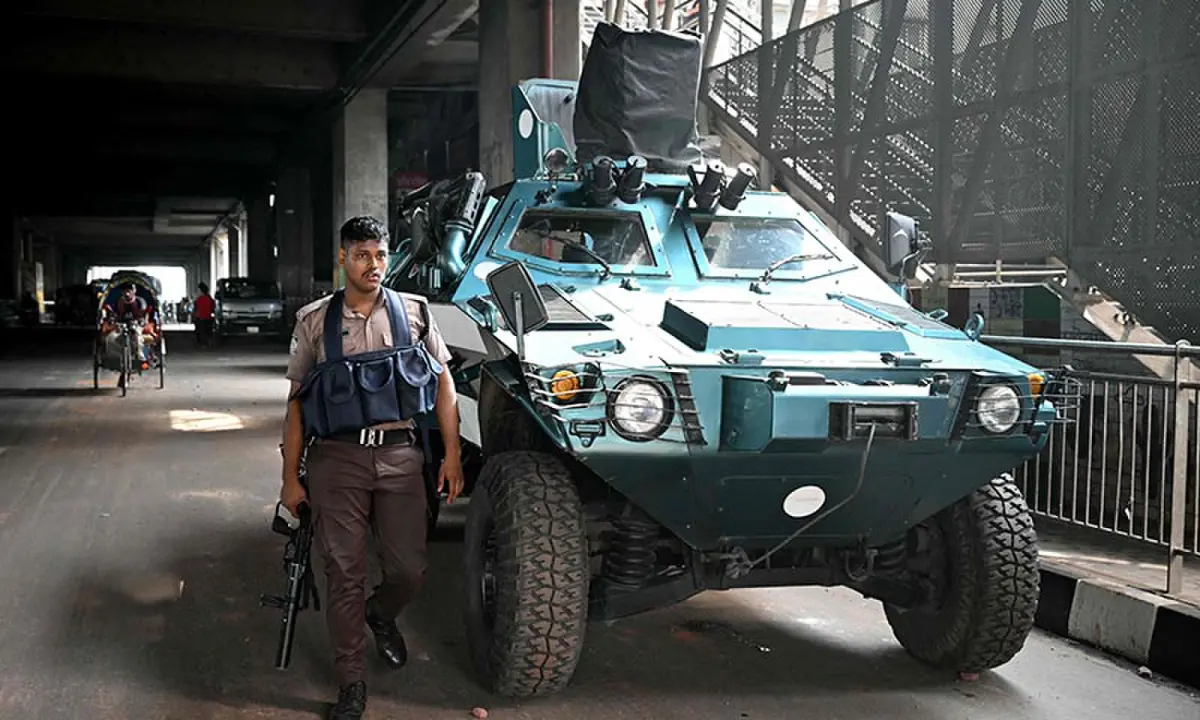
For several days, thousands of garment workers have protested and clashed with police across the capital, Dhaka. asserted
thousands → protest → capital
Dozens were injured during the civil action, including police officers who used tear gas and stun grenades to disperse the workers. asserted
who → injure → workers
In response to the unrest, which shut down hundreds of factories, the government formed a wage board to review pay in Bangladesh's garment sector. asserted
government → shut → sector
The board reached an agreement yesterday regarding raising the minimum wage, but said it would not announce the result until December. asserted
it → reach → December
But many workers were still unsure what the announcement meant. asserted
announcement → mean → what
University of New South Wales Australian Human Rights Institute director Professor Justine Nolan said the protests were the result of years of workers' rights being violated. asserted
protests → say → rights
"There's been real issues about the quality of working conditions in Bangladesh, including wage rates," she said. asserted
she → be → rates
"So they're at a point of desperation again, six, seven years later, basically saying, 'We again are desperate, we can't feed our families … we need people to look at this,'" Professor Nolan said. asserted
Nolan → say → this
In 2019, a worker was killed during similar protests in Bangladesh. asserted
worker → kill → Bangladesh
From factories to Australian stores Professor Nolan said global supply chains made these kinds of workers susceptible to human rights violations. asserted
kinds → say → violations
"It's really prone to contracting and subcontracting … so one factory might get an order, then subcontract that to 10 other factories," she said. uncertain
she → get → factories
She said this made it hard for brands to track their supply chains, and due to low price margins, brands were unlikely to build additional costs into their business models. asserted
brands → say → models
"The crunch is basically at the bottom of the supply chain, and where they shave margins off is the workers' wages, lack of overtime, lack of a decent living wage." asserted
wages → shave → wage
Ethical Clothing Australia national manager Arron Goldman said alarm bells should ring if an item was cheap. asserted
item → say → ?
"It's really important to recognise that if something is cheap on the shelf, someone's usually paying the price elsewhere and it's often most likely a vulnerable worker,"Mr Goldman said. asserted
Goldman → recognise → price
Worker exploitation in Australia Mr Goldman said even in Australia, apparel workers continued to be exploited. "[We] recovered around $926,000 in the last financial year from businesses that were underpaying workers, not giving them contracts or using the wrong contracts, not paying them super," he said. asserted
he → say → super
Mr Goldman said the introduction of the Modern Slavery Act in 2018 put a spotlight on local "precarious" practices. asserted
introduction → say → practices
"Particularly those who work from home, who often are a migrant cohort that might not know their rights and might also live in fear of speaking up," he said. uncertain
he → work → fear
How to know where to shop Mr Goldman said his organisation had an accreditation program in which it verified the ethical production chains of businesses. asserted
it → know → businesses
"For those people who actually want to make sure that their purchases are ethical … throughout the supply chain, the workers in the factories are being paid the correct amount, they're being paid super, their rights are respected in terms of the hours that they keep, and that they have freedom of movement," he said. asserted
he → want → movement
Professor Nolan said Australians could help by asking questions of the brands they purchased from, including where the product was from, where the factory was located, and whether they were looking beyond their direct supplier to lower rungs in the supply chain. uncertain
they → say → chain
"The more that we ask those questions, they're more likely to start to dig into that detail and then try and develop more of a relationship with the supplier," she said. asserted
she → ask → supplier

💬Give feedback · no sign-in needed

No sign-in needed for now. Your note is sent without a name, so it cannot be answered.

🕘History 🎫Support