The Aporia
Singh, R. (2026, November 1). Violent protests rock Bangladesh garment hubs as workers demand a steep pay hike. Times of India. https://timesofindia.indiatimes.com/world/south-asia/violent-protests-rock-bangladesh-garment-hubs-as-workers-demand-a-steep-pay-hike/articleshow/135422113.cms
Singh, Rajeev. “Violent protests rock Bangladesh garment hubs as workers demand a steep pay hike.” Times of India, 1 Nov. 2026, https://timesofindia.indiatimes.com/world/south-asia/violent-protests-rock-bangladesh-garment-hubs-as-workers-demand-a-steep-pay-hike/articleshow/135422113.cms.
Singh, Rajeev. “Violent protests rock Bangladesh garment hubs as workers demand a steep pay hike.” Times of India, November 1, 2026. https://timesofindia.indiatimes.com/world/south-asia/violent-protests-rock-bangladesh-garment-hubs-as-workers-demand-a-steep-pay-hike/articleshow/135422113.cms.
Dated from the outlet's own feed. Check the original for its byline.
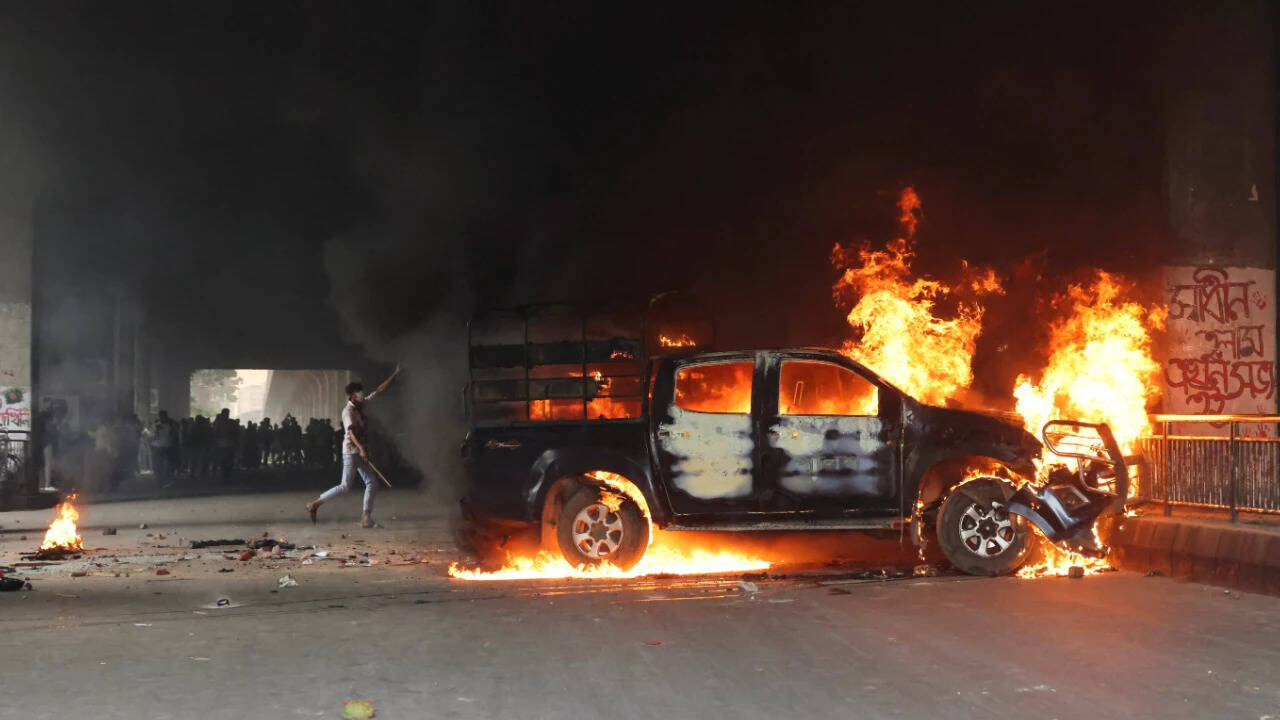
As of November 1, 2026, Bangladesh has formed a wage board to review the minimum wage for garment workers amid ongoing protests demanding higher wages. Despite the government's announcement, thousands of workers continued protesting in Dhaka and other industrial hubs, leading to clashes with police who used tear gas and sound grenades to disperse crowds. The protesters are demanding a monthly minimum wage of 30,000 taka ($242), more than double the current rate of 12,500 taka ($101). This demand is fueled by rising costs of living and comes as the government plans significant pay hikes for public sector employees. The garment industry in Bangladesh employs millions and generates a large portion of the country’s foreign earnings, making this dispute critical to the nation's economy.
Violent protests have erupted in Bangladesh's garment industry as workers demand a sharp increase in their minimum monthly wage from 12,500 taka to 30,000 taka.
Workers are demanding a monthly minimum wage of 30,000 taka, more than twice the existing minimum of 12,500 taka.
Their demand comes amid a recent government announcement of a new pay scale for public sector employees, which is expected to nearly double their salaries and benefits. Workers are seeking a comparable improvement in their earnings, arguing for a substantial increase in wages.
The dispute has put the spotlight on Bangladesh's ready-made garment (RMG) industry, which grew rapidly from the late 1970s and early 1980s to become the backbone of the country's export economy. The sector accounts for more than 80 per cent of Bangladesh's export earnings and employs around four million people.