Photo via freebeacon

‘Billionaire Tax’ Appears Defeated in California, But Soak-the-Rich Approach Gains Traction Elsewhere

Read the original at freebeacon ↗
Cite

Stoll, I. (2026, November 4). ‘Billionaire Tax’ Appears Defeated in California, But Soak-the-Rich Approach Gains Traction Elsewhere. freebeacon. https://freebeacon.com/democrats/billionaire-tax-appears-defeated-in-california-but-soak-the-rich-approach-gains-traction-elsewhere/

Dated from the outlet's own feed. Check the original for its byline.

freebeacon · collected 2026-11-06 · by Ira Stoll

Quick Summary

No summary of this article yet; the story summary below covers the event.

AI analysis

Story summary

On November 3, 2026, California voters decided against Proposition 40, which aimed to impose a one-time 5% tax on the net worth of individuals with assets over $1 billion. This measure was intended to raise funds for California’s Medicaid program but faced significant opposition from wealthy residents and influential figures like Democratic Governor Gavin Newsom. The proposal would have affected around 200 individuals, including sports team owners in cities like Inglewood. Despite support from economists Gabriel Zucman and Emmanuel Saez, the initiative was defeated, reflecting a broader voter sentiment against punitive taxation of the wealthy.

Written for “California Billionaire Tax Defeated” on 2026-11-06, grounded in this article and the 15 other(s) covering the same event.
Why this leaning score
The model judged this article politically coded and scored it -0.35, but 1 quote(s) could not be found in the article and the other 3 are attributed speech rather than the article's own narration, so the score is not published.
Written under an earlier scoring contract, which gave a paragraph rather than checkable quotes. Re-analysing this article replaces it.
Leaning score withheld for article 133371: no verified evidence · logged 2026-11-06

Story

📰 California Billionaire Tax Defeated
Politics · 16 article(s) covering the same event. Compare every outlet's account →

Compared with similar articles

This article reads unscored and hedges 30% of its claims. Each row says how that neighbour differs.
Washington Examiner
⚖️ Leans left Hedges 0 of 4 claims Outlet record 69/100
New York Post
⚖️ Leans right Hedges 4 of 22 claims Outlet record 66/100
New York Post
⚖️ Leans left Hedges 3 of 23 claims Outlet record 66/100
“The articles discuss different ballot measures: Article A covers Proposition 3, which locks in permanent tax rates on high earners to fund schools, while Article B refers to a separate initiative that would impose a one-time 5 percent tax on individuals and trusts with over $1 billion in assets.”
The Straits Times
⚖️ Leans left Hedges 3 of 31 claims Outlet record 66/100
“The articles discuss different stages of the same ballot measure's fate; Article A covers the initial vote tally showing a trailing measure while Article B discusses the final defeat and its implications.”
New York Post
⚖️ Leans strongly right Hedges 0 of 24 claims Outlet record 66/100
The Straits Times
⚖️ Leans left Hedges 3 of 31 claims Outlet record 66/100
The Guardian
⚖️ Leans strongly left Hedges 5 of 51 claims Outlet record 66/100
“The articles discuss different aspects of tax policies and attitudes towards billionaires, not a single specific incident.”
Daily Mail
Hedges 10 of 78 claims Outlet record 70/100
“While both articles discuss a 'Billionaire Tax' measure in California, Article A describes protests and demonstrations leading up to the vote, whereas Article B reports on the election results of the ballot initiative. They are related but describe different stages of the event.”
New York Post
⚖️ Leans strongly left Hedges 5 of 33 claims Outlet record 66/100
“The articles discuss different aspects of tax policies in California but do not describe the same specific incident or outcome.”
How this article was measured signals, leaning charts, publisher record, byline, topics and claims

Signals How these are calculated →

Claims extracted
23
sentences that state something as happening or true
Uncertain
30%
7 of 23 hedged ("reportedly", "may", "according to")
Leaning
withheld
no quote in the article backed the model's score
Publisher signals
95/100
freebeacon's corrections and hedging, across everything collected from it. Not a measure of accuracy.
Outlets on this story
16
Politics
Same framing elsewhere
1
articles that frame the event the way this one does
Analyzed 2026-11-06 · how these are computed

How this is being covered How these are calculated →

Article leaning vs. publisher reliability
Source leaning vs. consistency

Publisher

freebeacon · 20 article(s) · 0 correction(s) detected
No corrections detected for this publisher. That may mean careful reporting, or simply that nothing has been checked.

Who wrote this

Ira Stoll
3 article(s) here · 1 carrying a prediction
🔮 Would a genuinely "old school" class let a strike cancel learning for students?
🔮 Election results from a series of state ballot initiatives on tax issues suggest that the wave of Democratic victories may be more about gas prices and anti-Trump sentiment than any overwhelming voter enthusiasm for "tax the rich" policies.
🔮 Even readers who have followed the war closely may find themselves cheered to recall that during a few days in December 2024, after Bashar Assad’s Iran-allied regime in Syria was toppled, “Israel destroyed the major assets of the Syrian military: Chemical weapons, air-defense batteries, combat aircraft, helicopters, drones, the naval fleet, weapons stockpiles, production facilities, and even tanks.”
Also by Ira Stoll
Nothing else under this byline is closely related to this article, so these are simply their most recent.

Topics

California Democratic Democrats French U.C. Berkeley

Subjects

California GPE · 5× Democratic NORP · 2× Democrats NORP · 2× Zucman PERSON · 2× Dave Regan PERSON · 1× Emmanuel Saez PERSON · 1× French NORP · 1× Gabriel Zucman PERSON · 1× SEIU-United Healthcare Workers West ORG · 1× U.C. Berkeley ORG · 1×

Narrative

The Tax Foundation’s Jared Walczak summed it up in a blog post by observing, "The results on tax-related ballot measures lack the strong narrative of congressional results, but perhaps that is itself the takeaway: voters’ views on specific tax policies don’t seem to have changed much in recent years, even against a backdrop of significant partisan churn."
framing: mixed · carried by 1 article(s) · first seen 2026-11-06
🔮 Election results from a series of state ballot initiatives on tax issues suggest that the wave of Democratic victories may be more about gas prices and anti-Trump sentiment than any overwhelming voter enthusiasm for "tax the rich" policies.

Claims (23 extracted, 7 hedged)

Election results from a series of state ballot initiatives on tax issues suggest that the wave of Democratic victories may be more about gas prices and anti-Trump sentiment than any overwhelming voter enthusiasm for "tax the rich" policies. uncertain
wave → suggest → policies
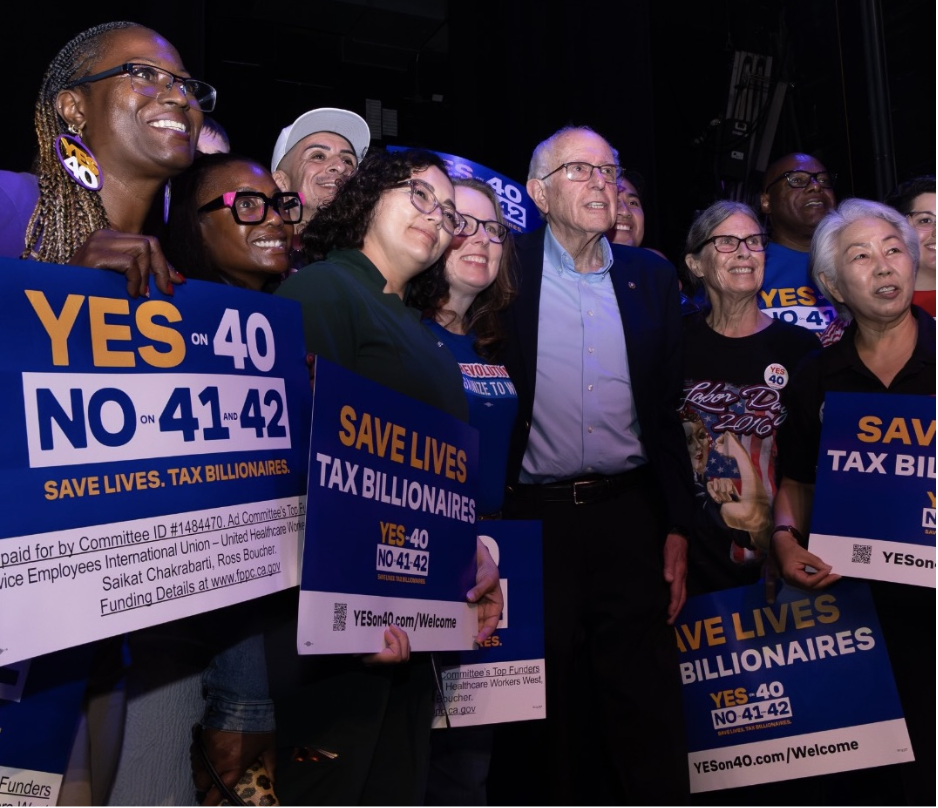
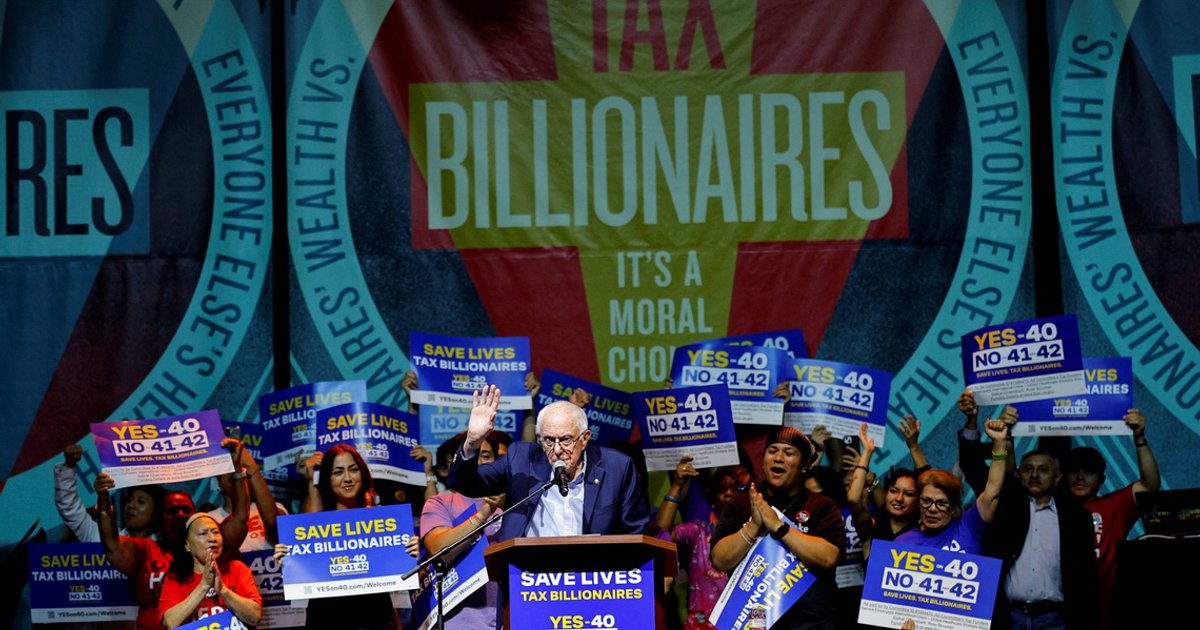
The center-ring tax ballot initiative of the election was a California measure that would have imposed a "one time"—yeah, right—5 percent tax on individuals and trusts with more than $1 billion in assets. asserted
that → impose → assets
Championed by French U.C. Berkeley economists Gabriel Zucman and Emmanuel Saez and by the president of SEIU-United Healthcare Workers West, Dave Regan, it was opposed by California-based tech billionaires, who spent hundreds of millions to defeat it. asserted
who → champion → it
Zucman conceded on Wednesday that the initiative had been defeated and said he would try to get it done nationally by an act of Congress. asserted
it → concede → Congress
"It’s now one of the best environments to pass a billionaire tax in Washington in decades," he said in a post on X, adding that Rep. Ro Khanna of California and Senator Bernie Sanders of Vermont had already introduced a national version of the tax. " asserted
Khanna → ’ → tax
Trump could veto it, but even so it could pave the way for a 2028 billionaire tax if the Democrats win back the White House. … uncertain
Democrats → veto → House
The battle between democracy and oligarchy is just beginning," Zucman said. asserted
Zucman → begin → democracy
A federal tax of that sort might face significant constitutional obstacles, however. uncertain
tax → face → obstacles
The California initiative, Proposition 40, was opposed by 55.6 percent of voters and favored by 44.4 percent, with 60 percent of votes counted in the Golden State’s glacially paced reporting system. asserted
initiative → oppose → system
A related measure, Proposition 42, that would amend the state constitution to ban such new taxes, was winning by a similar margin. asserted
that → amend → margin
It suggested that whatever resentment California voters harbor toward tech billionaires, they are also wary of any measures that would send more business and talent fleeing the state for lower-tax jurisdictions. uncertain
business → suggest → jurisdictions
The state already has an income tax with a top marginal rate of 13.3 percent. asserted
state → have → percent
"Not only was california’s wealth tax rejected by voters, the *concept* of the wealth tax was *banned* by voters. asserted
concept → reject → voters
eat shit, communists," commented Pirate Wires editor-in-chief Mike Solana, in a post that he subsequently walked back as possibly premature. uncertain
he → eat → that
"Voters were skeptical of claims it would be temporary and they were rightly worried this would drive wealthy Californians out of state," the Committee to Unleash Prosperity, a pro-growth research and advocacy group, wrote in its newsletter, in an item headlined, "Even in a Blue Wave Election, Voters Still Hate Taxes." uncertain
Voters → worry → Taxes
Democrats have tried to target the taxes at "the rich," attempting to capitalize on class resentments or envy and aiming to convince voters that the taxes will be paid by "the rich," not by the majority of people casting the votes. asserted
taxes → try → votes
In Washington State, a measure to repeal the millionaire tax was trailing, with 58.1 percent opposed to the repeal and 41.9 percent in favor, with 60 percent of votes in, according to the New York Times. uncertain
percent → repeal → Times
The state legislature and Democratic governor, Bob Ferguson, enacted a 9.9 percent tax on income and long-term capital gains above $1 million, which is scheduled to take effect January 1, 2028. asserted
which → enact → effect
In Colorado, a ballot measure, Amendment 87, to amend the state constitution and replace the current 4.4 percent flat tax with a top rate of 8.4 percent on those earning $1 million or more, was leading narrowly, 50.49 percent to 49.51 percent, with 76 percent of the votes counted. asserted
percent → amend → votes
Ballot measures in other states focused on property taxes. asserted
measures → focus → taxes
Florida voters approved what the Tax Foundation described as "a $250,000 homestead exemption for non-school property taxes." asserted
Foundation → approve → taxes
The Tax Foundation’s Jared Walczak summed it up in a blog post by observing, "The results on tax-related ballot measures lack the strong narrative of congressional results, but perhaps that is itself the takeaway: voters’ views on specific tax policies don’t seem to have changed much in recent years, even against a backdrop of significant partisan churn." asserted
views → sum → churn
Recent years have seen a series of high-profile departures by wealthy individuals from higher-tax states such as New York, Illinois, California, and Massachusetts to lower-tax states such as Texas, Nevada, and Florida. asserted
years → see → Texas

💬Give feedback · no sign-in needed

No sign-in needed for now. Your note is sent without a name, so it cannot be answered.

🕘History 🎫Support