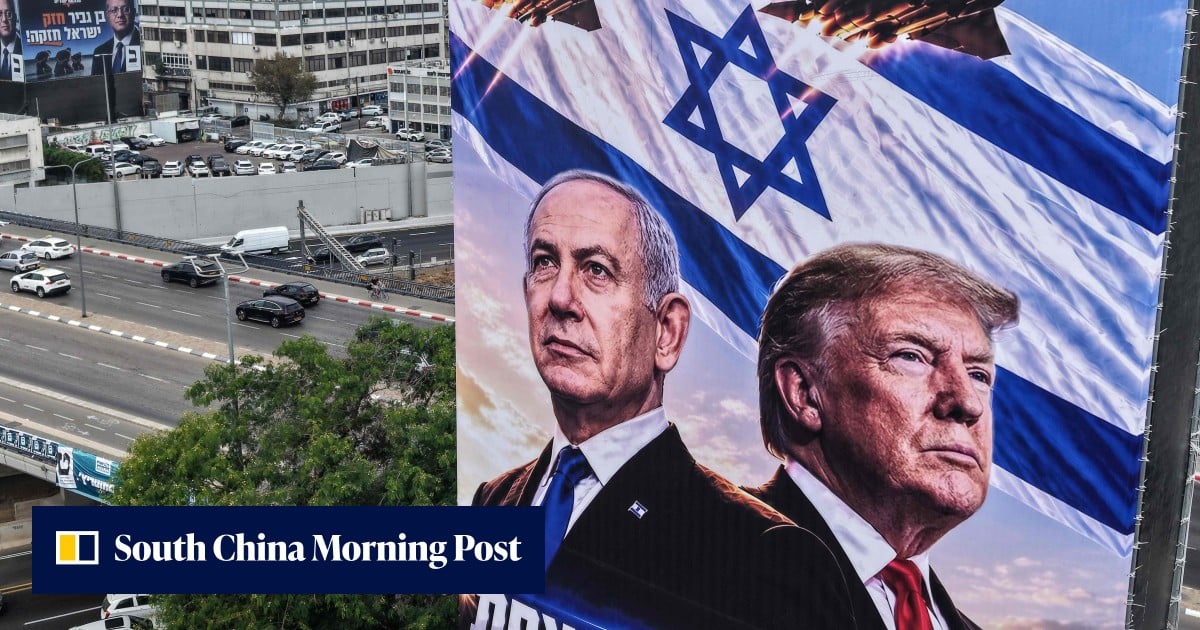
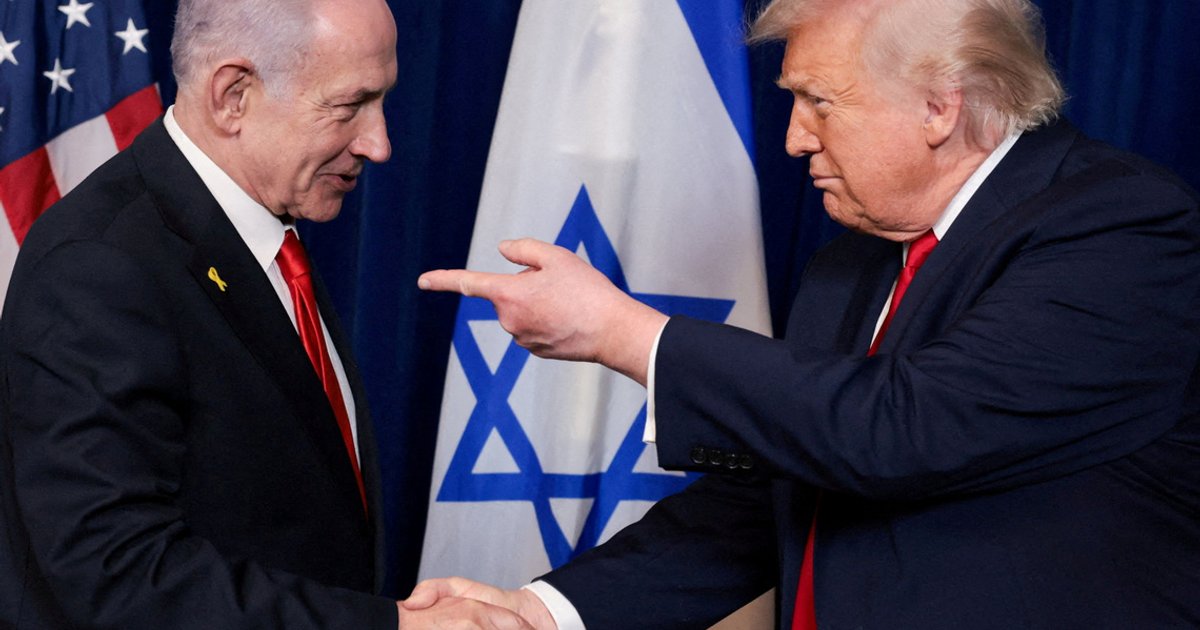
As the midterm votes trickled in on Tuesday and Democrats locked up majorities in both chambers of the United States Congress, Republicans began pointing fingers at the Trump administration’s increasingly unpopular foreign policies.
asserted
Republicans → trickle → policies
“The real reason we lost is obvious to almost everyone,” Vice President JD Vance said on X, blaming the war on Iran, which has triggered soaring fuel prices and a $47bn bill, for souring voters on the Republican Party.
asserted
which → lose → Party
Many, already appalled at US-funded Israeli genocide in Gaza and the occupation of southern Lebanon, also view the Trump administration as having been convinced to launch strikes on Iran on February 28 by Israel’s Benjamin Netanyahu government, which insisted without evidence that Iran was “close” to developing a nuclear weapon.
asserted
Iran → appal → weapon
Recommended Stories
list of 4 items- list 1 of 4Security officer killed in stabbing attack in Jordan’s capital
- list 2 of 4Workers strike across France, hundreds of thousands expected to protest
- list 3 of 4New Yorkers rally against gun violence after Ghanaian teen’s killing
- list 4 of 4Cristiano Ronaldo announces international retirement
asserted
Ronaldo → kill → retirement
An unnamed pollster, Vance said, had asked voters who had switched parties for this election what would bring them back.
asserted
what → say → them
Summing up the causes for their displeasure with Trump’s government, they said they wanted an end to the war on Iran, action on the cost of living, a return to “America First” and a fundamental change in Washington’s relationship with Israel.
asserted
they → sum → Israel
All of it, voters say, went directly against Trump’s campaign promises to end the US involvement in foreign wars and to bring down the cost of living.
asserted
voters → say → living
About six in 10 voters surveyed by The Associated Press said that going to war with Iran was the wrong decision.
asserted
going → survey → Iran
Even more called the cost of living key to their decision about how to vote in the midterm elections.
asserted
more → call → elections
“Voters may not have been thinking about the specific details of the conflict, but they connected the war with the rise of the cost of living in the United States, and punished Republicans for it,” Andrew Payne of the Chatham House think tank told Al Jazeera.
uncertain
Payne → think → Jazeera
Meanwhile in Detroit, Michigan’s Democratic senator-elect Abdul El-Sayed had called for an end to US military assistance to Israel, a position that experts say echoed the “America First” message on which many Republicans had won previous midterm races.
asserted
Republicans → call → races
He won his contest despite a vigorous campaign by the Republicans, and funded by the deep-pocketed, pro-Israel AIPAC lobby group.
asserted
He → win → group
Although El-Sayed’s campaign focused primarily on healthcare and the cost of living, it may have been anger towards Israel that propelled the first Muslim into the US Senate.
“We don’t want our money sent to do apartheid or genocide or war,” El-Sayed told supporters from the podium, where he also took a jab at Vance.
uncertain
he → focus → Vance
The two politicians sit at opposite ends of the political spectrum, but Vance’s diagnosis signals, at the very least, a rift in the Republican alliance with Netanyahu.
asserted
diagnosis → sit → Netanyahu
Payne said he believes a broader Republican realignment remains unlikely at this stage.
asserted
realignment → say → stage
But with Democrats winning so handily and criticism of Israel front and centre in some of their biggest swing-state upsets, he said that “the party could be emboldened to take an even tougher line moving forward.”
uncertain
party → win → line
“There are very few issues on which we’ll see such a stark partisan contrast, making it one of the most likely to cut through in the presidential campaign in 2028,” Payne said.
asserted
Payne → be → 2028
Where AIPAC lost ground
asserted
AIPAC → lose → ground
On Wednesday night, the American Israel Public Affairs Committee (AIPAC), the major US pro-Israel lobby which raises funds in support of pro-Israel political candidates, claimed more than “234 candidates” supported by its members had won their seats.
asserted
candidates → raise → seats
The group’s post on X congratulated Chuck Schumer and Hakeem Jeffries, the two Democratic leaders, as a swift reminder that it maintains support from both parties.
But the picture looks worse for AIPAC when measured by where its money went.
asserted
money → congratulate → AIPAC
A Responsible Statecraft report has found that AIPAC’s super PAC, United Democracy Project (UDP), and several other political committees spent $84.1m on races.
asserted
PAC → find → races
Of that, $55.3m went on races where their preferred candidate lost.
asserted
candidate → go → races
In 2022 and 2024, by comparison, 69 percent and 87 percent of UDP’s spending went to races where its preferred candidates won.
asserted
candidates → go → races
It was Abdul El-Sayed’s Michigan race that proved to be the Israeli lobby’s most expensive setback.
asserted
that → prove → ?
Responsible Statecraft put UDP’s spending on efforts to defeat El-Sayed at $31.47m across the primary and general election campaign periods.
asserted
Statecraft → put → periods
El-Sayed won both, and for Democrats weighing whether to challenge the party’s position on Israel, his victory establishes a strong precedent in which a candidate called for an end to military aid to Israel, withstood heavy outside donor spending and still won a statewide race in a swing state that Trump won in 2024.
asserted
Trump → win → 2024
Trump himself had already signalled that he understood the political cost.
asserted
he → signal → cost
On election day, he said Washington would end annual military aid to Israel after this year, taking away what he called a “bad talking point” for Democrats.
asserted
he → say → Democrats
The existing agreement provides for $3.8bn a year through September 2028.
asserted
agreement → exist → September
Trump offered few details about how he would bring an early end to the funding and said the US would keep selling Israel weapons, prompting scepticism from observers.
asserted
US → offer → observers
What, if anything, could change for Gaza now?
uncertain
What → change → Gaza
Once Democrats take control of both houses, they are likely to use committee hearings and investigations to probe what both the Biden and Trump administrations knew about how Israel was using US weapons in Gaza, and why weapon transfers continued amid allegations of grave violations of international law, experts told Al Jazeera.
asserted
experts → take → Jazeera
Lawmakers can also seek conditions for future military funding and force votes on individual sales.
asserted
Lawmakers → seek → sales
The appetite for such votes has grown over time.
asserted
appetite → grow → time
In January 2024, 11 senators backed an effort by Senator Bernie Sanders to require the US Department of State to report on Israel’s human rights record.
asserted
senators → back → record
A motion to advance a measure blocking a weapons sale drew 27 in July 2025.
asserted
motion → advance → July
In April this year, 40 senators voted to advance a measure opposing a sale of military bulldozers to Israel, and 36 backed a similar move on 1,000-pound bombs.
asserted
36 → vote → bombs
A Democratic majority could possibly tip the balance in favour of some sort of partial ban on weapons sales.
uncertain
majority → tip → sales
But Daniel Levy, president of the US/ Middle East Project (USMEP) and a former Israeli peace negotiator, told Al Jazeera that would likely be upended by Trump’s use of the presidential veto.
asserted
that → tell → veto
On Tuesday, Trump told Fox News he plans to use the veto to block “insane” Democratic policies in Congress.
asserted
he → tell → Congress
…and 19 more, not listed.
 The Aporia