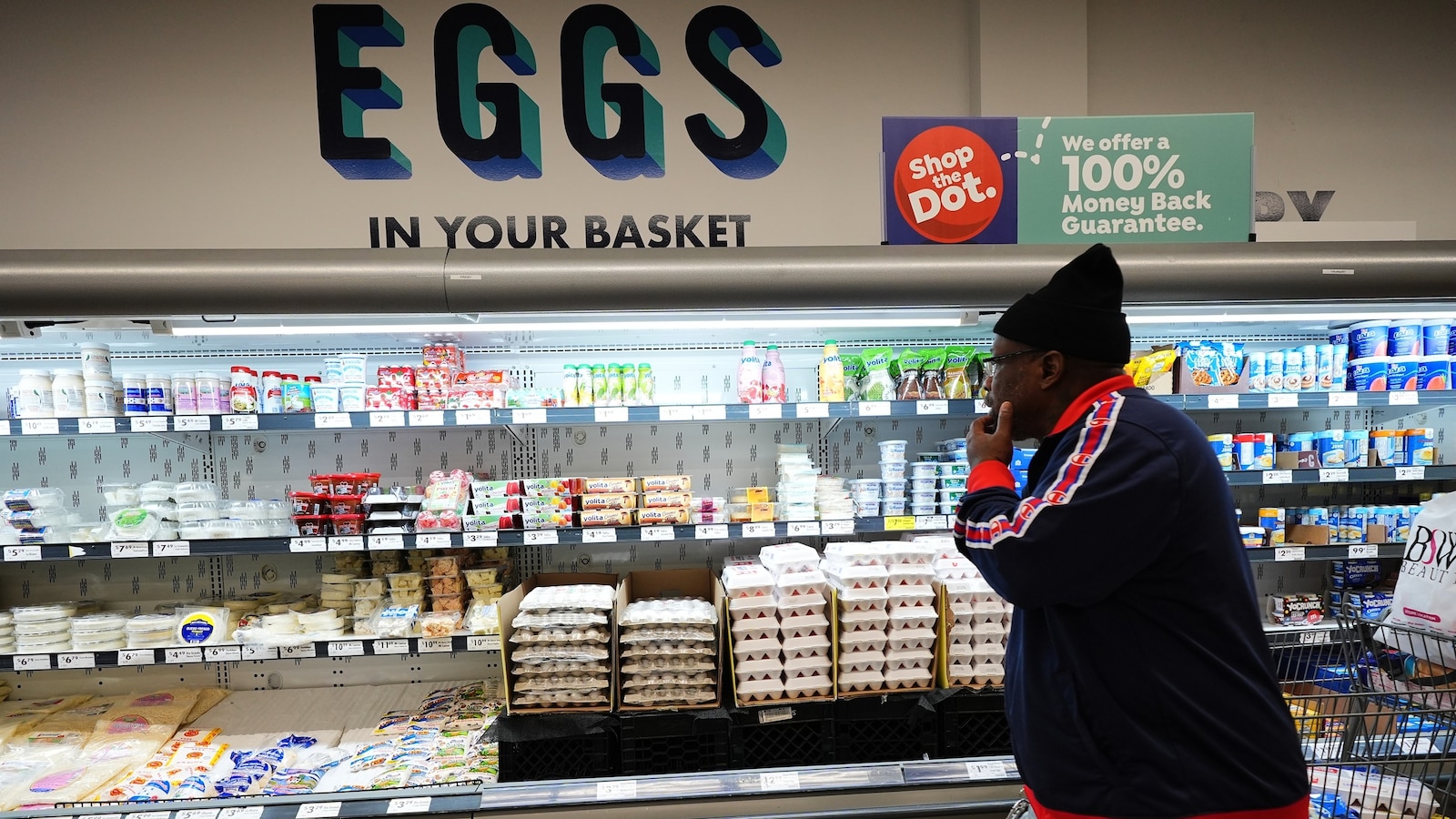
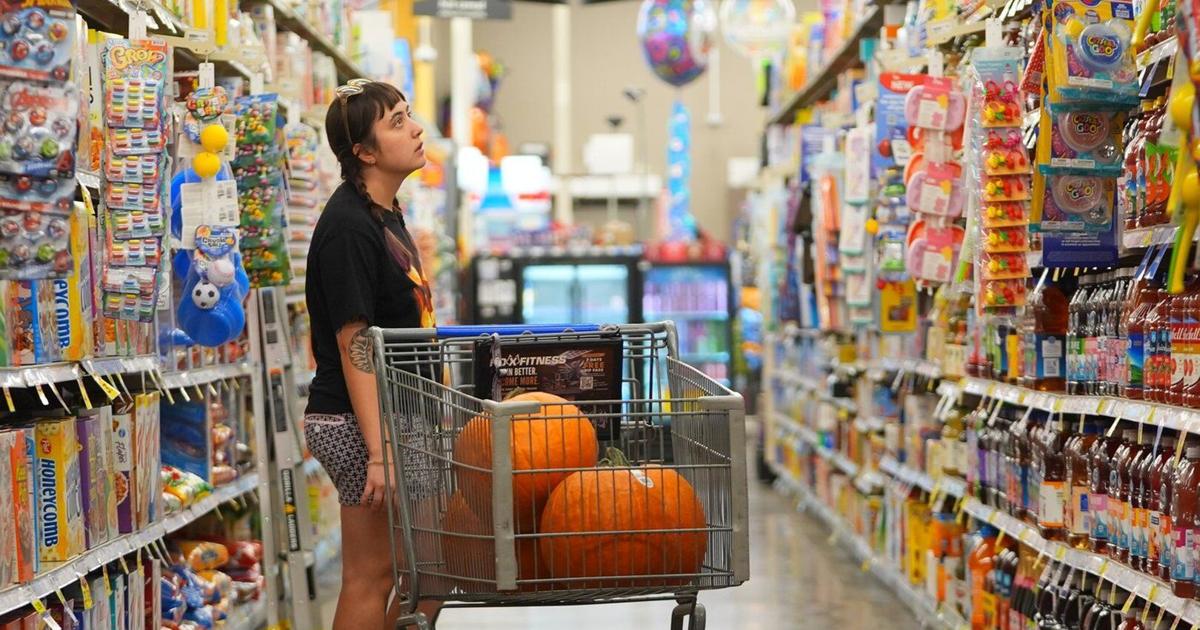
Photo via Toronto Star

Inflation, tariffs and a voter revolt: The midterm verdict on Trump's economy

Read the original at Toronto Star ↗
Cite

Boak, J. (2026, November 5). Inflation, tariffs and a voter revolt: The midterm verdict on Trump's economy. Toronto Star. https://www.thestar.com/news/world/united-states/inflation-tariffs-and-a-voter-revolt-the-midterm-verdict-on-trump-s-economy/article_4748b58a-a1de-5c3b-b593-4a7cac385a61.html

Dated from the outlet's own feed. Check the original for its byline.

Toronto Star · collected 2026-11-05 · by Josh Boak

Quick Summary

In Tuesday's midterm elections, President Donald Trump faced significant losses for Republicans in House, Senate, and gubernatorial races due to rising inflation. According to the AP Voter Poll, most voters blamed Trump’s policies, such as tariffs on foreign imports and the war with Iran, for driving up prices. Despite his claims that he had done a great job and that prices were coming down, two-thirds of voters said Trump's own actions fueled inflation more than Biden's policies. Democrats won due to voter concerns over cost-of-living increases and a desire for change from the status quo.
Written by AI on 2026-11-05, from this article's own text only (the story summary below draws on all the coverage).

AI analysis

Story summary

As of November 3, 2026, the U.S. midterm elections concluded with a decisive victory for the Democratic Party, which took control of both the House of Representatives and the Senate, stripping President Donald Trump's Republican party of their majorities in Congress. Democrats secured over 260 seats in the House and at least 56 seats in the Senate, marking a significant shift from previous expectations that they would only capture one chamber.

The elections were held amid rising concerns about affordability issues under Trump’s presidency, despite his reassurances to the contrary. Voter turnout was near-record high, with over 122 million ballots counted, reflecting widespread dissatisfaction among Americans with the state of the country and policies enacted during Trump's term.

Political analysts had initially predicted a challenging path for Democrats due to factors like voter fatigue and regional strongholds traditionally supporting Republicans. However, Democratic candidates performed exceptionally well across several previously Republican-held states such as Texas, South Carolina, and Kansas.

This outcome could significantly impact U.S. domestic policy over the next two years but may also escalate existing trade tensions and conflicts with global partners like China, given Trump’s continued hardline stance on foreign relations despite the new political landscape in Washington.

Written for “US Midterm Elections Results” on 2026-11-05, grounded in this article and the 721 other(s) covering the same event.
Why this leaning score
The article's own words the score was based on. Each is quoted verbatim and was checked against the article text before being stored, so you can find it in the original.
Reading Leans left (beta estimate) Confidence medium
Leaning: leans left for article 130771 (medium confidence, 3 verified quotes) · logged 2026-11-05

Story

📰 US Midterm Elections Results
Politics · 722 article(s) covering the same event. Compare every outlet's account →

Compared with similar articles

This article reads leans left and hedges 10% of its claims. Each row says how that neighbour differs.
Evening Standard
⚖️ Leans left Hedges 1 of 12 claims Outlet record 64/100
Toronto Star
⚖️ Leans left Hedges 3 of 52 claims Outlet record 64/100
Global News
⚖️ Leans strongly left further left than this Hedges 3 of 50 claims Outlet record 63/100
The Hindu
⚖️ Leans left Hedges 0 of 6 claims Outlet record 77/100
ABC News (US)
Hedges 13 of 74 claims Outlet record 67/100
“Article A discusses economists evaluating midterm candidates' proposals for fighting inflation, while Article B reports on the outcome of the midterm elections where voters punished Republicans due to high inflation. They describe different aspects and outcomes of events related to inflation but are not describing the same specific incident.”
Evening Standard
⚖️ Leans left Hedges 1 of 11 claims Outlet record 64/100
Washington Examiner
⚖️ Leans strongly left further left than this Hedges 9 of 36 claims Outlet record 69/100
The Straits Times
⚖️ Leans left Hedges 9 of 27 claims Outlet record 66/100
Semafor
⚖️ Leans right further right than this Hedges 2 of 20 claims Outlet record 59/100
“Article A discusses the economic context leading up to the midterm elections, while Article B reports on the results of the midterm elections and voter sentiment regarding Trump's economy.”
How this article was measured signals, leaning charts, publisher record, byline, topics and claims

Signals How these are calculated →

Claims extracted
49
sentences that state something as happening or true
Uncertain
10%
5 of 49 hedged ("reportedly", "may", "according to")
Leaning
Leans left
of the writing, not the subject · beta estimate
Publisher signals
64/100
Toronto Star's corrections and hedging, across everything collected from it. Not a measure of accuracy.
Outlets on this story
722
Politics
Same framing elsewhere
1
articles that frame the event the way this one does
Analyzed 2026-11-05 · how these are computed

How this is being covered How these are calculated →

Article leaning vs. publisher reliability
Source leaning vs. consistency

Publisher

Toronto Star · 11699 article(s) · 28 correction(s) detected
Running correction rate · 28 correction(s)
2026-10-26
Correction
2026-10-24
Correction
2026-10-07
Correction
2026-09-24
Correction

Who wrote this

Josh Boak
15 article(s) here · 1 carrying a prediction
🔮 Trump and Congress would likely need to work on a bipartisan basis, or simply keep the economy stable enough to allow the Federal Reserve to ratchet down inflation through its setting of interest rates.
🔮 Voters could see it clearly in their receipts from grocery stores and gasoline stations.
🔮 WASHINGTON (AP) — President Donald Trump would prefer that voters not worry about inflation.
🔮 Punching above their weight Bill Pulte has joined Trump for at least five legs of the midterm marathon so far, a sign that his status inside the administration is far higher than his title — director of the Federal Housing Finance Agency — would suggest. The scion of a homebuilding company, Pulte is a Trump pal who was for a brief period also the acting director of national intelligence and oversaw layoffs in that office.
🔮 PERRY, Ga. (AP) — President Donald Trump on Saturday announced that Audi will build an automobile plant in Georgia as he tries to deliver on his promise to bolster American manufacturing in the final days before the midterm elections.
🔮 President Donald Trump on Friday told a rally for candidates in South Florida that U.S. warships returning from the Middle East could stop over in Cuba on their way back from the Iran war, his latest suggestion of taking an interventionist approach to the nearby country.
🔮 In his inaugural address last year, the Republican pledged: “I will direct all members of my Cabinet to marshal the vast powers at their disposal to defeat what was record inflation and rapidly bring down costs and prices.”
🔮 The outcome will be decided in places like Dayton, which once sprouted factories because it led America in patents per capita.
🔮 Ohio Republican Party Chairman Alex Triantafilou recently told The Associated Press that he hoped Trump would visit his state, where he won by 11 percentage points in 2024.
🔮 The biggest policy announcement of the visit was modest: an agreement to extend by two months a trade truce that had been set to expire in November.
Also by Josh Boak
Nothing else under this byline is closely related to this article, so these are simply their most recent.
All 15 articles by Josh Boak →

Topics

Americans House Iran Republicans Senate

Subjects

Trump PERSON · 13× Americans NORP · 3× House ORG · 3× Congress ORG · 2× Democratic NORP · 2× Iran GPE · 2× Republicans NORP · 2× Senate ORG · 2× Donald Trump PERSON · 1× WASHINGTON GPE · 1×

Narrative

Voters have buyer’s remorse with Trump Democratic victories in Tuesday’s midterms signaled that most voters don’t believe the economy or Trump is working for them. Consumer prices are up 3.7% over the past 12 months, compared to an inflation rate of 3% when Trump began his second term.
framing: assertive · carried by 1 article(s) · first seen 2026-11-05
🔮 Trump and Congress would likely need to work on a bipartisan basis, or simply keep the economy stable enough to allow the Federal Reserve to ratchet down inflation through its setting of interest rates.

Claims (49 extracted, 5 hedged)

President Donald Trump was publicly humbled by inflation in Tuesday’s midterm elections, as rising prices provoked a blistering set of losses for Republicans in House, Senate and gubernatorial races. asserted
prices → humble → races
Most voters said that Trump’s own policies had smothered growth and drove costs even higher, according to The AP Voter Poll, a survey of roughly 100,000 midterm voters. uncertain
policies → say → voters
The president’s message that the fault lay with his predecessor, Democrat Joe Biden, didn’t land. asserted
fault → lie → predecessor
Americans saw prices start to climb with Trump’s chaotic rash of tariffs last year, and energy costs spiked after he launched a war with Iran in February. asserted
he → see → February
About two-thirds of voters said Trump’s own policies had fueled inflation. asserted
policies → say → inflation
By contrast, only about half of 2022 midterm voters said this about Biden’s policies, according to AP VoteCast. uncertain
half → say → VoteCast
Voters in states from California to Mississippi were broadly in agreement that Trump’s taxes on foreign imports have done more harm than good. asserted
taxes → do → harm
The election results matched what voters had been telling pollsters for months, but Trump had campaigned with a decidedly deaf ear. asserted
Trump → match → ear
“I’ve done a great job,” Trump said at one of his final midterm rallies in Iowa. asserted
Trump → do → Iowa
“Prices are coming way down.” asserted
Prices → come → ?
Voters have buyer’s remorse with Trump Democratic victories in Tuesday’s midterms signaled that most voters don’t believe the economy or Trump is working for them. Consumer prices are up 3.7% over the past 12 months, compared to an inflation rate of 3% when Trump began his second term. asserted
Trump → have → term
The president told reporters on Wednesday that the Iran war “drove the gasoline up a little bit short-term,” but he felt the choice to fight Iran was worth it because of its push for nuclear weapons. asserted
choice → tell → weapons
“If I had to do it again, I’d have to do it again,” he said. asserted
he → have → it
There is no guarantee that a House and Senate with a Democratic majority can fix an economy pestered by uncomfortably high inflation. asserted
House → be → inflation
Trump and Congress would likely need to work on a bipartisan basis, or simply keep the economy stable enough to allow the Federal Reserve to ratchet down inflation through its setting of interest rates. asserted
Reserve → need → rates
But voters did prefer Democrats to the status quo of a president who could govern with little to no congressional pushback from Republicans. uncertain
who → prefer → Republicans
About 9 in 10 voters said the cost of living was a “crucial” or “major” factor in their vote for Congress. asserted
cost → say → Congress
And about 6 in 10 of this group backed Democratic candidates in their local House races. asserted
10 → back → races
The economy is still growing, but AI is a source of fear instead of hope asserted
AI → grow → fear
The underlying economy is stronger than many Americans think, with the S&P 500 stock index up more than 10% so far this year and the unemployment rate at a healthy 4.2%. asserted
index → underlie → %
Investors greeted the news of Democratic wins as a positive with stocks up on Wednesday. asserted
stocks → greet → Wednesday
Still, the major driver of growth has been the buildout of artificial intelligence — a boom that Trump has actively stoked by refusing to codify more aggressive federal oversight. asserted
Trump → stoke → oversight
Voters don’t share Trump’s optimism about AI, which he has renamed “super intelligence” in federal documents. asserted
he → share → documents
Instead of buying the arguments that AI would increase productivity and accelerate growth, about 6 in 10 voters said AI will do more to hurt society. asserted
AI → buy → society
The technology could displace workers as jobs get automated or it could be a financial bubble that if popped could wreak havoc on retirement savings. uncertain
that → displace → savings
Despite the anxiety, only about one-quarter of voters said AI was a “crucial” factor. asserted
AI → say → voters
Wealth isn’t trickling down to the middle class Tech billionaires such as Meta’s Mark Zuckerberg, Nvidia’s Jensen Huang and Elon Musk have become frequent guests of Trump, attending state dinners or jetting aboard with the president. asserted
billionaires → trickle → president
But the growing concentration of wealth has been disconcerting for voters. asserted
concentration → grow → voters
Nationwide, about 7 in 10 voters said the economy favors the wealthy, while only about 3 in 10 said it’s fair to everyday Americans. asserted
it → say → Americans
The wealth gap has become so extreme that even a majority of voters with a 2025 household income of $300,000 or more in the tech-heavy state of California felt the economy was tilted toward the rich. asserted
economy → become → rich
Still, a slight majority of voters across the country had a “somewhat” or “very” favorable impression of capitalism, compared to about one-third who “strongly” or “somewhat” favor socialism. asserted
who → have → socialism
But the election suggested that voters believe the government should use its heft to help reduce the cost of healthcare. uncertain
government → suggest → healthcare
About 6 in 10 said they wanted the government to play a “bigger role” in addressing medical expenses. asserted
government → say → expenses
Most voters said Trump’s policies have made healthcare costs worse. asserted
costs → say → ?
Trump caught in a trap with voters How voters felt about the overall economy generally depended on the size of their paychecks. asserted
felt → catch → paychecks
While Trump campaigned on stats suggesting record low poverty, the working poor saw their own finances as crumbling. asserted
poor → campaign → finances
For those earning less than $50,000 a year, about 6 in 10 said they were worse off now than they were two years ago before Trump became president. asserted
Trump → earn → 50,000
People with higher incomes felt better about the economy, but that created a different problem for Trump. asserted
that → feel → Trump
Higher-income voters were more concerned about the state of American democracy, and voters focused on democracy overwhelmingly broke for Democrats. asserted
voters → focus → Democrats
Without congressional approval, Trump laid off thousands of federal workers, altered federal spending and imposed hundreds of billions of dollars in new tariffs that the Supreme Court earlier this year ruled were illegal. asserted
Court → lay → tariffs
…and 9 more, not listed.

💬Give feedback · no sign-in needed

No sign-in needed for now. Your note is sent without a name, so it cannot be answered.

🕘History 🎫Support