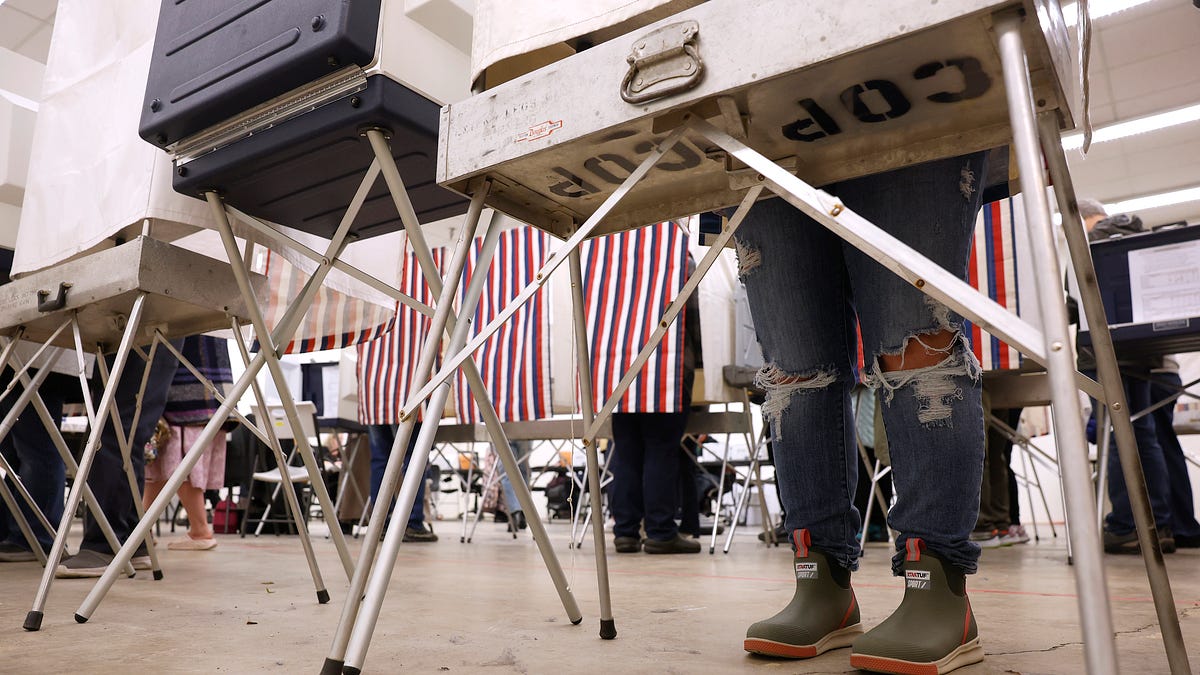
In this year’s midterm elections, I voted absentee from Prague, and I voted for the Democrats.
asserted
I → vote → Democrats
That is not a sentence I expected to write when I left for the United States some 20 years ago on a scholarship from the free-market Earhart Foundation.
asserted
I → expect → Foundation
Yet here I am, back in Prague in a self-imposed exile of sorts—in no small part because of what has become of the Republican and conservative politics I once looked up to.
asserted
I → impose → politics
I am far from the only European in America who has ended up worrying about the future of its democracy.
asserted
who → end → democracy
The political scientist Juan Linz spent his career asking why democracies collapse.
asserted
democracies → spend → career
His essay “The Perils of Presidentialism,” published in the very first issue of the Journal of Democracy in 1990, was decidedly out of sync with the optimism of that year.
asserted
essay → publish → year
Linz’s concern was that, in a presidential system, both the president and the legislature claim a direct mandate from the voters—a “dual democratic legitimacy.”
uncertain
president → claim → voters
What happens when the two collide?
asserted
two → happen → ?
The bar for impeachment and removal from office is high, and it ought to remedy “high crimes and misdemeanors,” not ordinary political conflict.
asserted
it → remedy → crimes
Without the possibility of an early election or a no-confidence vote, constitutions modeled after the United States lack an important release valve built into parliamentary systems.
asserted
constitutions → model → systems
This increases the risk of democratic breakdowns—self-coups, military takeovers, the hollowing out of unfriendly legislatures, and unresolved constitutional crises.
asserted
This → increase → legislatures
For Linz in 1990, the United States was an exception, which he credited to the loose, non-ideological nature of America’s parties, making bargaining across the aisle a routine part of governing.
asserted
bargaining → credit → governing
Today, those conditions are gone.
asserted
conditions → go → ?
As the legal scholar Miguel Schor observed, American presidentialism worked from the 1930s through the 1990s because its parties were moderate and willing to deal with each other.
asserted
parties → observe → other
Sixty-one percent disapprove of the president’s performance.
asserted
percent → disapprove → performance
A plurality say their vote for Congress is a vote against him.
asserted
vote → say → him
Democrats have taken a large majority in the House and have flipped the Senate, too.
asserted
Democrats → take → Senate
So what happens next?
asserted
what → happen → ?
The United States will soon have a Democratic House
asserted
States → have → ?
that will attempt to use the power of the purse to roll back Trump’s agenda and will likely try to impeach Trump as well as individual cabinet members.
asserted
that → attempt → Trump
Here’s the problem.
asserted
problem → ’ → ?
A president who retains the fervent loyalty of at least a third of the country—as Trump does—is not going to go quietly.
asserted
Trump → retain → country
He is bound to treat the new congressional majority as an illegitimate obstacle, keeping him from his work on behalf of “the people.
asserted
He → bind → people
For this reason, the flurry of executive orders and lawsuits that have characterized Trump’s second term is unlikely to give way to a more orderly form of governance over the next two years.
asserted
that → characterize → years
The president isn’t surrounded by figures who will restrain his worst impulses, or stand in his way, as Vice President Mike Pence did on January 6.
asserted
Pence → surround → January
Vice President Vance infamously argued back in 2021 that if the Supreme Court blocked a purge of the civil service, Trump should simply say: “The chief justice has made his ruling, now let him enforce it.”
asserted
him → argue → it
If Trump wants to do something and Congress votes to stop him, he may do it anyway—reprogramming money Congress refused to appropriate, ignoring subpoenas, and complying with court orders only selectively.
uncertain
Congress → want → orders
Some critics of Linz argued, fairly, that the problem with presidential systems is not inherent to their design, but rather a result of their disproportionate presence in countries with legacies of military rule.
asserted
problem → argue → rule
If that is the case, presidential systems would be expected to work much better in the United States than in, say, Latin American countries where military coup is a much greater threat.
asserted
coup → expect → countries
The bigger risk is that the system becomes unable to resolve political conflicts, resulting in a slow-burning, and possibly permanent, constitutional crisis.
uncertain
system → become → crisis
Poland, with its recent episode of unrest surrounding its Constitutional Tribunal, is a case in point.
asserted
Poland → surround → point
When it came to power in late 2015, the populist Law and Justice (PiS) government took many illiberal steps, including refusing to accept judges appointed to the Tribunal by its predecessor.
asserted
government → come → predecessor
Over the following years, it simply ignored the Tribunal’s rulings.
asserted
it → follow → rulings
The current government still does not recognize the Tribunal’s rulings, on the grounds that some of its judges were illegitimately seated.
asserted
some → recognize → judges
Meanwhile, the PiS-friendly president, Karol Nawrocki, agreed to swear in only two justices to the court’s six vacant seats.
asserted
president → agree → seats
There is no institutional way out of the impasse, and Poland now effectively has no judicial review of legislation.
asserted
Poland → be → legislation
The Latin American example should give us pause, too.
asserted
example → give → pause
In Argentina, as part of his effort to cut government spending, President Javier Milei responded to Congress’ overrides of his vetoes on disability benefits and university funding by… suspending them by decree.
asserted
Milei → cut → decree
Courts struck the suspensions down, but the government simply rewrote them.
asserted
government → strike → them
This shows that simply getting through the immediate post-election period is the easy part.
asserted
getting → show → period
…and 17 more, not listed.
 The Aporia