Hours before polls closed on Tuesday ahead of Republicans’ historic defeat, President Donald Trump shrugged off the impending wipeout by stating that he has so much power, it doesn’t matter what party controls Congress.
asserted
party → close → Congress
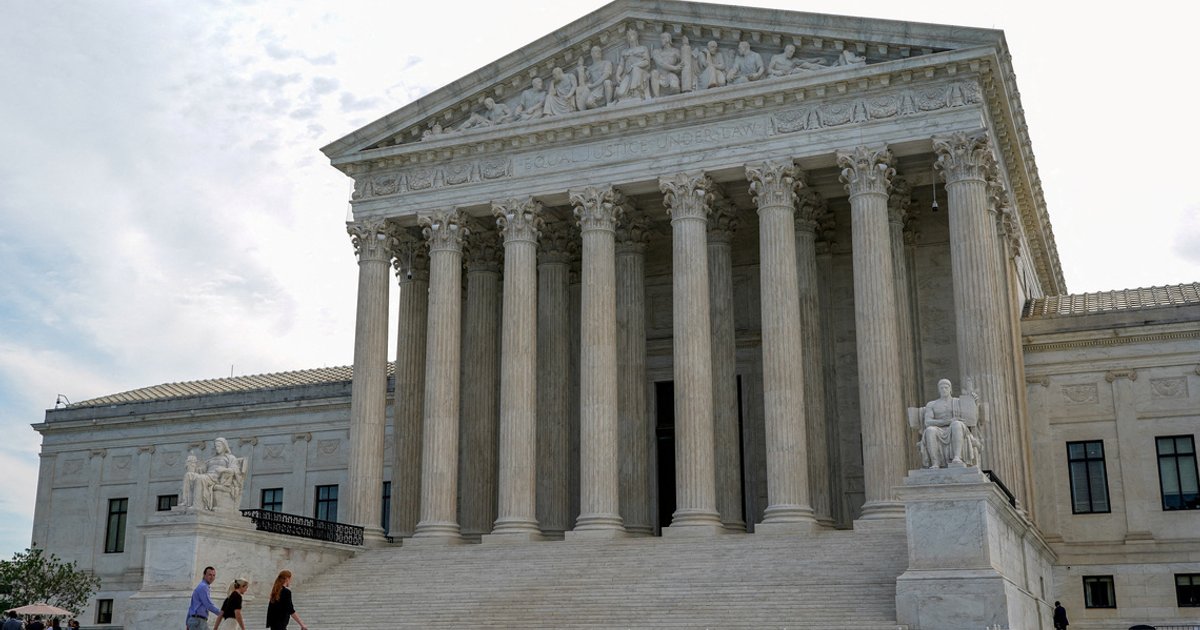
Trump bluntly named the source of his awesome authority: the Supreme Court.
asserted
Trump → name → authority
“We won the Slaughter case and the Slaughter case gives the president tremendous powers that it never had before,” Trump told CBS News, referring to the June decision by the court’s 6-3 Republican-appointed majority allowing him to control independent agencies.
asserted
him → win → agencies
He’s not wrong.
asserted
He → ’ → ?
In that case and others, the Supreme Court has shifted the balance between the branches of government, disempowering Congress while handing the president king-like powers.
asserted
Court → shift → powers
But yesterday’s elections were not just a rebuke of Trump; they were a rebuke of the system of politics that the Supreme Court has created.
asserted
Court → create → that
Voters’ anger over corruption not just about Trump’s ballooning bank accounts, but also at the vast sums of money warping our politics—like the half-billion Elon Musk spent to prop up Republicans this year.
asserted
Musk → balloon → Republicans
The Supreme Court created this reality not only through Citizens United and subsequent cases letting billionaires and industry spend unlimited sums in our elections, but through a lower-profile line of cases in which they made it almost impossible to prosecute corrupt officials.
asserted
it → create → officials
The fact that Black voters surged to rebuke Alabama Republicans’ attempt to gerrymander away their power was a rejection of this Supreme Court’s destruction of the 1965 Voting Rights Act and its endorsement of ruthless—and racist—gerrymandering.
asserted
voters → surge → gerrymandering
Many Democrats ran explicitly against the rigged political playing field this court created.
asserted
court → run → field
“To the super PACs and special interests who tried to beat us,” Democratic Senator-Elect Abdul El-Sayed said in his victory speech in Michigan Tuesday night, “we are coming for your system of politics.”
asserted
we → try → politics
The system the Supreme Court made.
asserted
Court → make → ?
With Democrats set to take control of both chambers of Congress by comfortable margins, the people will soon see the Supreme Court’s imperial presidency and the corruption it has wreaked in stark relief.
asserted
it → set → relief
For the first two years of Trump’s second term, the president claimed for himself powers reserved to Congress, including the power to spend money and appropriate funds, the power to levy tariffs, and the power to declare wars.
asserted
president → claim → wars
Because Congress was controlled by Republicans loyal to Trump, there was virtually no pushback.
asserted
Congress → control → Trump
But come January 3, the president will attempt to run the government in defiance of the will of a Democratic Congress, based on the powers the Supreme Court has given him, and relying on the same justices to assist him.
asserted
Court → come → him
His claims to executive privilege will run up against opposition lawmakers’ attempts to investigate his administration; his grasp on the agencies and how they administer their budgets may run up against Congress’ oversight responsibilities.
uncertain
they → run → responsibilities
In the courts, judges, and possibly the Supreme Court justices, will likely grapple with lawsuits a majority of Congress will be able to file against the executive.
uncertain
majority → grapple → executive
The situation will bring on a central battle over the future of our system of government: will we have rule by a lawless president, or rule by the people’s elected representatives?
asserted
we → bring → representatives
In two more years, the voters will choose which form of government they prefer.
asserted
they → choose → government
Trump is right that the Supreme Court has grown his powers, particularly in the last two years.
asserted
Court → grow → years
In the Slaughter opinion, penned by Chief Justice John Roberts, the court handed the president control of independent agencies by allowing him to remove their leaders without cause.
asserted
him → pen → cause
With the exception of the Federal Reserve, Trump can now control powerful agencies like the Federal Trade Commission and little known ones like the Merit Systems Protection Board, which was created after Watergate to insulate the civil service from political reprisal.
asserted
which → control → reprisal
Indeed, the Slaughter decision could open the door for presidents to fire any civil servant and replace them with unqualified loyalists, transforming the government from a body of experts into a nest of political schemers and nepo babies.
uncertain
presidents → open → schemers
The decision was the culmination of multiple Roberts opinions in which he has created the scaffolding for a powerful, unaccountable president, based not on the Constitution or the founding era but rather on disproven stories about the country’s early history and the intention of the founders.
asserted
he → create → founders
Slaughter is “embarrassingly thin, full of historical errors and cherry-picked sources,” Boston University law professor Jed Shugerman posted after the decision was handed down, “reverse engineered from unitary ideology.
asserted
decision → pick → ideology
He was referring to the idea of a unitary executive, an all-powerful president who controls every action of the executive branch.
asserted
who → refer → branch
It was cooked up by Republican lawyers in the 1980s who thought their party could control the White House but wouldn’t be able to secure Congress.
uncertain
party → cook → Congress
Roberts came up in the Reagan administration, where this theory was being developed, and as chief justice, he has turned it into the law of the land.
asserted
he → come → land
But it’s a weak theory based on historical inaccuracies and a misreading of the Constitution.
asserted
it → ’ → Constitution
As Trump has eagerly embodied this unitary executive, it’s clear that what the court has created is a presidency unbound by the laws.
asserted
created → embody → laws
This is most literally true in Trump v. United States, Roberts’ infamous decision giving presidents immunity from criminal prosecution.
asserted
This → give → prosecution
Shielded by the justices from accountability for criminal acts, Trump has broken laws on an unprecedented scale, from self-enrichment and taking bribes to ordering the murder of civilians at sea.
asserted
Trump → shield → sea
He’s contemplating mass pardons to insulate the executive branch, which would seal off not just the president but his cronies from the imperative to follow the law.
asserted
which → contemplate → law
Roberts’ opinion also gave Trump exclusive authority over investigations and prosecutions—even sham ones aimed at political persecution.
asserted
opinion → give → persecution
Trump has embraced this power by turning the Justice Department into a weapon against people he doesn’t like by manufacturing criminal indictments.
asserted
he → embrace → indictments
Finally, the court has welcomed the Trump administration’s emergency appeals and treated adverse ruling against the executive branch as a serious harm to the president, allowing many of his illegal policies to go forward even after lower courts found the actions likely unlawful.
asserted
actions → welcome → policies
“The presidency, our presidency, is considered a strong presidency,” Trump told CBS News on Tuesday.
asserted
Trump → consider → Tuesday
“You can do a lot.”
asserted
You → do → lot
But as much as the Roberts Court has given Trump—and may well yet let him get away with—Trump has also fallen short in seizing certain powers.
uncertain
Trump → give → powers
…and 5 more, not listed.
 The Aporia