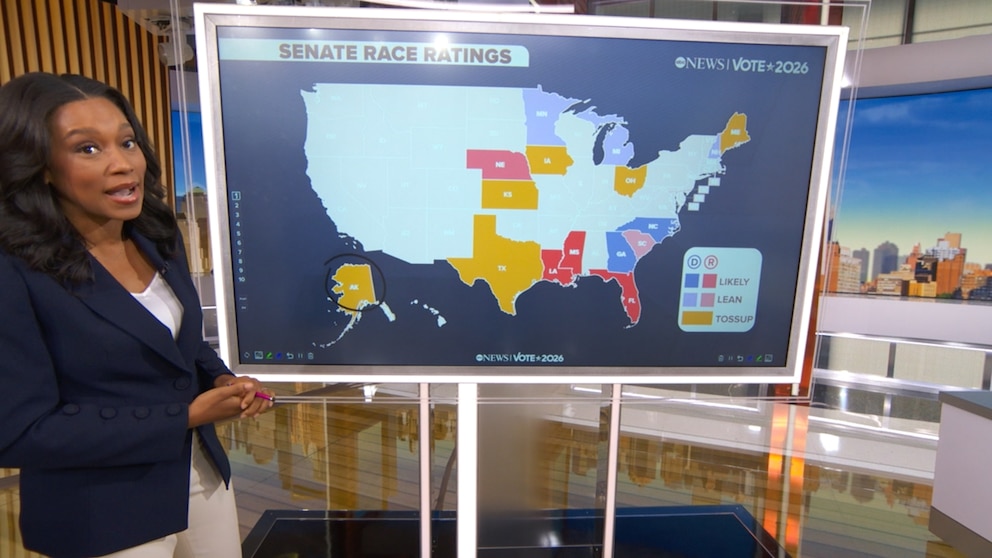
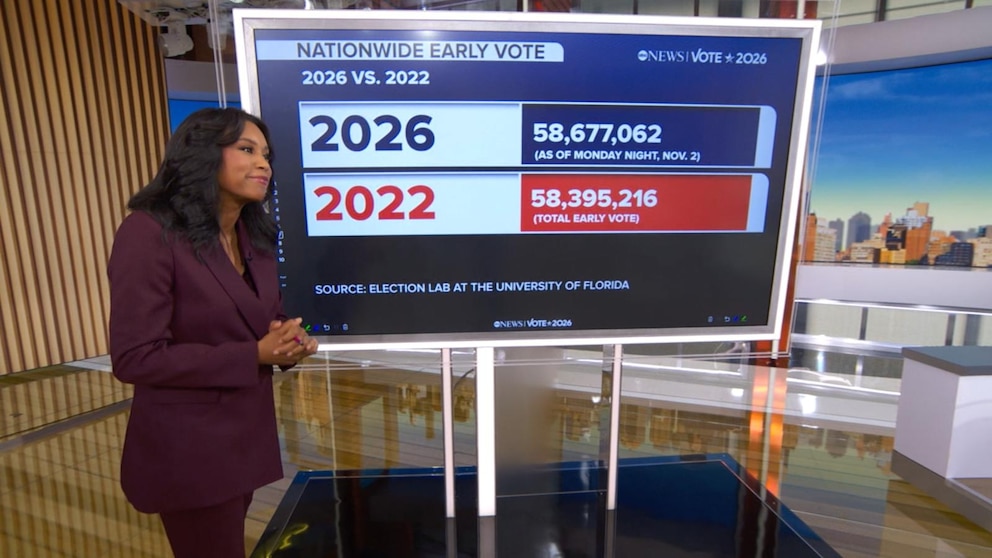
In a historic midterm election, Democrats swept both the House and Senate, riding a blue wave spurred by widespread voter discontent.
asserted
Democrats → sweep → discontent
The economy, government corruption, war in Iran and increasingly negative views of President Donald Trump's job performance created a perfect storm for Democrats to flip Senate seats in Republican stronghold states.
asserted
Democrats → create → states
At the time of publication, Democrats hold a 54-seat majority in the Senate and have secured 228 seats in the house.
asserted
Democrats → hold → house
The tossup Senate race in Alaska remains too close to call at this time.
asserted
race → remain → time
The Fox News Voter Poll surveyed more than 100,000 registered voters nationwide from Oct. 19 to Nov. 3, 2026, combining online and telephone interviews with in-person surveys of Election Day voters.
asserted
Poll → survey → voters
After the strong rightward shifts in the 2024 election, this year’s midterms marked a turn back to the left.
asserted
midterms → mark → left
The electorate remained divided by community type, gender, and education, a pattern that has become commonplace in recent elections.
asserted
that → remain → elections
Suburban and urban voters, women and Hispanics sided with Democrats, while rural voters, men and voters without a college degree favored Republicans.
asserted
voters → side → Republicans
Groups that helped power Trump’s 2024 win — namely rural, Hispanic, young, and independent voters — moved decidedly toward Democrats.
asserted
that → power → Democrats
A pivotal group in his win, rural voters backed Trump by 28 points in 2024.
asserted
voters → back → 2024
That advantage dropped by 10 points, to just 18 points in favor of Republican House candidates.
asserted
advantage → drop → candidates
Republicans underperformed among rural women.
asserted
Republicans → underperform → women
After Trump carried them by 21 points in 2024, Republican House candidates led among them by 8 points this year, an 13-point decline.
asserted
candidates → carry → decline
At the same time, suburban women marched firmly toward Democrats.
asserted
women → march → Democrats
Harris won them by a 14-point margin, and they broke for Democratic House candidates by 24 points.
asserted
they → win → points
That shift extended beyond community divides.
asserted
shift → extend → divides
Hispanic voters, who showed surprising support for Trump two years ago, backed Democratic House candidates by 27 points, after breaking for Harris by just 12 points.
asserted
who → show → points
This was driven largely by Hispanic men, who after narrowly voting for Harris by 2 points in 2024, sided with the Democrats by 15 points.
asserted
who → drive → points
Young voters also followed a similar pattern.
asserted
voters → follow → pattern
Often considered a reliable Democratic voting bloc, those under age 30 defied conventional wisdom and narrowly backed Harris by 4 points in 2024.
asserted
those → consider → 2024
Now, they backed Democratic House candidates by nearly 3-to-1.
asserted
they → back → 3
Young men made a complete reversal in their party preference, going from a 15-point margin for Trump to a 33-point margin for the Democratic House candidates, a 48-point swing.
Slightly more Democrats than Republicans backed their party’s House candidates.
asserted
Democrats → make → candidates
While there was a small amount of defection on the right, the bigger move came from the middle.
asserted
move → be → middle
Independents backed Democratic candidates by 22 points, a 16-point shift from 2024, when they backed Harris by just 6 points.
asserted
they → back → points
Within the Republican Party, the divide between MAGA and non-MAGA Republicans widened.
asserted
divide → widen → MAGA
A narrow majority of Republicans (54%) considered themselves MAGA, and they voted almost unanimously for Republican candidates (99%).
asserted
they → consider → candidates
Fewer non-MAGA Republicans stayed with their party (85%).
asserted
Republicans → stay → party
Beyond the demographic shifts, this was an election cycle marked by voter pessimism, economic frustration, and disillusionment with the Republican brand.
asserted
this → mark → brand
Voters cast their ballots with a bleak view of the country in their minds.
asserted
Voters → cast → minds
Three-quarters said they felt dissatisfied or angry about how things were going, while just a quarter were satisfied or enthusiastic.
asserted
quarter → say → ?
The anger divides along partisan lines: more than 6 in 10 Democrats were angry with how things were going, compared with 1 in 10 Republicans and more than a third of independents.
asserted
things → divide → independents
This is a reversal from the 2022 midterms, when roughly half of Republicans were angry, compared with 15% of Democrats and 27% of independents.
asserted
half → compare → independents
Frustration with the present extended into the future.
asserted
Frustration → extend → future
Half said they expected life for the next generation to be worse than life today, twice the share who expected it to be better.
asserted
it → say → life
Voters took those frustrations out on the president.
asserted
Voters → take → president
Trump’s job approval stood at 38%-62%, a net rating of -24, and that disapproval was intense.
asserted
disapproval → stand → -24
More than half strongly disapproved of his job performance, double the number who strongly approved.
asserted
who → disapprove → performance
More said they cast their House vote to express opposition to him than to support him, nearly a 3-to-1 margin.
asserted
they → say → him
Part of that opposition came from a sense that Trump did not understand what voters were going through.
asserted
voters → come → what
More voters said Trump prioritized his own personal interests than the country’s.
asserted
Trump → say → country
…and 84 more, not listed.
 The Aporia