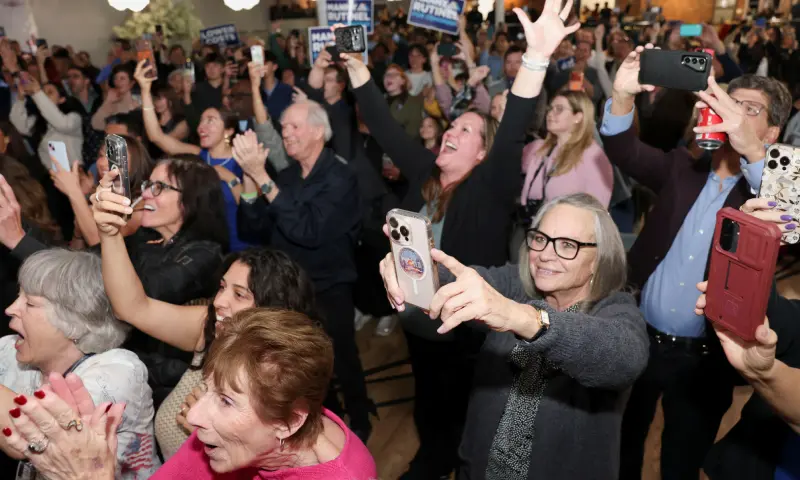
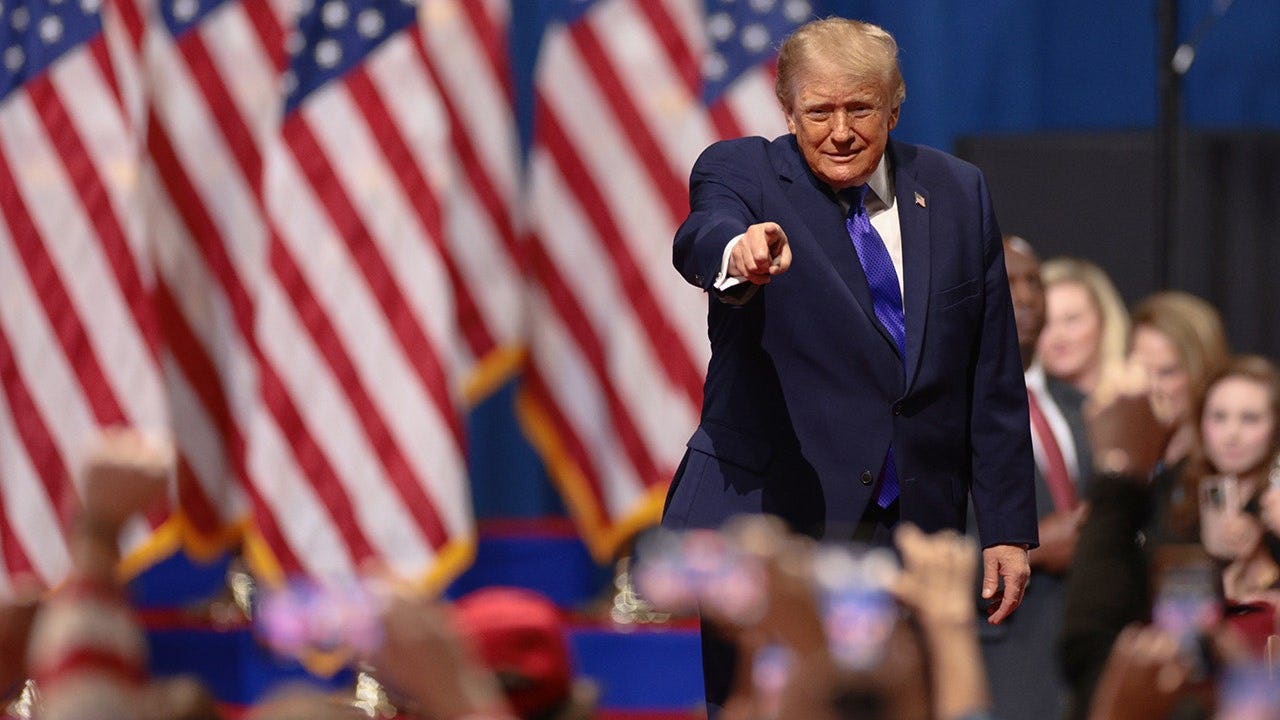
For the millions who cast their ballots in the US midterm elections, one issue ranked above all others: the economy.
asserted
issue → cast → others
So what does the Democrats' stunning capture of both the US Senate and House of Representatives mean for the economy and economic policy, given that President Donald Trump still has two years of his term to go?
asserted
Trump → mean → term
Initial market reaction has been muted but trending negative.
asserted
reaction → trend → ?
Global stocks fell slightly, while the dollar followed suit.
asserted
dollar → fall → suit
With Democrats now holding comfortable majorities in both houses of Congress and Trump still in the White House, it could lead to gridlock in Washington.
uncertain
it → hold → Washington
Trump has already said he would become "Mr Veto," meaning he would block any legislation the Democrats advance.
asserted
Democrats → say → legislation
"The magnitude of the gains for the Democrats in the midterms does not change too much for the near-term policy outlook, given the party still lacks a filibuster-proof majority in the Senate and President Trump has veto power to block legislation," Stephen Brown, chief North America economist with Capital Economics, said in a note.
asserted
Brown → change → note
"I think we are looking at two years of complete 100% gridlock," Jacob Funk Kirkegaard, nonresident senior fellow with the Peterson Institute for International Economics, told DW after the results came in.
asserted
results → think → DW
"Nothing will get done of any kind."
asserted
Nothing → do → kind
Some investors appear worried that the Democrats could force through AI regulation, especially if they also win the White House in 2028.
uncertain
they → appear → 2028
Rising opposition among large majorities of the US population to data centers — the key infrastructure behind AI — helped secure victories for many Democratic candidates.
asserted
opposition → rise → candidates
Kirkegaard, who is also a senior fellow at Bruegel, a European economics think tank, said the vote showed the extent of that opposition.
asserted
vote → say → opposition
Even if the Democrats can't force regulation, he thinks local opposition will make it harder for data centers to be built, which could hit the valuation of big tech firms that have benefitted from the AI boom.
uncertain
that → force → boom
"This election shows that the political underpinning of the rapid, aggressive AI growth story is shaky," he said.
asserted
he → show → story
"It doesn't mean it's going to stop or be made illegal, but the dynamic of the growth story has shifted."
asserted
dynamic → mean → story
If the Democrats were to win the presidency in 2028, Brown said, they would be perfectly placed to make major policy changes.
asserted
they → win → changes
"That includes the potential for tax hikes on corporations and high-income individuals as well as regulation that could delay the AI rollout," he said.
uncertain
he → include → rollout
According to polling conducted in early October by the Pew Research Center, 56% of Americans say Trump's tariff policies will have mostly negative impacts on the country, with only 20% saying mostly positive.
uncertain
% → accord → positive
That sentiment clearly drove many Democrats to victory in the midterms — particularly in states where tariffs have had a particularly negative impact.
asserted
tariffs → drive → impact
That includes those with sectors reliant on exports, such as Texas, Michigan, Iowa and Illinois, where counter-tariffs have hit and those that have high trade volumes with Canada.
asserted
that → include → Canada
Yet, barring an unprecedented climbdown from Trump — who has been ideologically wedded to tariffs since he first became a public figure almost 50 years ago — it's not clear how the Democrats could force substantial change to the president's signature economic policy.
uncertain
Democrats → bar → policy
"Trump will not be moderated," Deborah Elms, head of trade policy at the Hinrich Foundation in Singapore, told DW earlier this year.
asserted
Elms → moderate → DW
"Expect him to continue his trade disruption and tariff policies for as long as he remains in the Oval Office."
While the US Constitution gives Congress the power to collect and organize tariffs, various laws passed over the years have given presidents power to implement tariffs when they cite certain conditions, such as national security or economic emergencies.
asserted
they → expect → security
Trump has already used such avenues for his tariffs and can continue to do so, despite some legal rebukes.
asserted
Trump → use → rebukes
However, while Congress can't necessarily force an end to Trump's existing tariffs, it can now take further legal action against them to prevent greater escalation.
asserted
it → force → escalation
Kirkegaard says that while Trump and the Democrats are clearly not going to make common cause, the scale of the Republicans' defeat might force Trump to be less erratic in his policymaking, from escalating his trade war with Canada to his Iran policy.
uncertain
scale → say → policy
Trump said in the aftermath of Tuesday's defeats that he would "work with" the Democrats and told the Financial Times in the run-up to the vote that he was unlikely to escalate the war in Iran.
asserted
he → say → Iran
Were a deal to be struck with Iran, soaring energy prices — a pivotal election issue — could finally fall back, helping voters with their cost-of-living concerns.
uncertain
prices → strike → concerns
"You've got to get a deal with Iran and you've got to bring down gas prices," says Kirkegaard.
asserted
Kirkegaard → get → prices
George Saravelos, an analyst with Deutsche Bank FX Research, thinks the markets are beginning to become more optimistic in that area.
asserted
markets → think → area
"With oil flows through the Middle East having materially recovered, the market is pricing a large imminent risk premium of re-escalation and energy supply disruption," he said in a note.
asserted
he → recover → note
Could Democrat dominance force Trump to the table on the economy?
uncertain
dominance → force → economy
Despite the scale of the Democrats' victory across the board, the fact that Trump remains in the Oval Office will complicate all efforts to force a change to signature economic policies and issues.
asserted
Trump → remain → policies
Yet Congress can now exert considerable pressure.
asserted
Congress → exert → pressure
Another issue vital to voters was corruption and the belief that the Trump administration has engaged in corruption and personal enrichment while in office.
asserted
administration → engage → office
That raises the prospect of the new Democratic-controlled Congress launching legal investigations and potentially pursuing another impeachment of Trump, which could force the president to negotiate on some economic issues to secure his political survival.
uncertain
which → raise → survival
"Can you find 10 or 12 Republican senators who, in the face of overwhelming corruption, would be willing to vote for articles of impeachment?
asserted
who → find → impeachment
I wouldn't rule it out," says Kirkegaard.
asserted
Kirkegaard → rule → it
"And that's a scenario in which Trump might suddenly be much more accommodating to, for instance, abandoning most of his tariffs.
uncertain
Trump → abandon → tariffs
Yet despite voters' clear rejection of Trump's economic policies, the Democratic Party's newly minted senators, congressmen and congresswomen face an uphill battle trying to reverse them.
asserted
senators → mint → them
 The Aporia