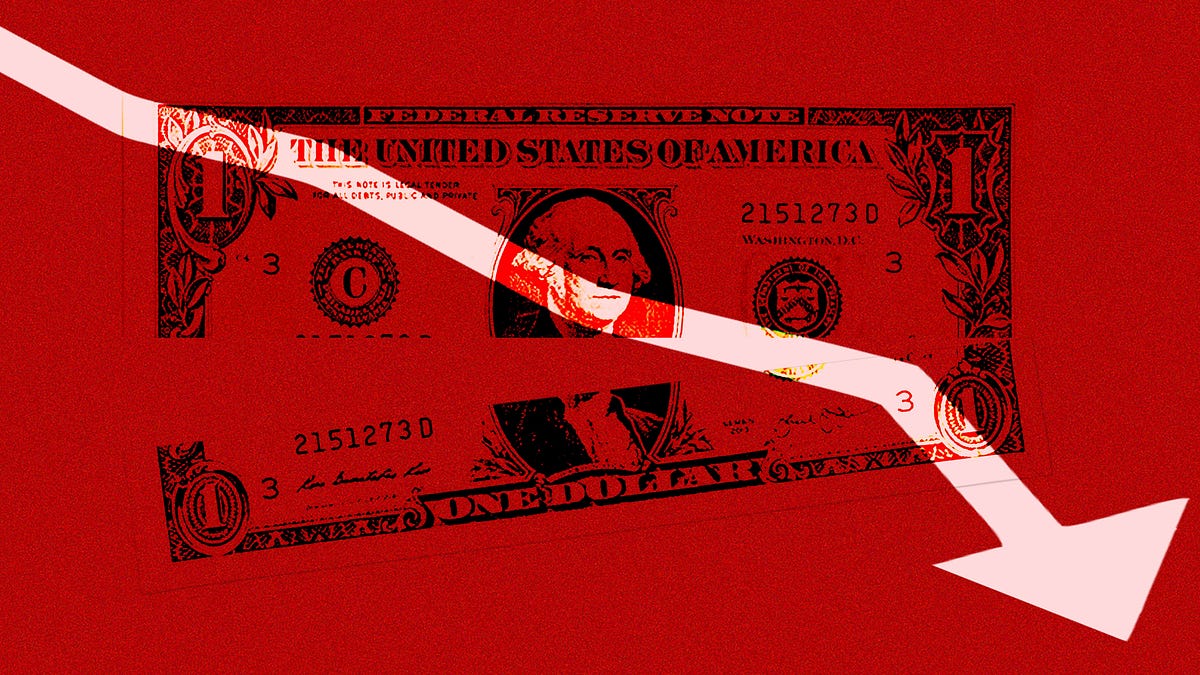
Photo via The Free Press

Tyler Cowen: No Matter Who Wins the Midterms, Economics Will Lose

Read the original at The Free Press ↗
Cite

Cowen, T. (2026, November 1). Tyler Cowen: No Matter Who Wins the Midterms, Economics Will Lose. The Free Press. https://www.thefp.com/p/tyler-cowen-economics-populism-midterms

Dated from the outlet's own feed. Check the original for its byline.

The Free Press · collected 2026-11-01 · by Tyler Cowen analysis

Quick Summary

Tyler Cowen laments the declining influence and respect economists have in contemporary politics. He contrasts today's disregard for economic reasoning with past eras where prominent economists like James Tobin and Paul Samuelson advised U.S. presidents, contributing significantly to policy decisions such as the Kennedy-Johnson tax cut of 1964. Cowen attributes this shift partly to a societal move away from deferring to elites, coupled with an increased skepticism towards scientific expertise in public discourse.
Written by AI on 2026-11-02, from this article's own text only (the story summary below draws on all the coverage).

AI analysis

Story summary

Economist Tyler Cowen expresses concern over the diminishing influence and respect of economists in government and public discourse. In a recent article, Cowen notes that neither Republicans nor Democrats are offering rigorous economic plans as voters head to the polls for midterm elections. He contrasts this with the 1960s, when prominent economists like James Tobin, Robert Solow, and Kenneth Arrow (all Nobel laureates) were actively involved in government policy-making under presidents John F. Kennedy and Lyndon Baines Johnson. Cowen highlights that these economists played crucial roles in shaping policies such as the 1964 tax cut, reflecting a period when economics was highly valued by political leaders. This trend of reduced economic reasoning in politics is seen across both major parties, according to Cowen, signaling a broader societal shift away from relying on expert economic advice for policy-making.

Written for “Tyler Cowen on Midterm Elections Impact” on 2026-11-03, grounded in this article and the 0 other(s) covering the same event.

Story

📰 Tyler Cowen on Midterm Elections Impact
Politics · 1 article(s) covering the same event.

Compared with similar articles

This article reads leans left and hedges 7% of its claims. Each row says how that neighbour differs.
The Straits Times
⚖️ Leans left Hedges 4 of 34 claims Outlet record 66/100
“The articles discuss different aspects of economics and politics around midterm elections, but describe distinct topics rather than the same specific incident.”
How this article was measured signals, leaning charts, publisher record, byline, topics and claims

Signals How these are calculated →

Claims extracted
15
sentences that state something as happening or true
Uncertain
7%
1 of 15 hedged ("reportedly", "may", "according to")
Leaning
Leans left
of the writing, not the subject · beta estimate
Publisher signals
97/100
The Free Press's corrections and hedging, across everything collected from it. Not a measure of accuracy.
Outlets on this story
1
Politics
Same framing elsewhere
1
articles that frame the event the way this one does
Analyzed 2026-11-02 · how these are computed

How this is being covered How these are calculated →

Article leaning vs. publisher reliability
Source leaning vs. consistency

Publisher

The Free Press · 420 article(s) · 0 correction(s) detected
No corrections detected for this publisher. That may mean careful reporting, or simply that nothing has been checked.

Who wrote this

Tyler Cowen
11 article(s) here · 1 carrying a prediction
🔮 Those were all names with significant academic heft who could count among the world’s leading macroeconomists.
🔮 That sent much of the internet running for patches and fixes, and the result probably will be that many older websites end up permanently dysfunctional.
2026-10-26 · mixed framing · Tyler Cowen: How to Outrun the AI Hackers
🔮 Instead of prison, I would put her under some form of house arrest and allow her to raise her children.
2026-10-20 · assertive framing · Tyler Cowen: Elizabeth Holmes Should Not Be in Prison
🔮 It seems to be a good time for a fuller accounting of what immigration from Africa will mean for America, at scale and over time.
2026-10-13 · assertive framing · America Needs African Immigrants
🔮 Coefficient Giving is only the largest of many young philanthropic groups animated by effective altruism, and this year it’s set to spend more than $2 billion of its $40 billion fund on the movement’s favorite causes, from AI safety research to uncaging farm-raised chickens.
2026-10-06 · assertive framing · In Defense of Effective Altruism
🔮 AI models have come under heavy criticism lately, with the charges ranging from an increased risk of ordinary hacks to the possibility that they will kill us all, but one abiding critique is that AI systems will make us stupid and turn us into docile pets.
2026-09-29 · assertive framing · Tyler Cowen: Don’t Let AI Make You Dumber
🔮 It took less than a month for that term, which represents the probability that AI will wipe out humanity, to grow from an airy debate topic among Bay Area insiders into the most urgent question in public life.
2026-09-21 · assertive framing · Tyler Cowen: A Doomsday Scenario for American AI
🔮 But the so-called “slowdown” is the most discussed, and it could benefit or harm AI progress depending on how it’s handled.
2026-09-14 · assertive framing · Tyler Cowen: The AI Slowdown Is Not What It Seems
🔮 It seems that more and more jobs will require AI skills of some kind, yet few major universities are embracing AI instruction as a general practice.
2026-09-04 · assertive framing · Tyler Cowen: Is College Still Worth It?
🔮 Nate Soares, who works in the AI safety movement and is co-author of the doomsday AI bestseller If Anyone Builds It, Everyone Dies, wrote that “This might be the last warning we get.”
Also by Tyler Cowen
Tyler Cowen: How to Outrun the AI Hackers
2026-10-26 · The Free Press
America Needs African Immigrants
2026-10-13 · The Free Press
In Defense of Effective Altruism
2026-10-06 · The Free Press
Nothing else under this byline is closely related to this article, so these are simply their most recent.
All 11 articles by Tyler Cowen →

Topics

Americans Democrats Republicans World War II the Cold War

Subjects

Americans NORP · 2× Feldstein PERSON · 2× Arthur Okun PERSON · 1× Democrats NORP · 1× James Tobin PERSON · 1× John F. Kennedy PERSON · 1× Kenneth Arrow PERSON · 1× Lyndon Baines Johnson PERSON · 1× Republicans NORP · 1× Robert Solow PERSON · 1×

Narrative

If we look at the 1960s, the John F. Kennedy and Lyndon Baines Johnson administrations brought James Tobin, Robert Solow, Kenneth Arrow (all three later Nobel laureates), Arthur Okun, Walter Heller, Gardner Ackley, Otto Eckstein, and Walt Rostow into government.
framing: assertive · carried by 1 article(s) · first seen 2026-11-02
🔮 Those were all names with significant academic heft who could count among the world’s leading macroeconomists.
2026-11-02 · The Free Press
Tyler Cowen: No Matter Who Wins the Midterms, Economics Will Lose · assertive framing

Claims (15 extracted, 1 hedged)

As a lifelong economist, I am distraught at what is happening to my profession. asserted
what → happen → profession
What I observe is economists losing status. asserted
economists → observe → status
Economists used to be highly respected figures, and nowadays, even when they are not pilloried, they are often simply ignored. asserted
they → use → ?
And as voters go to the polls this week, neither Republicans nor Democrats are offering anything like a rigorous plan for economic growth. asserted
Republicans → go → growth
If we look at the 1960s, the John F. Kennedy and Lyndon Baines Johnson administrations brought James Tobin, Robert Solow, Kenneth Arrow (all three later Nobel laureates), Arthur Okun, Walter Heller, Gardner Ackley, Otto Eckstein, and Walt Rostow into government. asserted
administrations → look → government
Those were all names with significant academic heft who could count among the world’s leading macroeconomists. uncertain
who → count → macroeconomists
Nobel laureate Paul Samuelson served as a consultant to the government. asserted
Samuelson → serve → government
Heller and some of the others helped to shape the Kennedy-Johnson tax cut of 1964. asserted
Heller → help → 1964
That cluster of talent and its influence should come as no surprise. asserted
cluster → come → surprise
Americans were used to deferring to elites, who had won World War II for them, and who were not out there making fools of themselves on the internet. asserted
who → use → internet
With the Cold War raging, Americans felt their government had to get it right. asserted
it → rag → ?
The Free Press and 2WAY are teaming up for a real-time interactive election night special, November 3 from 8 p.m. ET until late. asserted
Press → team → late
President Ronald Reagan appointed Martin Feldstein to chair his Council of Economic Advisers (CEA), Feldstein being a Harvard professor and one of the leading market-oriented economists of his time. asserted
Feldstein → appoint → time
Two of the junior economists working for Feldstein were Paul Krugman and Lawrence Summers—before they became famous, but the intellectual firepower was already there. asserted
firepower → work → Feldstein
Michael Mussa and William Niskanen were other notables in the administration, and Milton Friedman and Friedrich A. Hayek were standing sources of inspiration. asserted
Friedman → stand → inspiration
💬Give feedback
🕘History 🎫Support