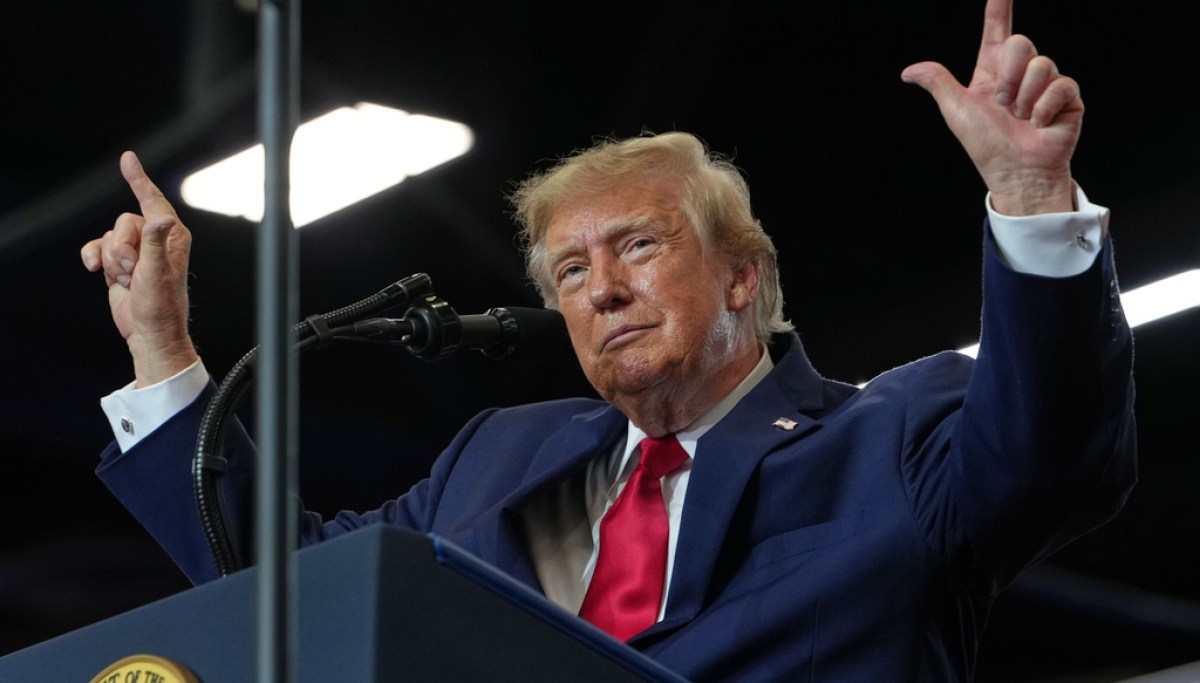
Photo via Euronews

The Senate on a razor’s edge: The races that will decide America's midterms

Read the original at Euronews ↗
Cite

The Senate on a razor’s edge: The races that will decide America's midterms. (2026, November 3). Euronews. https://www.euronews.com/2026/11/03/the-senate-on-a-razors-edge-the-races-that-will-decide-americas-midterms

Dated from the outlet's own feed. Check the original for its byline.

Euronews · collected 2026-11-03

Quick Summary

The upcoming US midterm elections are shaping up to be a decisive moment for control of Congress. Democrats are nearly certain to win the House, with prediction markets giving them a 95% chance and Cook Political Report rating at least 222 seats as leaning Democratic. The real contest is in the Senate, where Republicans hold 53 out of 100 seats. To take control, Democrats need a net gain of four seats. Prediction markets give Democrats roughly a three-in-four chance of winning the Senate. Key battleground states include North Carolina, Ohio, and Texas, among others, with national Republican support waning in some races like North Carolina's.
Written by AI on 2026-11-03, from this article's own text only (the story summary below draws on all the coverage).

AI analysis

Story summary

Democrats are expected to take control of the US House of Representatives in the 2026 midterm elections, with prediction markets giving them a 95% chance. Republicans currently hold 53 out of 100 Senate seats, and Democrats need a net gain of four seats to take control. The races for the Senate are closely contested, particularly in states where Republicans had not anticipated challenges, such as North Carolina. Democrats look poised to secure at least 222 House seats, surpassing the necessary 218 majority threshold, while 230 seats could be possible with a strong performance.

Written for “Senate Midterm Races” on 2026-11-04, grounded in this article and the 0 other(s) covering the same event.

Story

📰 Senate Midterm Races
Politics · 1 article(s) covering the same event.

Compared with similar articles

This article reads leans left and hedges 9% of its claims. Each row says how that neighbour differs.
Deutsche Welle
Outlet record 95/100
“Both articles discuss the upcoming US midterm elections, but they are not reporting on a single specific incident or occurrence; rather, they provide general analysis and context.”
NBC News
⚖️ Leans left Hedges 1 of 29 claims Outlet record 78/100
“Both articles discuss general trends and expectations for the U.S. midterm elections but do not describe a single, specific incident or outcome.”
Times of India
Hedges 3 of 29 claims Outlet record 59/100
“The articles discuss the overall context and potential outcomes of the US midterm elections but do not focus on a single specific incident or occurrence.”
Washington Examiner
Hedges 2 of 2 claims Outlet record 69/100
“Article A focuses on a specific poll about late deciders in key Senate races, while Article B provides an overview of the overall midterm election scenario with a focus on both House and Senate races.”
NBC News
⚖️ Leans left Hedges 1 of 25 claims Outlet record 78/100
“The articles discuss different aspects of the midterm elections and their implications for control of Congress, rather than focusing on one single incident.”
ABC News (US)
Hedges 3 of 44 claims Outlet record 70/100
“The articles discuss different aspects of the election, with Article A focusing on House races and their potential outcomes, while Article B covers both the Senate and House races but emphasizes the Senate's razor-thin margin.”
Washington Examiner
⚖️ Centre further right than this Hedges 2 of 2 claims Outlet record 69/100
“The articles discuss similar themes about midterm elections and Senate races but do not describe the exact same specific incident or moment.”
Reason
Hedges 6 of 49 claims Outlet record 67/100
“While both articles discuss the likelihood of Democrats winning control of Congress on Election Day, they do not describe the same specific incident or occurrence but rather different perspectives and analyses leading up to the election.”
The Independent
⚖️ Leans left Hedges 6 of 45 claims Outlet record 59/100
“While both articles discuss the midterm elections happening on the same day, they do not describe the same specific incident or occurrence.”
The Hindu
Hedges 2 of 6 claims Outlet record 77/100
“The articles discuss different points in time regarding midterm election predictions, with Article A focusing on forecasts before the election and Article B discussing polling stations opening on election day.”
How this article was measured signals, leaning charts, publisher record, byline, topics and claims

Signals How these are calculated →

Claims extracted
80
sentences that state something as happening or true
Uncertain
9%
7 of 80 hedged ("reportedly", "may", "according to")
Leaning
Leans left
of the writing, not the subject · beta estimate
Publisher signals
60/100
Euronews's corrections and hedging, across everything collected from it. Not a measure of accuracy.
Outlets on this story
1
Politics
Same framing elsewhere
1
articles that frame the event the way this one does
Analyzed 2026-11-03 · how these are computed

How this is being covered How these are calculated →

Article leaning vs. publisher reliability
Source leaning vs. consistency

Publisher

Euronews · 1181 article(s) · 1 correction(s) detected
Running correction rate · 1 correction(s)

Who wrote this

No reporter is named on this article.

Topics

Democrats North Carolina Republican Republicans Senate

Subjects

Senate ORG · 11× Republicans NORP · 9× Democrats NORP · 8× Republican NORP · 7× Democrat NORP · 4× North Carolina GPE · 4× Texas GPE · 4× Ohio GPE · 3× Paxton PERSON · 3× Democratic NORP · 2×

Narrative

The New York Times reported last week that Democratic operatives, including senior Peltola aides and officials at the Democratic Senatorial Campaign Committee, recruited Daniel J. Sullivan, a retired teacher, to run as a spoiler and confuse voters.
framing: assertive · carried by 1 article(s) · first seen 2026-11-03
🔮 The real fight is for the Senate, where a handful of races in states Republicans never expected to defend will decide who controls Washington.

Claims (80 extracted, 7 hedged)

Democrats look all but certain to take the US House. asserted
Democrats → look → House
The real fight is for the Senate, where a handful of races in states Republicans never expected to defend will decide who controls Washington. asserted
who → expect → Washington
Polling stations are opening across the United States in a midterm election that, a year ago, Republicans expected to survive with their Senate majority intact. asserted
Republicans → open → majority
That expectation has been reduced to a hope. asserted
expectation → reduce → hope
Start with the House of Representatives, where the question is no longer whether Democrats win, but by how much. asserted
Democrats → start → much
Prediction markets give them a 95% chance of taking control. asserted
markets → give → control
The Cook Political Report now rates 222 seats as at least leaning Democratic, four more than the 218 needed for a majority, against 195 for Republicans, with 18 pure toss-ups. asserted
Report → rat → ups
A good night for Democrats could see them controlling as many as 230 seats. uncertain
them → see → seats
A great night means the Senate and a blue wave. asserted
night → mean → Senate
The magic number Republicans hold 53 of the Senate's 100 seats. asserted
Republicans → hold → seats
To take control, Democrats need a net gain of four. asserted
Democrats → take → four
Three is not enough: in a 50-50 Senate, Vice President JD Vance casts the tie-breaking vote, just as Kamala Harris did a record 33 times as vice president; however, Senator John Fetterman, the Democrat from Pennsylvania, could muddle certain partisan votes in a 50-50 Senate. uncertain
Fetterman → cast → Senate
Prediction markets now give Democrats roughly a three-in-four chance of winning the Senate. asserted
markets → give → Senate
Cook rates six races as toss-ups, all of them held by Republicans. asserted
all → rat → Republicans
The battleground covers 12 seats. asserted
battleground → cover → seats
Democrats are defending three: Michigan, Minnesota and New Hampshire. asserted
Democrats → defend → three
Republicans are defending nine: Alaska, Iowa, Kansas, Maine, Nebraska, North Carolina, Ohio, South Carolina and Texas. asserted
Republicans → defend → nine
Two of the three Democratic seats look safe. asserted
Two → look → seats
In Minnesota, Peggy Flanagan leads Michele Tafoya by 5.2 points in the RealClearPolitics average. asserted
Flanagan → lead → average
In New Hampshire, Chris Pappas leads former Senator John E. Sununu by eight points in the same average. asserted
Pappas → lead → average
Michigan is another matter, but we will come back to it. asserted
we → come → it
North Carolina: Abandoned North Carolina is a swing state, but it leans Republican: it has voted for the Republican presidential candidate in every election since 1980 bar one. asserted
it → abandon → one
With Senator Thom Tillis retiring, it should have been a fair fight. asserted
it → retire → ?
Instead, national Republicans all but walked away. asserted
Republicans → walk → ?
The Senate Leadership Fund, the party's main Senate super PAC, had planned to spend $71 million backing its candidate, Michael Whatley. asserted
Fund → plan → candidate
It cancelled its remaining ads in early October, after spending more than $30 million. asserted
It → cancel → million
Former Governor Roy Cooper now leads Whatley by eight points in polls from both Quantus Insights and Trafalgar Group, two Republican-leaning pollsters. asserted
Cooper → lead → Insights
Barring an upset, North Carolina will be the Democrats' first flip. asserted
Carolina → bar → upset
That leaves three more to find. asserted
That → leave → three
The big prizes Democrats placed one of their biggest bets in Ohio. asserted
Democrats → place → Ohio
Sherrod Brown, who lost his seat two years ago, is running against Republican Jon Husted, who was appointed to JD Vance's old Senate seat in 2025. asserted
who → lose → 2025
Brown leads by 2.8 points in the RealClearPolitics average, in a state Trump won by double digits. asserted
Trump → lead → digits
The state has not elected a Democrat to the Senate since 1988. asserted
state → elect → 1988
Yet Democrat James Talarico leads Republican Ken Paxton 49% to 47% in the latest Texas Southern University poll—in line with other recent surveys. asserted
Talarico → lead → surveys
Texas probably isn’t turning blue. asserted
Texas → turn → ?
Republicans lead every other statewide race in the University of Houston's Hobby School poll, from governor down to railroad commissioner. asserted
Republicans → lead → commissioner
What Talarico could benefit from is ticket-splitting: voters backing a Republican for governor, attorney general or Congress, then crossing over to the Democrat for the Senate. uncertain
voters → benefit → Senate
Republican Governor Greg Abbott wins 93% of Republicans in the Hobby poll. asserted
Abbott → win → poll
Paxton wins 88%. asserted
Paxton → win → %
Part of the problem for Paxton is Talarico, a disciplined young candidate who has run a strong campaign. asserted
who → run → campaign
…and 40 more, not listed.

💬Give feedback
🕘History 🎫Support