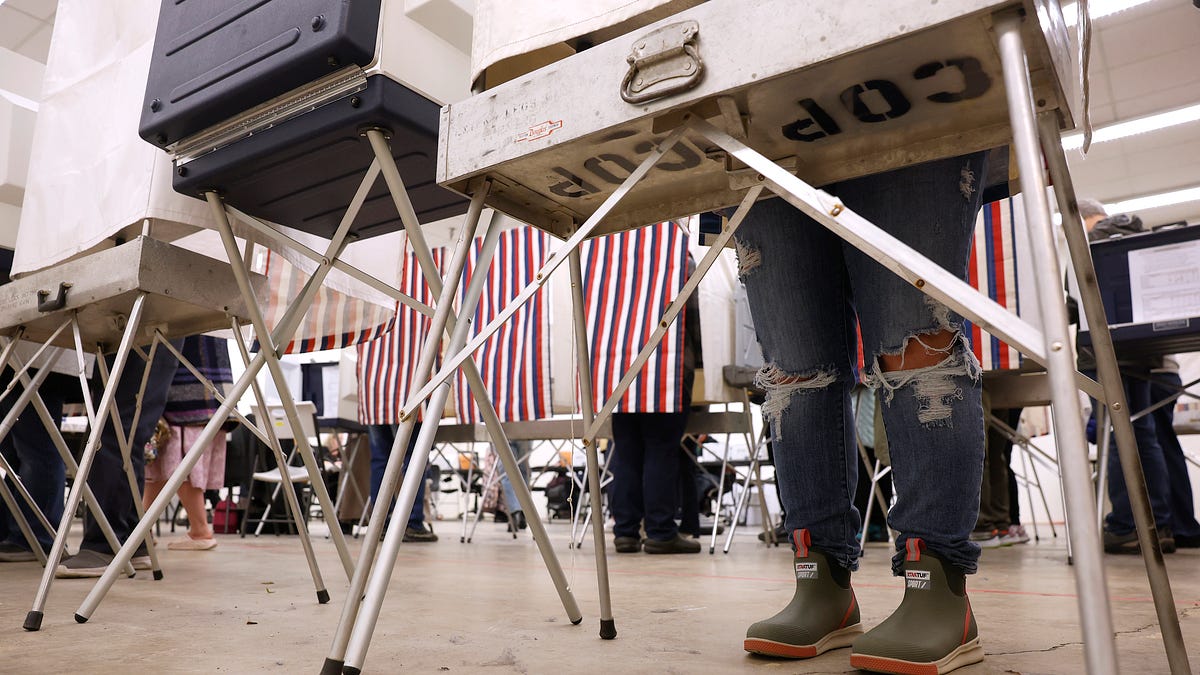
Photo via New York Post

Lawfare runs amok from Brazil to Poland — putting democracy in danger

Read the original at New York Post ↗
Cite

McCarthy, D. (2026, November 3). Lawfare runs amok from Brazil to Poland — putting democracy in danger. New York Post. https://nypost.com/2026/11/02/opinion/lawfare-runs-amok-from-brazil-to-poland-and-democracy-is-at-risk/

Dated from the outlet's own feed. Check the original for its byline.

New York Post · collected 2026-11-03 · by Daniel McCarthy

Quick Summary

The article discusses the misuse of legal systems by political opponents to undermine democracy through prosecution and imprisonment or even execution of former leaders, citing examples from South Korea and Brazil. It warns that such tactics, often referred to as "lawfare," can escalate into a dangerous cycle where leaders feel compelled to take extreme measures to protect themselves. The piece draws parallels with historical events in ancient Rome and the Soviet Union to illustrate how weaponizing legal processes endangers democratic institutions globally.
Written by AI on 2026-11-03, from this article's own text only (the story summary below draws on all the coverage).

AI analysis

Story summary

Flavio Bolsonaro, a conservative Brazilian politician who lost the country's presidential election last month to leftist incumbent Lula da Silva, fled into exile in America. Fearing prosecution by political opponents upon returning to Brazil after his military command expired outside Rome, Flavio took preemptive action. This incident highlights growing concerns about "lawfare," where legal tactics are used as a weapon against political rivals, posing threats to democracy in countries like South Korea and Brazil. In South Korea, former President Yoon Suk Yeol faces death penalty demands for his attempt at imposing martial law in late 2024, despite already receiving a life sentence. These events underscore the erosion of democratic norms as political opponents increasingly resort to punitive legal measures against each other.

Written for “Lawfare Threatens Democracy Globally” on 2026-11-03, grounded in this article and the 0 other(s) covering the same event.
Why this leaning score
The article's own words the score was based on. Each is quoted verbatim and was checked against the article text before being stored, so you can find it in the original.
Reading Leans strongly left (beta estimate) Confidence high
Leaning: leans strongly left for article 124554 (high confidence, 4 verified quotes) · logged 2026-11-03

Story

📰 Lawfare Threatens Democracy Globally
Politics · 1 article(s) covering the same event.

Compared with similar articles

This article reads leans strongly left and hedges 10% of its claims. Each row says how that neighbour differs.
America’s Test Different event
Persuasion
⚖️ Leans strongly left Hedges 1 of 7 claims
“The articles discuss similar themes of democratic erosion and authoritarian trends but do not describe the same specific incident or occurrence.”
How this article was measured signals, leaning charts, publisher record, byline, topics and claims

Signals How these are calculated →

Claims extracted
30
sentences that state something as happening or true
Uncertain
10%
3 of 30 hedged ("reportedly", "may", "according to")
Leaning
Leans strongly left
of the writing, not the subject · beta estimate
Publisher signals
66/100
New York Post's corrections and hedging, across everything collected from it. Not a measure of accuracy.
Outlets on this story
1
Politics
Same framing elsewhere
1
articles that frame the event the way this one does
Analyzed 2026-11-03 · how these are computed

How this is being covered How these are calculated →

Article leaning vs. publisher reliability
Source leaning vs. consistency

Publisher

New York Post · 16360 article(s) · 35 correction(s) detected
Running correction rate · 35 correction(s)

Who wrote this

Daniel McCarthy
7 article(s) here · 1 carrying a prediction
🔮 His political enemies were waiting for his military command outside Rome to expire, so they could prosecute him when he returned to the city.
🔮 He’s opposed to the policies of the democratically elected government of our country, and he’s used the freedoms and privileges afforded to him on American soil to agitate for policies that would favor Hamas over Israel.
🔮 Starting next month, users will be prohibited from “sustained and needless cruel and abusive behavior” toward Anthropic’s AI chatbot, Claude.
🔮 Jeane Kirkpatrick, who became Ronald Reagan’s ambassador to the United Nations, argued in the late 1970s that Washington treated foreign friends on the right worse than most enemies on the left, as if the only way to beat communism and socialism was to prove America could appeal to left-wing sensibilities, too.
🔮 The coalition that better holds together is the one that will win control of the Senate.
🔮 How far will New York Gov. Kathy Hochul go to keep immigrant criminals in this country?
🔮 The hard-left influencer debated Kirk in 2017 and was set to do so again before Kirk was murdered last year.
Also by Daniel McCarthy
Nothing else under this byline is closely related to this article, so these are simply their most recent.
All 7 articles by Daniel McCarthy →

Topics

Brazil Roman Rome South Korea South Korean

Subjects

South Korea GPE · 3× Yoon PERSON · 3× Brazil GPE · 2× Caesar PERSON · 2× Poland GPE · 2× Roman NORP · 2× Rome GPE · 2× South Korean NORP · 2× Americans NORP · 1× Congress ORG · 1×

Narrative

Flavio Bolsonaro, the conservative candidate who lost Brazil’s second-round election last month, was warned he wouldn’t remain a free man with his rival, the leftist incumbent President Lula da Silva, reconfirmed in power — so he took no chances: He fled into exile here in America.
framing: assertive · carried by 1 article(s) · first seen 2026-11-03
🔮 His political enemies were waiting for his military command outside Rome to expire, so they could prosecute him when he returned to the city.
2026-11-03 · New York Post
Lawfare runs amok from Brazil to Poland — putting democracy in danger · assertive framing

Claims (30 extracted, 3 hedged)

Politics has high enough stakes without the losers being sent to prison — or losing their heads. asserted
losers → have → heads
Jailing opponents or condemning them to death is what dictatorships do, not democracies. asserted
dictatorships → jail → what
But times are changing, rapidly — and democracy isn’t what it used to be, thanks to a vengeful spirit that’s taken hold from Brazil to South Korea. asserted
that → change → Korea
And we’ve had a taste of it as well. asserted
we → have → it
As Americans think about what’s in store for the next two years after a new Congress is sworn in next January, with the 2028 presidential election now on the horizon, we should take heed of just how far “lawfare” is going in other parts of the world. asserted
lawfare → think → world
Prosecutors last week renewed demands that Yoon be put to death for his attempt to impose martial law in late 2024. asserted
Yoon → renew → 2024
Prosperous as South Korea is, its democracy is still young, less than 40 years old, and three of the country’s last five presidents have wound up being sent to prison. asserted
three → wind → prison
But prosecutors are not satisfied with the life sentence (and additional time) already imposed on Yoon: They want him dead, despite the farcical nature of his attempt at martial law, which lasted barely six hours. asserted
which → impose → law
President Donald Trump’s critics have at times invoked South Korea as a precedent for how they’d like him to be treated. asserted
him → invoke → precedent
The idea is sheer madness, not only because of the differences between Trump and South Korea’s imprisoned presidents but even more important, because the South Korean example illustrates how escalatory these episodes can be. asserted
episodes → imprison → Trump
The threat of winding up in prison like some of his predecessors only made Yoon more determined to stay in office at any cost. asserted
Yoon → wind → cost
Killing him risks making the next leader — who fears for his life as well as his freedom — even more desperate to survive by whatever means he can muster. asserted
he → kill → means
This was the predicament Julius Caesar found himself in 2,000 years ago. asserted
Caesar → find → himself
His political enemies were waiting for his military command outside Rome to expire, so they could prosecute him when he returned to the city. uncertain
he → wait → city
Caesar didn’t give them the chance. asserted
Caesar → give → chance
Instead he took his army with him to Rome, and that was the beginning of the final chapter for the Roman Republic. asserted
that → take → Republic
The end had been a long time coming, in truth: Prosecutions had become so politically weaponized that practically every Roman leader was vulnerable and had to fear for his own safety. asserted
leader → come → safety
Even the great champion of liberty Cicero, a man who was morally Caesar’s opposite, was accused of breaking the law and putting Roman citizens to death without due process in the course of stopping a conspiracy against the republic. asserted
who → accuse → republic
The law was a weapon that could be used against the just as well as the unjust. “Show me the man, and I’ll show you the crime,” was reputed to be the motto of Josef Stalin’s secret-policy chief, Lavrentiy Beria. uncertain
I → use → chief
If prosecutors are ambitious enough, they can find a law under which to charge anyone. asserted
they → find → anyone
That’s as true in democracies where the law has become politicized as it is in openly authoritarian states — and this abuse of prosecutorial power is one thing that marks the turn from freedom to tyranny. asserted
that → ’ → tyranny
Flavio Bolsonaro, the conservative candidate who lost Brazil’s second-round election last month, was warned he wouldn’t remain a free man with his rival, the leftist incumbent President Lula da Silva, reconfirmed in power — so he took no chances: He fled into exile here in America. asserted
He → lose → America
Poland in recent days has provided a fresh warning to the world of what happens when law ceases to be seen as protecting everyone in politics equally. asserted
law → provide → politics
Police took over the country’s Constitutional Tribunal as part of Prime Minister Donald Tusk’s campaign to purge government institutions of holdovers from the previous administration. asserted
Police → take → administration
Poland’s president — who is one of those holdovers — showed up to protest the police action. asserted
who → show → action
Tusk and his right-wing opponents each claim the other side is corrupt, and the opposition says they are being subjected to legal abuse and intimidation: in effect, outlawed for their anti-European Union — and anti-Tusk — politics. uncertain
they → claim → politics
When Trump was put before America’s voters after years of legal battles, the people acquitted him, making him president once more, and in effect canceling most of the setbacks he’d suffered in court. asserted
he → put → court
That was the American people’s verdict on lawfare: They would not stand for it. asserted
They → stand → it
The next Congress, and eventually the next president, should remember that. asserted
Congress → remember → that
Americans do not want our democracy to become like Brazil’s, South Korea’s or Poland’s — or our republic to end like Rome’s. asserted
republic → want → Rome

💬Give feedback
🕘History 🎫Support