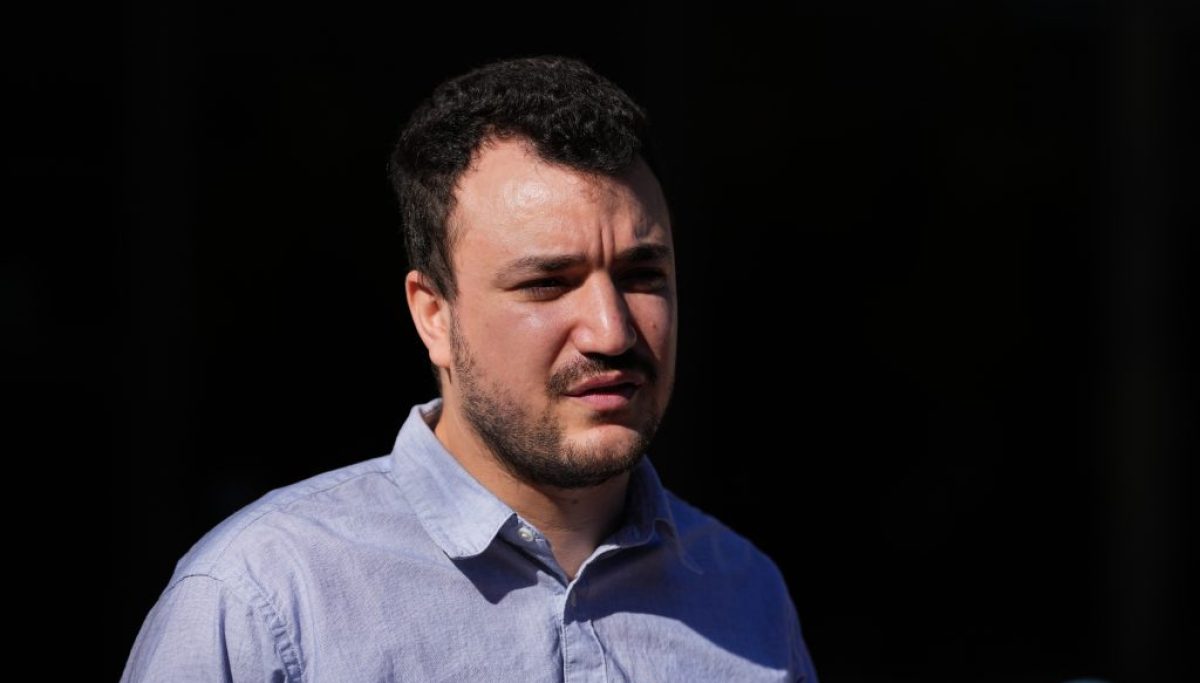
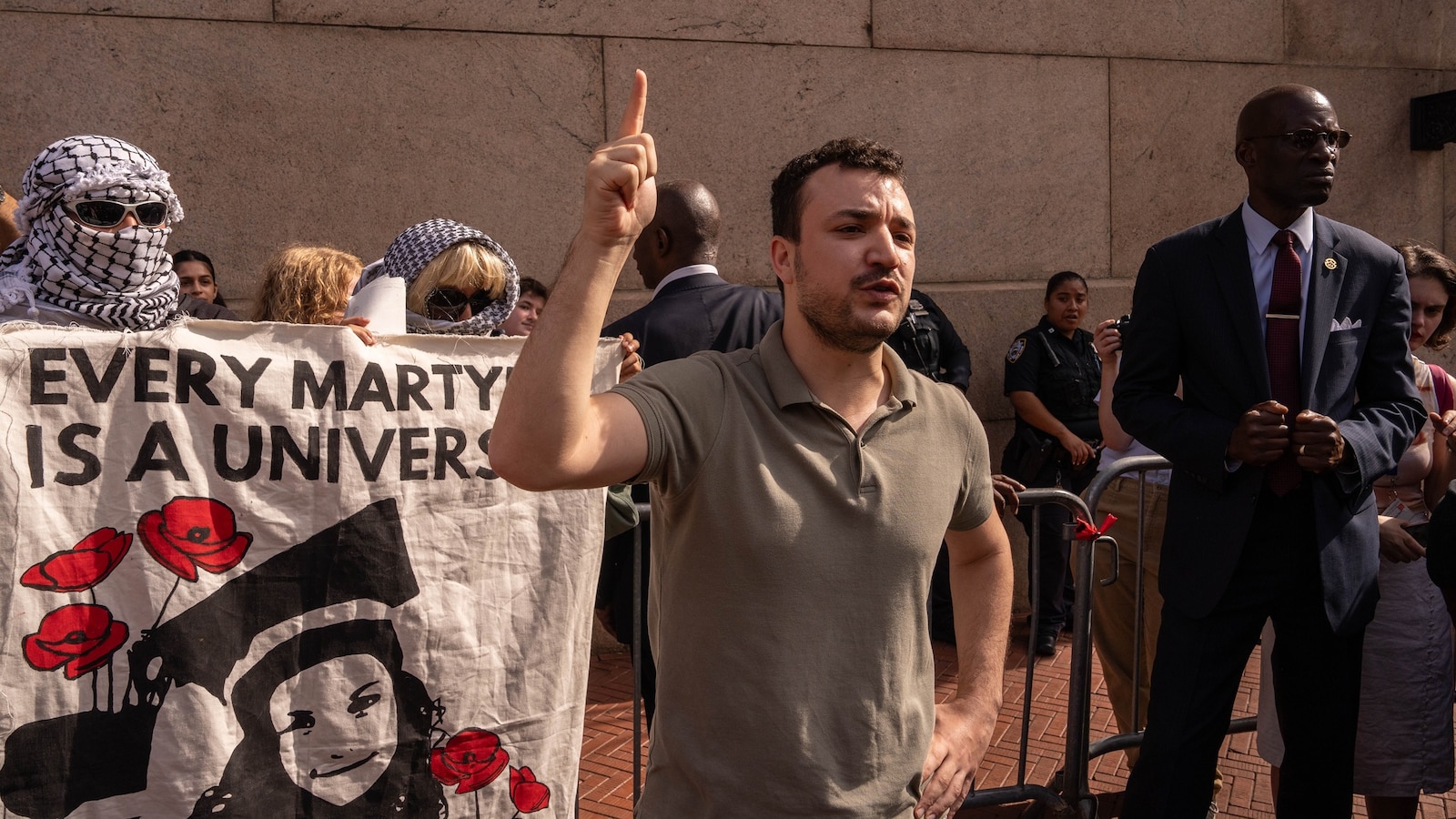
Trump channels George Washington in the fight to deport Mahmoud Khalil

Read the original at New York Post ↗
Cite

McCarthy, D. (2026, October 21). Trump channels George Washington in the fight to deport Mahmoud Khalil. New York Post. https://nypost.com/2026/10/21/opinion/trump-channels-george-washington-to-deport-mahmoud-khalil/

Dated from the outlet's own feed. Check the original for its byline.

New York Post · collected 2026-10-21 · by Daniel McCarthy

Quick Summary

President Trump is defending the decision to initiate deportation proceedings against Mahmoud Khalil, a Syrian-born Palestinian legal resident who advocates for Hamas over Israel. This case echoes an issue from more than 200 years ago when President George Washington faced similar challenges with Edmond-Charles Genêt, a French diplomat who attempted to undermine American neutrality by organizing pro-French groups within the U.S. The article explores how both administrations viewed foreign activists undermining their policies as justification for deportation, highlighting current debates over noncitizens' First Amendment rights and political activism in the United States.
Written locally by qwen2.5:14b on 2026-10-21, using this article's own text rather than the other coverage of the same event (that is the story summary below).

AI analysis runs on qwen2.5:14b, locally

Story summary

Mahmoud Khalil, a Palestinian activist and former Columbia University student, has asked the U.S. Supreme Court to review his case, challenging the legality of his prolonged detention by U.S. Immigration and Customs Enforcement (ICE). In March 2025, Khalil was arrested in New York City, held for over 100 days, and faced deportation after then-Secretary of State Marco Rubio declared that Khalil's pro-Palestinian activities compromised a compelling U.S. foreign policy interest. His lawyers argue that federal courts should be able to review the legality of his detention before immigration court proceedings are completed, citing violations of his First Amendment rights. The 3rd U.S. Circuit Court of Appeals in Philadelphia had ruled against Khalil, stating that federal judges cannot consider such claims until after the completion of separate immigration court processes. This case could have significant implications for non-citizens' ability to challenge detentions on grounds of free speech.

Written for “Mahmoud Khalil Deportation Case” on 2026-10-22, grounded in this article and the 5 other(s) covering the same event.
Why this leaning score
The article's own words the score was based on. Each is quoted verbatim and was checked against the article text before being stored, so you can find it in the original.
Reading Leans strongly right (beta estimate) Confidence high
Leaning: leans strongly right for article 97702 (high confidence, 3 verified quotes) · logged 2026-10-21

Story

📰 Mahmoud Khalil Deportation Case
Politics · 6 article(s) covering the same event. Compare every outlet's account →

Compared with similar articles

This article reads leans strongly right and hedges 4% of its claims. Each row says how that neighbour differs.
South China Morning Post
⚖️ Leans strongly left further left than this 🔴 0% hedged 0 of 2 📰 publisher trust 64
“Both articles discuss Mahmoud Khalil's legal battle to challenge his deportation, specifically referring to his petition to the US Supreme Court.”
Washington Examiner
⚖️ leaning not scored 🔴 33% hedged 1 of 3 📰 publisher trust 66
“Both articles discuss Mahmoud Khalil's appeal to the Supreme Court regarding his deportation case, indicating they are reporting on the same specific legal action.”
Al Jazeera
⚖️ Leans strongly left further left than this 🔴 14% hedged 3 of 22 📰 publisher trust 60
“Both articles discuss Mahmoud Khalil's petition to the US Supreme Court regarding his potential deportation, indicating the same specific legal action.”
Toronto Star
⚖️ Leans left further left than this 🔴 0% hedged 0 of 2 📰 publisher trust 63
“The articles discuss different aspects of the case involving Mahmoud Khalil; Article A focuses on his legal petition to the Supreme Court regarding immigration detentions, while Article B discusses broader political commentary and context around his deportation case.”
ABC News (US)
⚖️ leaning not scored 🔴 14% hedged 3 of 22 📰 publisher trust 59
“While both articles discuss Mahmoud Khalil's legal battle against deportation and his appeal to the Supreme Court, Article A focuses on Khalil's court filing and a recent ruling, while Article B provides commentary on the broader political context and Trump's stance.”
How this article was measured signals, leaning charts, publisher record, byline, topics and claims

Signals How these are calculated →

Claims extracted
27
sentences that state something as happening or true
Uncertain
4%
1 of 27 hedged ("reportedly", "may", "according to")
Leaning
Leans strongly right
of the writing, not the subject · beta estimate
Publisher signals
66/100
New York Post's corrections and hedging, across everything collected from it. Not a measure of accuracy.
Outlets on this story
6
Politics
Same framing elsewhere
1
articles that frame the event the way this one does
Analyzed 2026-10-21 · how these are computed

How this is being covered How these are calculated →

Article leaning vs. publisher reliability
Source leaning vs. consistency

Publisher

New York Post · 12667 article(s) · 33 correction(s) detected
Running correction rate · 33 correction(s)

Who wrote this

Daniel McCarthy
6 article(s) here · 1 carrying a prediction
🔮 He’s opposed to the policies of the democratically elected government of our country, and he’s used the freedoms and privileges afforded to him on American soil to agitate for policies that would favor Hamas over Israel.
🔮 Starting next month, users will be prohibited from “sustained and needless cruel and abusive behavior” toward Anthropic’s AI chatbot, Claude.
🔮 Jeane Kirkpatrick, who became Ronald Reagan’s ambassador to the United Nations, argued in the late 1970s that Washington treated foreign friends on the right worse than most enemies on the left, as if the only way to beat communism and socialism was to prove America could appeal to left-wing sensibilities, too.
🔮 The coalition that better holds together is the one that will win control of the Senate.
🔮 How far will New York Gov. Kathy Hochul go to keep immigrant criminals in this country?
🔮 The hard-left influencer debated Kirk in 2017 and was set to do so again before Kirk was murdered last year.
Also by Daniel McCarthy
Nothing else under this byline is closely related to this article, so these are simply their most recent.
All 6 articles by Daniel McCarthy →

Topics

America American France ICE Palestinian

Subjects

America GPE · 6× American NORP · 4× Genêt PERSON · 4× Khalil PERSON · 4× France GPE · 3× French NORP · 3× Jefferson PERSON · 3× Washington GPE · 3× ICE ORG · 2× Palestinian NORP · 2×

Narrative

Mahmoud Khalil does not have a right to set America’s policies, even through the indirect means of political organization and speech. And if the Supreme Court takes this case and gets it wrong, it won’t be the First Amendment that’s saved — but our self-government as a distinct people that’s lost.
framing: assertive · carried by 1 article(s) · first seen 2026-10-21
🔮 He’s opposed to the policies of the democratically elected government of our country, and he’s used the freedoms and privileges afforded to him on American soil to agitate for policies that would favor Hamas over Israel.
2026-10-21 · New York Post
Trump channels George Washington in the fight to deport Mahmoud Khalil · assertive framing

Claims (27 extracted, 1 hedged)

Mahmoud Khalil wants to take the case against his deportation all the way to the Supreme Court. asserted
Khalil → want → Court
If the justices accept it, they’ll be deciding one of the oldest and most controversial questions in American politics — a dispute more than 200 years old. asserted
they → accept → politics
Khalil is not an American: He’s a Syrian-born Palestinian, here legally. asserted
He → ’ → ?
He’s opposed to the policies of the democratically elected government of our country, and he’s used the freedoms and privileges afforded to him on American soil to agitate for policies that would favor Hamas over Israel. asserted
that → ’ → Israel
President Donald Trump saw no reason why a guest should be able to undercut his host in this way, so ICE began deportation proceedings — he was taken into custody at Columbia University, where he was a graduate student. And then the courts got involved. asserted
courts → see → University
A New Jersey judge said ICE had to release Khalil because, in the judge’s opinion, the case against him was likely to fail in the end on First Amendment grounds, and in the meantime he should be free to continue his Palestinian activism. asserted
he → say → activism
Judges in other cases have ruled noncitizens do have First Amendment free-speech rights, but a federal appeals court in Pennsylvania overturned the earlier decision that released Khalil from detention. asserted
that → rule → detention
The big question still hasn’t been answered: When can America deport a foreign political activist? asserted
America → answer → activist
If Khalil were a Russian demanding America end support for Ukraine, Democrats would in all likelihood be eager to have him expelled — though an administration like Joe Biden’s might look for an espionage angle to justify deportation. uncertain
administration → demand → deportation
Trump’s administration is not looking for pretexts: It’s tackling the principle at the heart of the matter. asserted
It → look → matter
America’s earliest presidents saw the question the same way Trump does. asserted
Trump → see → question
George Washington famously proclaimed America neutral in the conflict between revolutionary France and Great Britain, but France deployed agents — including its de facto ambassador to America, Edmond-Charles Genêt — to organize opposition to Washington’s policy and drag America into the war. asserted
France → proclaim → war
The French revolutionary strategy was to go over Washington’s head and appeal directly to the American people, by setting up what we would now call grassroots activist groups and even the political organs resembling the beginnings of a political party, called “Democratic Societies.” asserted
we → go → party
Washington even believed these radical, pro-French groups were responsible for political violence, including the 1794 Whiskey Rebellion. asserted
groups → believe → Rebellion
Thomas Jefferson was madly in love with the French Revolution — he wrote in one letter he would rather see half the earth desolated and every country reduced to just an Adam and an Eve than let the French cause fail. asserted
cause → write → Adam
Yet even Jefferson recognized that Genêt had gone too far and was subverting the government Americans had chosen for themselves. asserted
Americans → recognize → themselves
The only reason Genêt was ultimately not deported was because the unstable revolutionary government in France had changed: The new authorities stripped Genêt of his diplomatic role and intended to execute him if he went back home. asserted
he → deport → him
The problem was much bigger than Genêt, however, and Americans expressed their opposition to French radicalism by electing John Adams rather than Jefferson as president in 1796, along with a Congress dominated by anti-French Federalists. asserted
Americans → express → Federalists
To tackle ongoing foreign subversion, Congress passed, and Adams signed into law, the Alien and Sedition Acts. asserted
Adams → tackle → Acts
Although liberal historians have subsequently demonized these laws, the restrictions they placed on foreigners’ political activities were justified. asserted
they → demonize → activities
In fact, one of the three controversial laws — the Alien Enemies Act — is still on the books: It gives the president the broad power to deport any foreigner from an enemy country during wartime. asserted
It → give → wartime
The Alien Friends Act, which specified the president’s powers to remove foreigners during peacetime, didn’t survive the election of Jefferson and his party’s congressional majority in 1800. asserted
which → specify → 1800
But other laws since which have reaffirmed presidential authority to expel foreign political activists in times of peace, and they remain in force. asserted
they → reaffirm → force
Immigration law, for example, includes a provision allowing removal of “an alien whose presence or activities in the United States the Secretary of State has reasonable ground to believe would have potentially serious adverse foreign policy consequences.” asserted
Secretary → include → consequences
It’s a commonsense policy, and the power has to rest with the executive branch — Congress can’t legislate for every circumstance, and judges should virtually never set national-security policy or usurp the elected president’s role in making foreign policy. asserted
judges → ’ → policy
Middle East policy is something for the American people to debate among themselves, especially when passions run as high as they did in the days when the French Revolution polarized American politics. asserted
Revolution → debate → politics
Mahmoud Khalil does not have a right to set America’s policies, even through the indirect means of political organization and speech. And if the Supreme Court takes this case and gets it wrong, it won’t be the First Amendment that’s saved — but our self-government as a distinct people that’s lost. asserted
that → have → people

💬Give feedback
🕘History 🎫Support