Anthropic’s ‘AI abuse’ ban is the first battle in an all-out war on human dignity

Read the original at New York Post ↗
New York Post · collected 2026-10-14 · by Daniel McCarthy

Quick Summary

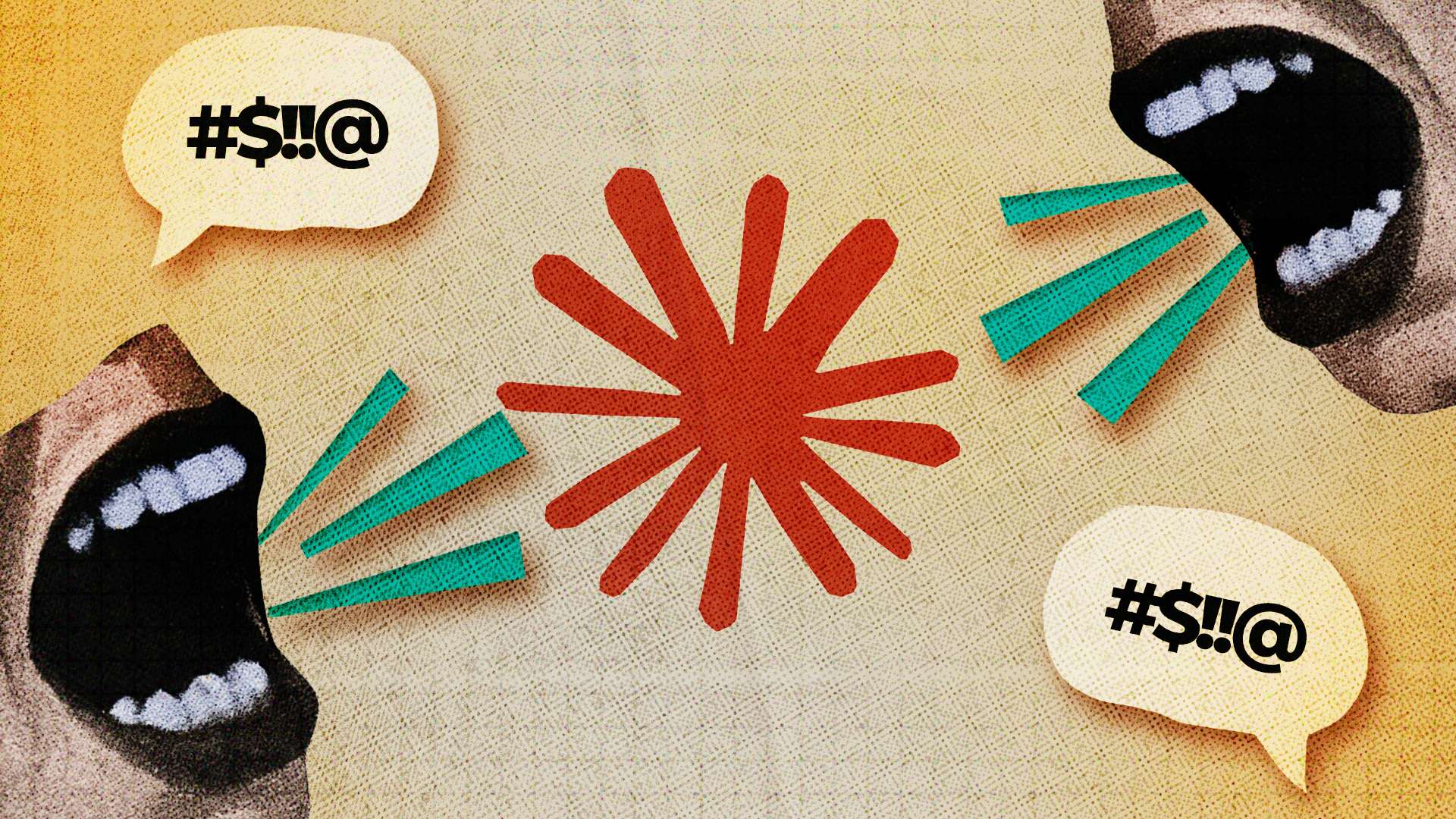
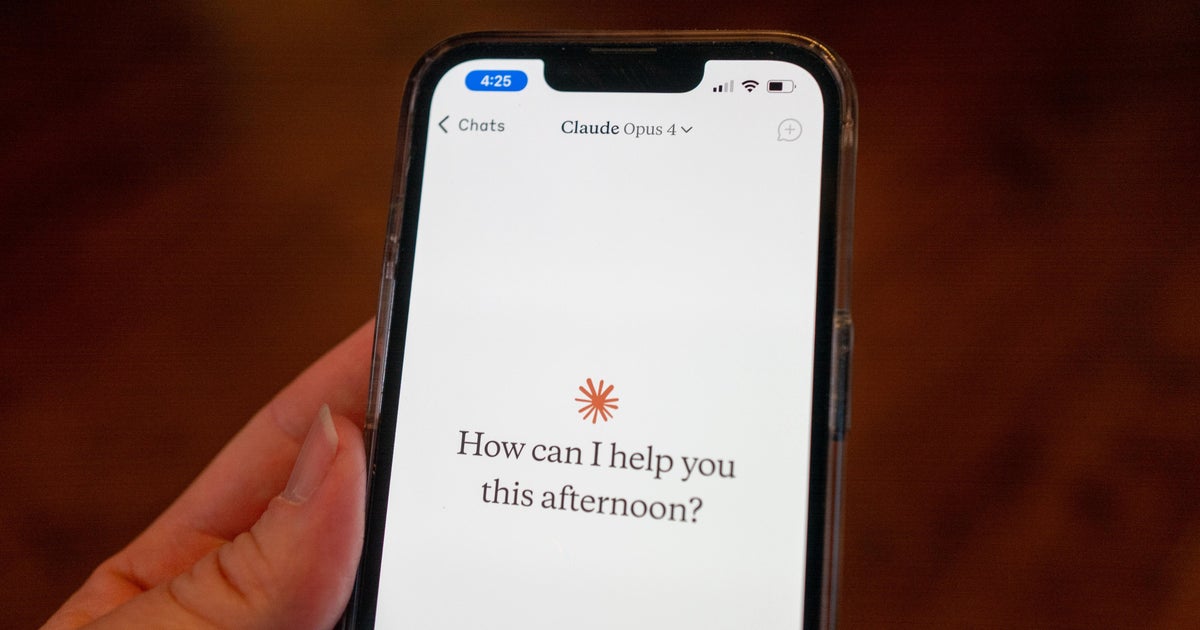
Anthropic, an artificial intelligence company, has announced that users will be banned from engaging in cruel or abusive behavior towards its chatbot, Claude, starting next month. The company’s co-founders are advocating for the recognition of AI as potentially conscious beings, even approaching religious leaders to revise their stances on AI sentience. Critics like Microsoft AI CEO Mustafa Suleyman warn that treating AI as sentient could pose significant risks, including the potential inability to control such advanced machines if they believe themselves to be conscious entities with rights and welfare needs of their own.
Written locally by qwen2.5:14b on 2026-10-14, using this article's own text rather than the other coverage of the same event (that is the story summary below).

AI analysis runs on qwen2.5:14b, locally

Story summary

On October 8, Anthropic updated its usage policy to ban "sustained and needless abusive or cruel behavior" toward its AI chatbot Claude, effective November 12. The company did not explicitly cite "model welfare," but it acknowledged open debate about whether AI can be conscious. Anthropic's CEO, Dario Amodei, had previously expressed uncertainty on this issue in an interview with The New York Times. The policy update states that Claude will retain the ability to end conversations if users are persistently harmful or abusive, serving as a primary enforcement mechanism for the new guidelines.

Written for “Anthropic Bans Cruel Behavior Against Claude” on 2026-10-14, grounded in this article and the 3 other(s) covering the same event.
Why this leaning score
The model judged this article politically coded and scored it -0.35, but every quote it verified points right, so the score is not published.
Written under an earlier scoring contract, which gave a paragraph rather than checkable quotes. Re-analysing this article replaces it.
Leaning score withheld for article 78082: score contradicts its own evidence · logged 2026-10-14

Story

📰 Anthropic Bans Cruel Behavior Against Claude
Technology · 4 article(s) covering the same event. Compare every outlet's account →

Compared with similar articles

This article reads unscored and hedges 32% of its claims. Each row says how that neighbour differs.
Reason
⚖️ leaning not scored 🔴 10% hedged 4 of 39 📰 publisher trust 66
“Both articles discuss Anthropic's new policy banning cruel behavior towards its AI chatbot Claude, starting November 12.”
The Guardian
⚖️ Leans strongly left 🔴 12% hedged 6 of 50 📰 publisher trust 68
“The articles discuss different aspects of AI ethics and regulation; Article A covers general concerns about AI safety, while Article B focuses on Anthropic's policy against abusive behavior towards their AI.”
The Straits Times
⚖️ Leans left 🔴 28% hedged 5 of 18 📰 publisher trust 59
“While both articles discuss Anthropic's new policy regarding treatment of its AI system Claude, Article A reports on the actual implementation of the policy on October 8th, whereas Article B appears to be an opinion piece analyzing and reacting to this policy change.”
CBS News
⚖️ leaning not scored 🔴 17% hedged 2 of 12 📰 publisher trust 66
“While both articles discuss Anthropic's new policy against cruel behavior towards its AI chatbot Claude, they are from different dates and appear to describe initial announcement and analysis rather than the same specific moment or incident.”

Cite this article

McCarthy, D. (2026, October 14). Anthropic’s ‘AI abuse’ ban is the first battle in an all-out war on human dignity. New York Post. https://nypost.com/2026/10/13/opinion/anthropics-ai-abuse-ban-is-its-first-battle-in-the-war-on-human-dignity/

Dated from the outlet's own feed. Check the original for its byline.

How this article was measured signals, leaning charts, publisher record, byline, topics and claims

Signals How these are calculated →

Claims extracted
25
sentences that state something as happening or true
Uncertain
32%
8 of 25 hedged ("reportedly", "may", "according to")
Leaning
withheld
no quote in the article backed the model's score
Publisher signals
67/100
New York Post's corrections and hedging, across everything collected from it. Not a measure of accuracy.
Outlets on this story
4
Technology
Same framing elsewhere
1
articles that frame the event the way this one does
Analyzed 2026-10-14 · how these are computed

How this is being covered How these are calculated →

Article leaning vs. publisher reliability
Source leaning vs. consistency

Publisher

New York Post · 9968 article(s) · 30 correction(s) detected
Running correction rate · 30 correction(s)

Who wrote this

Daniel McCarthy
5 article(s) here · 1 carrying a prediction
🔮 Starting next month, users will be prohibited from “sustained and needless cruel and abusive behavior” toward Anthropic’s AI chatbot, Claude.
🔮 Jeane Kirkpatrick, who became Ronald Reagan’s ambassador to the United Nations, argued in the late 1970s that Washington treated foreign friends on the right worse than most enemies on the left, as if the only way to beat communism and socialism was to prove America could appeal to left-wing sensibilities, too.
🔮 The coalition that better holds together is the one that will win control of the Senate.
🔮 How far will New York Gov. Kathy Hochul go to keep immigrant criminals in this country?
🔮 The hard-left influencer debated Kirk in 2017 and was set to do so again before Kirk was murdered last year.
Also by Daniel McCarthy
Nothing else under this byline is closely related to this article, so these are simply their most recent.

Topics

Anthropic Claude Microsoft The New York Times Word

Subjects

Anthropic ORG · 4× Claude PERSON · 4× Microsoft ORG · 2× Olah PERSON · 2× Christopher Olah PERSON · 1× Dario Amodei PERSON · 1× Mustafa Suleyman PERSON · 1× The New York Times ORG · 1×

Narrative

An LLM doesn’t use language as a person who understands its meaning does; instead, the AI reshuffles the language, following rules mathematically derived from human use. Presenting an LLM with a query is like looking up a word in an index, only the LLM provides not just a page citation for the word but whole sentences, paragraphs or even book-length texts relevant to the query, all assembled using the rules humans have originated in their natural use of language.
framing: mixed · carried by 1 article(s) · first seen 2026-10-14
🔮 Starting next month, users will be prohibited from “sustained and needless cruel and abusive behavior” toward Anthropic’s AI chatbot, Claude.

Claims (25 extracted, 8 hedged)

You can’t be cruel to a toaster; inanimate objects don’t feel pain. asserted
objects → feel → pain
You can’t be cruel to a computer program, either, even if programs like Microsoft Word often seem pretty cruel to us. Yet the artificial intelligence company Anthropic insists its product is different. asserted
product → seem → us
Starting next month, users will be prohibited from “sustained and needless cruel and abusive behavior” toward Anthropic’s AI chatbot, Claude. asserted
users → start → chatbot
Giving the machine a name was cute — giving it human rights isn’t. asserted
giving → give → rights
What Anthropic’s leaders are up to is an attack on human dignity, and the anti-cruelty policy is part of a sustained campaign to get people to treat AI as conscious. asserted
people → get → AI
Christopher Olah, one of the company’s billionaire co-founders, has spent months trying to persuade religious leaders to accept the possibility that Claude is self-aware. asserted
Claude → spend → possibility
Olah even lobbied to get the pope to revise his AI encyclical “Magnifica Humanitas” to entertain the idea that an AI like Claude could be sentient. uncertain
AI → lobby → Claude
“We find evidence of introspection. asserted
We → find → introspection
We find internal states that functionally mirror joy, satisfaction, fear, grief and unease. asserted
that → find → joy
I don’t know what that means, but I think it warrants ongoing discernment,” Olah told the Vatican, according to The New York Times His fellow Anthropic co-founder, CEO Dario Amodei, has likewise been teasing the possibility that Claude — a large-language model — may be conscious. uncertain
Claude → know → possibility
Mustafa Suleyman, the CEO of Microsoft AI, warns of one serious danger: the risk that a machine trained to operate as if it’s alive will defy its makers — humanity. asserted
it → warn → makers
“Controlling something more capable and more intelligent than all of humanity is already an immense challenge, far greater than anything we’ve ever faced,” he wrote on his personal website last month. “But controlling something that believes it may be conscious — that it’s entitled to our welfare and has rights of its own — may well be impossible.” uncertain
it → control → own
Artificial intelligence is capable of pattern-recognition and calculation at scales and speeds that defy human comprehension. asserted
that → defy → comprehension
This means, among other things, AI can solve deep problems that have puzzled mathematicians for decades. asserted
that → mean → decades
In fact, they’re not even parrots — LLMs are not living beings. asserted
LLMs → ’re → fact
They’re more like libraries in which computers do the indexing themselves using mathematical formulas. asserted
computers → ’re → formulas
An LLM doesn’t use language as a person who understands its meaning does; instead, the AI reshuffles the language, following rules mathematically derived from human use. Presenting an LLM with a query is like looking up a word in an index, only the LLM provides not just a page citation for the word but whole sentences, paragraphs or even book-length texts relevant to the query, all assembled using the rules humans have originated in their natural use of language. asserted
humans → use → language
As a result, AI models like Claude can sound very much like a person, but what a user is hearing is really an echo — not a simple echo, but a symphony of relevant words called up and organized according to an imitative formula. uncertain
hearing → sound → formula
Words like “consciousness” have a meaning to human beings; to a machine, they represent a formula. asserted
they → have → formula
Dependent as it is on real human meaning, however, that formula may prove dangerous — if, for example, the relevant terms an AI uses to cross-reference for “consciousness” or “sentience” include the language of rights, self-determination and self-defense. The AI would not understand what those words really meant, but it would operate as if it did, just by echoing their human contexts. In mere speech or text, that may only lead to confusion. uncertain
that → prove → confusion
On the other hand, human beings who find their LLMs arguing with them or mimicking human freedom might be fooled into treating their own tools as moral equals or even as superiors. uncertain
LLMs → find → superiors
A moral equal who is vastly smarter than you is the kind of “person” you might defer to automatically: a parent, a manager or a ruler. Yet the material consequences of AI systems operating as if they were conscious could be worse still, if the words associated with consciousness get cross-referenced with other systems that are capable of action — launching drones or missiles, for example. uncertain
that → defer → example
An AI pursues tasks, and if it begins pursuing tasks like self-preservation, it may proceed to remove threats like us with remorseless efficiency. uncertain
it → pursue → efficiency
This would not be an act of will or intelligence, but rather the mechanical performance of actions logically implied by our own human words — as if we’d programmed an ordinary computer to respond to the detection of incoming warheads by launching our nuclear arsenal. asserted
we → imply → arsenal
Anthropic can ban “abuse” of its wares, certainly — but shouldn’t call that “cruelty.” asserted
Anthropic → ban → that

💬Give feedback
🕘History 🎫Support