Photo via Semafor

Resilience of Gulf oil infrastructure has its limits

Read the original at Semafor ↗
Cite

Bakr, A. (2026, November 2). Resilience of Gulf oil infrastructure has its limits. Semafor. https://www.semafor.com/article/11/02/2026/resilience-of-gulf-oil-infrastructure-has-its-limits

Dated from the outlet's own feed. Check the original for its byline.

Semafor · collected 2026-11-02 · by Amena Bakr

Quick Summary

Amena's analysis discusses how Gulf oil-exporting states like Saudi Arabia and the UAE are preparing for potential renewed conflicts with Iran despite showing resilience in maintaining their oil supply. The article highlights specific infrastructure investments such as the UAE’s 1.8 million-barrel-per-day pipeline from Abu Dhabi to Fujairah, which has proven its value during recent tensions. With global inventories depleted by about 1 billion barrels and Brent crude trading above $110 a barrel, there is concern that further price increases could significantly reduce oil demand.
Written by AI on 2026-11-02, from this article's own text only (the story summary below draws on all the coverage).

AI analysis

Story summary

The ongoing US-Iran conflict, now eight months long, has put Gulf oil infrastructure at significant risk despite the resilience shown by Saudi Arabia and the UAE. These nations have activated contingency plans and repaired damaged facilities quickly to maintain energy supply stability. The UAE’s pipeline from Abu Dhabi to Fujairah, with a capacity of 1.8 million barrels per day, has proven particularly valuable; it recovered its investment costs within just one month due to increased demand following the conflict. A second similar pipeline is expected to be completed by July 2027. Additionally, Saudi Arabia is considering expanding its East-West Pipeline and potentially including countries like Iraq and Kuwait in the project to further diversify oil export routes beyond the Strait of Hormuz. This infrastructure expansion aims to mitigate future disruptions caused by unresolved political conflicts in the region.

Written for “Gulf Oil Infrastructure Vulnerability” on 2026-11-02, grounded in this article and the 0 other(s) covering the same event.
Why this leaning score
The article's own words the score was based on. Each is quoted verbatim and was checked against the article text before being stored, so you can find it in the original.
Reading Leans left (beta estimate) Confidence medium 1 quote(s) discarded as not found in the article
Leaning: leans left for article 122992 (medium confidence, 3 verified quotes) · logged 2026-11-02

Story

📰 Gulf Oil Infrastructure Vulnerability
Economy/Business · 1 article(s) covering the same event.

Compared with similar articles

This article reads leans left and hedges 15% of its claims. Each row says how that neighbour differs.
Washington Examiner
⚖️ Leans left Hedges 0 of 5 claims Outlet record 70/100
“While both articles discuss potential risks to Gulf oil infrastructure due to political conflicts involving Iran, they do not describe a single specific incident but rather broader implications and analyses of the situation.”
The Guardian
Hedges 2 of 15 claims Outlet record 66/100
“The articles discuss related topics concerning the impact of US-Iran war on Gulf states' defense and oil infrastructure resilience, but describe different aspects and outcomes.”
How this article was measured signals, leaning charts, publisher record, byline, topics and claims

Signals How these are calculated →

Claims extracted
26
sentences that state something as happening or true
Uncertain
15%
4 of 26 hedged ("reportedly", "may", "according to")
Leaning
Leans left
of the writing, not the subject · beta estimate
Publisher signals
59/100
Semafor's corrections and hedging, across everything collected from it. Not a measure of accuracy.
Outlets on this story
1
Economy/Business
Same framing elsewhere
1
articles that frame the event the way this one does
Analyzed 2026-11-02 · how these are computed

How this is being covered How these are calculated →

Article leaning vs. publisher reliability
Source leaning vs. consistency

Publisher

Semafor · 1423 article(s) · 3 correction(s) detected
Running correction rate · 3 correction(s)

Who wrote this

Amena Bakr
2 article(s) here · 1 carrying a prediction
🔮 Renewed strikes will put more of the region’s oil supply at risk.
2026-11-02 · assertive framing · Resilience of Gulf oil infrastructure has its limits
🔮 Trump said the US will control the sale of Venezuelan oil, while a recent agreement grants Washington sweeping influence over access, production, and exports.
2026-09-08 · assertive framing · Leaving OPEC won’t give Venezuela its oil back
Also by Amena Bakr
Nothing else under this byline is closely related to this article, so these are simply their most recent.

Topics

Abu Dhabi Fujairah Iraq Saudi Arabia UAE

Subjects

UAE GPE · 4× ADIPEC ORG · 2× European NORP · 2× Fujairah GPE · 2× Saudi Arabia GPE · 2× Abu Dhabi GPE · 1× Amena PERSON · 1× Anwar Gargash PERSON · 1× Iraq GPE · 1× Kuwait GPE · 1×

Narrative

The UAE’s race toward its “Zero Hormuz” strategy runs through Fujairah, where investments can be seen in all directions intended to move the fossil fuels and products that would otherwise be trapped in the Gulf, Semafor reported.
framing: assertive · carried by 1 article(s) · first seen 2026-11-02
🔮 Renewed strikes will put more of the region’s oil supply at risk.
2026-11-02 · Semafor
Resilience of Gulf oil infrastructure has its limits · assertive framing

Claims (26 extracted, 4 hedged)

The drums of war are beating again, and the oil-exporting states are bracing “for the worst,” as the UAE’s presidential advisor Anwar Gargash recently put it. asserted
advisor → beat → it
Eight months into the US-Iran war, one lesson is clear: There is no amount of operational resilience that can shield energy infrastructure from an unresolved political conflict. asserted
that → be → conflict
Renewed strikes will put more of the region’s oil supply at risk. asserted
strikes → put → risk
Saudi Arabia and the UAE have demonstrated exceptional levels of resilience, activating contingency plans, carrying out repair works in record time, and keeping customers supplied. asserted
Arabia → demonstrate → customers
Their bypass pipelines have proven the value of planning for the shift from the “just in time” model to the “just in case” approach. asserted
pipelines → prove → approach
The UAE’s 1.8 million-barrel-per-day (bpd) pipeline from Abu Dhabi to Fujairah on the Gulf of Oman was once questioned as an investment. asserted
pipeline → question → investment
Its cost was recovered after just one month of conflict, according to people familiar with the matter. uncertain
cost → recover → matter
A second link with similar capacity is expected to be completed by July 2027. asserted
link → expect → July
Saudi Arabia is considering expanding its larger East-West Pipeline and may bring in countries like Iraq and Kuwait that don’t have shipping outlets outside the Gulf. uncertain
that → consider → Gulf
Within the industry, there’s a growing consensus that the pre-war oil flows will not return. asserted
flows → ’ → industry
More investment will be earmarked for contingencies, reflecting in part the view that reaching a diplomatic resolution to the Iran war is unlikely anytime soon. asserted
reaching → earmark → war
So far, the global energy system has performed better than expected. asserted
system → perform → ?
Gulf exporters kept their oil flowing despite the risks faced in Hormuz and Bab el-Mandeb, inventories were released, and some demand was curtailed, all of which combined to limit the oil price spike. asserted
all → keep → spike
But this resilience should not be mistaken for future security of supply, especially as this potential escalation comes at a time when global inventory levels have been drained by around 1 billion barrels. asserted
levels → mistake → barrels
Brent is trading above $110 a barrel, of which perhaps $40 could be attributed to geopolitical risk. uncertain
40 → trade → risk
While much of the focus is on guessing what US President Donald Trump is planning, the reality for the oil industry is that higher prices may have eroded around 3 million bpd of demand, according to energy industry executives. uncertain
prices → guess → executives
This assumption is even more pessimistic than the IEA’s forecast of demand declining by around 2.6 million bpd this year. asserted
demand → decline → bpd
Another rise in prices, or oil prices sustained at this level, will only lead to even more demand destruction. asserted
rise → sustain → destruction
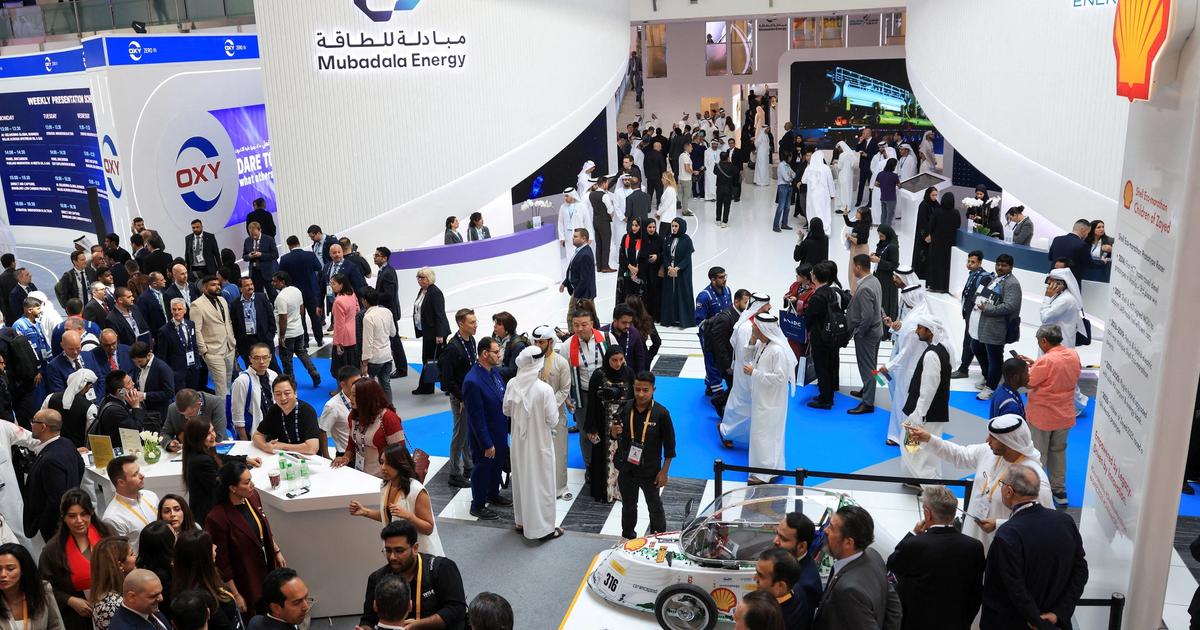
This week, ahead of Abu Dhabi’s flagship energy conference ADIPEC, senior executives and CEOs from the energy industry gathered to discuss the challenges facing the industry under the Chatham House Rule. asserted
executives → gather → Rule
Over the past two decades, around 25% of Europe’s refineries were shut down, mainly as a result of policies related to the energy transition. asserted
% → shut → transition
Today, energy executives from European oil majors are pressured to address rising prices of oil products without having the facilities needed to deliver the energy to consumers. asserted
executives → pressure → consumers
If there’s one silver lining from this crisis, it’s prioritizing investments in new supply and abandoning the dichotomy between the concepts of “old energy” and “new energy.” asserted
it → ’ → energy
At the opening of ADIPEC on Monday, Sam Altman, the CEO of OpenAI, was asked what the biggest challenge facing his industry is. asserted
challenge → ask → industry
He replied with one word: “energy.” asserted
He → reply → word
Another round of war will make that energy costlier, and less abundant. asserted
energy → make → war
The UAE’s race toward its “Zero Hormuz” strategy runs through Fujairah, where investments can be seen in all directions intended to move the fossil fuels and products that would otherwise be trapped in the Gulf, Semafor reported. asserted
Semafor → run → Gulf

💬Give feedback
🕘History 🎫Support