AS AMERICANS VOTE IN THE MIDTERM elections, arguments about the economy, immigration, national security, and the performance of our elected officials abound.
asserted
arguments → vote → officials
But beneath the political debates lies a question that deserves more attention: What kind of country do we aspire to be?
asserted
we → lie → country
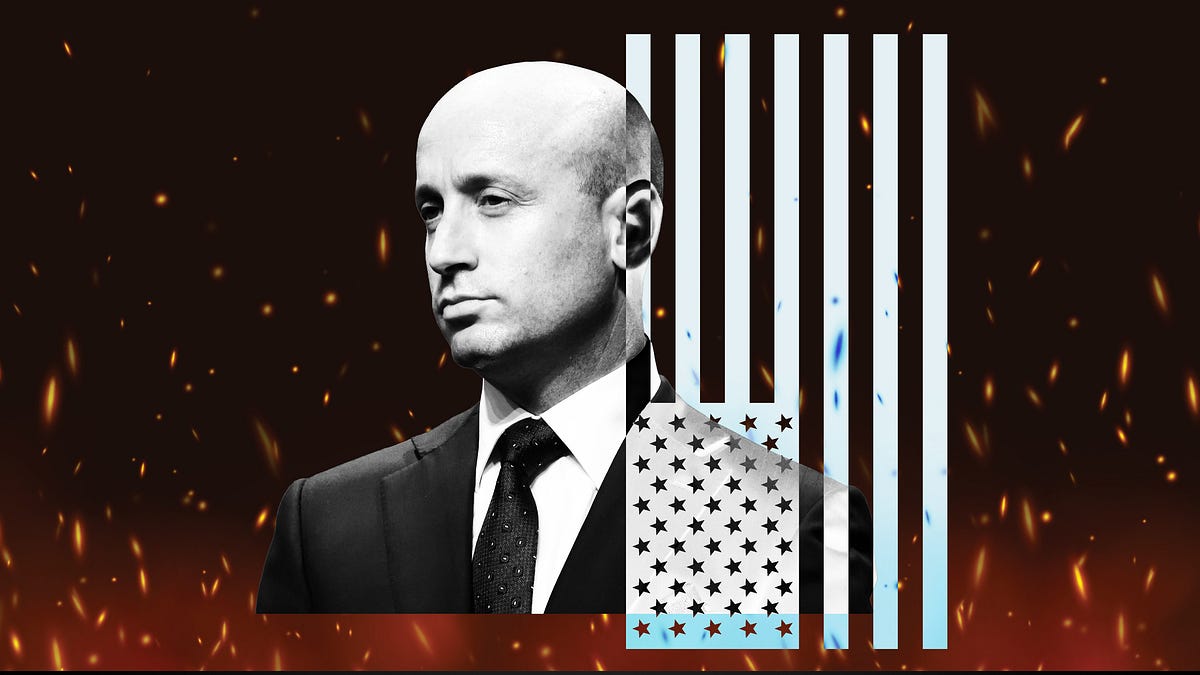
Last week, Donald Trump hosted an event in the Oval Office to introduce the Justice Department’s new “Fraud Whistleblower Incentive Program,” and his deputy chief of staff, Stephen Miller, used the opportunity to distinguish between people he portrayed as exploiting government benefits—namely refugees and immigrants—and the American taxpayers being robbed by them:
asserted
he → host → them
The president is describing . . . a criminal conspiracy where a state knowingly aids and admits fraud that’s funneled into these communities.
asserted
that → describe → communities
They then use those funds to fund the Democrat party.
asserted
They → use → party
So it’s a self-enrichment scheme that’s being exposed, that is fundamentally a criminal conspiracy.
asserted
that → ’ → ?
I first grew suspicious of the administration’s attempts to transform American culture in the spring of 2025, when Miller delivered remarks from the White House “about what President Trump has done to secure our values, our culture and our way of life from the unwavering assault from the radical left and the communists and the Democrat party.”
asserted
Trump → grow → left
He went on to decry “the wave of racial discrimination, so called diversity, equity and inclusion policies, that have taken over both public sector and private sector entities,” and promised that “this administration is not going to let our society devolve into communist woke DEI strangulation.”
asserted
society → go → strangulation
After a disconcerting soliloquy about prison rape and child abuse, Miller promised that “children will be taught to love America, children will be taught to be patriots.
asserted
children → promise → America
Children will be taught civic values for schools that want federal taxpayer funding.
asserted
that → teach → funding
For any nation to be successful it cannot teach its children to hate themselves and to hate their country.”
asserted
it → teach → country
Miller and the rest of the Trump administration have been explicit about their desire to reshape our society, from what children are taught in schools to how Americans understand equality, national identity, immigration, and patriotism.
asserted
Americans → reshape → equality
But I wonder whether they truly understand the complexity of what they are attempting.
asserted
they → wonder → what
I’ve commanded military organizations with tens of thousands of soldiers, worked with physicians and hospital executives to transform health care organizations, and taught business leaders struggling to change their companies’ cultures.
asserted
I → command → cultures
In almost every instance, the challenge was far more complicated than the leaders initially imagined.
asserted
leaders → imagine → instance
Culture is not a policy memorandum, a strategic plan, or a collection of slogans posted.
asserted
Culture → post → slogans
It is the accumulation of history—the good and the bad—made up of our shared experiences, traditions, values, and behaviors.
asserted
It → make → experiences
It is reflected in what people believe, how they treat one another, what they consider acceptable, and what they are willing to defend.
asserted
they → reflect → what
Leaders certainly influence culture, but every individual also shapes it.
asserted
individual → influence → it
One of the first lessons leaders learn when attempting to change culture is that authority and influence are not the same thing.
asserted
authority → learn → culture
A CEO can change organizational structures, revise policies, replace executives, and change performance standards.
asserted
CEO → change → standards
A military commander can issue lawful orders, establish priorities, and enforce discipline.
asserted
commander → issue → discipline
But genuine cultural change requires credibility, trust, consistency, and, perhaps most importantly, a willingness among all members of the organization to embrace the values their leaders claim to represent.
uncertain
leaders → require → values
A leader’s most powerful tool to change a culture is personal example.
asserted
tool → change → culture
People watch what leaders do far more closely than they listen to what leaders say.
asserted
leaders → watch → what
When leaders preach integrity but practice deception, demand accountability but refuse to accept responsibility, or insist upon respect while treating others with contempt, their actions overwhelm their words.
asserted
actions → preach → words
Changing the culture of a military unit or a company is hard enough.
asserted
Changing → change → unit
It is made up not of employees or subordinates but citizens—more than 340 million of them—with different beliefs, religions, traditions, political opinions, and aspirations.
asserted
It → make → beliefs
Our government derives its legitimate authority from those citizens, not the other way around.
asserted
government → derive → citizens
The president can propose policies, enforce laws, and advocate for his preferred vision for the country.
asserted
president → propose → country
But no elected official can legitimately claim exclusive ownership of American culture or determine that citizens who hold different beliefs from him are somehow less American.
uncertain
who → elect → him
That’s what makes Miller’s statements worth examining, especially as we approach an election.
asserted
we → ’ → election
The issue is not whether American culture should change.
asserted
culture → change → ?
It has always changed, and much of our national progress has depended upon that evolution.
asserted
much → change → evolution
The more important questions are what values should guide that change, how it should occur, and whether the government’s methods of imposing change respect the constitutional principles that define our republic.
asserted
that → guide → republic
Our Founders believed that individuals possessed inherent rights to think, speak, worship, assemble, and pursue their lives without unnecessary government interference.
asserted
individuals → believe → interference
Yet Miller revealed that the administration was working to ban certain theories—those he vaguely described as promoting “communist ideology—from even being discussed in schools.
asserted
he → reveal → schools
I believe deeply in teaching young Americans to love their country.
asserted
I → believe → country
I spent nearly four decades wearing its uniform, and I’ve witnessed extraordinary acts of patriotism from soldiers who understood the sacrifices required to defend it.
asserted
who → spend → it
But patriotism cannot be commanded.
asserted
patriotism → command → ?
…and 55 more, not listed.
 The Aporia