Imperial ambitions are ever-shifting under President Donald Trump.
asserted
ambitions → shift → Trump
Greenland, Venezuela, Iran, and Cuba are oftentimes spoken about as one continuous train of complete victories and soon-to-be-complete-victories.
asserted
Greenland → speak → victories
With the midterms fast approaching, and the date for an apparent telegraphed return to the Iran war on its heels, talk of easily overthrowing regimes has returned, if it ever truly left.
asserted
it → approach → regimes
At a rally in Florida last Friday, Trump laid out his grand vision, which he promised would come to pass once the Islamic Republic is neutralized as a threat to the world: “We’re going to come back from Iran.
asserted
We → lay → Iran
Those beautiful ships will pass Cuba.
asserted
ships → pass → Cuba
We’ll have one of them stop about 50 yards off the coast.
asserted
one → have → coast
They’ll raise up their hands, and then we’re going to send Marco Rubio in to finish up the deal.”
asserted
we → raise → deal
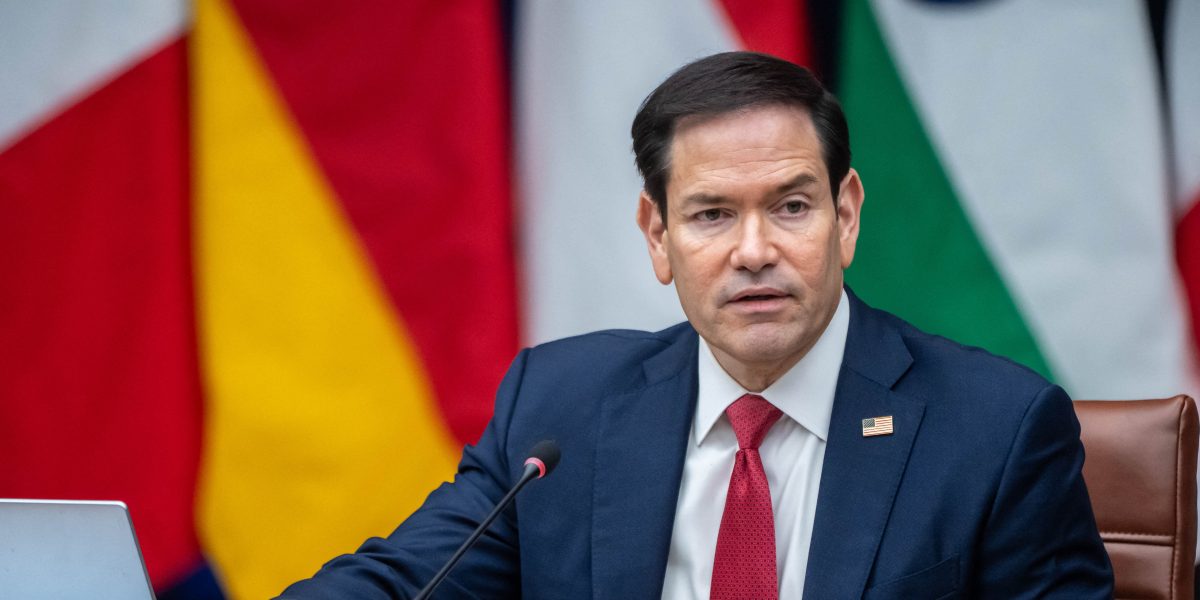
Secretary of State Marco Rubio, the descendant of Cuban immigrants who left under President Fulgencio Batista (though Rubio later tried to claim his parents fled Castro, who came to power three years later), has long put overthrowing the Communist government in Havana at the top of his agenda, with the hope of replicating the relative ease of kidnapping Venezuelan President Nicolás Maduro in January.
uncertain
who → leave → January
Rubio turned some heads last Friday when he publicly posted on X that those seeking “to create positive change in Cuba” could “seize this opportunity to create the change you desire through a discrete [sic] partnership with the CIA.”
uncertain
you → turn → CIA
The post was widely met with bewilderment (Bloomberg’s White House correspondent wrote: “Checked like four times that this was real”), but U.S. officials and members of Congress also shared the post, elevating the public call for collaboration.
asserted
officials → meet → collaboration
Recruiting in public might come across as strange and out of character to a public that imagines the CIA recruiting secret agents and informants through clandestine channels or hidden websites, as the agency had done to try and recruit agents inside Iran under Bush and Obama.
uncertain
agency → recruit → Bush
Under the Biden administration, the CIA recruited collaborators inside Russia via a public Telegram channel, as well as publishing videos on social media hoping to recruit Chinese, Iranian, and North Korean assets.
asserted
CIA → recruit → assets
This kind of overt recruitment stems from the difficulties Western intelligence agencies face against adversaries who have built sophisticated surveillance networks of their own.
asserted
who → stem → own
A CIA official told ABC News in May 2025, “in today’s world of [universal technical surveillance], we can’t recruit sources the same way that we did 20 years ago, probably the same way you did 10 years ago.”
uncertain
you → tell → sources
This has not only affected intelligence operations targeting Beijing, but also Tehran and Havana, where both the U.S. and Israel’s lack of on-the-ground connections and limited official presence has led the CIA and the Mossad to try to recruit willing informants online.
asserted
lack → affect → informants
While these limitations may govern the particulars of this strategy, those in power in their respective countries may not see it as evidence of constraints, but instead as evidence of the power of their new strategy: boasting about their national power, rather than keeping it behind closed doors where it supposedly remains useless.
uncertain
it → govern → doors
After all, what is the use of a deterrent if nobody knows it was you?
asserted
it → know → deterrent
The scale of these public appeals, despite having started under Biden, has exploded under the second Trump term, but these moves were arguably preceded by Benjamin Netanyahu’s efforts to bring the Mossad’s operations much more into the public sphere.
asserted
moves → start → sphere
The Israeli prime minister’s bragging about numerous cyberattacks targeting Iran’s nuclear program in the late 2010s began to precipitate a shift in public discussion of the Mossad’s work, with many Netanyahu allies, like then-Justice Minister Ayelet Shaked, praising the fact that Iran could now “know it is exposed and that Israel can reach anywhere in the Islamic Republic.”
uncertain
Israel → target → Republic
A former deputy director of the Mossad said after the unveiling of Iran’s stolen nuclear archive that Netanyahu’s move “goes against our nature,” and that “the prime minister insisted on publicizing this.”
asserted
minister → say → this
Netanyahu’s pick in 2021 for the director of the Mossad, David Barnea, has been credited with institutionalizing that change, shifting the secretive intelligence agency’s operations toward appealing to larger masses, and reportedly concerning Mossad veterans who were shocked by the publicizing of agents inside Iran.
uncertain
who → credit → Iran
Casting Israel as a superpower capable of exerting its power anywhere has become a popular refrain under Netanyahu.
asserted
Casting → cast → Netanyahu
In an interview with “60 Minutes,” one Mossad officer said of the 2024 pager attacks in Lebanon, which injured more than 2,000 people, that “they are walking proof of our superiority all around the Middle East,” with another officer saying the operation’s complexity and success demonstrated “the world is our stage.”
asserted
world → say → East
The U.S. has also gotten in the habit of flexing its superpower status under Trump, declaring the nation’s intent to conquer places like Greenland and Canada, to steal the natural resources of Venezuela and Iran to fill American coffers, and to openly and unabashedly place the Western Hemisphere under a Washingtonian protectorate known as the “Donroe Doctrine.”
asserted
U.S. → get → Doctrine
Rubio declared in Greece in early October, speaking in terms of civilizational battle against the backdrop of the Acropolis, that “we choose the unapologetic pursuit of national power.”
asserted
we → declare → power
Openly siccing the CIA on foreign adversaries and ICE on domestic ones has been part of that strategy of embracing imperial fervor at home and abroad.
asserted
ICE → sicce → home
Erik Prince, the founder of Blackwater and a private security contractor who remains influential in Trump world, said he was “jealous” of the pager attacks and publicly urged the CIA to take a lesson from the Mossad, saying “we should be getting those kinds of results.”
asserted
we → remain → results
While both countries have openly sought deep intelligence penetration in adversarial nations, there are limitations to the power of clandestine and overt operations, even by superpowers and wannabes.
asserted
countries → seek → superpowers
While the CIA asserted its power in May by openly having its director meet with Cuban officials in Havana to demand “fundamental changes” in return for relief from economic strangulation, the agency’s history of attempts to overthrow the Communist Cuban government are as storied as they are unsuccessful.
uncertain
they → assert → government
Earlier hopes for Iran to be as quick and as clean as taking control of Venezuela’s government were dashed early on in the conflict, with the war that was supposed to only take a few weeks now all but certain to extend past the midterm elections for another devastating round.
asserted
that → take → round
Even if the war with Iran ends so easily that American ships are able to go through Cuba on the way back ready for more, both outside analysts and even internal U.S. intelligence assessments do not see as easy a way to overthrow the Communist state.
asserted
way → end → state
The New York Times reported in August that American intelligence sources indicate it could be a situation closer to Iran, where even if Raúl Castro (who has held no official position in the country since 2021) were captured, “few pragmatic officials” are likely to take power in his stead.
uncertain
officials → report → stead
While Cuba’s military lacks the kind of advanced equipment Iran has, and shows of readiness (like with Venezuela) are no indication of a country’s actual willingness to fight a protracted campaign, Cuba’s military structure is similar to Iran’s in that it is based on decentralization and redundancies in leadership.
asserted
it → lack → leadership
In addition, Cuba has a political power structure that, also similar to Iran, is not actually based around a single individual, despite popular claims to the contrary.
uncertain
that → have → contrary
Despite Trump’s constant bluster about the miracle of being able to take out Maduro without a single American death, the brazenness of that operation, and the openness with which the negotiations with Iran have been deceptive, appear to have had lessons for the Cuban leadership.
asserted
negotiations → take → leadership
President Miguel Díaz-Canel said in June: “All these elements create a lot of distrust in the Cuban people when it comes to conducting any type of negotiation.
asserted
it → say → negotiation
We continue to express our willingness for dialogue, but it has to be a dialogue between equals, without pressure and with respect for our sovereignty.”
asserted
it → continue → sovereignty
American officials have yet to internalize that sentiment.
asserted
officials → have → sentiment
Discussing Cuba in March, Trump joyfully mused: “Whether I free it, take it, I think, I could do anything I want with it.”
uncertain
I → discuss → it
At the time, he was saying similar things about Iran.
asserted
he → say → Iran
…and 3 more, not listed.
 The Aporia