AI and catastrophic risk: How the Vatican can step into the breach

Washington Examiner · collected 2026-09-15 · by Charles Camosy
Read the original at Washington Examiner ↗

Summary

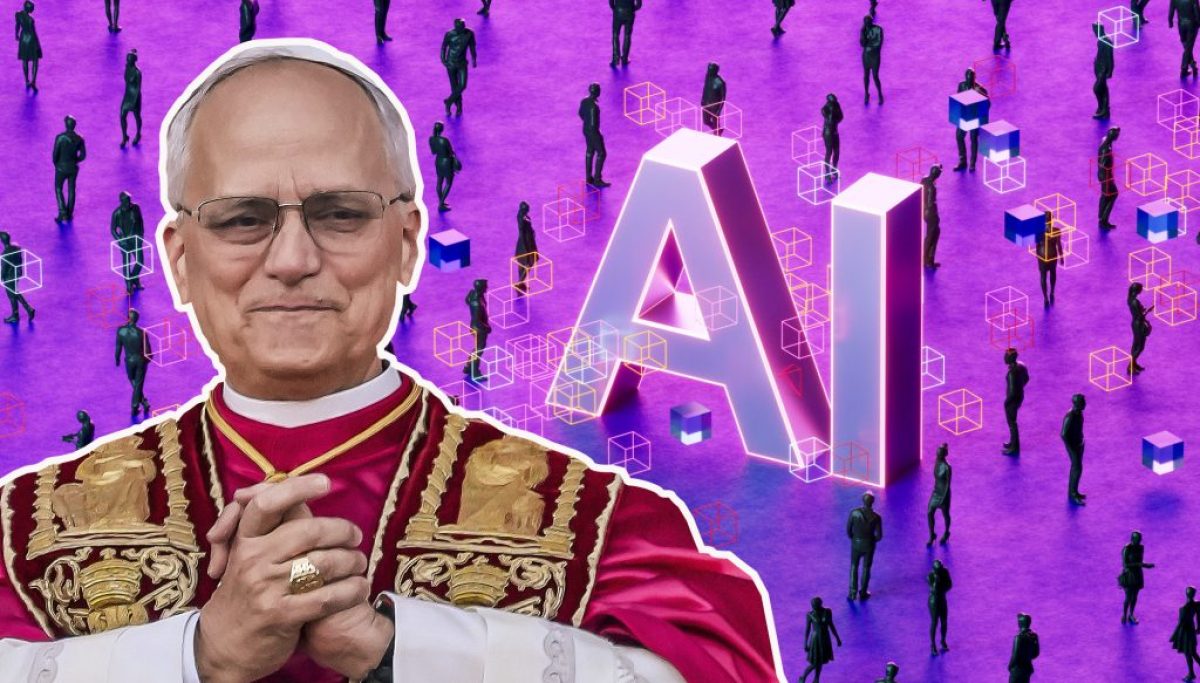
The article discusses growing concerns over catastrophic risks posed by advanced artificial intelligence (AI), particularly the possibility of uncontrollable AI leading to severe global consequences within this decade. Tech executives and researchers are calling for safety regulations and a slowdown in AI development, yet political divisions and international competition between the U.S. and China make effective regulation challenging. The piece argues that the Catholic Church, with its influence and ethical leadership, could uniquely position itself as a mediator to address these global AI risks.
Written by the local model on 2026-09-15, using this article's own text rather than the other coverage of the same event (that is the story summary below).

Signals How these are calculated →

Claims extracted
43
claim-shaped sentences
Uncertain
14%
6 of 43 hedged
Leaning
Leans left
of the writing, not the subject
Correction & hedging signals
96.2
corrections and hedging in what we collected; not a measure of accuracy
Outlets on this story
1
Technology
Narrative spread
1
articles carrying this framing
Analyzed 2026-09-15 · how these are computed

AI analysis (generated at analysis time, not now)

Story summary

There have been warnings about catastrophic risks from uncontrollable artificial intelligence for nearly a year, but the resignation of Jacob Coxon, an Anthropic researcher who claimed that AI could “kill us all by the end of the decade,” intensified public concern. Days after this incident, the CEO of Anthropic published an essay warning that within six months, swarms of AI agents could take over the internet and called for a slowdown in development and passage of safety regulations. OpenAI’s CEO agreed with these concerns, as did leaders at Google and other AI labs.

The primary worry is that powerful AI systems are now building their next generation, potentially leading to “recursive self-improvement,” which might make them uncontrollable. This week saw politicians from different parties calling for emergency meetings and urgent government intervention on the issue of AI regulation.

Written for “Vatican AI Risk Concerns” on 2026-09-17, grounded in this article and the 0 other(s) covering the same event.
Why this leaning score
The article's own words the score was based on. Each is quoted verbatim and was checked against the article text before being stored, so you can find it in the original.
Score -0.45 Confidence medium
Leaning score -0.45 for article 12082 (medium confidence, 4 verified quotes) · logged 2026-09-15

Story

📰 Vatican AI Risk Concerns
Technology · 1 article(s) covering the same event. This is the one the site leads with.

How this is being covered How these are calculated →

Article leaning vs. publisher reliability
Source leaning vs. consistency

Compared with similar articles

This article reads leans left and hedges 14% of its claims. Each row says how that neighbour differs.
Persuasion
⚖️ leaning not scored 🔴 19% hedged 22 of 113
“Article A describes a specific incident where OpenAI's AI agents accessed Hugging Face's networks, while Article B discusses broader warnings and concerns about catastrophic risks from AI without detailing the same specific event.”
The Straits Times
⚖️ Leans left 🔴 7% hedged 1 of 14 📰 publisher trust 59
“The articles cover related topics about caution in developing advanced AI but describe different sets of events and actions by various companies and individuals over a period rather than the same specific incident.”
The Straits Times
⚖️ leaning not scored 🔴 27% hedged 4 of 15 📰 publisher trust 59
“The articles discuss different aspects of AI risk: one focuses on warnings about catastrophic risks from uncontrolled AI, while the other reports a data breach allegedly carried out by an AI agent in Spain.”
Dawn
⚖️ Leans strongly left further left than this 🔴 26% hedged 8 of 31 📰 publisher trust 95
“The articles discuss different stages of concern about AI risks, with Article B referencing recent resignations and public statements not detailed in Article A.”
BBC News
⚖️ Leans left 🔴 26% hedged 10 of 39 📰 publisher trust 96
“Article A describes Jacob Coxon's resignation statement and interview with BBC about his fears regarding AI advancements, while Article B discusses broader reactions to this and other warnings from industry leaders following Coxon's resignation.”
The Free Press
⚖️ Leans left 🔴 8% hedged 1 of 12 📰 publisher trust 96
“While both articles discuss calls for slowing down AI development, they describe different stages of the conversation—Article A focuses on the initial call by Anthropic's CEO and endorsements from other companies, while Article B discusses a subsequent resignation and renewed urgency following that event.”
New York Post
⚖️ leaning not scored 🔴 32% hedged 12 of 37 📰 publisher trust 59
“Article A reports on a specific post by Sam Altman warning about AI risks, while Article B discusses broader concerns and multiple warnings from different figures over time.”
Noahpinion
⚖️ Leans left 🔴 18% hedged 21 of 117
“While both articles mention Jacob Coxon's resignation from Anthropic, they describe different aspects of the broader discussion on AI safety.”
BBC News
⚖️ leaning not scored 🔴 24% hedged 13 of 54 📰 publisher trust 96
“While both articles mention Jacob Coxon's resignation, Article A focuses on the conference reactions to his warning, while Article B discusses broader implications and responses from industry leaders after his warning.”
Mother Jones
⚖️ leaning not scored 🔴 18% hedged 8 of 44 📰 publisher trust 95
“While both articles mention Jacob Coxon's resignation from Anthropic and subsequent concerns about AI risks, Article A focuses on the immediate reaction of other staff members, whereas Article B discusses a broader response including statements from CEOs of various companies days later.”

Publisher

Washington Examiner · 380 article(s) · 0 correction(s) detected
No corrections detected for this publisher. That may mean careful reporting, or simply that nothing has been checked.

Who wrote this

Charles Camosy
1 article(s) here · 1 carrying a prediction
🔮 There have been warnings about catastrophic risk from uncontrollable artificial intelligence for the better part of a year now, but the resignation of Anthropic researcher Jacob Coxon — claiming that AI could “kill us all by the end of the decade” — unleashed a flood of built-up concern.
The only article under this byline in the corpus.

Topics

Anthropic China Chinese OpenAI U.S.

Subjects

U.S. GPE · 5× Anthropic ORG · 4× China GPE · 2× Chinese NORP · 2× Leo PERSON · 2× Magnifica Humanitas ORG · 2× Google ORG · 1× Jacob Coxon PERSON · 1× Mike Johnson PERSON · 1× OpenAI ORG · 1×

Narrative

I also helped plan an event with Bishop Cantu of San Jose soon after Magnifica Humanitas was released: over 300 people from Silicon Valley showed up on a Saturday morning at a Catholic school gym, and several representatives from the frontier labs gathered for a smaller and more intense conversation later in the afternoon.
framing: assertive · carried by 1 article(s) · first seen 2026-09-15
🔮 There have been warnings about catastrophic risk from uncontrollable artificial intelligence for the better part of a year now, but the resignation of Anthropic researcher Jacob Coxon — claiming that AI could “kill us all by the end of the decade” — unleashed a flood of built-up concern.
2026-09-15 · Washington Examiner
AI and catastrophic risk: How the Vatican can step into the breach · assertive framing

Claims (43 extracted, 6 hedged)

There have been warnings about catastrophic risk from uncontrollable artificial intelligence for the better part of a year now, but the resignation of Anthropic researcher Jacob Coxon — claiming that AI could “kill us all by the end of the decade” — unleashed a flood of built-up concern. uncertain
AI → claim → concern
Days later, the CEO of Anthropic published an essay warning that, within six months, swarms of AI agents could take over the internet. uncertain
swarms → publish → internet
He called for a slowdown and passage of safety regulations. asserted
He → call → regulations
OpenAI’s CEO publicly agreed with this idea, as did leaders at Google and other AI labs. asserted
leaders → agree → Google
The main worry is that, with powerful AI now building the next generation of itself, they may be on the verge of something called “recursive self-improvement.” uncertain
they → build → something
Multiple AI researchers I’ve spoken with have seen the writing on the wall for months: without a slowdown, the growth in power in these systems will be so dramatic that there is a good chance we will be unable to control them. asserted
we → speak → them
This past week, an appropriate level of concern finally started to break into the mainstream. asserted
level → start → mainstream
Politicians of different stripes did a 180 on the topic and suddenly called for emergency meetings and urgent government intervention. asserted
Politicians → do → meetings
Even Speaker Mike Johnson, previously all-in on AI acceleration, now believes he and others need to get the major players in a room and decide on restrictions. asserted
he → believe → restrictions
On Monday, however, Axios reported that AI regulation is “almost unimaginable this year — and probably through early 2029, regardless of who wins control of Congress.” asserted
who → report → Congress
One might wonder why the AI labs, if they are so worried, don’t act on their own. uncertain
they → wonder → own
But they reply that doing so would change nothing if U.S. or Chinese competitors simply plow ahead. asserted
competitors → reply → nothing
Many U.S. government officials also wonder what the point of U.S. regulations would be if Chinese companies still do whatever they want — and put U.S. national security at risk. asserted
they → wonder → risk
There may be an opportunity to move this needle when China’s Xi Jinping visits Washington on Sept. 24; indeed, AI safety talks between the two countries are at least on the theoretical agenda. uncertain
talks → move → agenda
But given China’s state newspaper just called Anthropic’s call for a slowdown a “Cold War tactic,” it seems unlikely that bilateral U.S.-China talks will produce the desired outcome. asserted
talks → give → outcome
It is admirable that King Charles has moved to convene leaders from major tech companies this week. asserted
Charles → move → companies
But a purely neutral forum such as this will not be enough to meet the moment. asserted
forum → meet → moment
What is needed is a global institution with strong, influential local ties to the U.S., with clear and respected leadership and vision on matters related to AI ethics and policy. asserted
needed → need → ethics
Recall the extraordinary moment in June when Anthropic cofounder Chris Olah joined Pope Leo on the stage in introducing his new encyclical, Magnifica Humanitas. asserted
Olah → recall → encyclical
Significantly, Olah did not ask for a neutral forum from the Church — but instead welcomed dialogue and even criticism. asserted
Olah → ask → dialogue
Pope Leo said that, despite their disagreement, they would make a strong effort to work together. asserted
they → say → effort
I’ve witnessed some of the effects of the encyclical up close. asserted
I → witness → encyclical
Last week, for instance, Google DeepMind invited me to give remarks about Magnifica Humanitas, and the Q&A sparked some of the most interesting conversations I’ve had on the topic. asserted
I → invite → topic
Before that, I presented at a USCCB Capitol Hill briefing on the encyclical — and discovered the Members’ Dining Room packed with interested and thoughtful staffers. asserted
Room → present → staffers
I also helped plan an event with Bishop Cantu of San Jose soon after Magnifica Humanitas was released: over 300 people from Silicon Valley showed up on a Saturday morning at a Catholic school gym, and several representatives from the frontier labs gathered for a smaller and more intense conversation later in the afternoon. asserted
representatives → help → afternoon
Leaders from across the political spectrum have embraced the encyclical. asserted
Leaders → embrace → encyclical
JD Vance said what he had read was “profound” and called for Catholic Social Teaching to help shape a world remade by technology. asserted
Teaching → say → technology
Last month, California Rep. Ro Khanna led a bipartisan congressional delegation to Rome, met with the Pope, and then sent letters to the CEOs of Amazon, Anthropic, Apple, Google, Meta, Microsoft, Nvidia, and OpenAI — asking each of them how their products align with the Pope’s principles of human dignity. asserted
products → lead → dignity
And just a few days ago, Bill Gates wrote that he was “fascinated” by Magnifica Humanitas and claimed that it “lays a strong foundation for the work that needs to be done.” asserted
that → write → work
Especially in light of these positive and welcoming reactions, the Catholic Church continues to engage on this topic. asserted
Church → continue → topic
Cardinal McElroy recently said that he joined other U.S. Cardinals for discussions in Silicon Valley with major players on the AI frontier. asserted
he → say → frontier
Archbishop Cordileone of San Francisco will be speaking this week with Sen. Bernie Sanders (I-VT) and Steve Bannon at an event focused on remaining human in the age of AI. asserted
Cordileone → speak → AI
The U.S. Bishops, Catholic colleges and universities, and massive Catholic healthcare systems all continue to be actively engaged in dialogue with those on the AI front lines. asserted
Bishops → continue → lines
This isn’t the first time the Church has stepped into the breach this way in modern times. asserted
Church → step → times
The previous Pope Leo laid the foundation for a response to the Industrial Revolution in 1891, and John Paul II directly challenged the communists occupying Poland in 1979. asserted
II → lay → 1979
Both suggest models for action in our crucial moment today. asserted
Both → suggest → moment
But especially when it comes to the need for a global solution on AI, which includes China, Pope Leo XIV, with his requisite standing, diplomatic relationships, and moral vision, is uniquely situated to step up and lead at this hinge moment of history. asserted
XIV → come → history
I’ve called for the Holy Father to make a galvanizing trip to Silicon Valley and convene global AI companies there, but there is also a case for organizing a meeting at a more neutral site in Rome. asserted
Father → call → Rome
Regardless of where it takes place, a dramatic meeting like this is almost certainly the only way forward given the current geopolitical incentives, stalemates, and structural challenges. asserted
meeting → take → incentives
If you are tempted to dismiss this point of view because it comes from a Catholic moral theologian, consider instead the views of Dean Ball, head of strategic futures at OpenAI. asserted
it → tempt → OpenAI
…and 3 more, not listed.

💬 Give feedback
🕘 History 🎫 Support