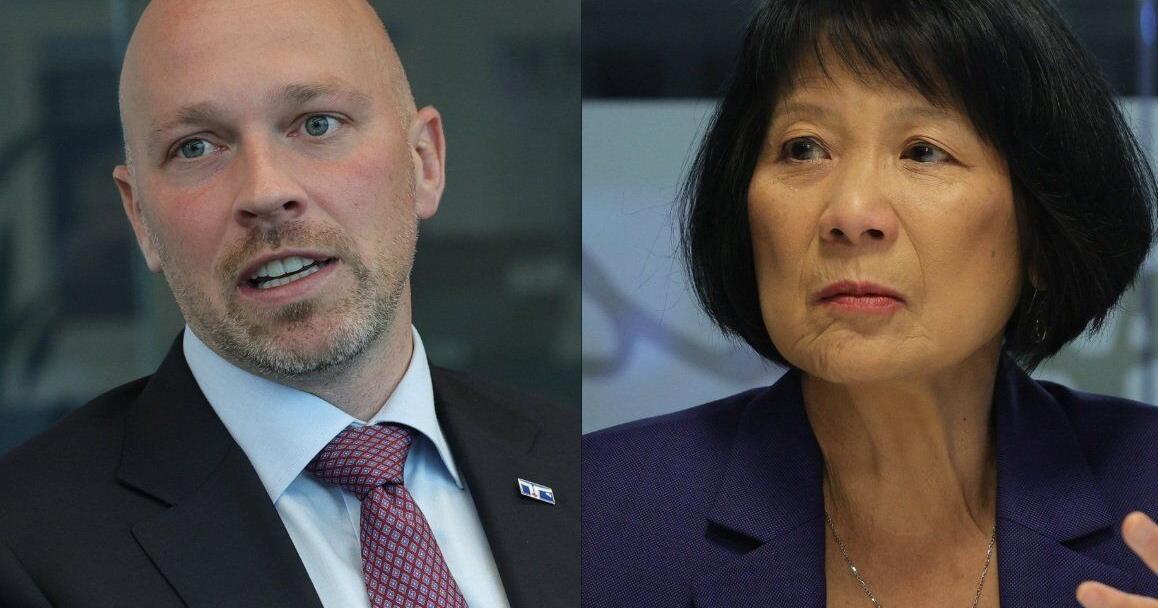
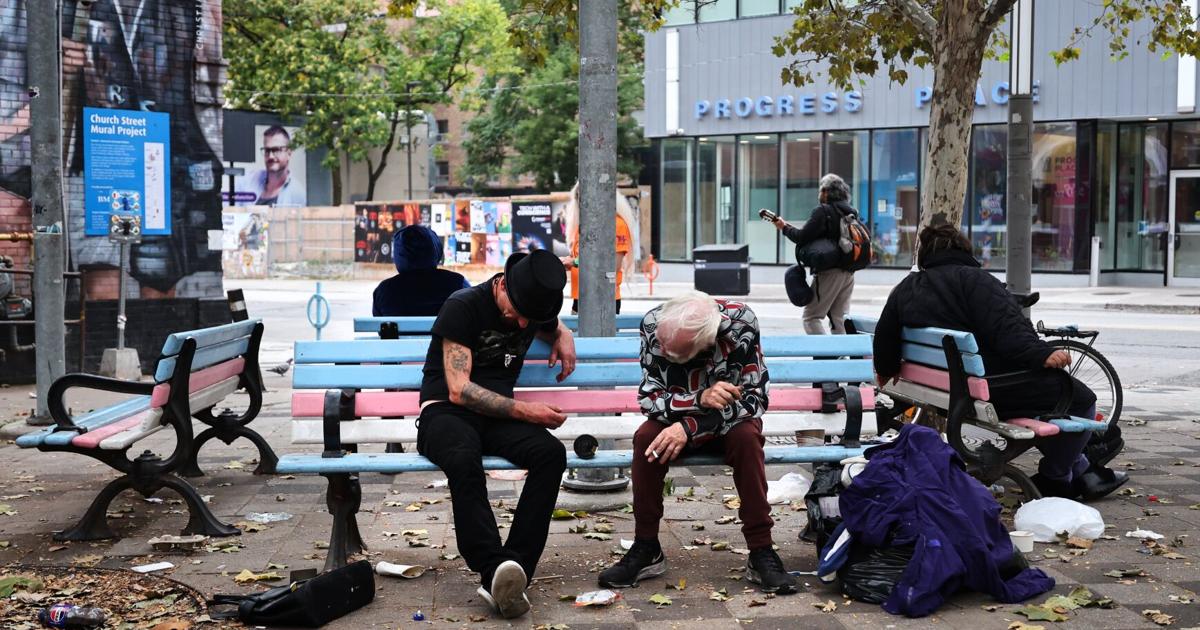
Photo via Toronto Star

Inside the fierce fight to be Toronto’s mayor: the ground war, the tight polls — and those negative ads

Read the original at Toronto Star ↗
Cite

Spurr, B. (2026, October 31). Inside the fierce fight to be Toronto’s mayor: the ground war, the tight polls — and those negative ads. Toronto Star. https://www.thestar.com/news/gta/city-hall/inside-the-fierce-fight-to-be-toronto-s-mayor-the-ground-war-the-tight-polls-and-those-negative-ads/article_8d72722f-7824-47de-a741-6de4eacf16bc.html

Dated from the outlet's own feed. Check the original for its byline.

Toronto Star · collected 2026-10-31 · by Ben Spurr

Quick Summary

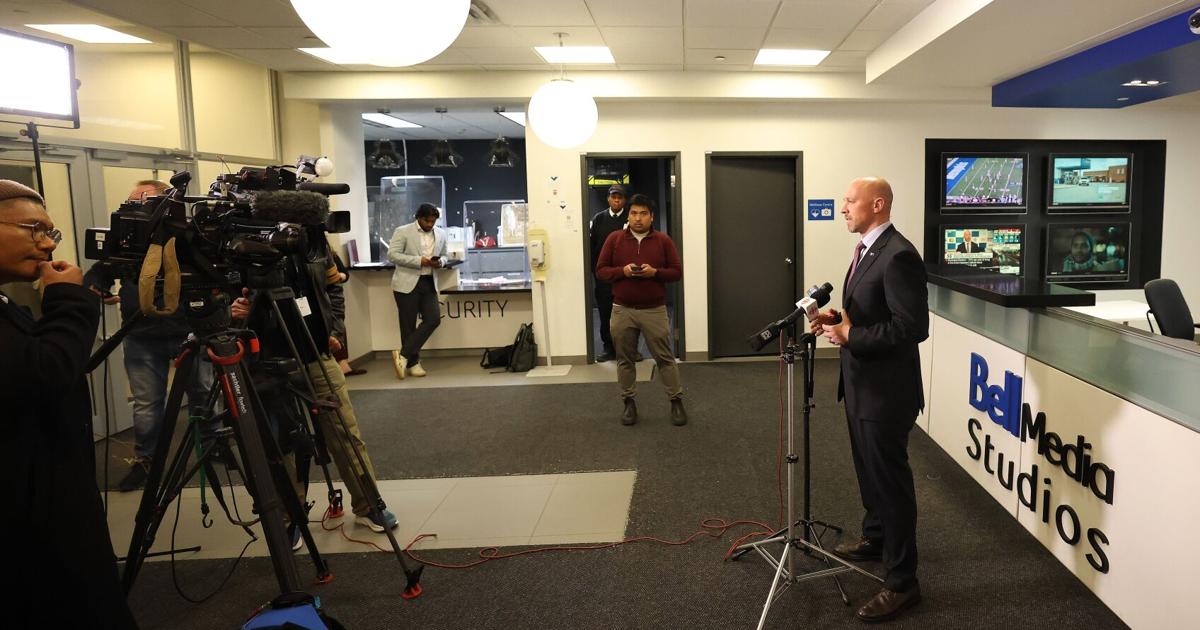
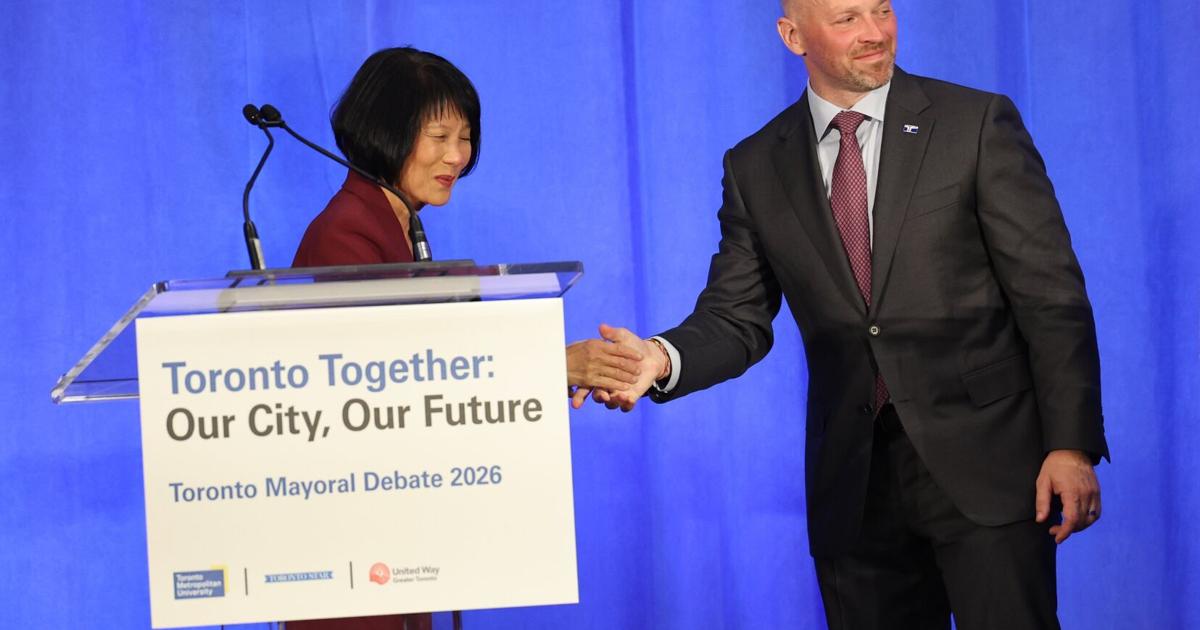
Bradford's campaign team felt confident four days before the Toronto mayoral election after a debate where they believed their candidate had performed well, with polls showing a narrowing gap between Bradford and incumbent Olivia Chow. However, as election day approached, negative ads and online comments from Chow’s camp intensified, according to Bradford’s supporters, causing a shift in voter sentiment. Chow's team disputes this, arguing that voters simply became more aware of Bradford's policies by the end of the campaign, leading them to prefer Chow based on her consistent positive message and personal history with Toronto.
Written by AI on 2026-10-31, from this article's own text only (the story summary below draws on all the coverage).

AI analysis

Story summary

As Brad Bradford walked off the debate stage four days before the Toronto mayoral election, his campaign team felt optimistic. Polls showed the race was close and expected a surge for Bradford. However, three days later, on the eve of the election, polls consistently showed Olivia Chow ahead. Despite lingering hopes, Bradford lost the election by about 13 percentage points to incumbent Mayor Olivia Chow on election day.

Bradford's campaign team had initially felt confident after months of campaigning and a final debate where they believed they had withstood attacks from Chow. However, as the election approached, their optimism waned as polls shifted in favor of Chow. The decisive swing came just days before the vote, leaving Bradford’s supporters uncertain until the results were clear.

The fierce competition involved criticism of Bradford's water plan and negative advertising campaigns by both sides, highlighting the intense nature of Toronto's mayoral race.

Written for “Fierce Fight for Toronto Mayor Title Race” on 2026-10-31, grounded in this article and the 0 other(s) covering the same event.
Why this leaning score
The article's own words the score was based on. Each is quoted verbatim and was checked against the article text before being stored, so you can find it in the original.
Reading Leans left (beta estimate) Confidence medium
Leaning: leans left for article 119425 (medium confidence, 2 verified quotes) · logged 2026-10-31

Story

📰 Fierce Fight for Toronto Mayor Title Race
Politics · 1 article(s) covering the same event.

Compared with similar articles

This article reads leans left and hedges 12% of its claims. Each row says how that neighbour differs.
The Globe and Mail
⚖️ Leans left Hedges 2 of 36 claims Outlet record 52/100
“The articles describe different aspects of the Toronto mayoral election campaign, not a single specific incident.”
CBC News
⚖️ Leans right further right than this Hedges 4 of 54 claims Outlet record 74/100
“The articles describe different stages of the mayoral campaign; Article A discusses the overall context leading up to the election day, while Article B focuses on a debate four days before the election.”
National Post
⚖️ Leans left Hedges 0 of 32 claims Outlet record 60/100
“While both articles discuss the Toronto mayoral election, Article A provides an overview of the race between Olivia Chow and Brad Bradford in a broader context of Ontario's municipal elections, while Article B focuses on the final stages and debates leading up to the same election, describing specific events and moods during the campaign period.”
Toronto Star
⚖️ Leans right further right than this Hedges 3 of 44 claims Outlet record 64/100
“The articles discuss different aspects of the Toronto mayoral election campaign, not a single specific incident.”
The Globe and Mail
⚖️ Leans right further right than this Hedges 0 of 32 claims Outlet record 52/100
“The articles cover different aspects of the Toronto mayoral election; Article A discusses Olivia Chow's win, while Article B focuses on the final debate and campaigning efforts.”
How this article was measured signals, leaning charts, publisher record, byline, topics and claims

Signals How these are calculated →

Claims extracted
112
sentences that state something as happening or true
Uncertain
12%
14 of 112 hedged ("reportedly", "may", "according to")
Leaning
Leans left
of the writing, not the subject · beta estimate
Publisher signals
64/100
Toronto Star's corrections and hedging, across everything collected from it. Not a measure of accuracy.
Outlets on this story
1
Politics
Same framing elsewhere
1
articles that frame the event the way this one does
Analyzed 2026-10-31 · how these are computed

How this is being covered How these are calculated →

Article leaning vs. publisher reliability
Source leaning vs. consistency

Publisher

Toronto Star · 10784 article(s) · 28 correction(s) detected
Running correction rate · 28 correction(s)
2026-10-26
Correction
2026-10-24
Correction
2026-10-07
Correction
2026-09-24
Correction

Who wrote this

Ben Spurr
13 article(s) here · 1 carrying a prediction
🔮 And while his team had expected the incumbent mayor to try to land a knockout punch in the final debate, hosted by CP24, she went after him, but they didn’t believe she had dealt a decisive blow.
🔮 With the Toronto skyline glittering behind him, the mayoral candidate declared to assembled reporters that under his leadership, the city that many feel is foundering could reach its full potential.
🔮 It’s a situation Kennedy never expected to be in, but after complications from the birth of her son in 2013 left her disabled, and the death of her husband about four years later, she was in a tough position.
🔮 With their electoral showdown less than two weeks away, the leading contenders to be mayor of Toronto offered acutely different visions of the city’s present and its future Wednesday.
🔮 Culverwell and others living in Toronto Centre say they’ve reached a breaking point over the social problems spilling into their parks and public spaces, and their demands for action have become the top issue as the ward gets set to elect a councillor this month.
🔮 The two leading candidates in the race for Toronto mayor will face off at noon today in the third of three debates this week.
🔮 The road to the mayor’s office runs through Toronto’s inner suburbs.
🔮 That’s because the former municipality, whose residents often feel forgotten by city hall, is set to play a potentially crucial role in the mayor’s race, with some predicting the contest will be decided by whichever candidate performs the best in Scarborough’s half-dozen wards.
🔮 Mayoral rivals clashed Friday over who could take credit for protecting tenants at one of Toronto’s most notorious apartment buildings, with Olivia Chow asserting that a crackdown on the property’s landlord was the result of her decisions as mayor, and Brad Bradford accusing her of misrepresenting her record.
🔮 The councillor for Beaches—East York argues that a detailed, external examination of the city’s finances is long overdue, and predicts it will uncover major savings that will help pay for his campaign promises — including costly proposals for the police and TTC — while he limits new revenue through a property tax freeze in his first year.
Also by Ben Spurr
Nothing else under this byline is closely related to this article, so these are simply their most recent.
All 13 articles by Ben Spurr →

Topics

Bradford CP24 Scarborough St. James Town Toronto

Subjects

Bradford PERSON · 10× Chow PERSON · 9× Van Soelen PERSON · 3× Brad Bradford PERSON · 2× St. James Town GPE · 2× CP24 ORG · 1× Mike Van Soelen PERSON · 1× Olivia Chow PERSON · 1× Scarborough GPE · 1× Toronto GPE · 1×

Narrative

Why the water plan became a campaign flashpoint Immediately after Bradford announced the proposal on Sept. 28, Chow criticized the plan and for the next four weeks accused Bradford of wanting to surrender control of Toronto’s water to the province, and open the door to privatizing some of North America’s cleanest drinking water.
framing: assertive · carried by 1 article(s) · first seen 2026-10-31
🔮 And while his team had expected the incumbent mayor to try to land a knockout punch in the final debate, hosted by CP24, she went after him, but they didn’t believe she had dealt a decisive blow.

Claims (112 extracted, 14 hedged)

As Brad Bradford walked off the debate stage at a Scarborough TV studio four days before the Toronto election, the mood on his team was buoyant. asserted
mood → walk → team
After months of relentless campaigning, their candidate appeared to have momentum behind him. asserted
candidate → appear → him
Some public polls showed he had closed the gap on Olivia Chow, and the race was now a dead heat. asserted
race → show → Chow
And while his team had expected the incumbent mayor to try to land a knockout punch in the final debate, hosted by CP24, she went after him, but they didn’t believe she had dealt a decisive blow. asserted
she → expect → blow
“It felt like months and months of hard work (were paying off),” said Mike Van Soelen, Bradford’s campaign co-chair. asserted
Soelen → feel → work
“We were feeling good.” asserted
We → feel → ?
That night would turn out to be the high-water mark of Bradford’s campaign. asserted
night → turn → campaign
Three days later, on the eve of the election, his team’s optimism was fading. asserted
optimism → fade → election
By Sunday, pollsters once reporting a Bradford surge were pumping out unanimous results: Chow was ahead. asserted
Chow → report → results
While Bradford’s team held onto hope, some feared the door to victory had closed. asserted
door → hold → victory
On election day, the mayor won by a comfortable margin of about 13 percentage points. asserted
mayor → win → points
Two teams, two stories about the late swing Like much of what happened during the campaign, the two candidates’ teams disagree on what caused what appeared to be a late swing in the final days — and even whether Bradford was ever within touching distance of a win. asserted
Bradford → happen → win
Each side says it was the other campaign that leaned harder into negative messaging. asserted
that → say → messaging
Van Soelen was certain there was a shift, which he described as the result of a “negative onslaught” of online comments and ads that hit Bradford in the 72 hours after the debate. asserted
that → be → debate
Van Soelen took that as a sign the attacks Chow’s team unleashed in the campaign’s final stages were taking hold. asserted
team → take → hold
Those attacks accused Bradford of buddying up with a Trump supporter, threatening to close libraries — and even suggested he would pollute children’s drinking water. uncertain
he → accuse → water
Chow’s camp “went decidedly negative” and beat Bradford in the final days, Van Soelen said. asserted
Soelen → go → days
“It came so fast and furious … asserted
It → come → ?
But Chow’s team rejects the claim that they went negative. uncertain
they → reject → claim
Instead, they say the campaign had a consistent mix of positive and critical messaging throughout the race. asserted
campaign → say → race
What changed in the final days, they say, was that voters started paying attention to the election. asserted
voters → change → election
When they did, they didn’t like what Bradford was offering. asserted
Bradford → do → what
“Nothing actually changed in the last 10 days of the campaign. asserted
Nothing → change → campaign
There was never a period where Brad’s campaign had successfully narrowed the gap to the point where they were going to win on election day,” said Karla Webber-Gallagher, Chow’s campaign manager. asserted
Gallagher → be → day
“As people got to know him, his unfavourables went way up and his favourables started to slide.” asserted
favourables → get → him
Chow’s closing pitch: hope and a water attack On the Friday before election day, Chow made her closing argument to voters. asserted
Chow → make → voters
Standing in front of the rental building in St. James Town where she grew up after immigrating from Hong Kong, she recalled how the neighbourhood shaped her principles. asserted
neighbourhood → stand → principles
“Our city has changed a lot. asserted
city → change → ?
But in all the important ways, I have not,” Chow said. asserted
Chow → have → ways
“I’m still the kid from St. James Town who is in awe of our city and loves its people, and who has dedicated herself to helping others, to lifting people up, and listening. asserted
who → ’m → people
Meanwhile, her campaign had aimed a sharp attack at a central plank of Bradford’s platform. asserted
campaign → aim → platform
Just over a week out from the Oct. 26 election day, Chow’s campaign started running an ad on Facebook and Instagram that opened with a child getting a glass of water at the family kitchen sink. asserted
child → start → sink
But as she brings the glass to her lips, there’s something wrong: the water is filthy. asserted
water → bring → lips
“Our water should never be for sale,” intones a voice-over. asserted
over → intone → sale
A headline about the deadly Walkerton water disaster flashes on the screen, before the closing tag line: “We can’t trust Brad Bradford with our water.” asserted
We → flash → water
The ad garnered nearly a million impressions, according to an expert analysis of the Meta ad library, and was the strongest version of an attack Chow had been making for weeks against Bradford’s plan to turn Toronto Water, a city division, into a utility with an independent board, like Toronto Hydro. uncertain
Chow → garner → Hydro
Bradford said the plan would help cut rates and other taxes, offset by debt-financing. asserted
plan → say → financing
Several legal and government finance experts described it as high risk. asserted
experts → describe → risk
Why the water plan became a campaign flashpoint Immediately after Bradford announced the proposal on Sept. 28, Chow criticized the plan and for the next four weeks accused Bradford of wanting to surrender control of Toronto’s water to the province, and open the door to privatizing some of North America’s cleanest drinking water. asserted
Chow → become → water
Throughout October, the proposal also came under fire from GTA bureaucrats, the union representing workers at treatment plants, which published a legal analysis, and former mayors including David Miller and John Tory. asserted
which → come → Miller
…and 72 more, not listed.

💬Give feedback
🕘History 🎫Support