Photo via Toronto Star

What neighbourhood voting results tell us about Olivia Chow's big mayoral win

Read the original at Toronto Star ↗
Cite

Pilla, N. (2026, October 31). What neighbourhood voting results tell us about Olivia Chow's big mayoral win. Toronto Star. https://www.thestar.com/news/gta/city-hall/what-neighbourhood-voting-results-tell-us-about-olivia-chow-s-big-mayoral-win/article_d85e72a4-9ccc-4a70-afde-277d2ff88824.html

Dated from the outlet's own feed. Check the original for its byline.

Toronto Star · collected 2026-10-31 · by Nathan Pilla

Quick Summary

Poll-by-poll voting results from Toronto's mayoral election reveal that Olivia Chow won with 54.2% of the vote, securing victories in 19 out of 25 wards. She performed particularly well in Toronto Centre and Scarborough, areas where many residents rely on public transit or walk to work. In contrast, Brad Bradford, who focused his campaign on Etobicoke and North York, won only six wards but saw stronger support in neighbourhoods with detached homes. Despite this, Chow's broader appeal across various communities, especially among renters and those using public transportation, contributed significantly to her victory margin over Bradford.
Written by AI on 2026-10-31, from this article's own text only (the story summary below draws on all the coverage).

AI analysis

Story summary

Olivia Chow was elected as Toronto's mayor for a second term on October 27, 2026, defeating her conservative challenger Brad Bradford by almost 130,000 votes. The race had been closely watched and predicted to be very tight due to issues like affordability and fiscal management in the wake of COVID-19's impact. Chow campaigned on promises such as more rental housing, free school lunches, and reduced transit fares for frequent riders. Her victory was attributed not only to progressive support but also a strong ground game and moderate stance that broadened her appeal. Meanwhile, former NDP leader Andrea Horwath lost in Hamilton's mayoral race, part of several upsets across the Greater Toronto and Hamilton Area (GTHA).

Written for “Olivia Chow Elected Toronto Mayor” on 2026-10-31, grounded in this article and the 22 other(s) covering the same event.
Why this leaning score
The article's own words the score was based on. Each is quoted verbatim and was checked against the article text before being stored, so you can find it in the original.
Reading Leans left (beta estimate) Confidence high
Leaning: leans left for article 119418 (high confidence, 1 verified quote) · logged 2026-10-31

Story

📰 Olivia Chow Elected Toronto Mayor
Politics · 23 article(s) covering the same event. Compare every outlet's account →

Compared with similar articles

This article reads leans left and hedges 3% of its claims. Each row says how that neighbour differs.
National Post
Hedges 4 of 40 claims Outlet record 60/100
“The articles discuss different municipal elections; one covers Ontario generally excluding Toronto, while the other focuses on the results of a specific mayoral election in Toronto.”
The Globe and Mail
Hedges 1 of 31 claims Outlet record 52/100
CBC News
Hedges 2 of 27 claims Outlet record 74/100
“While both articles discuss Olivia Chow's re-election as mayor of Toronto, ARTICLE A describes the immediate reaction to the election results on the night of the vote, while ARTICLE B provides an analysis and breakdown of neighborhood voting patterns several days later.”
National Post
Hedges 1 of 39 claims Outlet record 60/100
The Globe and Mail
Hedges 0 of 24 claims Outlet record 52/100
“Article A provides an overview of mayoral election results across Ontario, while Article B focuses on detailed voting analysis for Olivia Chow's win specifically in Toronto.”
The Globe and Mail
⚖️ Leans left Hedges 2 of 28 claims Outlet record 52/100
CBC News
Hedges 5 of 29 claims Outlet record 74/100
The Guardian
⚖️ Leans left Hedges 1 of 27 claims Outlet record 66/100
CBC News
Hedges 1 of 39 claims Outlet record 74/100
“The articles describe different election outcomes in Ontario; one focuses on women's historic wins in municipal elections across Ontario, while the other details Olivia Chow's victory in Toronto's mayoral election.”
The Globe and Mail
Hedges 2 of 40 claims Outlet record 52/100
“The articles describe different mayoral elections in distinct cities: Winnipeg's election where Scott Gillingham was re-elected, and Toronto's election where Olivia Chow won.”
How this article was measured signals, leaning charts, publisher record, byline, topics and claims

Signals How these are calculated →

Claims extracted
35
sentences that state something as happening or true
Uncertain
3%
1 of 35 hedged ("reportedly", "may", "according to")
Leaning
Leans left
of the writing, not the subject · beta estimate
Publisher signals
64/100
Toronto Star's corrections and hedging, across everything collected from it. Not a measure of accuracy.
Outlets on this story
23
Politics
Same framing elsewhere
1
articles that frame the event the way this one does
Analyzed 2026-10-31 · how these are computed

How this is being covered How these are calculated →

Article leaning vs. publisher reliability
Source leaning vs. consistency

Publisher

Toronto Star · 10784 article(s) · 28 correction(s) detected
Running correction rate · 28 correction(s)
2026-10-26
Correction
2026-10-24
Correction
2026-10-07
Correction
2026-09-24
Correction

Who wrote this

Nathan Pilla
1 article(s) here · 1 carrying a prediction
🔮 When the dust cleared Monday night from Toronto’s mayoral election, the results surprised many people.
The only article under this byline in the corpus.

Topics

Bradford Etobicoke North York Scarborough Toronto

Subjects

Chow PERSON · 16× Bradford PERSON · 9× Etobicoke GPE · 7× Scarborough GPE · 5× Toronto GPE · 5× North York GPE · 4× Eglinton GPE · 3× Parkdale GPE · 2× Willowdale GPE · 2× York Centre GPE · 2×

Narrative

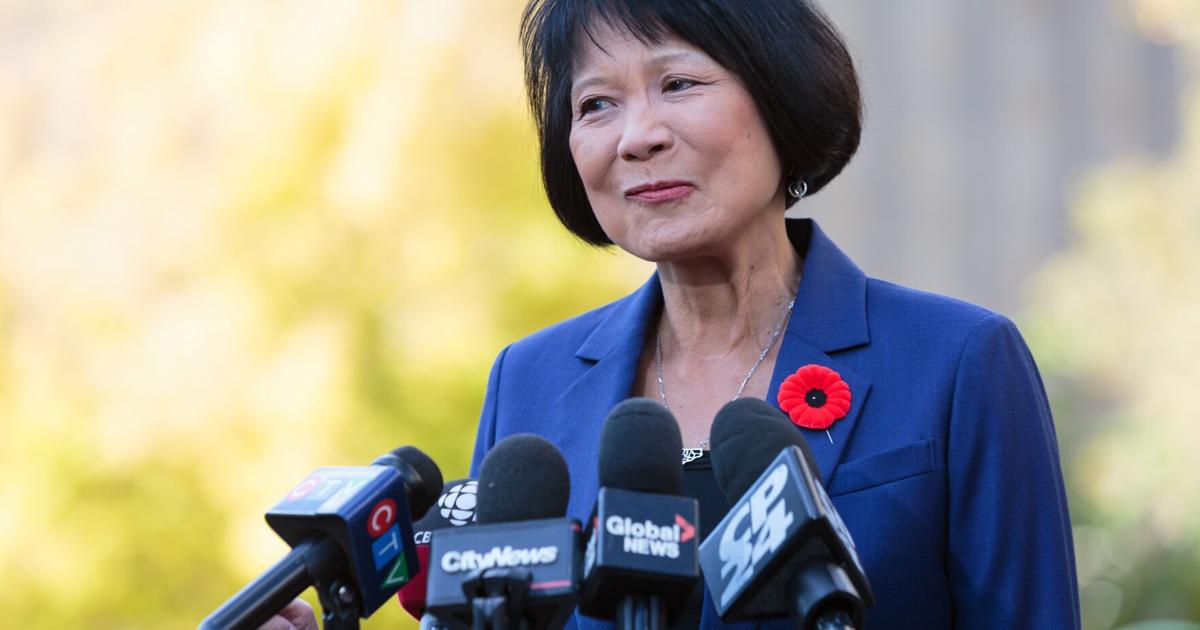
Poll-by-poll voting results released Thursday by the City of Toronto help explain how and where Chow, a former NDP MP and proud progressive, beat Bradford, the Beaches—East York city councillor who ran from the political centre-right and lost by 13 points.
framing: assertive · carried by 1 article(s) · first seen 2026-10-31
🔮 When the dust cleared Monday night from Toronto’s mayoral election, the results surprised many people.

Claims (35 extracted, 1 hedged)

When the dust cleared Monday night from Toronto’s mayoral election, the results surprised many people. asserted
results → clear → people
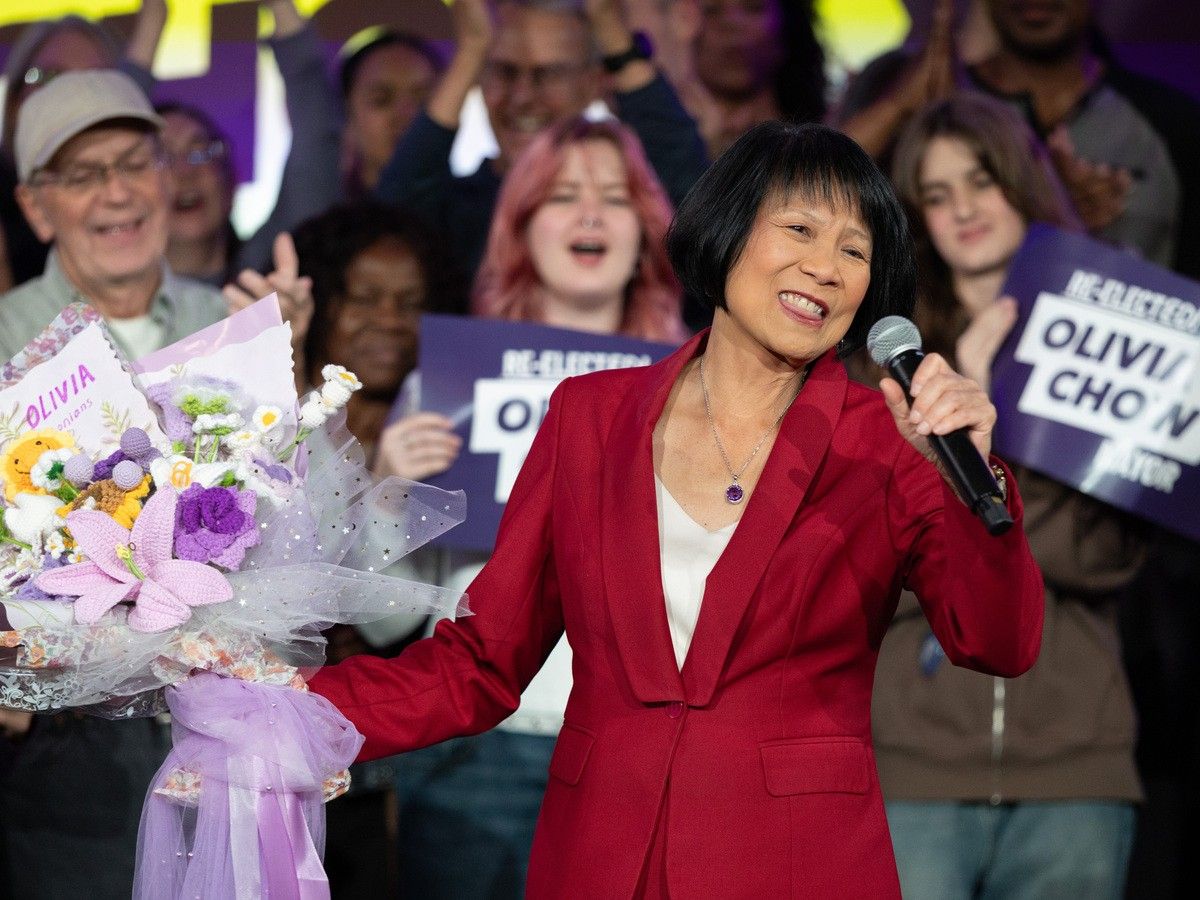
Rather than the near-dead heat envisioned by opinion polls — with a narrative that Mayor Olivia Chow’s lacklustre re-election campaign had squandered its lead to the more energetic Brad Bradford — Chow had scored a thumping victory. asserted
Chow → envision → victory
Poll-by-poll voting results released Thursday by the City of Toronto help explain how and where Chow, a former NDP MP and proud progressive, beat Bradford, the Beaches—East York city councillor who ran from the political centre-right and lost by 13 points. asserted
who → release → points
The data tells us: Where Chow won, and who put her over the top Chow won 54.2 per cent of the vote, winning 19 of Toronto’s 25 wards. asserted
Chow → tell → wards
She did best, in order of vote percentage, in Toronto Centre, Toronto—Danforth, Davenport, Parkdale—High Park and Spadina—Fort York. asserted
She → do → Centre
Crucially, she won all six Scarborough wards and owes the area a debt of gratitude, again, for helping make her mayor. asserted
she → win → gratitude
Chow won a bigger share of the vote this election, against one prominent challenger, than in 2023, when she took 37.2 per cent of the vote against multiple rivals. asserted
she → win → rivals
However, rather than conquering new parts of Toronto, she was re asserted
she → conquer → Toronto
Chow was most successful in neighbourhoods where many people bike, walk or take transit to work. asserted
people → bike → work
Neighbourhoods with more renters leaned Chow, but the link is much stronger for neighbourhoods where people don’t drive to work. asserted
people → lean → work
Chow made her biggest gains in Scarborough—Guildwood, Bradford’s home turf of Beaches—East York and Humber River—Black Creek. asserted
Chow → make → River
She made her smallest gains in York Centre, Scarborough North, Eglinton—Lawrence and Willowdale. asserted
She → make → Centre
Chow’s share fell in an estimated six of about 1,200 polling areas, all small areas near Bathurst Street. asserted
share → fall → Street
Where Bradford did well, and where he fell short Bradford won six of 25 wards, all in Etobicoke and North York. asserted
Bradford → fall → Etobicoke
Although his home turf is downtown-adjacent, he campaigned heavily in Etobicoke and North York and made campaign pledges that appealed to voters in those communities. asserted
that → campaign → communities
Neighbourhoods where Bradford did best on election day: Bathurst Manor, Bridle Path-Sunnybrook-York Mills and Bedford Park-Nortown. asserted
Bradford → do → day
Across Toronto, Bradford’s popularity rose with an area’s preponderance of detached homes. asserted
popularity → rise → homes
Bradford won 60 of 282 single-building polling areas (condo or apartment towers), including ones in Humber Bay Shores, Etobicoke City Centre, Westminster-Branson and the Bathurst corridor. asserted
Bradford → win → Shores
Chow, however, dominated the tower vote except in North York, where it split evenly, and in Etobicoke, where it was close. asserted
it → dominate → Etobicoke
Bradford’s strength in some suburbs could not make up for Scarborough, where he got only 39.9 per cent of the vote to Chow’s 53.4 per cent. uncertain
he → make → cent
Even Scarborough’s detached-house neighbourhoods went clearly Chow, unlike those in Etobicoke and North York. asserted
neighbourhoods → detach → Etobicoke
Where turnout went up, where it did not and how that shaped the result asserted
that → go → result
Citywide voter turnout surged from 38.4 per cent in the 2023 byelection to 47.2 per cent. asserted
turnout → surge → cent
Parkdale—High Park had the highest turnout while Humber River—Black Creek had the lowest. asserted
River → have → lowest
The boost in turnout did not, on its own, help Chow. asserted
boost → help → Chow
If voter participation had stayed the same as in 2023, she would have won by about the same margin. asserted
she → stay → margin
If anything, turnout rose slightly more in Bradford-leaning wards. asserted
turnout → rise → wards
What did help Chow: her vote share went up in every ward, rich and poor. asserted
share → help → ward
Chow’s vote total almost doubled, from 269,000 last election, to 532,000. asserted
total → double → 532,000
South Etobicoke: a changing district Ward 3 Etobicoke—Lakeshore was narrowly won by Bradford with 49.3 per cent compared to Chow’s 47.1 per cent. asserted
Ward → change → cent
However, Chow was much more popular than in 2023 when she got only 29.4 per cent of the vote. asserted
she → get → vote
Between 2016 and 2021, the number of high-rise homes in the ward grew 20 per cent, twice the city’s rate. asserted
number → grow → ward
Chow’s support was most concentrated in waterfront neighbourhoods, including Mimico, New Toronto and Long Branch. asserted
support → include → Mimico
She also won the towers near Islington and Kipling stations, 54 to 41 per cent for Bradford. asserted
She → win → Bradford
Bradford won Etobicoke—Lakeshore only with very strong support from residents of prosperous single-family neighbourhoods including Kingsway South, Alderwood and Stonegate-Queensway. asserted
Bradford → win → South

💬Give feedback
🕘History 🎫Support