Proposed billionaire tax could impact California sports teams
uncertain
tax → propose → teams
- The proposed billionaire tax on California’s November ballot could slap a one-time 5% levy on wealthy residents, including sports team owners, to raise healthcare funds.
uncertain
tax → propose → funds
- Opponents warn professional sports teams owned by wealthy Californians could face higher costs, resulting in job losses, as well as increases to the cost of tickets, parking and concessions.
uncertain
teams → warn → tickets
- Supporters argue billionaire team owners should pay their fair share after benefiting from Trump-era tax cuts.
asserted
owners → argue → cuts
The billionaires targeted by the wealth tax on the November ballot include owners of some of California’s top sports teams and, among them, there will be winners and losers if voters approve the measure.
asserted
voters → target → measure
Which owners would be ensnared by the proposed tax on billionaires’ assets remains unclear, since it’s largely dependent on whether they are declared official California residents, at least for state tax purposes.
uncertain
they → ensnare → purposes
And that’s before lawyers and accountants get involved, an almost certain bet if the ballot measure is approved by California voters.
asserted
measure → ’ → voters
So it’s possible that the majority owner of the Los Angeles Chargers, Dean Spanos, would have to pay the the wealth tax while the owner of the Los Angeles Rams, San Kroenke, would not — even though both their teams are playing on the same home field at SoFi Stadium in Inglewood.
asserted
teams → ’ → Inglewood
It all depends on whether the state considers Spanos or Kroenke official California residents and how their assets are tallied.
asserted
assets → depend → ?
Other wealthy team owners or co-owners who have residences in California and could be subject to the tax include the Golden State Warriors’ Joe Lacob and Peter Guber, the San Diego Padres’ José E. Feliciano and Kwanza Jones, the San Jose Sharks’ Hasso Plattner and the Anaheim Ducks’ Henry Samueli.
uncertain
who → have → Lacob
Among those who appear to live out of state, according to news reports, and may not be impacted: the San Francisco 49ers’ Denise DeBartolo York and John York, the Los Angeles Clippers’ Steve Ballmer, the San Francisco Giants’ Charles Johnson, the L.A. Kings’ and the L.A. Galaxy’s Philip Anschutz.
uncertain
who → appear → York
In August, embattled billionaire Mark Walter agreed to sell the L.A. Lakers to former Disney chief executive Bob Iger and venture capitalist Joshua Kushner.
asserted
Walter → agree → Iger
The proposed billionaire tax would apply to Iger, who lives in California, but not Kushner, who lives in New York.
asserted
who → propose → York
A spokesperson for Iger declined comment.
asserted
spokesperson → decline → comment
Walter, who also owns the Dodgers and has been under federal investigation, told the California Post on Wednesday that he has no plans to sell the team.
asserted
he → own → team
There is uncertainty and disagreement about how the tax would be levied on sports team owners, and how their ownership stakes would be evaluated by the state when assessing their assets.
asserted
stakes → be → assets
Representatives of the Warriors and Chargers, declined comment.
asserted
Representatives → decline → comment
Spokespeople for the Kings, Padres, Sharks and Ducks did not respond to requests for comment, nor did representatives of Kroenke or Sun Microsystems co-founder Vinod Khosla, who lives in California and whose $9.6-billion purchase of the Seattle Seahawks was finalized in September.
asserted
purchase → respond → September
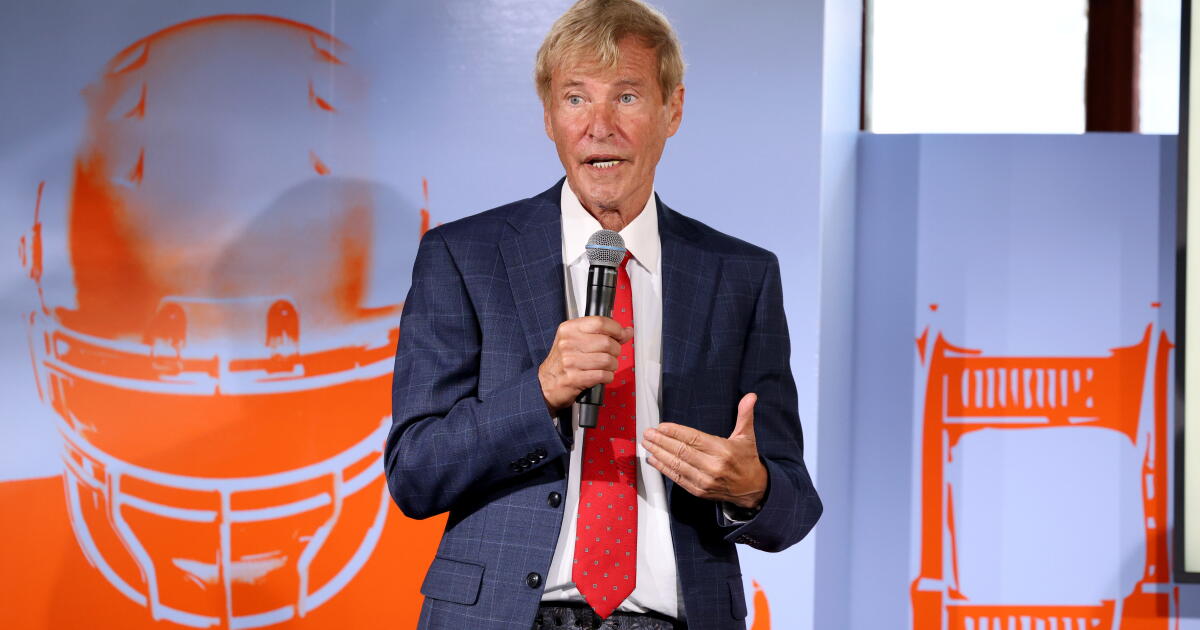
Legendary sports agent Leigh Steinberg warned that the proposed tax would have unintended consequences.
asserted
tax → warn → consequences
“It creates an uneven playing field,” he said.
asserted
he → create → field
“Out-of-state owners get an advantage over in-state residents.”
asserted
owners → get → residents
Steinberg, who has represented more than 300 professional athletes including Troy Aikman, Drew Bledsoe, Michael Vick and Oscar De La Hoya, said the increased tax could be passed on to fans if voters approve Proposition 40 on Nov. 3.
uncertain
voters → represent → Nov.
“Ticket prices are high enough anyway, and somewhat prohibitive to a working person or young person attending a game live,” Steinberg said.
asserted
Steinberg → work → game
“The last thing in the world positive for the growth of sports is passing on that surcharge.”
asserted
thing → pass → surcharge
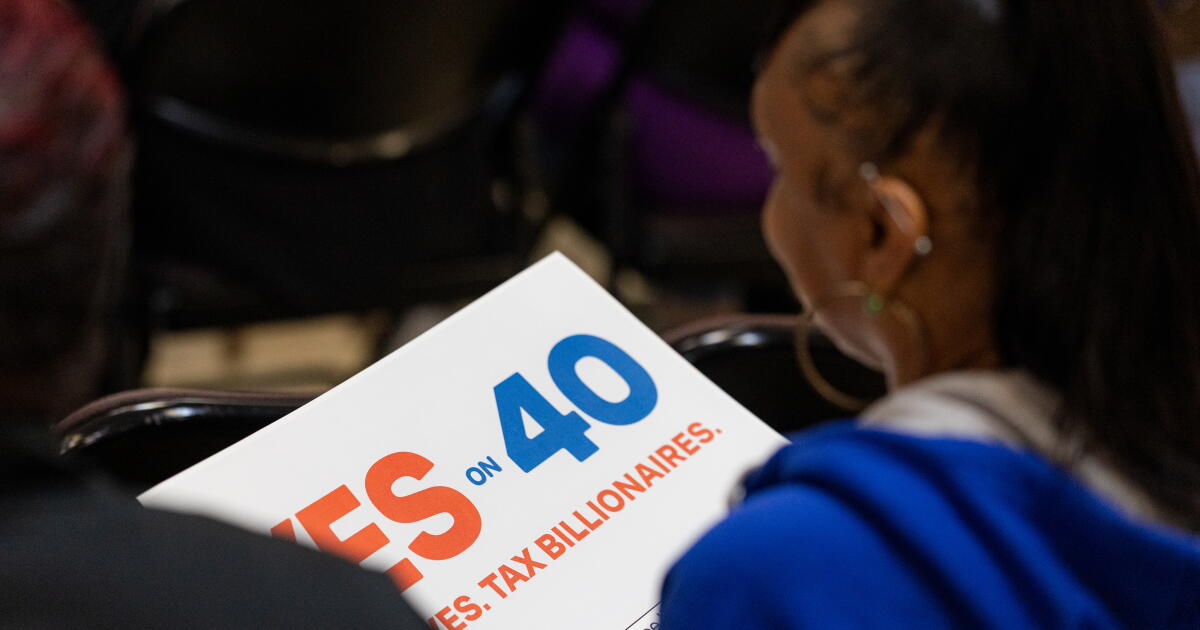
Proposition 40 would impose a one-time 5% levy on many of the assets of billionaires, including their holdings in companies.
asserted
Proposition → impose → companies
It was crafted by a healthcare union to compensate for federal healthcare cuts signed by President Trump last year that will cost California an estimated $100 billion, impacting the state’s most vulnerable residents.
asserted
that → craft → residents
David Gamage, a tax law and policy professor at the University of Missouri’s law school, countered that consumers would be far more hurt by the impacts of the impending federal healthcare funding cuts than by potentially higher prices at sporting events.
asserted
consumers → counter → events
“The billionaire wealth tax would address the healthcare crisis caused by the Trump administration slashing Medicaid and other healthcare funding.
asserted
administration → address → Medicaid
Passing the billionaire wealth tax would be expected to reduce healthcare costs and thereby keep the prices of hot dogs and other consumer goods lower,” Gamage said.
asserted
Gamage → pass → dogs
“Trying to fool voters by implying otherwise is shameful.”
asserted
Trying → try → voters
More than 200 billionaires live in California, some of whom moved themselves or their businesses out of the state because of the proposed tax.
asserted
some → live → tax
Facebook creator Mark Zuckerberg, the chief executive of social media giant Meta, told company leaders that he planned to leave the state to avoid his control over the company being substantially diluted by being forced to sell enough stock to pay the proposed levy.
asserted
control → tell → levy
Last week, the company announced the creation of a new nonvoting type of stock that would allow Zuckerberg to sell enough shares to pay the proposed tax while retaining his voting power in exchange for him agreeing to remain in the state for eight years.
asserted
him → announce → years
Proposition 40 supporters say that billionaire sports team owners have benefited from Trump’s tax cuts — dividends they didn’t share with the fans who spend hard-earned money to bring their families to games — and that they need to pay their fair share.
asserted
they → say → share
Opponents argue that professional sports are among myriad California economic engines that will suffer if voters approve the proposition, in part because owners based in the state would be subject to the tax while those who reside in other parts of the country would be exempt.
asserted
who → argue → country
The measure “will also drive up the cost of operating a sports team in California, increasing the price of tickets, concessions and merchandise,” said Rob Lapsley, president of the California Business Roundtable.
asserted
Lapsley → drive → Roundtable
“This is just one of many ways Proposition 40 will cost Californians.”
asserted
Proposition → cost → Californians
A poll by UC Berkeley’s Institute of Governmental Studies released Thursdayshowed public sentiment had turned against the billionaire tax, with half of likely voters opposing it and 42% supporting it.
asserted
% → release → it
More than $404 million has been donated to efforts supporting and opposing the wealth tax, according to the California Secretary of State’s Office.
uncertain
million → donate → Office
Proponents of the ballot measure had raised $36.5 million as of Thursday, while opponents received nearly $368 million.
asserted
opponents → raise → million
…and 12 more, not listed.
 The Aporia