In its account of the deadly fire at CFB Wainwright, the Canadian Armed Forces (CAF) describes an extraordinary chain of events on Oct. 17.
asserted
Forces → describe → Oct.
The base, it says, was monitoring a common grass fire that erupted in “uncommonly strong winds,” with flames soon devouring a kilometre in just 30 to 60 seconds.
asserted
flames → say → seconds
The military called the event “entirely anomalous.”
asserted
military → call → event
A Global News analysis of satellite imagery and weather records, reviewed by seven Canadian wildfire experts, paints a different picture.
asserted
analysis → review → picture
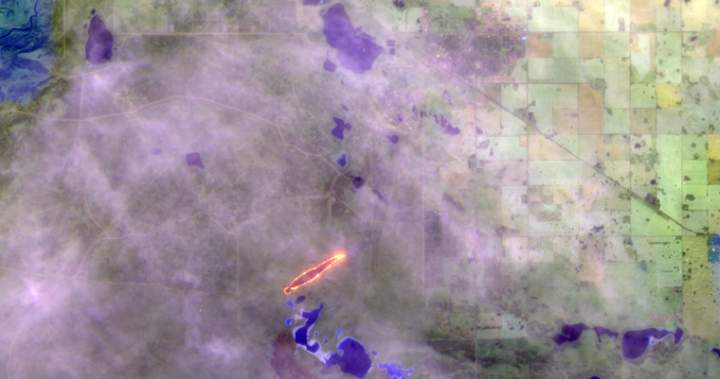
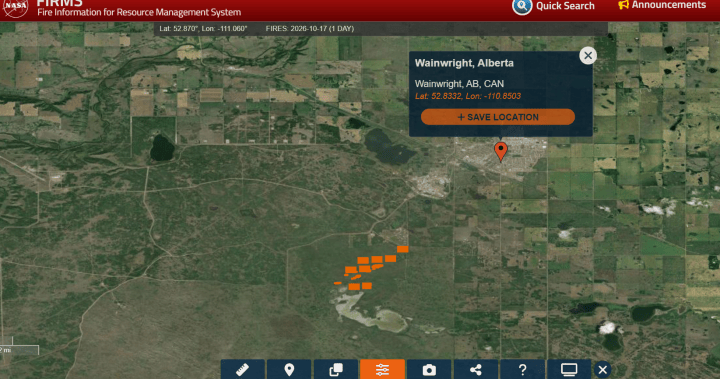
As soldiers continued their training on that day, satellites showed the fire had already spread.
asserted
fire → continue → day
But the day before, Environment Canada forecast a cold front bringing powerful winds and later issued wind warnings for the area.
asserted
Canada → forecast → area
And experts say the flames were unlikely to travel at the speed the military suggests, although estimates made during a traumatic event may understandably be imprecise.
uncertain
estimates → say → event
More importantly, however, experts say base leadership should have known the dangers posed by the incoming weather, even if they couldn’t predict the precise timing or consequences.
asserted
they → say → timing
“This was not unexpected given the forecast cold front, the actively spreading fire and the wind warnings that were issued earlier in the day,” says Jen Beverly, an associate professor of wildland fire at the University of Alberta.
asserted
Beverly → give → Alberta
According to the military, four soldiers were killed and 39 injured, including 19 critically, when the fire swept through the military training grounds.
uncertain
fire → accord → grounds
It said the fire rapidly intensified and overran soldiers around 4 p.m.
But satellite imagery and weather records show a two-kilometre stretch of fire at noon was likely spreading as winds picked up and a violent cold front approached.
asserted
front → say → noon
Nearly two weeks after the disaster, crucial questions remain unanswered: What did commanders know about the growing fire and approaching weather? What warnings were passed on? And why were soldiers still training nearby?
asserted
soldiers → remain → fire
The military says its Board of Inquiry, which will answer those questions, could take more than a year.
uncertain
which → say → year
But weather records, satellite observations and decades of wildfire research already offer important clues about how the tragedy unfolded.
asserted
tragedy → offer → clues
Global examined the evidence and had seven leading wildfire experts review its findings, reconstructing the hours before the disaster to better understand what happened — and whether the fire behaved as unexpectedly as the military has suggested.
uncertain
military → examine → disaster
The reconstruction traces how the fire may have spread throughout the day, what warnings were issued, and how a forecast wind shift changed the danger.
uncertain
shift → trace → danger
It also raises questions about how quickly the flames advanced — and why soldiers remained in their path.
asserted
soldiers → raise → path
Long before it became a military training ground, CFB Wainwright was known as Buffalo National Park, established in 1909 to help save plains bison from extinction.
asserted
Wainwright → become → extinction
Dozens of the once-overhunted beasts still graze on the base today as a commemorative herd.
asserted
Dozens → overhunte → herd
Those vast, open grasslands face powerful winds, with few natural barriers to interrupt them as they sweep across the prairie.
asserted
they → face → prairie
While the precise combination of weather and fire conditions on Oct. 17 may have been exceptional, the area has seen destructive winds before.
uncertain
area → see → winds
Exactly nine years earlier, on Oct. 17, 2017, gusts exceeding 100 kilometres per hour derailed 13 railway cars at a trestle bridge west of town.
asserted
gusts → exceed → town
Local Wainwright residents told Global News the area is known for being windy, but the day’s gusts were extraordinary.
asserted
gusts → tell → News
However, forecasts predicted those winds.
asserted
forecasts → predict → winds
Since the previous morning, Environment Canada had forecast strong winds, with gusts expected to rise from 60 to 80 kilometres per hour by Oct. 17.
asserted
gusts → forecast → Oct.
The forecast also predicted a shift in wind direction, from southwest to west, that afternoon.
asserted
forecast → predict → west
Two hours before the soldiers were reportedly overrun, at 2:14 p.m., Environment Canada extended a yellow wind warning to Wainwright, indicating “hazardous” winds, and forecast gusts up to 100 kilometres per hour.
uncertain
Canada → overrun → hour
The base has its own weather station to monitor conditions, while CFB Wainwright’s standing orders, which set out safety rules, require Range Control to receive forecasts twice daily, at 6 a.m. and 6 p.m.
But it remains unclear who was monitoring the weather on Oct. 17.
uncertain
who → have → Oct.
In a tense exchange with a reporter days after the disaster, Maj.-Gen. Wade Rutland, speaking on behalf of the military, repeatedly declined to say whether Wainwright had a meteorologist or wildfire-behaviour expert, citing the ongoing investigation.
asserted
Wainwright → speak → investigation
Environment Canada provides meteorologists at some military bases, but confirmed none was stationed at Wainwright that day, adding that the base instead received remote forecasting support from CFB Gagetown in New Brunswick.
asserted
base → provide → Brunswick
“Uncommonly strong winds caused the fire to spread rapidly and shift direction,” Rutland said on Oct. 18, speaking on behalf of the military.
asserted
Rutland → cause → military
While much remains unknown about that day, wildfire experts consulted by Global News said the forecasts and warnings should have raised serious concerns, particularly with an established grass fire already burning on the base.
asserted
fire → remain → base
The approaching front threatened to intensify the blaze and abruptly change its direction.
asserted
front → approach → direction
“It was a classic setup,” said Mike Flannigan, a wildfire researcher at Thompson Rivers University.
asserted
Flannigan → say → University
“You don’t want to be out in the field on a day like Saturday.”
asserted
You → want → Saturday
A fire already burning
asserted
fire → burn → ?
A grass fire ignited on the automatic grenade launcher range that Saturday, although the military has declined to say precisely when it began.
asserted
it → ignite → range
At the time, the Canadian Wildland Fire Information System categorized the wildfire danger in Wainwright as “extreme.”
asserted
System → categorize → Wainwright
The military’s account of the blaze’s timing has changed.
asserted
account → change → timing
The morning after the tragedy, officials put the ignition time at around 4 p.m. Later that day, Rutland told a briefing that the fire started “several hours earlier,” adding that officials believed it was “contained.”
asserted
it → put → briefing
…and 66 more, not listed.
 The Aporia