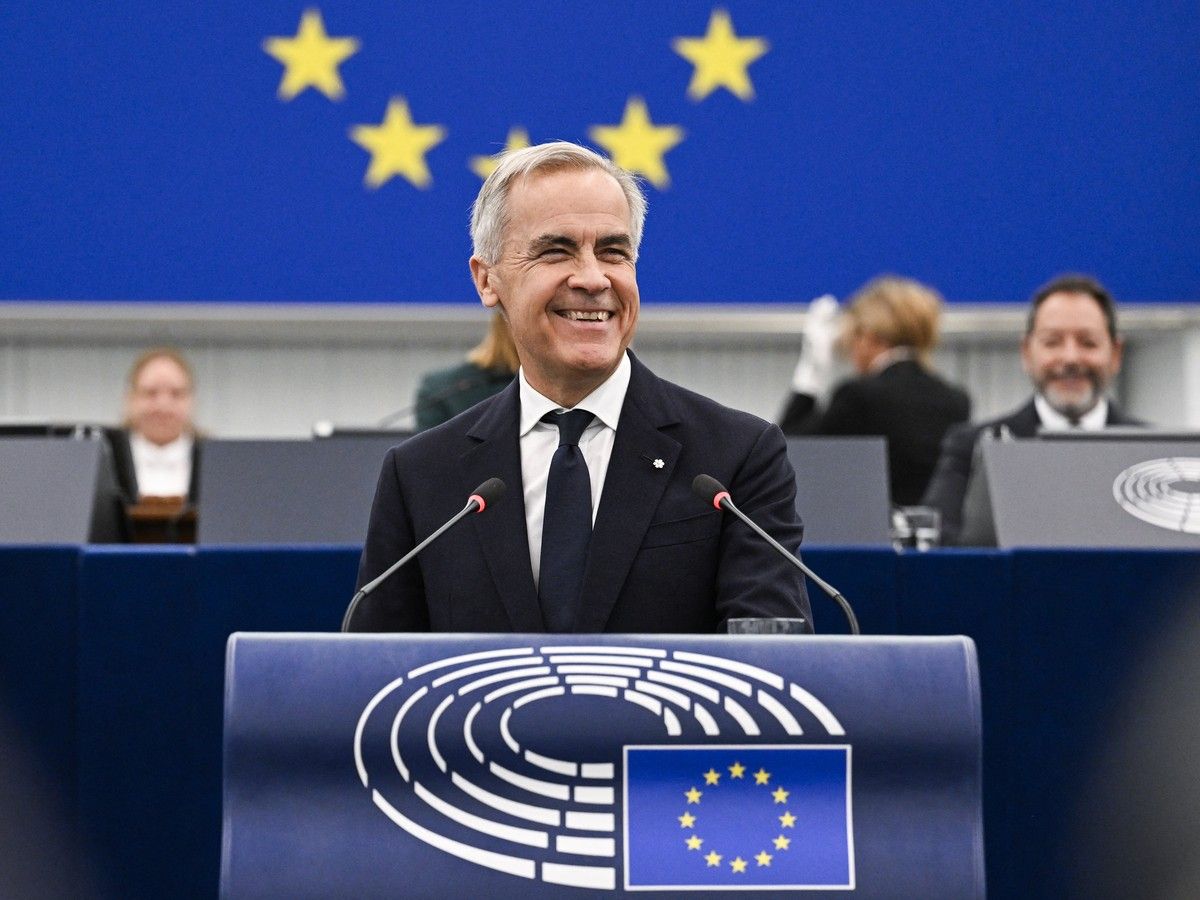
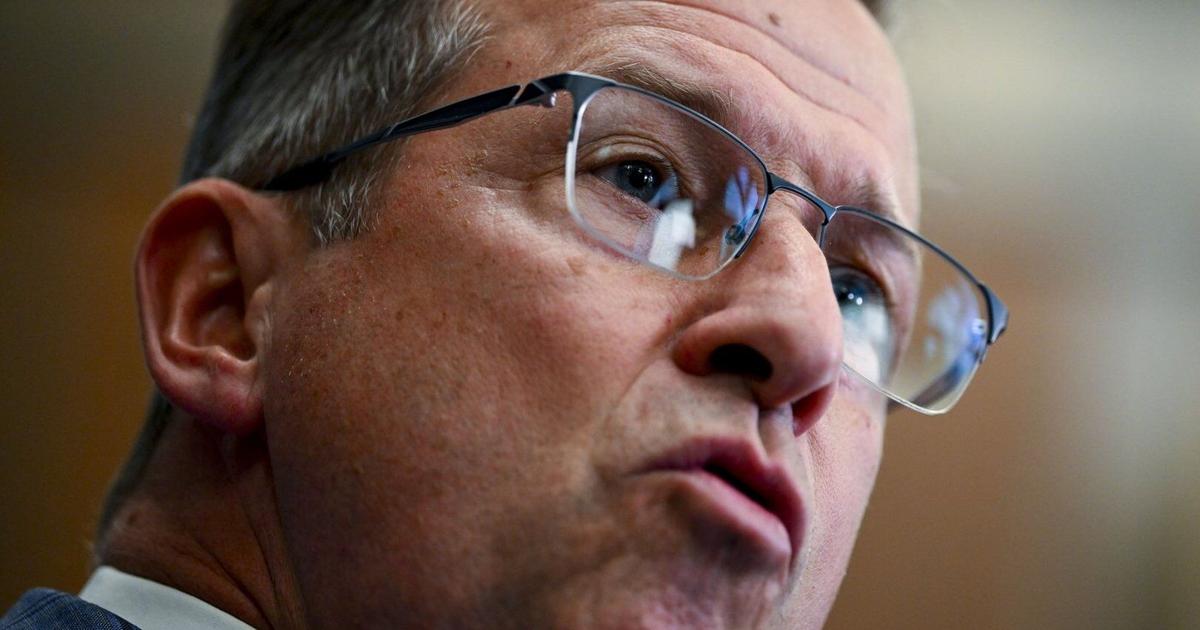
Photo via The Globe and Mail

Ottawa inspired by NAFTA as it pursues a new Canada-EU alliance, Joly says

Read the original at The Globe and Mail ↗
Cite

Bergeron, É. (2026, October 30). Ottawa inspired by NAFTA as it pursues a new Canada-EU alliance, Joly says. The Globe and Mail. https://www.theglobeandmail.com/business/article-ottawa-inspired-by-nafta-as-it-pursues-a-new-canada-eu-alliance-joly/

Dated from the outlet's own feed. Check the original for its byline.

The Globe and Mail · collected 2026-10-30 · by Émilie Bergeron

Quick Summary

Industry Minister Mélanie Joly says Canada is looking to the North American Free Trade Agreement as inspiration for strengthening its ties with the European Union. Speaking at the Canada-EU summit in Montreal, Joly highlighted how NAFTA fostered deep industrial integration and could serve as a model for future agreements between Canada and the EU. She emphasized moving beyond the existing Comprehensive Economic and Trade Agreement (CETA) to create deeper connections between Canadian and European industrial sectors, aiming towards a common market that goes beyond simple free trade.
Written by AI on 2026-10-30, from this article's own text only (the story summary below draws on all the coverage).

AI analysis

Story summary

Industry Minister Mélanie Joly is using the North American Free Trade Agreement (NAFTA) as inspiration for strengthening trade ties between Canada and the European Union (EU). Speaking at the Canada-EU summit in Montreal on October 30, 2026, Joly noted that 75% of Canadian exports to the United States had decreased to 67%, suggesting a shift towards European markets. She emphasized that NAFTA's success in fostering industrial integration could serve as a model for deepening connections between Canada and EU industries beyond existing agreements like CETA, which focuses primarily on tariff-free trade. Joly envisions moving from free-trade deals to creating a common market similar to what NAFTA established for North America.

Written for “Ottawa Inspired By NAFTA For New Alliance” on 2026-10-30, grounded in this article and the 1 other(s) covering the same event.
Why this leaning score
This article does not take a side on a contested political question, so it has no leaning score. That is an answer rather than a gap: a match report or a rescue can be warmly or critically written without being left or right, and scoring it anyway is how approval of a subject gets recorded as a political position.
No political leaning scored for article 117756 · logged 2026-10-30

Story

📰 Ottawa Inspired By NAFTA For New Alliance
Politics · 2 article(s) covering the same event. See how they differ ↓

Compared with similar articles

This article reads unscored and hedges 14% of its claims. Each row says how that neighbour differs.
Toronto Star
Hedges 5 of 37 claims Outlet record 64/100
BBC News
Hedges 3 of 28 claims Outlet record 69/100
“The articles discuss different aspects of Canada-EU relations and do not refer to a single specific event or meeting.”
CBC News
Hedges 2 of 22 claims Outlet record 60/100
“The articles discuss different aspects of Canada's relationship with the EU and do not describe the same specific incident.”
CBC News
Hedges 0 of 19 claims Outlet record 74/100
“The articles discuss related topics but describe different aspects and discussions regarding Canada's relationship with the EU, not a single specific event.”
National Post
Hedges 1 of 21 claims Outlet record 60/100
“The articles discuss related themes of Canada's interest in strengthening ties with Europe but describe different aspects and sources (a poll vs. a minister's statement).”
CBC News
⚖️ Leans left Hedges 3 of 35 claims Outlet record 60/100
“The articles discuss different aspects of Canada's relationship with the EU and do not refer to the same specific incident.”
CBC News
Hedges 3 of 19 claims Outlet record 74/100
“The articles discuss different aspects of Canada's relationship with the EU and do not describe the same specific incident.”
Times of India
Hedges 6 of 34 claims Outlet record 59/100
“The articles discuss related initiatives but describe different events: Article A covers a meeting between Carney and von der Leyen on Thursday, while Article B cites Minister Joly drawing inspiration from NAFTA for Canada-EU ties.”
Toronto Star
⚖️ Leans left Hedges 0 of 42 claims Outlet record 64/100
“The articles discuss different aspects of Canada's relationship with the EU and US, one focusing on Mark Carney's stance and another on Industry Minister Mélanie Joly's comments about drawing inspiration from NAFTA for a new alliance with the EU.”
Global News
Hedges 1 of 13 claims Outlet record 63/100
“The articles discuss different aspects of Canada's relationship with the EU and do not describe the same specific incident.”
How this article was measured signals, leaning charts, publisher record, byline, topics and claims

Signals How these are calculated →

Claims extracted
36
sentences that state something as happening or true
Uncertain
14%
5 of 36 hedged ("reportedly", "may", "according to")
Leaning
not political
takes no side on a contested political question
Publisher signals
52/100
The Globe and Mail's corrections and hedging, across everything collected from it. Not a measure of accuracy.
Outlets on this story
2
Politics
Same framing elsewhere
1
articles that frame the event the way this one does
Analyzed 2026-10-30 · how these are computed

How this is being covered How these are calculated →

Article leaning vs. publisher reliability
Source leaning vs. consistency

Publisher

The Globe and Mail · 1012 article(s) · 35 correction(s) detected
Running correction rate · 35 correction(s)

Who wrote this

Émilie Bergeron
3 article(s) here · 1 carrying a prediction
🔮 The minister said the accord, which has since been replaced by the CUSMA trade deal, could be a model for strengthening ties between Canada and the EU.
🔮 OTTAWA - Bloc Québécois MPs will gather near Ottawa to prepare for the return of Parliament, with the impact of the Canada-U.S. trade dispute expected to loom large over their discussions.
Also by Émilie Bergeron
Nothing else under this byline is closely related to this article, so these are simply their most recent.

Topics

CETA Canada NAFTA the European Union the United States

Subjects

Canada GPE · 12× Joly PERSON · 6× the United States GPE · 5× European NORP · 3× Canadian NORP · 2× Montreal GPE · 2× NAFTA ORG · 2× U.S. GPE · 2× the European Union ORG · 2× Ottawa GPE · 1×

Narrative

“Little by little, the flow of trade – which used to account for 75 per cent of our exports to the United States and has now decreased to 67 per cent … (we) will see that trade flows will shift toward Europe,” she said.
framing: assertive · carried by 1 article(s) · first seen 2026-10-30
🔮 The minister said the accord, which has since been replaced by the CUSMA trade deal, could be a model for strengthening ties between Canada and the EU.
2026-10-30 · The Globe and Mail
Ottawa inspired by NAFTA as it pursues a new Canada-EU alliance, Joly says · assertive framing

Claims (36 extracted, 5 hedged)

Ottawa is drawing inspiration from the North American Free Trade Agreement as it works to develop a new alliance with the European Union, Industry Minister Mélanie Joly says. asserted
Joly → draw → Union
Joly told The Canadian Press that Canada’s trade agreement with the United States and Mexico fostered industrial integration that has worked effectively in North America for decades. asserted
that → tell → decades
The minister said the accord, which has since been replaced by the CUSMA trade deal, could be a model for strengthening ties between Canada and the EU. uncertain
which → say → Canada
It’s more than CETA,” said the minister, referring to the Comprehensive Economic and Trade Agreement with the European Union that took effect 10 years ago. asserted
that → ’ → effect
She said CETA was largely “about being able to export without tariffs.” asserted
CETA → say → tariffs
Current discussions, she said, focus on developing deeper connections between Canadian and European industrial sectors like the ones NAFTA fostered for decades. asserted
NAFTA → say → decades
“We’re moving from a free-trade agreement to the idea of a common market,” she said in an interview that took place between working sessions and hallway discussions at the Canada-EU summit in Montreal. asserted
that → move → Montreal
Joly cited NAFTA’s rules of origin provisions, which allow officials to determine which goods are entitled to preferential tariff treatment. asserted
goods → cite → treatment
“This ranges from the certification of our passengers and products at airports to the fact that we have the same certification standards for cars and electrical equipment,” she said. asserted
she → range → cars
“If it’s certified in the United States, it’s automatically certified in Canada.” asserted
it → certify → Canada
CETA “has never had that,” she said. asserted
she → have → that
Joly said there is an “immense” opportunity for Canada to reduce its dependence on the United States by deepening its ties with Europe. asserted
Canada → say → Europe
“Little by little, the flow of trade – which used to account for 75 per cent of our exports to the United States and has now decreased to 67 per cent … (we) will see that trade flows will shift toward Europe,” she said. asserted
she → use → Europe
Canada already has several agreements with the EU, some of which were initiated under former prime minister Justin Trudeau. asserted
some → have → Trudeau
These agreements cover areas such as artificial intelligence and research funding. asserted
agreements → cover → intelligence
In February 2026, Prime Minister Mark Carney’s government formalized Canada’s participation in the European program known as SAFE, which looks to accelerate defence procurement by EU member states. asserted
which → formalize → states
Carney also has been hinting for months at the possibility of a closer relationship with Europe that would go far beyond existing agreements. asserted
that → hint → agreements
European Commission President Ursula von der Leyen has gone so far as to suggest Canada could become the first “associate member” of the EU. uncertain
Canada → go → EU
The details of new relationship have yet to be defined and its benefits remain unclear. uncertain
benefits → have → relationship
Some of those answers could come on Friday, at the conclusion of the two-day summit. Joly offered some clues. uncertain
Joly → come → clues
On Thursday, she visited the Montreal facilities of a French company, Nexans, which specializes in copper cables and wires for electrical systems. asserted
which → visit → systems
“When the (U.S.) tariffs were imposed a few months ago, they lost 75 per cent of their business … asserted
they → impose → business
It was going to kill the company,” she said. asserted
she → go → company
Joly said company managed to turn things around by finding new markets. asserted
company → say → markets
“Little by little, they reached 14 per cent of their output that they were able to ship to Europe, and the goal is to reach 20 per cent,” she said. asserted
she → reach → cent
“They’ve also gradually managed to expand their market in Canada, so they’ve regained about 75 per cent of the 75 per cent they had lost. asserted
they → manage → cent
Closer ties with Europe could also reduce Canada’s reliance on the United States for undersea cables, Joly said. uncertain
Joly → reduce → cables
The cables, which carry data between North America and Europe, are currently controlled by “Big Tech,” she said. asserted
she → carry → Tech
“We need undersea cables that connect Europe to Canada and are owned by European and Canadian interests,” she said. asserted
she → need → interests
“That way, if we ever have a conflict, they can’t prevent us from accessing that flow of information and data.” asserted
they → have → information
Canada has been mired in a trade war triggered by U.S. President Donald Trump for more than a year and a half. asserted
Canada → mire → year
Europeans have not been spared the U.S. president’s attacks, although the situation is different for them because they don’t share a land border. asserted
they → spar → border
NAFTA was torn up by Trump during his first term. asserted
NAFTA → tear → term
It was only after a long period of tariffs targeting Canada that Ottawa and Washington buried the hatchet by negotiating CUSMA. asserted
Ottawa → target → CUSMA
During his current term, Trump has argued that CUSMA no longer serves the United States well and that it needs to be revised. asserted
it → argue → States
Canada, the United States and Mexico have been drawn into an annual review of the agreement, which has meant a less predictable trading environment. asserted
which → draw → environment

💬Give feedback
🕘History 🎫Support