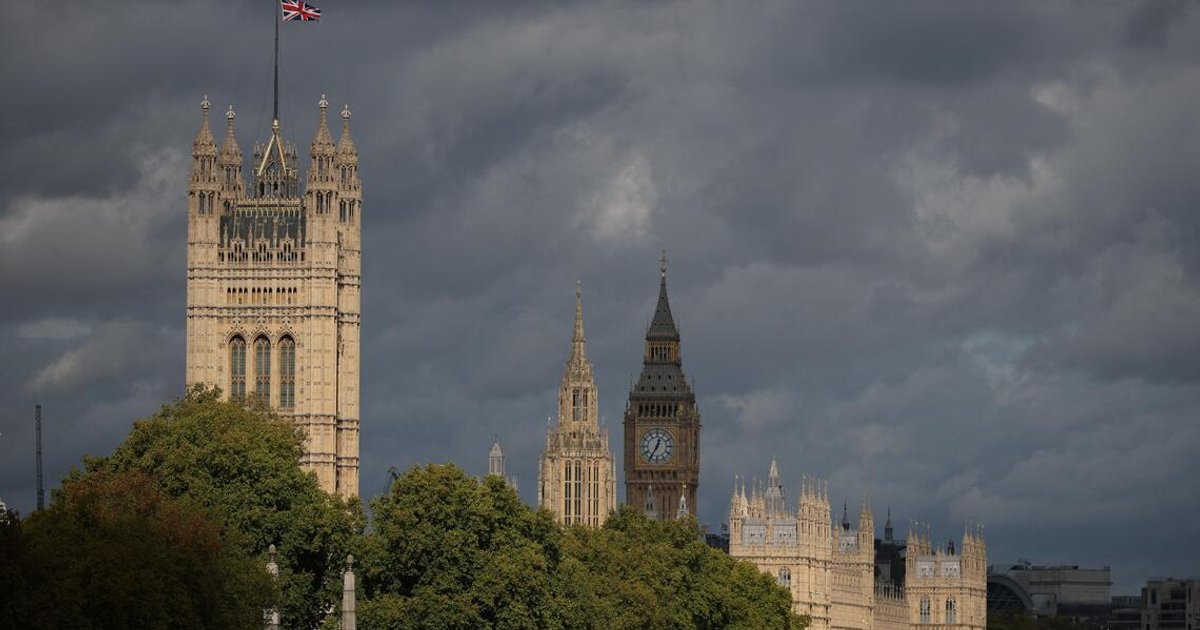
Photo via BBC News

What are the government's options for reducing welfare spending?

Read the original at BBC News ↗
Cite

Chu, B. (2026, October 29). What are the government's options for reducing welfare spending? BBC News. https://www.bbc.co.uk/news/articles/cwy7l1lrkmk2o?at_medium=RSS&at_campaign=rss

Dated from the outlet's own feed. Check the original for its byline.

BBC News · collected 2026-10-29 · by Ben Chu

Quick Summary

Chancellor John Healey and Prime Minister Andy Burnham aim to reduce welfare spending, though they have not provided a specific timeline for doing so. The government faces criticism from political opponents for lacking details on welfare reform in the recent Budget. According to official forecasts by the Office for Budget Responsibility (OBR), welfare spending is projected to increase by £79 billion over the next few years, rising from £353 billion this year to £431 billion in 2032. However, when considering the size of the economy, the relative rise in welfare spending appears less dramatic, increasing from 11.1% of GDP today to 11.3% by 2032, below the peak of around 12% seen during the financial crisis in 2013.
Written by AI on 2026-10-29, from this article's own text only (the story summary below draws on all the coverage).

AI analysis

Story summary

As of 2026-10-29, Chancellor John Healey and Prime Minister Andy Burnham aim to reduce welfare spending but have not provided a detailed timeline or specific reforms. Their opponents criticize them for delaying difficult decisions on welfare cuts despite official forecasts predicting an increase in welfare costs by £79bn over the next few years, rising from £353bn to £431bn by 2032 according to the Office for Budget Responsibility (OBR). The OBR estimates that pensioner benefits make up nearly half of total welfare spending, primarily due to state pensions.

Written for “Government Welfare Spending Options” on 2026-10-31, grounded in this article and the 0 other(s) covering the same event.

Story

📰 Government Welfare Spending Options
Politics · 1 article(s) covering the same event.

Compared with similar articles

This article reads leans right and hedges 40% of its claims. Each row says how that neighbour differs.
BBC News
Hedges 2 of 26 claims Outlet record 69/100
“While both articles discuss John Healey's pledge to reduce welfare spending, they do not describe the same specific incident or occurrence. Article A focuses on Healey's promise and immediate reaction from political opponents, while Article B discusses the broader context of government options for reducing welfare spending without specifying a single event.”
The Straits Times
⚖️ Leans right Hedges 1 of 20 claims Outlet record 66/100
“Article A reports on Finance Minister Healey's specific announcement about reducing welfare costs, while Article B discusses broader government options and criticisms regarding welfare reform without focusing on a single specific announcement.”
The Guardian
Hedges 1 of 29 claims Outlet record 66/100
“While both articles discuss John Healey's approach to reducing welfare spending, they cover different aspects and timing of the event.”
Evening Standard
Hedges 3 of 21 claims Outlet record 65/100
“While both articles discuss government efforts to reduce welfare spending and mention similar issues with cost warnings, they describe different aspects of a broader issue rather than the same specific incident or time.”
BBC News
⚖️ Leans left further left than this Hedges 2 of 26 claims Outlet record 69/100
“The articles discuss different aspects of the Budget announcement — one focuses on funding for social and affordable housing, while the other discusses government options for reducing welfare spending.”
Evening Standard
⚖️ Leans right Hedges 1 of 14 claims Outlet record 65/100
“The articles discuss related fiscal and welfare issues but do not describe the same specific incident or occurrence.”
Evening Standard
⚖️ Leans left further left than this Hedges 6 of 27 claims Outlet record 65/100
“The articles discuss different aspects of the government's fiscal policy and welfare reform, rather than describing the same specific incident or announcement.”
The Guardian
⚖️ Leans left further left than this Hedges 2 of 44 claims Outlet record 66/100
“While both articles mention Chancellor John Healey's budget announcement, Article A focuses specifically on the abolition of the 'cliff-edge' rule for carer’s allowance, while Article B discusses broader welfare spending and reductions in general.”
Daily Mail
Hedges 3 of 23 claims Outlet record 68/100
“The articles discuss related topics regarding government welfare policies but refer to different time points and perspectives, with Article A focusing on the unveiling of a new Budget and its implications while Article B examines the government's options for reducing welfare spending after the Budget has been presented.”
The Guardian
⚖️ Leans left further left than this Hedges 10 of 48 claims Outlet record 66/100
“While both articles discuss Chancellor John Healey's budget, Article A focuses on the overall allocation and context of the first budget presentation, whereas Article B specifically addresses the government's options for reducing welfare spending in light of the budget announcement. They cover different aspects of the same broader event.”
How this article was measured signals, leaning charts, publisher record, byline, topics and claims

Signals How these are calculated →

Claims extracted
30
sentences that state something as happening or true
Uncertain
40%
12 of 30 hedged ("reportedly", "may", "according to")
Leaning
Leans right
of the writing, not the subject · beta estimate
Publisher signals
69/100
BBC News's corrections and hedging, across everything collected from it. Not a measure of accuracy.
Outlets on this story
1
Politics
Same framing elsewhere
1
articles that frame the event the way this one does
Analyzed 2026-10-29 · how these are computed

How this is being covered How these are calculated →

Article leaning vs. publisher reliability
Source leaning vs. consistency

Publisher

BBC News · 4716 article(s) · 6 correction(s) detected
Running correction rate · 6 correction(s)

Who wrote this

Ben Chu
6 article(s) here · 1 carrying a prediction
🔮 Their political opponents have criticised them for a lack of detail on welfare reform in Wednesday's Budget, accusing the government of delaying difficult decisions over cuts. Official forecasts released alongside the Budget indicate welfare spending is going to increase by £79bn in cash terms over the next few years.
🔮 Economists think the buffer might have halved in the last six months from around £24bn to as low as £11bn, in part because of rising interest rates the government has been paying to borrow money from private investors.
🔮 The US economy is also being helped by an AI investment boom, and could falter if that spending were to dry up. So how does all this feel for the average American?
🔮 - Published Conservative leader Kemi Badenoch has announced she will overhaul inheritance tax if her party wins the next general election.
🔮 There are growing concerns of another inflationary shock on the world economy, which could cause interest rates to rise, increase mortgage costs and raise the price of almost everything in the shops including food.
🔮 In a speech at a care home on Wednesday he announced that cross-party talks involving the Conservatives and Liberal Democrats would start later.
Also by Ben Chu
Nothing else under this byline is closely related to this article, so these are simply their most recent.
All 6 articles by Ben Chu →

Topics

BBC Verify Budget OBR Universal Credit the Office for Budget Responsibility

Subjects

OBR ORG · 4× Universal Credit ORG · 2× Alan Milburn PERSON · 1× Andy Burnham PERSON · 1× BBC Verify ORG · 1× Budget ORG · 1× Conservative NORP · 1× John Healey PERSON · 1× Labour ORG · 1× the Office for Budget Responsibility ORG · 1×

Narrative

But official forecasts made it clear that annual spending on health-related welfare in cash terms was still set to rise after the reform, external, just not as rapidly as the path it had previously been on. However, at the time the OBR did forecast the plans would help put overall UK welfare spending on a "slightly downward trajectory" as a share of the economy, external over the medium term, rather than remaining flat as had been previously projected.
framing: mixed · carried by 1 article(s) · first seen 2026-10-29
🔮 Their political opponents have criticised them for a lack of detail on welfare reform in Wednesday's Budget, accusing the government of delaying difficult decisions over cuts. Official forecasts released alongside the Budget indicate welfare spending is going to increase by £79bn in cash terms over the next few years.

Claims (30 extracted, 12 hedged)

- Published Chancellor John Healey and Prime Minister Andy Burnham have both spoken of their desire for the benefits bill to come down, but the government has not yet laid out a timetable for any reductions. asserted
government → publish → reductions
Their political opponents have criticised them for a lack of detail on welfare reform in Wednesday's Budget, accusing the government of delaying difficult decisions over cuts. Official forecasts released alongside the Budget indicate welfare spending is going to increase by £79bn in cash terms over the next few years. asserted
spending → criticise → years
BBC Verify has taken a look at the numbers behind this thorny political issue and some of the difficult options the government have to bring down welfare costs. asserted
government → take → costs
How much is being spent on welfare? asserted
much → spend → welfare
The official forecaster, the Office for Budget Responsibility (OBR), estimates in its latest forecasts that the cost of the welfare system will rise, external from £353bn this year to £431bn in 2032. asserted
cost → estimate → 2032
The OBR's figures include spending on pensioners, which accounts for just under half of the total. asserted
which → include → total
However, if we look at the size of welfare spending relative to the size of the overall economy the OBR's projections are less dramatic, increasing from 11.1% today to 11.3% of GDP in 2032. asserted
projections → look → 2032
Total welfare spending would also remain below the peak of around 12% of GDP in 2013 following the global financial crisis, leading some economists and researchers to question the idea that welfare spending is out of control., external asserted
spending → remain → control
But there are some welfare costs that are rising rapidly. asserted
that → be → ?
Spending on health and disability related benefits, in particular Personal Independence Payments (PIP), is up sharply since the Covid-19 pandemic. asserted
Spending → relate → pandemic
Accounting for inflation, spending on working-age disability benefits increased from £14bn in 2020 to £25bn in 2026, external. asserted
spending → account → 2026
Inflation-adjusted welfare spending remains lower than 2013 because several other working-age benefits, such as Universal Credit and housing benefit, were cut by Conservative-led governments as part of their austerity programme from 2010 onwards, external. So spending in some parts of the system has come down while it has risen in others - and there could be a connection. Some researchers think the post-2010 welfare cuts to benefits might have created an incentive for people to claim sickness and disability benefits instead to protect their living standards, external, therefore shifting costs around the system rather than generating lasting savings. uncertain
people → adjust → savings
The problem of Neets Many also see a specific problem regarding the growing number of young people in the welfare system claiming benefits, including PIP. asserted
Many → see → PIP
Official figures show the number of 16 to 24-year-olds who are not in employment, education or training (Neets) has risen, external by around 230,000 since 2019 to just under one million. asserted
who → show → million
Former Labour health secretary Alan Milburn is leading an official review into Neets and is expected to recommend major reforms designed to get many off benefits and into work. asserted
Milburn → lead → work
His interim report in May estimated that annual PIP expenditure on 16 to 24-year-olds rose from £1.3bn in 2020 to around £3.2bn in 2025, external. uncertain
expenditure → estimate → 2025
It also projected this cost would reach £6.5bn and cover 700,000 young people in five years' time. asserted
cost → project → time
PIP claimants can be in work, but official statistics show that only around one in five are, external. What could cutting the benefits bill mean? uncertain
cutting → show → bill
Politicians are often unclear about what they mean by reducing spending on welfare. uncertain
they → mean → welfare
In March 2025, former prime minister Sir Keir Starmer's government presented a plan which it said would save £5bn a year from health-related welfare spending by 2030 by tightening PIP access and reducing the value of health-related Universal Credit payments. asserted
it → present → payments
But official forecasts made it clear that annual spending on health-related welfare in cash terms was still set to rise after the reform, external, just not as rapidly as the path it had previously been on. However, at the time the OBR did forecast the plans would help put overall UK welfare spending on a "slightly downward trajectory" as a share of the economy, external over the medium term, rather than remaining flat as had been previously projected. asserted
plans → make → term
So this type of relative reduction in anticipated welfare spending, rather than a cut in absolute cash terms, could be what the government seeks to deliver. uncertain
government → anticipate → what
Looming reports may offer options uncertain
reports → loom → options
The final Milburn report is expected in the coming weeks, as well as a separate final report from disability minister Stephen Timms into the options for PIP reform. asserted
report → expect → reform
There has been speculation that these could recommend creating a new welfare system for people under the age of 25, external, so they are not eligible for PIP and receive lower payments than older people. uncertain
they → recommend → people
There are also suggestions Timms could propose a new PIP eligibility test to reduce access, external, although he was not specifically instructed to find savings. uncertain
he → be → savings
Reforms along these lines could potentially make some savings to the welfare bill relative to the existing trajectory of rising spending, as well as reducing forecast welfare spending as share of GDP. But some analysts argue that to be effective in delivering sustainable savings, such reforms are likely also to require the government to spend a lot more, external to enable young people in particular to get into and remain in work. uncertain
people → make → work
This was signalled by the interim Milburn report which noted that for every £1 the government spends on employment support for young people around £25 is spent on benefits, suggesting he could propose a significant increase in government spending on welfare-to-work schemes. uncertain
he → signal → schemes
This means that any welfare savings could, in the near term at least, be offset by additional spending in other departments. uncertain
savings → mean → departments
However, in the long term this approach could still deliver welfare savings if the employment support was effective. uncertain
support → deliver → savings

💬Give feedback
🕘History 🎫Support