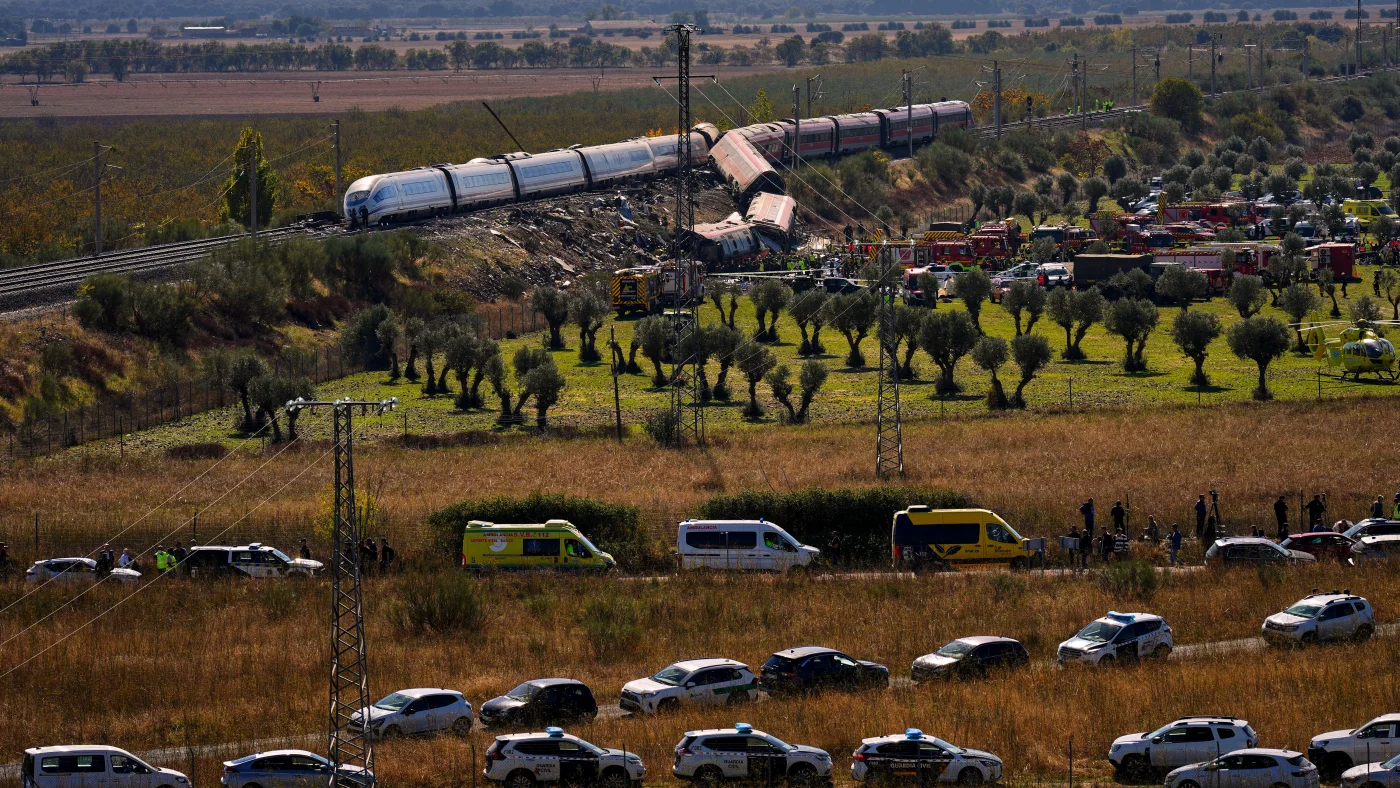
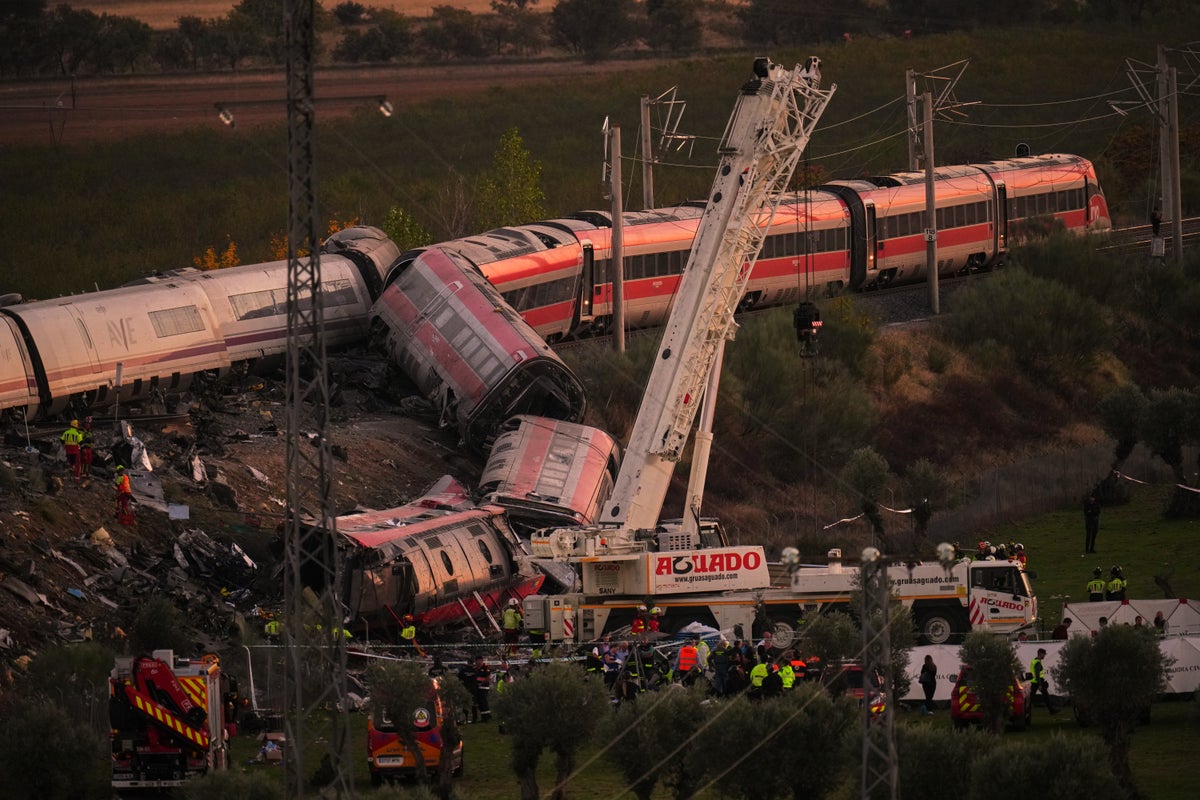
At least 68 people were killed and about 80 injured when a high-speed train ploughed into the back of a stationary train in central Spain on Wednesday.
asserted
train → kill → Wednesday
The crash, just before 9am (08:00 GMT) near Urda, a town south of Madrid, is Spain’s second deadly high-speed rail disaster in less than a year, and comes just weeks before national elections.
asserted
crash → come → elections
Recommended Stories
list of 3 items- list 1 of 3Train crash in Spain kills at least 68 people
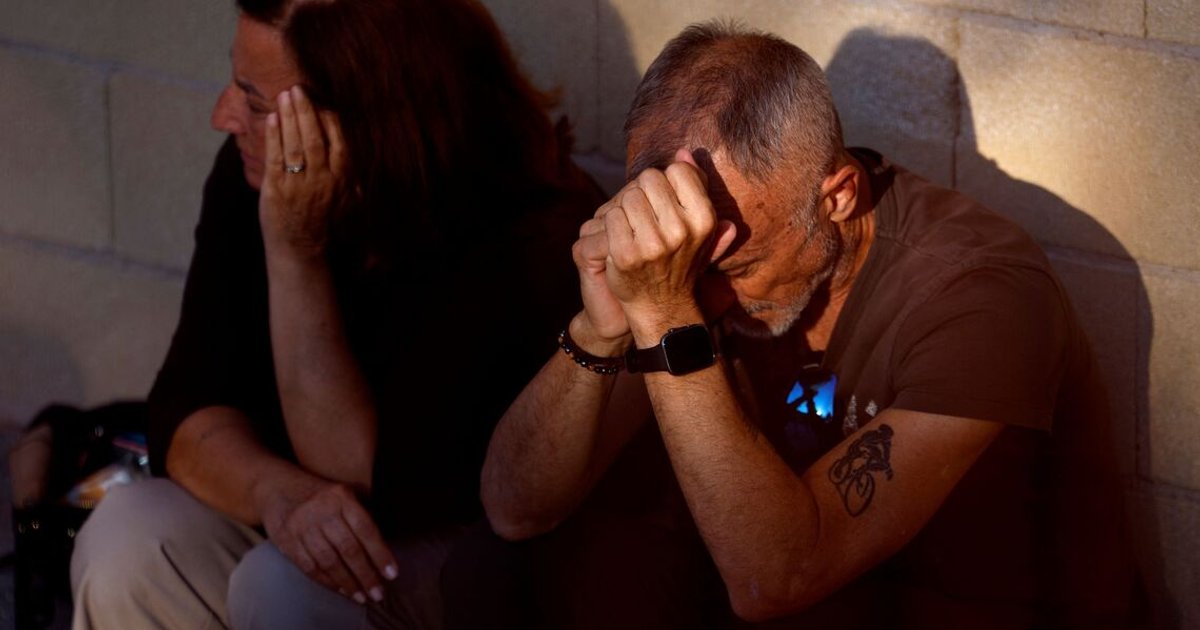
- list 2 of 3‘I held this woman in my arms.
asserted
3‘I → kill → arms
She died’: Spain mourns train crash victims
asserted
Spain → die → victims
- list 3 of 3Photos: Deadly high-speed train collision in Spain kills dozens
The authorities have blamed an “inexplicable” order given by a rail control centre that allowed one of the trains to resume normal speed following a signalling failure.
asserted
one → kill → failure
Here is what we know about the crash:
What happened and where?
asserted
happened → know → crash
The moving train was run by Renfe, Spain’s state-owned rail company.
asserted
train → move → Renfe
It hit the rear of a stalled train operated by Iryo, a private player which entered the country’s high-speed railway service market in 2022.
asserted
which → hit → 2022
Both trains were travelling from Madrid to Seville.
asserted
trains → travel → Seville
The Renfe train was carrying 397 people and the Iryo train 147, according to the government of Castilla-La Mancha, the central region where the crash happened.
uncertain
crash → carry → Mancha
The trains collided on a raised section of track between Urda and the neighbouring town of Los Yebenes, near the ancient city of Toledo.
asserted
trains → collide → Toledo
Two of the Iryo train’s carriages derailed and fell down the embankment during the collision, regional officials and emergency sources quoted by Spanish newspaper El Pais said.
asserted
officials → derail → newspaper
The toll is the highest in a European rail accident since a 2013 derailment in the northwestern Spanish city of Santiago de Compostela killed 80 people.
asserted
derailment → kill → people
Prime Minister Pedro Sanchez visited the site on Wednesday and declared three days of national mourning, starting on Thursday.
asserted
Sanchez → visit → Thursday
He pledged to get to the bottom of the crash, saying any negligence would come to light and any system failures would be met with a strong response.
asserted
failures → pledge → response
What do we know about the dead and injured?
asserted
we → know → dead
At least 68 people were killed in the crash and about 80 were injured, 50 of them seriously and 15 critically, said Emiliano Garcia-Page, president of the Castilla-La Mancha regional government.
asserted
Page → kill → government
The most seriously injured people were taken to hospitals in the region and in Madrid, the capital.
asserted
people → injure → Madrid
Others were assessed at a sports hall near the crash site, where emergency teams sorted them by the severity of their injuries before sending them home or to hospital.
asserted
teams → assess → hospital
Survivors treated near the scene had head wounds, facial swelling and bloodied clothing, and many were dazed, according to local media reports.
Juan Quesada, 65, who was travelling on the Renfe train to Seville for work, suffered a head injury.
uncertain
who → treat → injury
“A tremendous impact and so much noise, and everyone was coming at you,” he told El Pais.
asserted
he → come → Pais
A local who contributed to supplying the makeshift medical centre told the paper the scene was “like a horror movie”.
asserted
scene → contribute → movie
Emergency crews continue to clear the wreckage of the two trains and search for victims trapped under the rubble.
asserted
crews → continue → rubble
Fifty-two bodies have been recovered so far.
asserted
bodies → recover → ?
Spain’s Civil Guard sent a disaster investigation team to the site, with evidence from the site being collected.
asserted
evidence → send → site
What caused the collision between the trains?
asserted
What → cause → trains
At about 8:30am (07:30 GMT), a computer failure knocked out LZB, the main signalling system that automatically keeps trains on the line a safe distance apart, Transport Minister Oscar Puente said.
asserted
Puente → knock → line
As a result, about six trains on a 63km (39-mile) stretch stopped automatically, including the Iryo and Renfe trains.
asserted
trains → stop → trains
The Renfe train had been running about 25km (15.5 miles) behind the Iryo train on the same track.
asserted
train → run → track
Control of those trains then passed to a centre in Madrid run by Adif, the state company that manages Spain’s rail infrastructure.
asserted
that → pass → infrastructure
Its controllers had to decide when and how fast each train could move again.
uncertain
train → have → ?
At 8:36am, controllers cleared the Renfe train to resume running at its normal speed, according to the preliminary investigation by El Pais that cites train data and recordings of calls with controllers.
uncertain
that → clear → controllers
The Iryo train was given the same order at 8:41am but could not get moving.
uncertain
train → give → 8:41am
At 8:48am, its driver told controllers it was still stalled.
asserted
it → tell → controllers
By then, the Renfe train had sped up to more than 200km/h (124mph).
asserted
train → speed → km/h
At 8:53am, it smashed into the stalled Iryo train.
asserted
it → smash → train
Puente has said the crash was caused by what he called an “inexplicable” order from the control centre after the safety system failed.
asserted
system → say → centre
He said the train drivers and engineers were not to blame.
asserted
drivers → say → ?
In his view, the Renfe train should never have been allowed to move while a stop signal was still showing, or should at least have been instructed to proceed slowly.
asserted
signal → allow → view
That is what Spain’s rail rules usually require.
asserted
rules → require → what
…and 26 more, not listed.
 The Aporia