Second fatal train collision this year casts doubt over Spain’s high-speed rail network

Read the original at The Guardian ↗
Cite

Madrid, A. K. i. (2026, October 28). Second fatal train collision this year casts doubt over Spain’s high-speed rail network. The Guardian. https://www.theguardian.com/world/2026/oct/28/analysis-fatal-collision-doubt-over-spain-high-speed-rail

Dated from the outlet's own feed. Check the original for its byline.

The Guardian · collected 2026-10-28 · by Ashifa Kassam in Madrid

Quick Summary

A deadly collision on Wednesday morning in Spain killed at least 64 people when two trains collided near Toledo, one day before a planned union strike over safety concerns. This incident follows another fatal crash in January that left 46 dead. Both crashes involved the Madrid-Andalusia line and raised questions about signaling faults and train speeds. Rail unions are demanding safer conditions and better communication channels for workers to report issues, while the government claims it has increased railway maintenance spending by 54% since 2018.
Written by AI on 2026-10-29, from this article's own text only (the story summary below draws on all the coverage).

AI analysis

Story summary

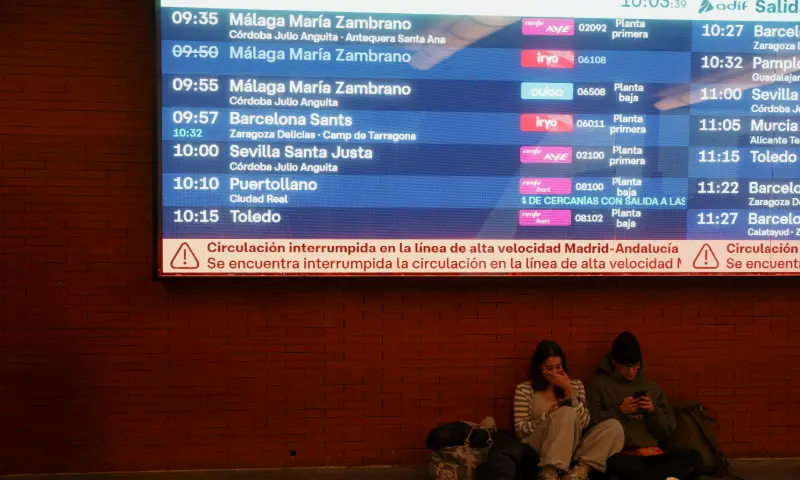
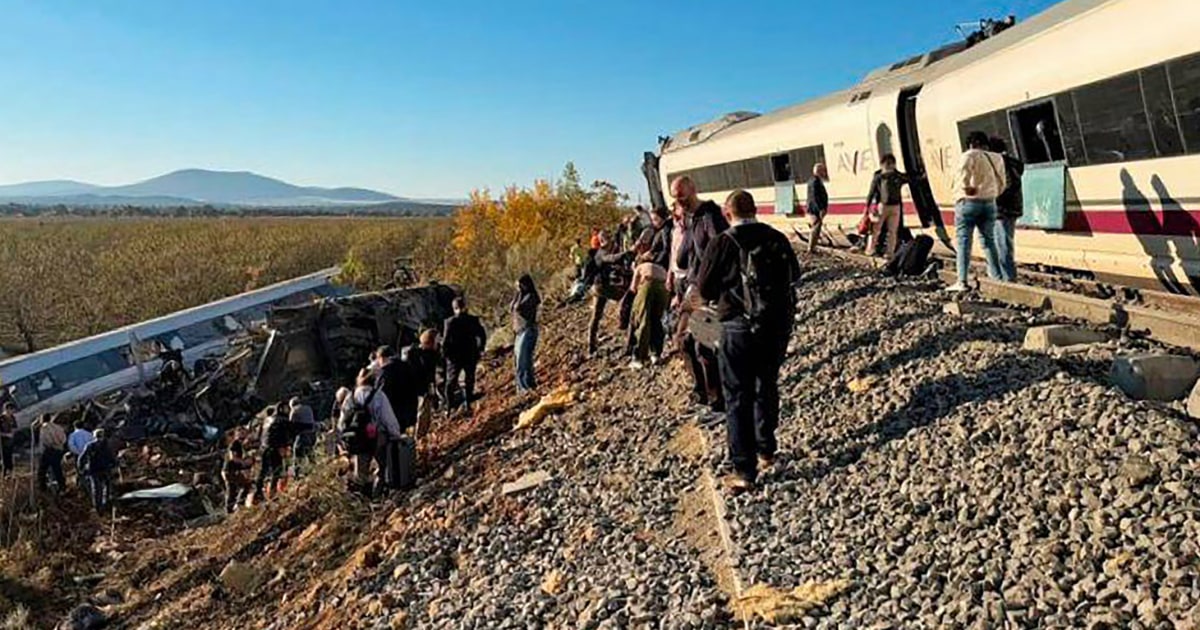
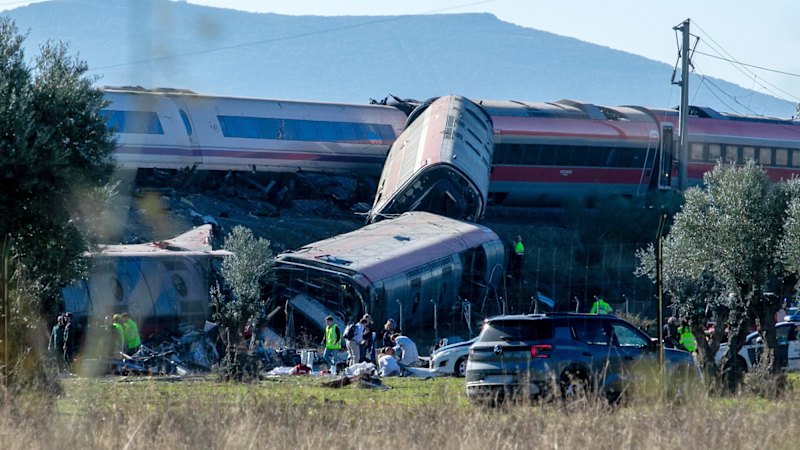
As of October 29, 2026, at least 68 people died and over 107 were injured when two high-speed trains collided near Urda in central Spain. The crash occurred around 9 a.m. local time on Wednesday morning. One train operated by state-owned Renfe struck the rear of another train from the private company Iryo, which had stopped on the tracks due to a signaling system malfunction. Both trains were heading south from Madrid towards Seville.

The collision happened just weeks before Spain's national election and has raised significant concerns about rail safety in the country. Spanish Prime Minister Pedro Sánchez visited the crash site and pledged an investigation into the cause of the accident, promising improvements to prevent similar tragedies.

Conflicting accounts emerged regarding why the Iryo train was still stopped despite instructions from the control center to resume its journey under new signaling conditions. The transport minister attributed some errors to "inexplicable circumstances," leading to calls for a thorough inquiry into Spain's rail network safety protocols.

Written for “Spanish Train Crash Kills Dozens” on 2026-10-29, grounded in this article and the 43 other(s) covering the same event.
Why this leaning score
This article does not take a side on a contested political question, so it has no leaning score. That is an answer rather than a gap: a match report or a rescue can be warmly or critically written without being left or right, and scoring it anyway is how approval of a subject gets recorded as a political position.
No political leaning scored for article 112188 · logged 2026-10-29

Story

📰 Spanish Train Crash Kills Dozens
World · 44 article(s) covering the same event. Compare every outlet's account →

Compared with similar articles

This article reads unscored and hedges 12% of its claims. Each row says how that neighbour differs.
The Independent
Hedges 2 of 40 claims Outlet record 59/100
The Globe and Mail
Hedges 0 of 2 claims Outlet record 53/100
Dawn
Hedges 1 of 12 claims Outlet record 71/100
Al Jazeera
Hedges 0 of 3 claims Outlet record 60/100
The Straits Times
Hedges 0 of 23 claims Outlet record 68/100
ABC News (AU)
Hedges 5 of 31 claims Outlet record 68/100
Dawn
Hedges 2 of 16 claims Outlet record 71/100
New York Post
Hedges 0 of 11 claims Outlet record 66/100
NBC News
Hedges 1 of 12 claims Outlet record 60/100
The Sydney Morning Herald
Hedges 1 of 15 claims Outlet record 61/100
How this article was measured signals, leaning charts, publisher record, byline, topics and claims

Signals How these are calculated →

Claims extracted
26
sentences that state something as happening or true
Uncertain
12%
3 of 26 hedged ("reportedly", "may", "according to")
Leaning
not political
takes no side on a contested political question
Publisher signals
66/100
The Guardian's corrections and hedging, across everything collected from it. Not a measure of accuracy.
Outlets on this story
44
World
Same framing elsewhere
1
articles that frame the event the way this one does
Analyzed 2026-10-29 · how these are computed

How this is being covered How these are calculated →

Article leaning vs. publisher reliability
Source leaning vs. consistency

Publisher

The Guardian · 2630 article(s) · 6 correction(s) detected
Running correction rate · 6 correction(s)

Who wrote this

Ashifa Kassam in Madrid
3 article(s) here · 1 carrying a prediction
🔮 The union also called for guarantees that trains would be “reliable and safe”, adding: “We demand real and definitive technical solutions to the safety and reliability issues that have long plagued our rolling stock.”
🔮 Announcing that an early general election would be held on Sunday 29 November, the prime minister defended his government’s record in office and admitted it had made mistakes, but insisted it was time to let the Spanish people have their say.
🔮 Late on Thursday, as news broke of that several rightwing parties were planning to vote against the proposed measures, Sánchez said the parliamentary vote would go ahead as planned.
Also by Ashifa Kassam in Madrid
Nothing else under this byline is closely related to this article, so these are simply their most recent.

Topics

China Iryo Renfe Reuters Spain

Subjects

Spain GPE · 9× Renfe ORG · 3× Iryo ORG · 2× Reuters ORG · 2× Adamuz GPE · 1× Adif PERSON · 1× Andalucía GPE · 1× China GPE · 1× Madrid GPE · 1× Toledo GPE · 1×

Narrative

Media on Wednesday were swift to point to the parallels between the two crashes: both involved the same train operators and took place on the line connecting Madrid to the southern region of Andalusia, which is the oldest on Spain’s high-speed network.
framing: assertive · carried by 1 article(s) · first seen 2026-10-29
🔮 The union also called for guarantees that trains would be “reliable and safe”, adding: “We demand real and definitive technical solutions to the safety and reliability issues that have long plagued our rolling stock.”

Claims (26 extracted, 3 hedged)

Spain’s high-speed rail network, the most extensive in Europe and the second largest in the world after China, has long ranked as a point of pride in the country. asserted
network → rank → country
But Wednesday’s deadly crash – the second in nine months – has recast the spotlight on questions about safety. asserted
crash → recast → safety
Officials said at least 64 people were killed on Wednesday morning after two trains collided, leading to the derailment of several carriages. asserted
trains → say → carriages
The two trains were carrying 544 passengers. asserted
trains → carry → passengers
While the cause of the accident has yet to be confirmed, a source told Reuters that a train operated by the private company Iryo had come to a halt near the city of Toledo because of a signalling fault and on orders from infrastructure manager Adif. asserted
train → have → Adif
Soon after, a second train, operated by state-owned Renfe struck the stationary train. asserted
train → operate → train
It had been travelling on the same line at a high speed. asserted
It → travel → speed
Renfe said in a statement that its train had been instructed to continue on its way and had crashed into the stationary Iryo train “for reasons we don’t know”. asserted
we → say → reasons
The accident follows a crash in January that killed 46 people and left dozens more injured near the town of Adamuz in Andalucía. asserted
that → follow → Andalucía
Media on Wednesday were swift to point to the parallels between the two crashes: both involved the same train operators and took place on the line connecting Madrid to the southern region of Andalusia, which is the oldest on Spain’s high-speed network. asserted
which → point → network
The first crash sparked a wider conversation over safety on the line, a debate that rail unions say has continued. asserted
unions → spark → line
Wednesday’s disaster came a day before a planned 24-hour work stoppage at Renfe by Spain’s largest train drivers union. asserted
disaster → come → union
“Our goal is to change the system and make it safer,” the union said earlier this month. asserted
union → change → system
Their reasons for taking action ranged from the need for climate emergency protocols to ensuring channels of communication for workers to convey concerns. asserted
workers → take → concerns
The union also called for guarantees that trains would be “reliable and safe”, adding: “We demand real and definitive technical solutions to the safety and reliability issues that have long plagued our rolling stock.” asserted
that → call → stock
It has also called a rolling, six-day strike for drivers at the high-speed rail operator Ouigo. asserted
It → call → operator
The January crash sparked a bout of political finger-pointing over whether Pedro Sánchez’s Socialist party government had spent enough on railway maintenance in a country where travel by train accounts for about 57% of all transport. asserted
travel → spark → transport
Train travel grew by 40% from 2019 to 2024, coinciding with a period in which the country opened up its rail network to private companies. asserted
country → grow → companies
In the first half of this year, 25 million passengers used a high-speed train in Spain. asserted
passengers → use → Spain
The government says it has increased spending on railway network maintenance by 54% since taking power in 2018. asserted
it → say → 2018
Spain spends more than any other country on its high-speed network, averaging about €1.5bn (£1.26bn) a year from 2018 to 2022, according to a Reuters analysis of EU data. uncertain
Spain → spend → data
More than 90% of Spain’s train network is equipped with the highest level of safety control systems in the EU. asserted
% → equip → EU
Much of the funding, however, has seemingly been directed at new infrastructure, with about 16% earmarked for maintenance, renewal and upgrades. asserted
% → direct → maintenance
Data from the European Commission suggests Spain’s maintenance investment in its 4,000km (2,500 miles) of high-speed lines has lagged behind countries such as Germany or Switzerland although some of this could be attributed to differences in the age of the rail lines and the cost of public works and materials. uncertain
some → suggest → works
Until this year, Spain had among the lowest accident rates in the EU, with just one or fewer fatalities per thousand kilometres of track, according to data from Eurostat, the statistics arm of the EU. uncertain
Spain → have → EU
Spain’s worst rail accident took place in 2013, when 80 people died after a train veered off a curved section of track outside the north-western city of Santiago de Compostela. asserted
train → take → Compostela

💬Give feedback
🕘History 🎫Support