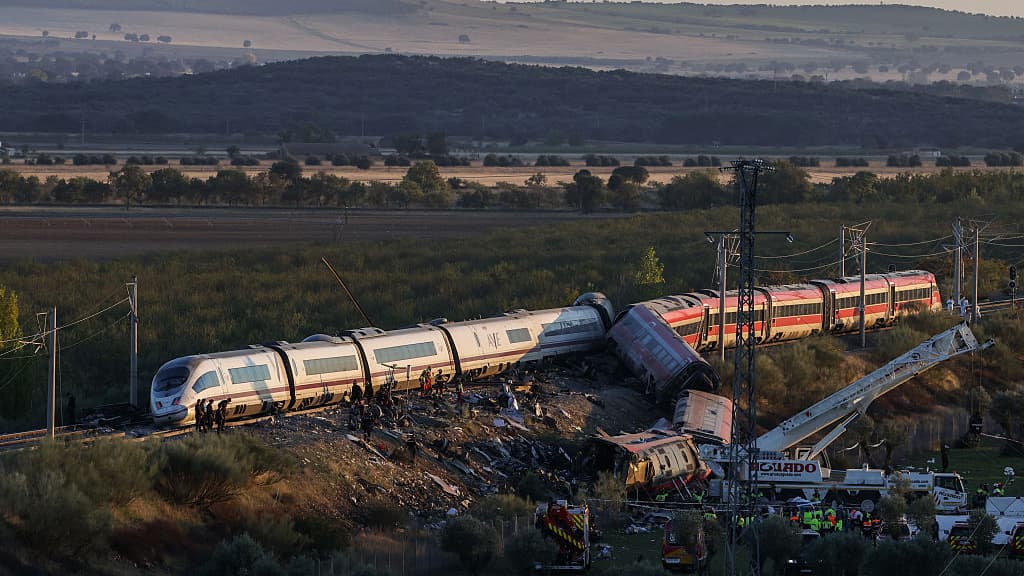
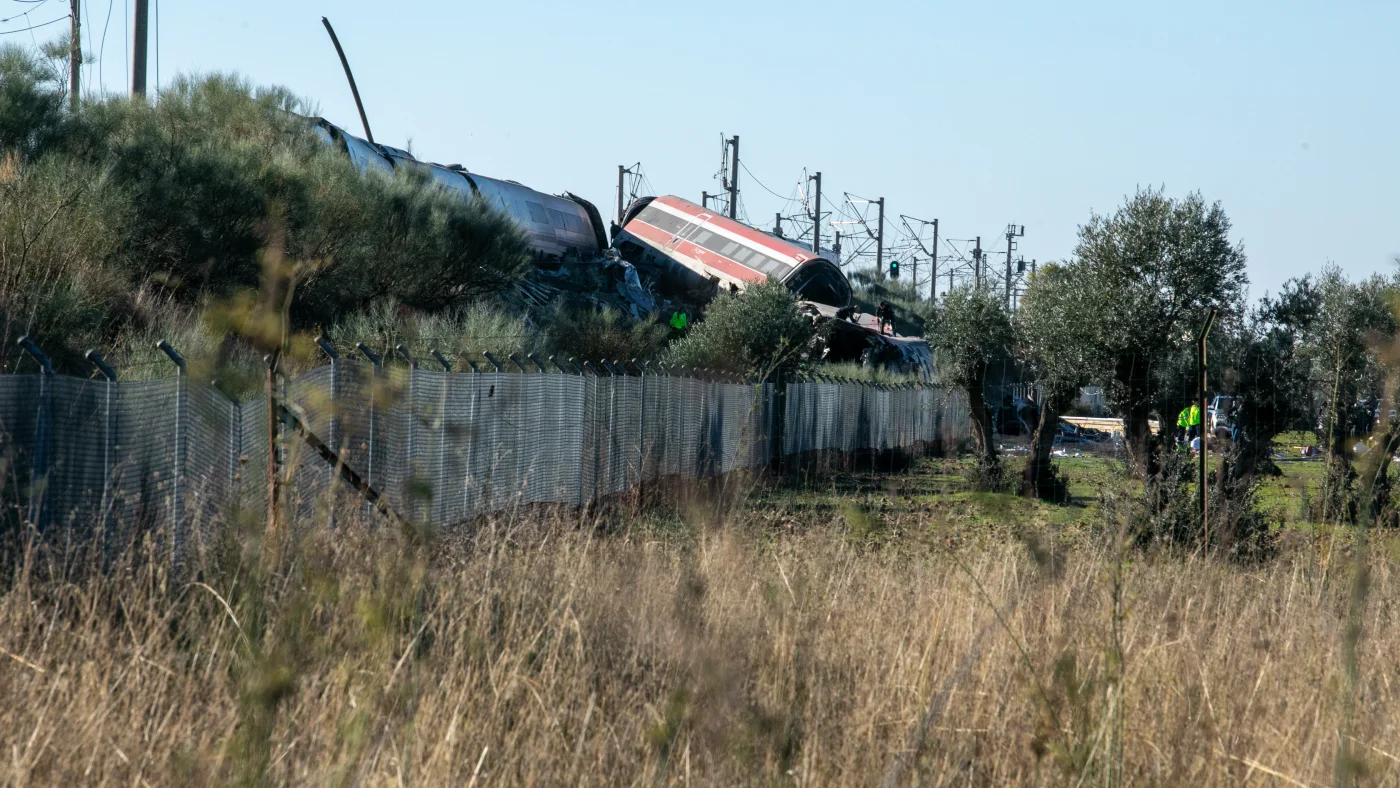
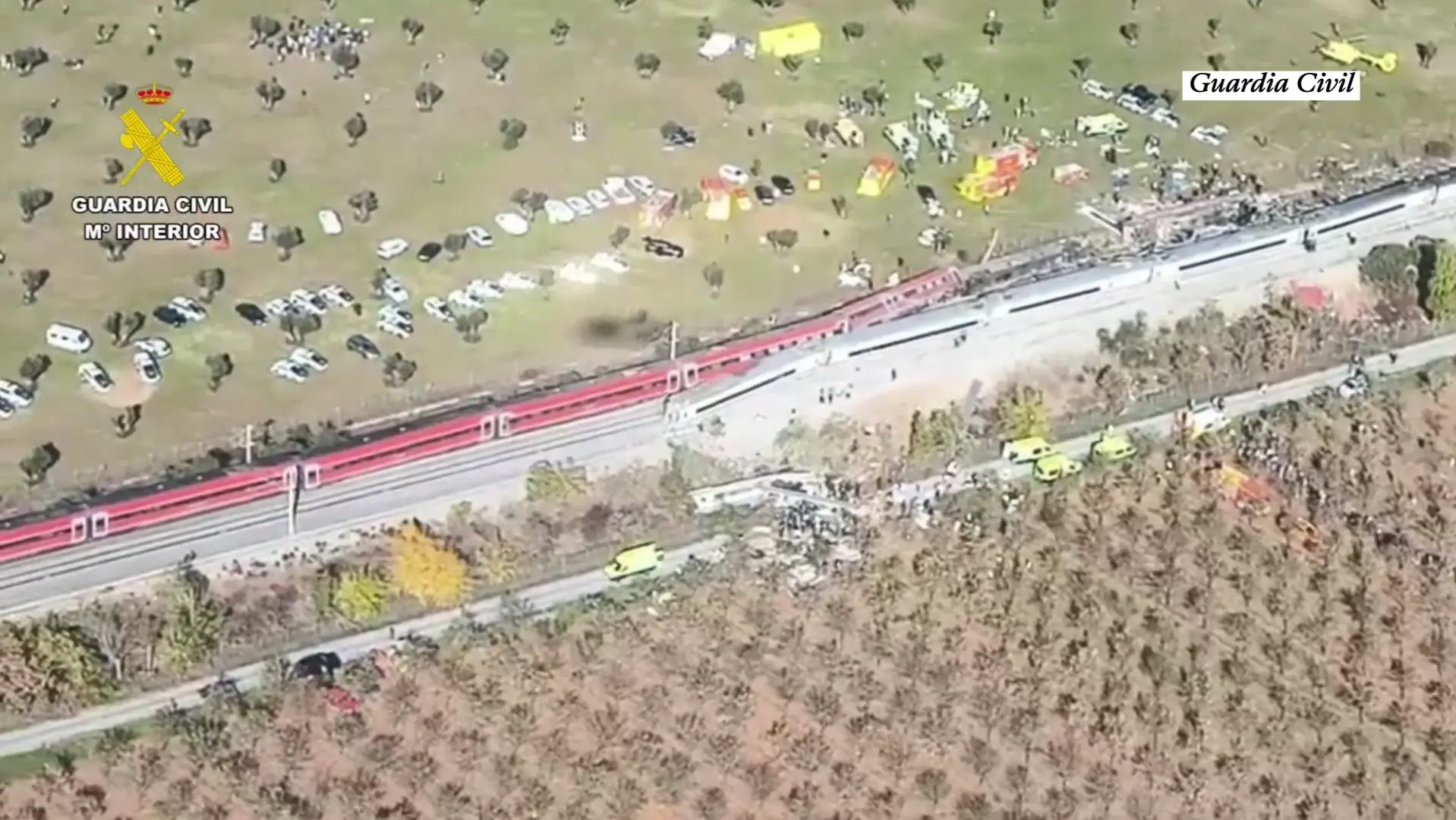
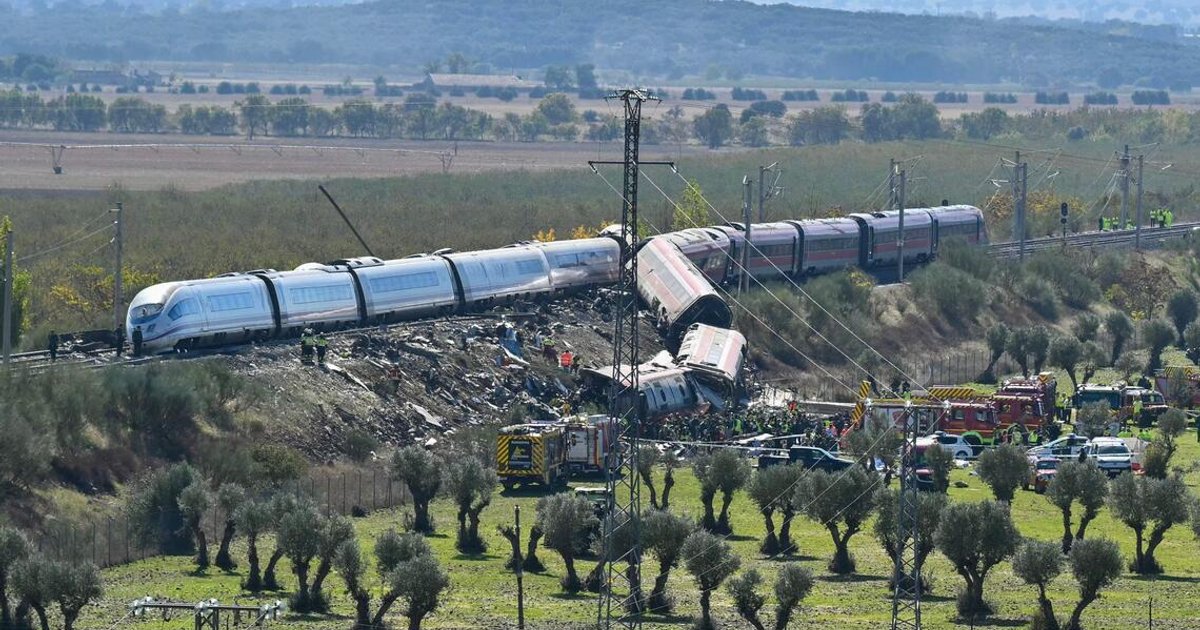
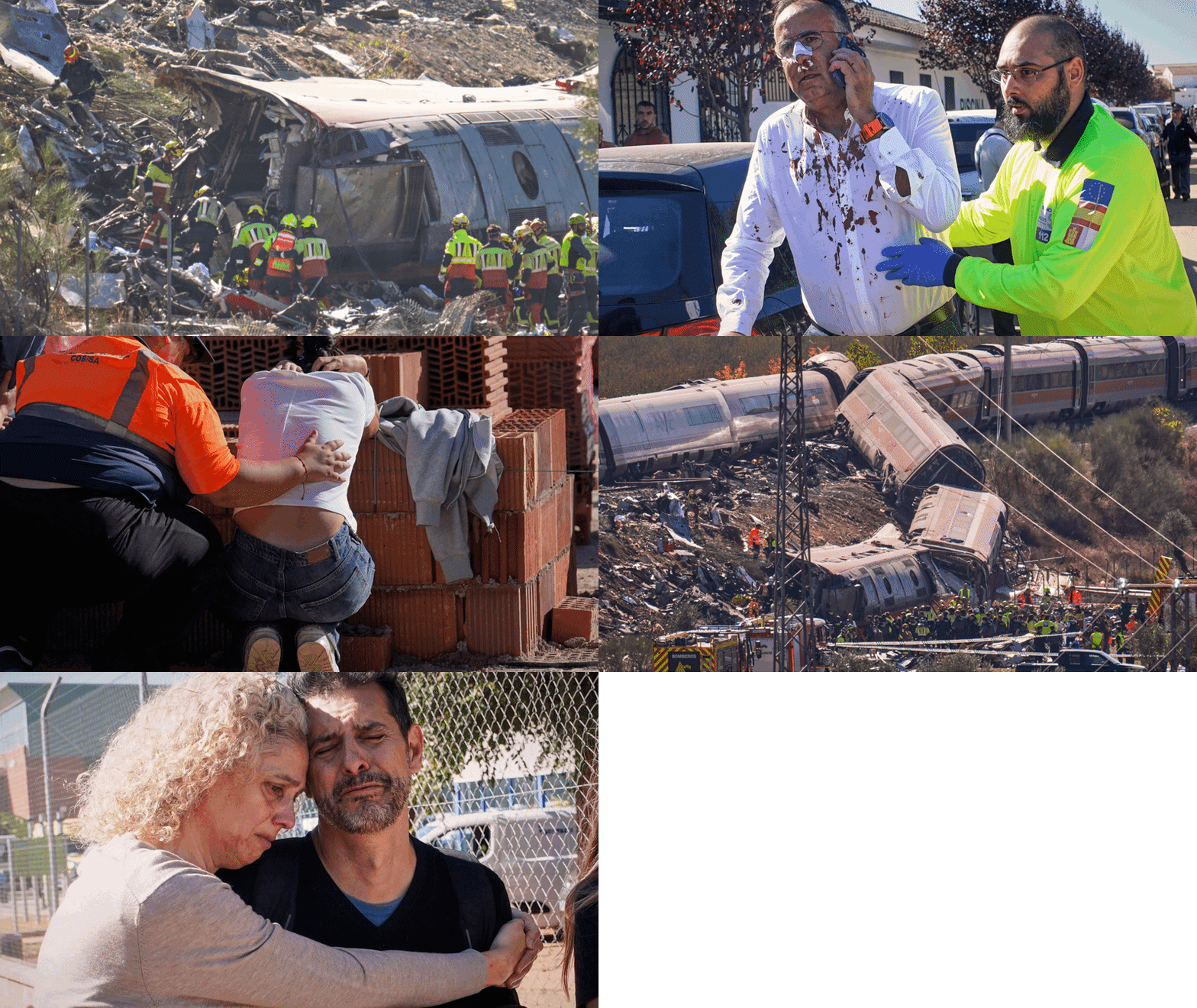
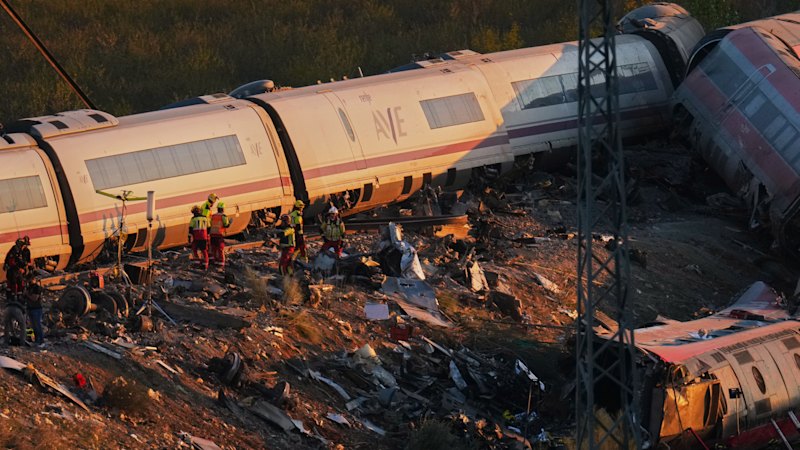
Spanish authorities are investigating the cause behind a high-speed train collision Wednesday morning that killed at least 68 people and injured dozens of others.
asserted
that → investigate → others
The country’s transport minister suggested that a combination of “inexplicable” human error and a computer failure was likely behind the tragedy, which occurred near Urda, Toledo, more than 80 miles south of Madrid.
uncertain
which → suggest → Madrid
Transport Minister Óscar Puente said in a press conference that the state-operated Renfe train slamming into the rear of a stationary private train operated by Iryo was due to an “inexplicable” order from a command center for Spain’s trains.
asserted
train → say → trains
Puente said the center had a computer malfunction before the order.
asserted
center → say → order
“It was the control center, through its operators, that made the decision to resume traffic, under circumstances that, from our point of view, are inexplicable,” Puente said.
asserted
Puente → make → view
He added later: “Clearly, it was a wrong decision.”
asserted
it → add → ?
Puente said that they have identified the person who decided to let the Renfe train continue moving even though the Iryo one had already stopped, but he has not spoken to the control center operator.
asserted
he → say → operator
“This person is subject to whatever the investigation determines,” Puente said in the press conference.
asserted
Puente → determine → conference
The regional government of Castilla-La Mancha, where the Toledo town is, said in a social media post that 53 people are still receiving medical treatment in healthcare facilities.
asserted
people → say → facilities
The number of people hospitalized reached 107 earlier in the day.
asserted
number → hospitalize → day
The Wednesday collision is now the deadliest train crash in the country since a 2013 incident in Santiago de Compostela that killed 80 people.
asserted
that → kill → people
But the latest collision follows a similarly deadly train crash in January, which involved high-speed trains operated by the same two companies.
asserted
which → follow → companies
In that crash, which occurred in Adamuz, Córdoba, 46 people died and 122 sustained injuries.
asserted
122 → occur → injuries
Prime Minister Pedro Sánchez, who visited the crash site, announced that his government would declare three days of mourning in response and vowed an investigation.
asserted
government → visit → investigation
“What is unacceptable for a country like Spain is to suffer two high-speed rail accidents in the same year,” Sánchez said, though he noted that it “is highly likely that the two accidents are unrelated.”
asserted
accidents → suffer → year
Despite the accident, Puente insisted that the Spanish rail system is “safe and comparable to that of other countries in our region.”
asserted
system → insist → region
However, while there are “very clear” regulations and protocols in place, he admitted, “failures can obviously occur.”
asserted
failures → be → place
What happened?
asserted
What → happen → ?
The crashes involved a Renfe high-speed train bound for Seville with 393 people on board, and an Iryo train carrying 151 passengers.
asserted
crashes → involve → passengers
The Renfe train departed Madrid at 8:00 a.m. local time, while the Iryo train left a little earlier at 7:54 a.m., plying the same route.
asserted
train → depart → route
Spain’s rail infrastructure uses the German LZB (Linienzugbeeinflussung) system, a railway safety technology that monitors train speeds and sends traffic instructions to the driver’s cab.
asserted
that → use → cab
Operations are meant to revert to manual control when the automated safety system fails.
asserted
system → mean → control
Puente, in the press conference, said that at around 8:30 a.m., three computers on the railway network experienced a communication failure, taking the LZB control system offline along a 63 km (39 mi) stretch of the track.
asserted
computers → say → track
This automatically stopped about six trains traveling on that section, Puente said.
asserted
Puente → stop → section
The central command center would assume manual management of rail traffic.
asserted
center → assume → traffic
By 8:36 a.m., the command center authorized the Renfe train to continue its journey “normally,” even though Puente says internal protocols dictate otherwise and that a “red signal” should have prevented the journey from resuming.
asserted
signal → authorize → journey
The Renfe train had 25 km (15.5 mi) to travel before it struck the Iryo train, roughly 17 minutes later, at 8:53 a.m.
asserted
it → have → train
The speed it reached before the impact is still unknown, but it could reach up to 200 km/h (124 mph) for that stretch of track.
uncertain
it → reach → track
What to know about Spanish high-speed rail
asserted
know → know → rail
Spain is among the world leaders in investing in domestic high-speed rail infrastructure—defined as rails for trains that can travel 250 km/h (155 mph) and over, according to the European Commission’s Ninth Rail Market Monitoring report last year.
uncertain
that → invest → report
The report shows that of European Union countries, Spain allocated the most to high-speed rail between 2018 and 2022, averaging €1.5 billion (around $1.67 billion) per year.
asserted
Spain → show → year
Latest data from the International Union of Railways shows that Spain has laid nearly 4,000 km (2,400 mi) of high-speed track, second only to China, which has laid more than 47,000 km (28,000 mi).
asserted
which → show → km
The European country only legally opened its domestic commercial high-speed passenger rail market to private competitors in December 2020, and Iryo became one of the commercial high-speed operators in Spain in 2022.
asserted
Iryo → open → 2022
 The Aporia