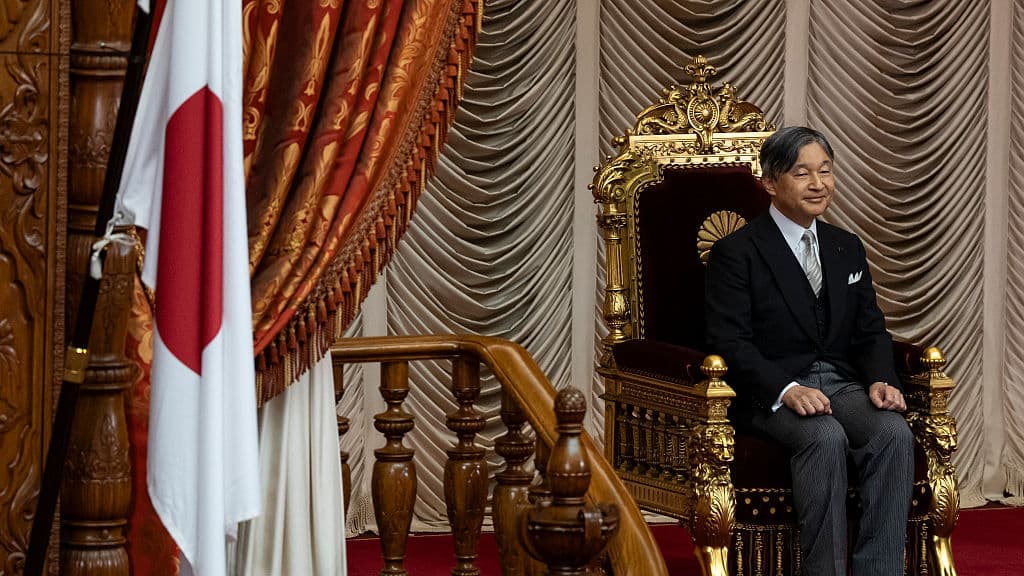
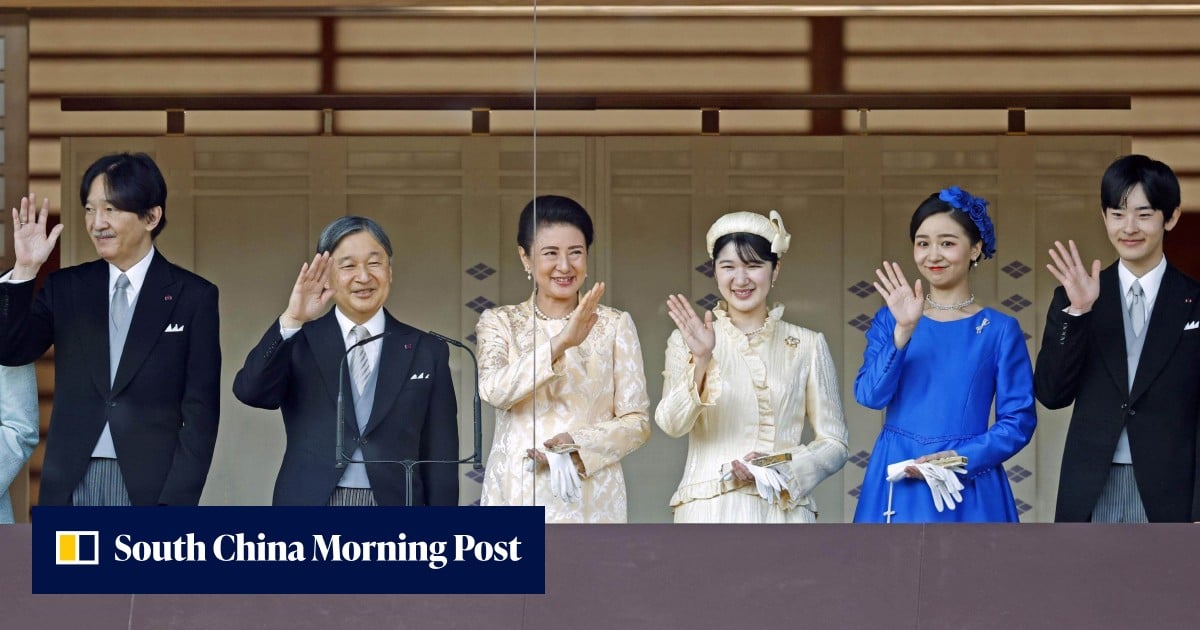
Japanese lawmakers are reforming the country’s more-than-a-millennia-old continuous hereditary monarchy in an effort to keep it alive amid a shrinking imperial family.
asserted
lawmakers → reform → family
Amendments to Japan’s Imperial House Law that passed in July took effect on Saturday.
asserted
that → pass → Saturday
One allows Japanese princesses to keep their royal status even if they marry non-royals, though their future children are not considered royals.
asserted
children → allow → royals
The other amendment is an apparent roundabout way to preserve patrilineal succession: members of the royal family may adopt a male from former imperial branch families, and those adoptees’ future male offspring can be considered legitimate successors to the throne.
uncertain
offspring → preserve → throne
The revisions aim to expand the future pool of eligible heirs to the throne while reinforcing the shutting out of women from leading the Japanese monarchy, which staunch conservatives including the country’s first female Prime Minister, Sanae Takaichi, have repeatedly advocated against upending.
asserted
conservatives → aim → Minister
Before the revisions took effect, Emperor Naruhito only had a few viable successors: his younger brother Akishino, followed by his 20-year-old nephew Prince Hisahito, then his 90-year-old uncle Prince Hitachi.
asserted
Naruhito → take → nephew
The small pool had raised concerns about the future of the Japanese imperial family.
asserted
pool → raise → family
The Japanese public has shown support for female monarchs, signaling a preference to keep the renowned family on the throne.
asserted
public → show → throne
Fans of Princess Aiko, the emperor’s sole daughter, have marched in Japan’s streets in recent weeks in support of her eligibility to become empress.
asserted
Fans → march → eligibility
But extreme right-wing factions in Takaichi’s Liberal Democratic Party have insisted that maintaining only males from the male imperial line as eligible to become emperor preserves the authority of the Chrysanthemum Throne.
asserted
maintaining → insist → Throne
The revisions were ultimately borne out of the coalition agreement signed in October last year by the LDP and its junior partner, the Japan Innovation Party.
asserted
revisions → bear → LDP
While the Imperial Household Agency has said it will study how to implement the measures, critics are already studying how to turn the policy over, arguing that it violates the country’s anti-discrimination law.
asserted
it → say → law
Manga artist Yoshinori Kobayashi filed a lawsuit against the government that called the amendment “unconstitutional.”
asserted
that → file → amendment
Experts say the amendments could affect how the Japanese public views the imperial family.
uncertain
public → say → family
“It could dilute the feeling of closeness or the feeling of holiness that some people might feel towards the royal family,” Jeffrey J. Hall, a lecturer at Kanda University of International Studies, tells TIME, “because they're more used to the royals that they already know.”
Welcoming back the former imperial family branches
The amendments allow members of the imperial family to adopt a male who is 15 years of age or older and is also a legitimate descendant of a male member of the imperial family before it was trimmed down after World War II.
uncertain
it → dilute → II
That adoptee should not be married or have children.
asserted
adoptee → marry → children
Several branches of the Japanese imperial family renounced their royal status in 1947 to cut down on costs the monarchy incurred after the war.
asserted
monarchy → renounce → war
Government officials previously said that these 11 families split from a common male-line ancestor some 600 years ago, and are now at least 36 degrees of kinship from Naruhito.
asserted
families → say → Naruhito
However, the adopted males would not be eligible for the throne—only their eligible male offspring would be.
asserted
offspring → adopt → throne
The law would be reviewed every 30 years.
asserted
law → review → ?
Jeff Kingston, a professor of Asian history at Temple University’s Japan campus in Tokyo, tells TIME the government’s offered solution to the dwindling pool raises questions about the legitimacy of the potential heirs.
asserted
solution → tell → heirs
“Would these people be taken as legitimate by the public?” he says remains an open question, especially as reports surface about who those potential additional successors to the throne might be.
uncertain
successors → take → throne
“The problem of a monarchy is it’s sort of based on—I don't know—a collectively held myth, belief, faith; and a sausage maker probably isn't going to have that magic.”
asserted
maker → base → magic
Hall, from the Kanda University of International Studies, echoes that the Japanese government will find it difficult to convince the public, especially since the move would introduce unfamiliar faces.
asserted
move → echo → faces
“It will be a very difficult problem for the Japanese government to try to basically build up an ideology or a PR program that convinces people that the new royal adoptees are just as royal as the other ones that we all know.”
asserted
we → try → that
Snubbing the nation’s popular princess
Kingston says that conservatives proposed the amendments to ensure that a female-led monarchy wouldn’t happen in Japan, even when many Japanese people appear fine with it and some even seem to prefer it.
asserted
some → snub → it
Past media surveys have shown that more than 80% of Japanese respondents favored a female emperor.
asserted
% → show → emperor
The other amendment that took effect allows Aiko and the four other single princesses to retain royal status if they get married to people outside the imperial family.
asserted
they → take → family
Before, princesses who did so lost their royal status, meaning their children are ineligible for the line of succession; the most recent being Mako, one of Naruhito’s nieces.
asserted
recent → do → nieces
Mako married her college boyfriend in 2021 and has since moved to the U.S.
Hall describes the recent amendments as “very strange” and suspects “many Japanese people won't really fully grasp” them.
asserted
people → marry → them
An August poll from the Social Survey Research Center came to a similar conclusion that the revisions to the Imperial House Law “have not gained the understanding of the Japanese public.”
asserted
revisions → come → public
While Naruhito and the royal family have largely ceremonial duties and do not weigh in on the country’s politics, they have even hinted at what they think should be done.
asserted
they → have → politics
In June, the emperor said he hopes any decision to expand the imperial family should have public support: “I hope it will be something that gains the understanding of the people.”
asserted
that → say → people
 The Aporia