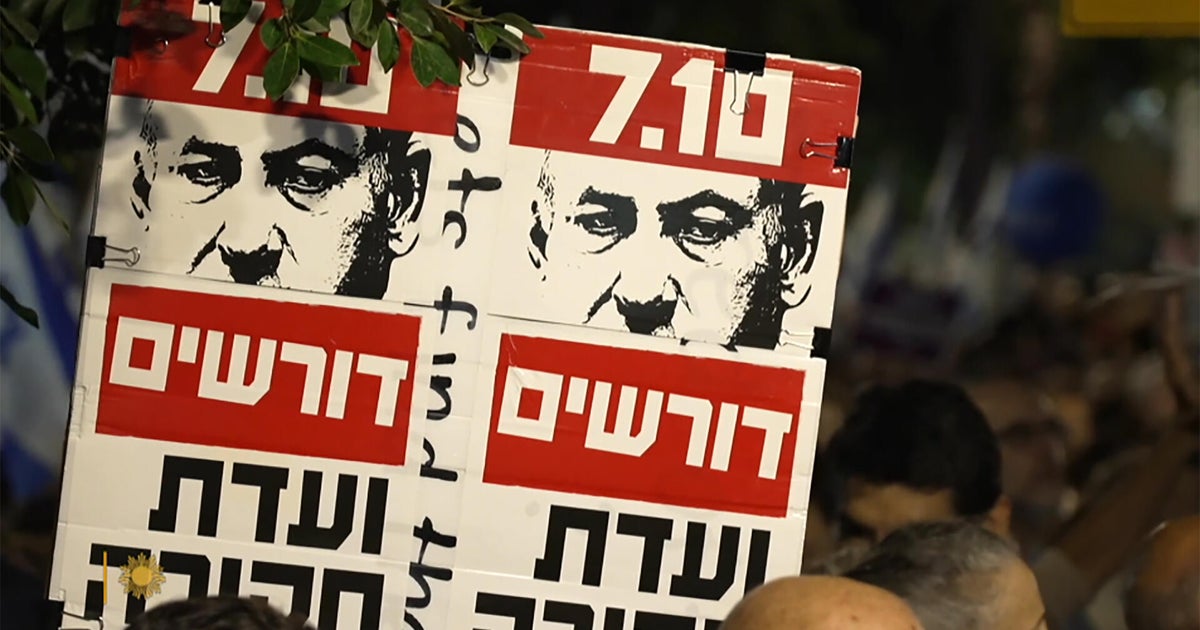
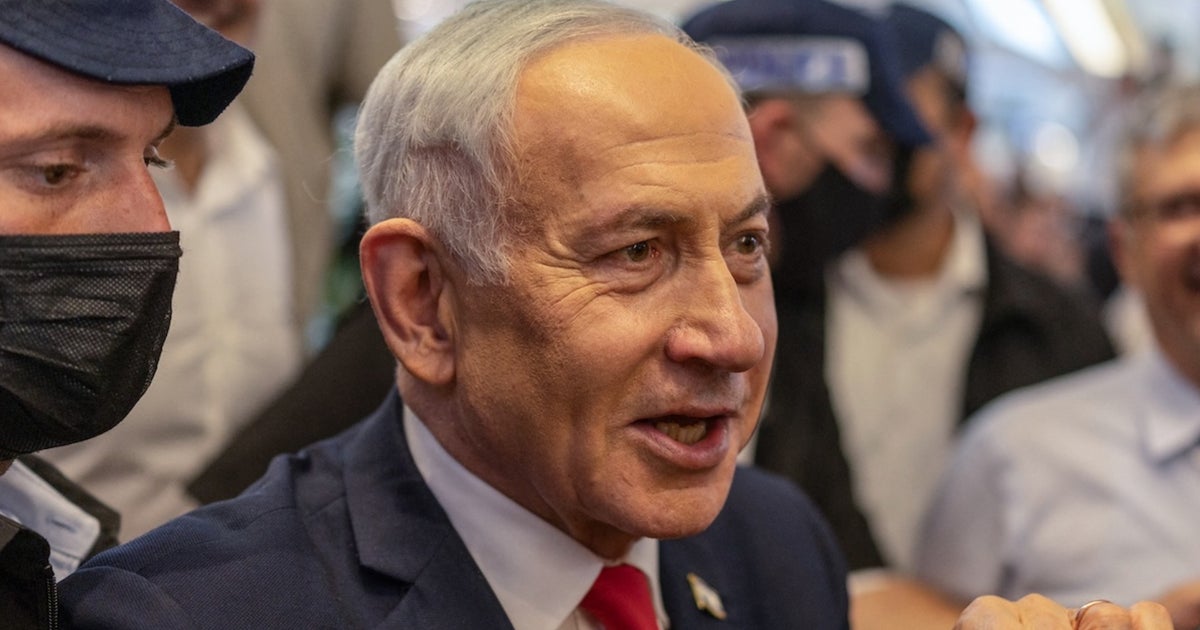
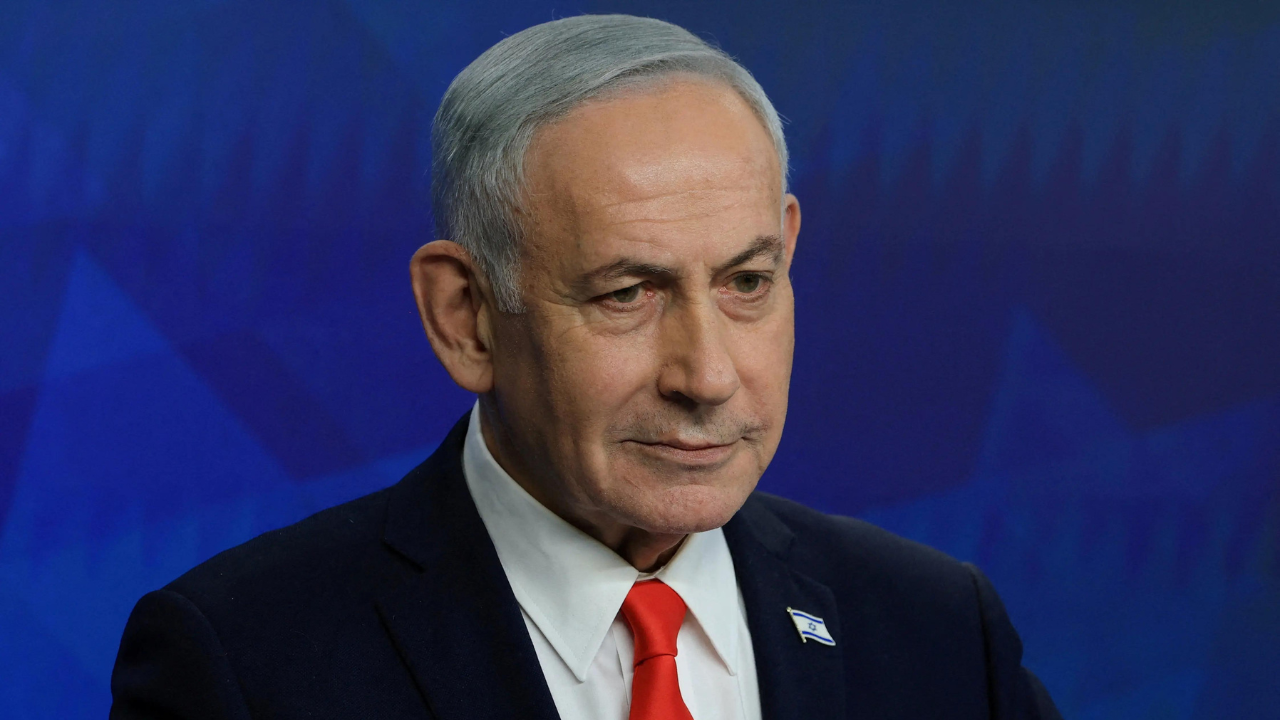
Israel’s October 27 election was framed by the Opposition as a referendum on Benjamin Netanyahu.
asserted
election → frame → Netanyahu
For the country’s longest-serving Prime Minister, who oversaw the war on Gaza, attacked Iran twice and vowed not to make concessions to Palestinians, the election was a battle for survival.
asserted
election → serve → survival
For the Opposition led by former military chief Gadi Eisenkot, this was an opportunity to oust Mr. Netanyahu from power.
asserted
this → lead → power
With almost 90% of the vote counted, Israel is divided into three blocs, none of which can govern alone.
asserted
none → count → which
On the latest count, Mr. Netanyahu’s right-religious coalition has 53 seats, eight short of the 61 needed for a majority in the Knesset.
asserted
coalition → have → Knesset
His far-right partners, Otzma Yehudit of Ithamar Ben-Gvir (7) and Religious Zionism of Bezalel Smotrich (6), hold 13 between them, down slightly from 14 in the last election.
asserted
partners → hold → election
The remaining seats in his bloc come from the religious parties—Shas and United Torah Judaism—each with seven seats.
asserted
seats → remain → seats
The Opposition bloc, led by Gadi Eisenkot, has 48 seats, 13 short of a majority.
asserted
bloc → lead → majority
His Yesh Atid party, which was expected to beat Likud, finished second with 21 seats.
asserted
which → expect → seats
His allies, B’Yachad of Naftali Bennett (12) and Israel Beytenu of Avigdor Lieberman (7), add a combined 19.
asserted
allies → add → 19
But the main surprise factor of the election was the surge of the Arab parties, which emerged as the third bloc.
asserted
which → emerge → bloc
They have 19 seats between them, with the Joint List winning 12 and the United Arab List (Ra’am) 7.
asserted
List → have → 12
Likud’s slide is real, but it is smaller than the Opposition had hoped, and Likud outperformed many pre-election polls.
asserted
Likud → hop → polls
Mr. Netanyahu, a wanted man by the International Criminal Court, a divisive figure at home, and the leader of Israel’s right, still commands the single biggest party and the single biggest bloc.
asserted
Netanyahu → command → party
The possibilities
Mr. Netanyahu has built his career on one claim: that only he can “keep Israel safe”.
uncertain
he → build → Israel
This election was the first test of that claim since the failures of October 7, a war in Gaza that has killed over 70,000 Palestinians, including 20,000 children, and a failed campaign against Iran with global economic consequences.
uncertain
that → kill → consequences
Losing his majority and seeing his party shed seats shows that the claim has weakened, even if it has not collapsed.
uncertain
it → lose → seats
But the mechanics of Israeli coalition-building favour the incumbent.
asserted
mechanics → favour → incumbent
Mr. Netanyahu has vowed that he would form a right-wing government.
asserted
he → vow → government
As the leader of the largest party and the largest bloc, Mr. Netanyahu can expect to be invited by President Isaac Herzog to form the government.
asserted
Netanyahu → expect → government
He will have 24 days to prove the majority.
asserted
He → have → majority
He has two ways forward.
asserted
He → have → ways
But it’s not clear whether Mr. Eisenkot, who has also promised to form the government, would back Mr. Netanyahu as Prime Minister.
asserted
who → ’ → Minister
Second, Mr. Netanyahu could win the support of one of two of Mr. Eisenkot’s right-wing allies (such as Mr. Lieberman or Mr. Bennet) and form a Zionist coalition government.
uncertain
Netanyahu → win → government
That would break Mr. Eisdenkot’s coalition.
asserted
That → break → coalition
But if Mr. Netanyahu fails to win a majority, the mandate would pass to Mr. Eisenkot, who faces a harder problem.
asserted
who → fail → problem
His 48 seats cannot reach 61 without the Arab parties.
asserted
seats → reach → parties
Even Ra’am’s 7 would take him only to 55.
asserted
7 → take → 55
In 2021, Ra’am had supported the Bennet coalition government to keep Mr. Netanyahu out of power.
asserted
Ra’am → support → power
But that experiment collapsed in 2022, forcing the country into another election, which Mr. Netanyahu’s coalition won.
asserted
coalition → collapse → which
The Joint List has always been in opposition, and Mr. Eisdenkot would need their support – either direct or support from outside – to form a government.
asserted
Eisdenkot → need → government
Two of Mr. Eisenkot’s allies, Mr. Bennett’s B’Yachard and Mr. Lieberman’s Beytenu, have strongly opposed any alliance with Arab parties.
asserted
Two → oppose → parties
The Opposition campaign was built on ousting Mr. Netanyahu from power, but the opposition coalition needs the support of Arab parties, traditionally kept on the margins of Israel’s power politics, which are reluctant to seek.
asserted
which → build → politics
If neither bloc gets a majority, Israel would return to the polls within months, with Mr. Netanyahu serving as caretaker Prime Minister throughout.
asserted
Netanyahu → get → Minister
That outcome would suit him.
asserted
outcome → suit → him
A caretaker government retains the full machinery of the state, and a prolonged campaign would allow him to fall back on his strongest argument — only he can guarantee national security and political stability.
asserted
he → retain → security
Mr. Netanyahu has lost his majority, his Likud party has shrunk and his claim to be indispensable has been weakened.
uncertain
claim → lose → majority
But the fragmentation of his opponents remains his most reliable asset.
asserted
fragmentation → remain → opponents
He has not won the election, but by denying his opponents an outright victory, he has found a way to cling to power and ensure his political survival, at least for now.
asserted
he → win → survival
 The Aporia