Trump, Vance, and the ‘jihadist’ el Sayed

Read the original at Washington Examiner ↗
Cite

York, B. (2026, October 28). Trump, Vance, and the ‘jihadist’ el Sayed. Washington Examiner. https://www.washingtonexaminer.com/daily-memo/4783581/trump-vance-jihadist-el-sayed/

Dated from the outlet's own feed. Check the original for its byline.

Washington Examiner · collected 2026-10-29 · by Byron York

Quick Summary

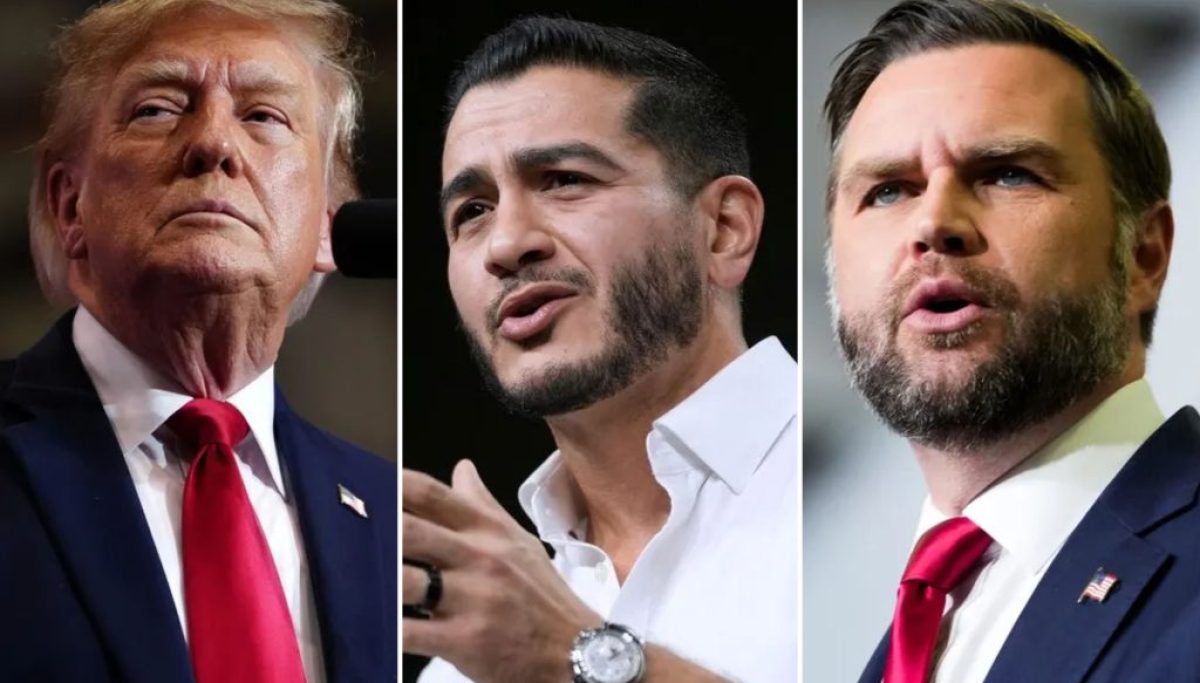
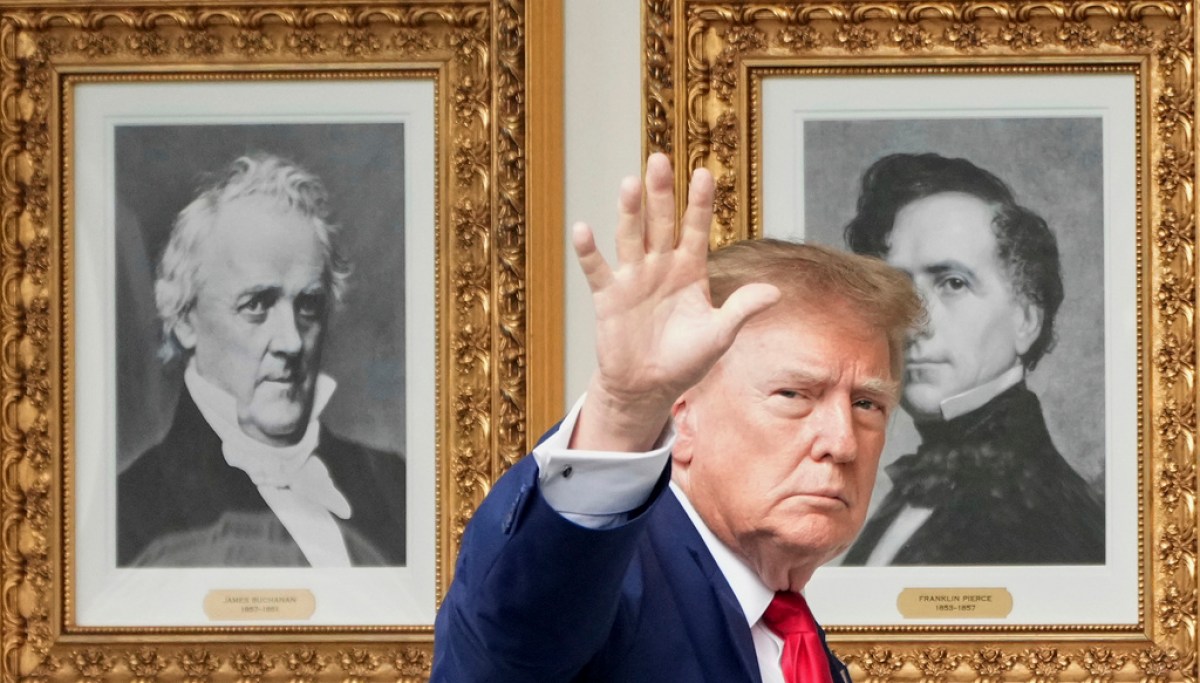
President Donald Trump referred to Democratic Senate nominee Abdul el Sayed as a "jihadist Muslim Brotherhood member" during a trip to Michigan on Monday, sparking controversy in the race. Vice President JD Vance, when asked if he agreed with Trump's characterization, was more cautious, describing el Sayed as having “weird friends” and associating with a segment of Democrats that justify violence against the U.S., without explicitly calling him a jihadist. This incident occurred during Vance’s visit to Michigan for an event where he emphasized the contributions of small-town Americans and their struggles under economic changes.
Written by AI on 2026-10-29, from this article's own text only (the story summary below draws on all the coverage).

AI analysis

Why this leaning score
The model judged this article politically coded and scored it +0.35, but all 2 of its quote(s) are attributed speech - words the article quotes from someone, not the article's own narration, so the score is not published.
Written under an earlier scoring contract, which gave a paragraph rather than checkable quotes. Re-analysing this article replaces it.
Leaning score withheld for article 113318: attributed speech only · logged 2026-10-29

Story

📰 Trump Attacks El-Sayed Over Faith In Michigan Campaign
Politics · 16 article(s) covering the same event. Compare every outlet's account →

Compared with similar articles

This article reads unscored and hedges 4% of its claims. Each row says how that neighbour differs.
NBC News
⚖️ Leans strongly right Hedges 0 of 38 claims Outlet record 60/100
Daily Mail
⚖️ Leans right Hedges 4 of 38 claims Outlet record 68/100
South China Morning Post
⚖️ Leans strongly right Hedges 0 of 6 claims Outlet record 64/100
CBS News
Hedges 0 of 14 claims Outlet record 66/100
The Straits Times
⚖️ Leans left Hedges 4 of 56 claims Outlet record 68/100
Al Jazeera
⚖️ Leans left Hedges 0 of 2 claims Outlet record 60/100
“The articles describe different aspects of the campaign and interactions with Abdul el Sayed; one focuses on Trump's comments during a trip, while the other covers El-Sayed speaking to Al Jazeera.”
Daily Mail
⚖️ Leans right Hedges 3 of 30 claims Outlet record 68/100
“Article A discusses El-Sayed's campaign payroll and connection to an antisemite, while Article B covers President Trump's intense rhetoric during a trip to Michigan.”
New York Post
Hedges 5 of 37 claims Outlet record 66/100
“Article A discusses El-Sayed's academic research and views, while Article B reports on President Trump's comments about El-Sayed during a trip to Michigan. These are different events occurring at distinct times.”
CBS News
Hedges 7 of 45 claims Outlet record 66/100
“The articles describe different speakers using inflammatory language about Abdul el Sayed: Article A cites Ted Cruz, while Article B focuses on President Donald Trump.”
New York Post
Hedges 5 of 24 claims Outlet record 66/100
“Article A discusses Abdul El-Sayed's background and research, while Article B reports on President Trump's comments about El-Sayed during a visit to Michigan. Although related, they describe different specific events.”
How this article was measured signals, leaning charts, publisher record, byline, topics and claims

Signals How these are calculated →

Claims extracted
76
sentences that state something as happening or true
Uncertain
4%
3 of 76 hedged ("reportedly", "may", "according to")
Leaning
withheld
no quote in the article backed the model's score
Publisher signals
70/100
Washington Examiner's corrections and hedging, across everything collected from it. Not a measure of accuracy.
Outlets on this story
16
Politics
Same framing elsewhere
1
articles that frame the event the way this one does
Analyzed 2026-10-29 · how these are computed

How this is being covered How these are calculated →

Article leaning vs. publisher reliability
Source leaning vs. consistency

Publisher

Washington Examiner · 3663 article(s) · 7 correction(s) detected
Running correction rate · 7 correction(s)

Who wrote this

Byron York
12 article(s) here · 1 carrying a prediction
🔮 For one, he seemed to be saying that he, JD Vance, would not have used the word “jihadist” to describe Abdul el Sayed.
2026-10-29 · assertive framing · Trump, Vance, and the ‘jihadist’ el Sayed
🔮 Trump couldn’t believe that on the Alaska ballot the real and the fake Dan Sullivan appeared indistinguishable.
2026-10-24 · assertive framing · Trump and the MAGA enthusiasm strategy
🔮 One place that theory could be tested is the race for Senate in Michigan.
🔮 It’s been said many times that a president’s job approval rating is one of the most important predictors of how his party will perform in midterm elections.
2026-10-16 · assertive framing · Inside Trump’s job approval crisis
🔮 “We cannot let them have a nuclear weapon,” he said back in May, in the war’s third month.
🔮 A Republican victory there would take away a current Democratic seat and make it much harder for Democrats to win control of the Senate.
2026-10-08 · assertive framing · In GOP midterm calculation, avoiding the unthinkable
🔮 If she had stopped there, she might conceivably have been able to move on to living her life, with less alcohol and ketamine.
2026-10-05 · assertive framing · The political path of the Cornell rape allegation
🔮 The current situation could send long-term trends in North Carolina in a new direction.
2026-09-29 · assertive framing · The Senate seat most likely to flip
🔮 Yes, Republicans are very likely going to lose, but maybe not by the blue wave, or even blue tsunami, that some are talking about.
2026-09-28 · assertive framing · Are GOP doomers overreacting?
🔮 Trump did almost nothing to clearly explain to the American public why the war was necessary and what its goals would be, instead announcing the beginning of hostilities in an overnight video.
2026-09-25 · assertive framing · Trump, the midterm elections, Congress, and the war
Also by Byron York
Trump and the MAGA enthusiasm strategy
2026-10-24 · Washington Examiner
Inside Trump’s job approval crisis
2026-10-16 · Washington Examiner
Nothing else under this byline is closely related to this article, so these are simply their most recent.
All 12 articles by Byron York →

Topics

American Democrats Detroit Michigan Senate

Subjects

Vance PERSON · 14× Michigan GPE · 6× TRUMP PERSON · 4× Abdul el Sayed PERSON · 3× American NORP · 3× Americans NORP · 3× Democrats NORP · 2× Detroit GPE · 2× JD Vance PERSON · 2× Senate ORG · 2×

Narrative

So the next day, as Vice President JD Vance arrived at Joint Base Andrews to board Air Force Two for his own trip to Michigan, I asked Vance, “Is Abdul el Sayed a jihadist, as the president said?” Recommended Stories “Well, look, he certainly has a lot of weird friends, and he said a lot of crazy stuff,” Vance answered.
framing: assertive · carried by 1 article(s) · first seen 2026-10-29
🔮 For one, he seemed to be saying that he, JD Vance, would not have used the word “jihadist” to describe Abdul el Sayed.
2026-10-29 · Washington Examiner
Trump, Vance, and the ‘jihadist’ el Sayed · assertive framing

Claims (76 extracted, 3 hedged)

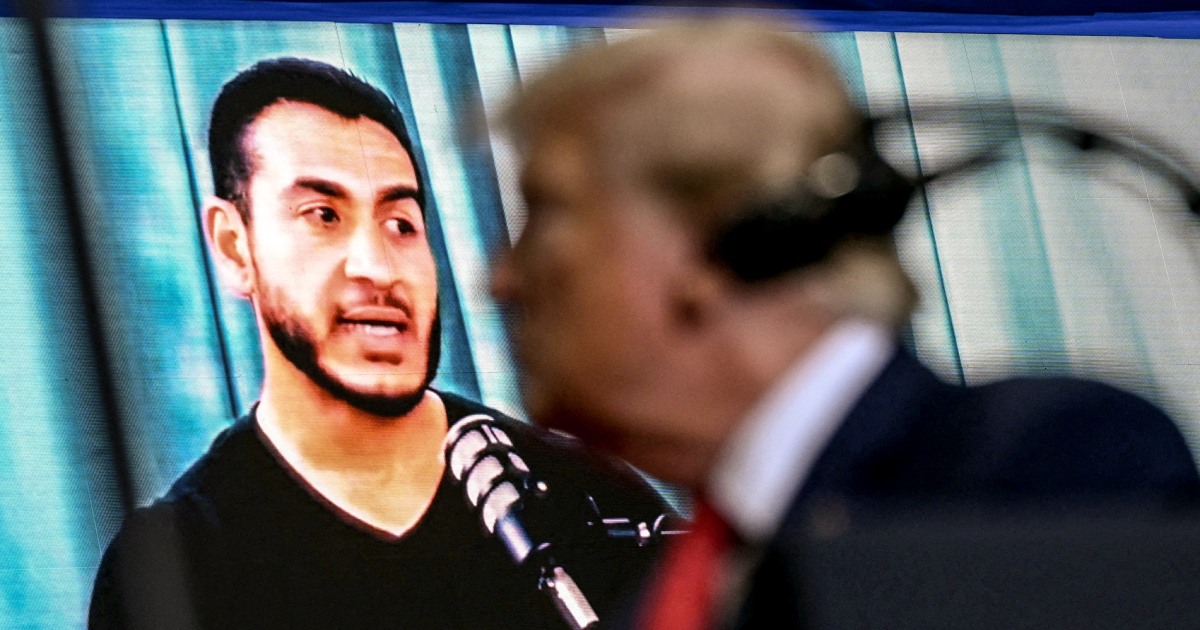
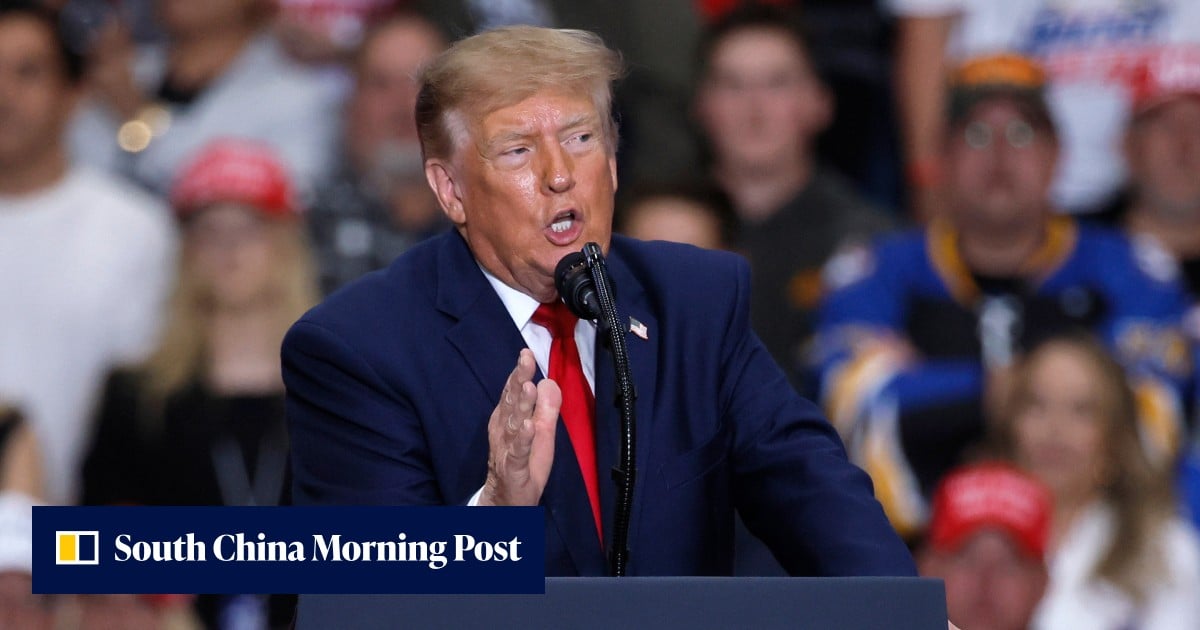
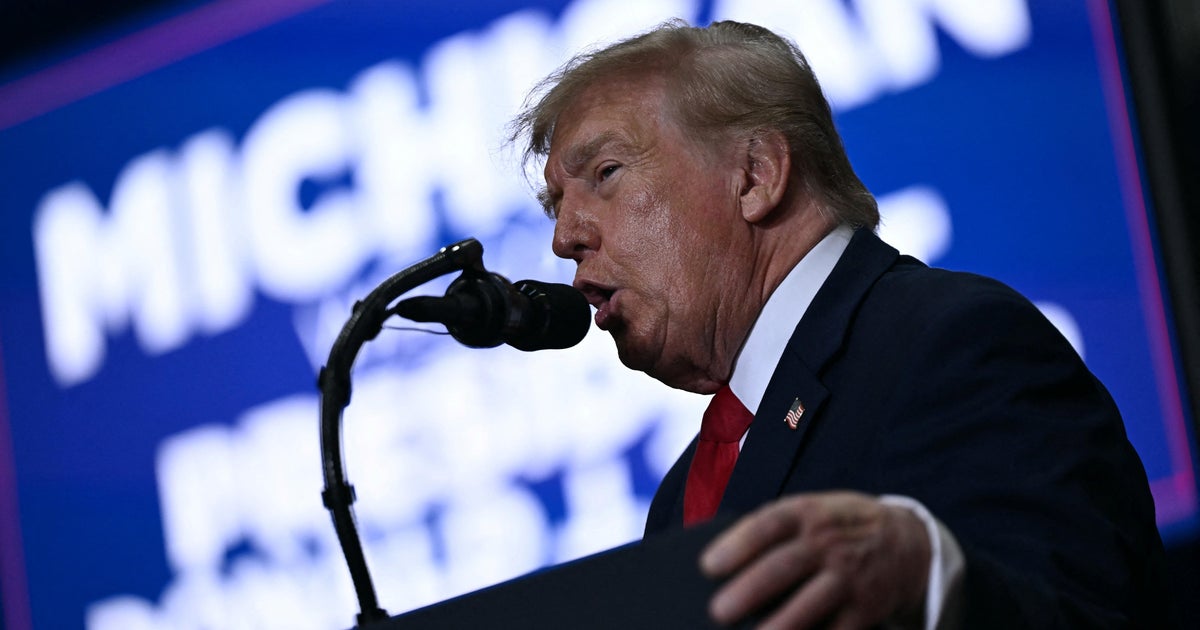
During a trip to Michigan on Monday, President Donald Trump focused on Democratic Senate nominee Abdul el Sayed and said, “I’m here to keep a jihadist Muslim Brotherhood member from becoming a United States senator.” asserted
I → focus → member
A moment later, Trump added, “Mohamed is a jihadist lunatic who hates our country, the black people of Detroit, and wants to see the U.S. fail.” asserted
U.S. → add → Detroit
(The president was referring to el Sayed’s full name, which is Abdulrahman Mohamed el Sayed.) asserted
which → refer → name
Even with the intense rhetoric that has characterized this race, Trump’s use of “jihadist” seemed a step beyond. asserted
use → characterize → jihadist
So the next day, as Vice President JD Vance arrived at Joint Base Andrews to board Air Force Two for his own trip to Michigan, I asked Vance, “Is Abdul el Sayed a jihadist, as the president said?” Recommended Stories “Well, look, he certainly has a lot of weird friends, and he said a lot of crazy stuff,” Vance answered. asserted
Vance → arrive → stuff
“And he has identified himself with a segment of the Democratic Party which, by the way, I don’t think represents most Democrats in the country. asserted
I → identify → country
But unfortunately, it represents a lot of elected Democrats who seem to align with people who justify violence against the United States of America. asserted
who → represent → America
I don’t know what’s in the guy’s heart. asserted
what → know → heart
I just know he has a lot of weird friends.” asserted
he → know → friends
For one, he seemed to be saying that he, JD Vance, would not have used the word “jihadist” to describe Abdul el Sayed. asserted
he → seem → Sayed
On the other hand, Vance seemed to suggest that Trump was on to something that needed to be discussed in the Michigan Senate race. asserted
that → seem → race
Vance, the former senator from Ohio, began by making light of the rivalry between his home state and Michigan. asserted
Vance → begin → state
But he quickly moved to the similarities of small towns in those states — idyllic, upright, American to the core. asserted
he → move → core
“Both are filled with Americans who work hard and have sacrificed much for their country,” Vance said. asserted
Vance → fill → country
“And I’m talking particularly about the grandsons and granddaughters of those who built the arsenal of democracy during the Second World War.” asserted
who → talk → War
They built a good life for themselves, Vance told the audience. asserted
Vance → build → audience
“You know, it was our states that built the great American middle class, it was our states that ushered in an era of prosperity unlike anything the world had ever seen,” he said. asserted
he → know → anything
“We showed everybody that everyone had a part to play in the great American success story, whether you were a welder, a janitor, or a CEO. asserted
you → show → story
But then things began to go wrong. asserted
things → begin → ?
The elites running the country felt “indifference to the fate” of small towns in the heartland. asserted
elites → run → heartland
Factory jobs were shipped overseas. asserted
jobs → ship → ?
Local businesses suffered. asserted
businesses → suffer → ?
Vance recalled playing peewee football, and on his jersey was printed the name of the local business that supported the team. asserted
that → recall → team
“And I distinctly remember looking at my old jerseys and seeing the names of businesses that had sponsored those teams and realizing that most of the teams I played for, those businesses no longer existed,” Vance said. asserted
Vance → remember → teams
“They were casualties of politicians in a faraway place who didn’t give a damn what happened to Michigan or Ohio, and it was us that paid the consequences.” asserted
that → give → consequences
Then came 9/11, which happened when Vance was 17 years old. asserted
Vance → come → ?
Americans unified, but Vance also remembered “going to a gas station and waiting in line for hours for gasoline that, of course, had shot up in price because of a region of the world made up of countries whose name I couldn’t even pronounce.” asserted
I → unify → name
Americans went to war. asserted
Americans → go → war
Vance remembered that “in 2003 there were only two kids from my block who graduated from high school that year; it was me and a buddy of mine named Nick. asserted
it → remember → mine
And both of us immediately enlisted in the United States Marine Corps.” asserted
both → enlist → Corps
Then Vance recalled “coming home from Iraq to labor strikes in my hometown, because there was a threat that even more of the factories that my town relied on would be closed down and shipped to another country. asserted
town → recall → country
And I remember distinctly wondering why it was that politicians seemed to care so little for the places that farmed our food, that built our cars, and that sent our troops to fight in wars. asserted
that → remember → wars
And on it went, for years. asserted
it → go → years
Then, finally, came rescue in the person of President Donald Trump. asserted
rescue → come → Trump
“If you think about it, our movement is about sovereignty, the idea that the people’s government belongs to the people, not to lobbyists, not to bureaucrats, not to foreign money, and not to illegal aliens,” Vance said. asserted
Vance → think → aliens
“At its heart, our movement is about returning control of the United States of America to you, which is exactly where it belongs.” asserted
it → return → you
At that point, well into the speech, Vance had not said a word about Abdul el Sayed. asserted
Vance → say → Sayed
He had not called el Sayed a jihadist, had not even said he has a lot of weird friends. asserted
he → call → friends
Instead, Vance had painted a portrait of formerly great small-town America, made great by small-town Americans, that went through bad times at the hand of self-centered elites but is now becoming great again under Trump. asserted
that → paint → Trump
Only then, after all that, did Vance introduced Abdul el Sayed as someone who doesn’t really care about that America, who doesn’t even want to be part of it, and appears to feel contempt, or at least hostile indifference, toward it. asserted
who → introduce → it
…and 36 more, not listed.

💬Give feedback
🕘History 🎫Support