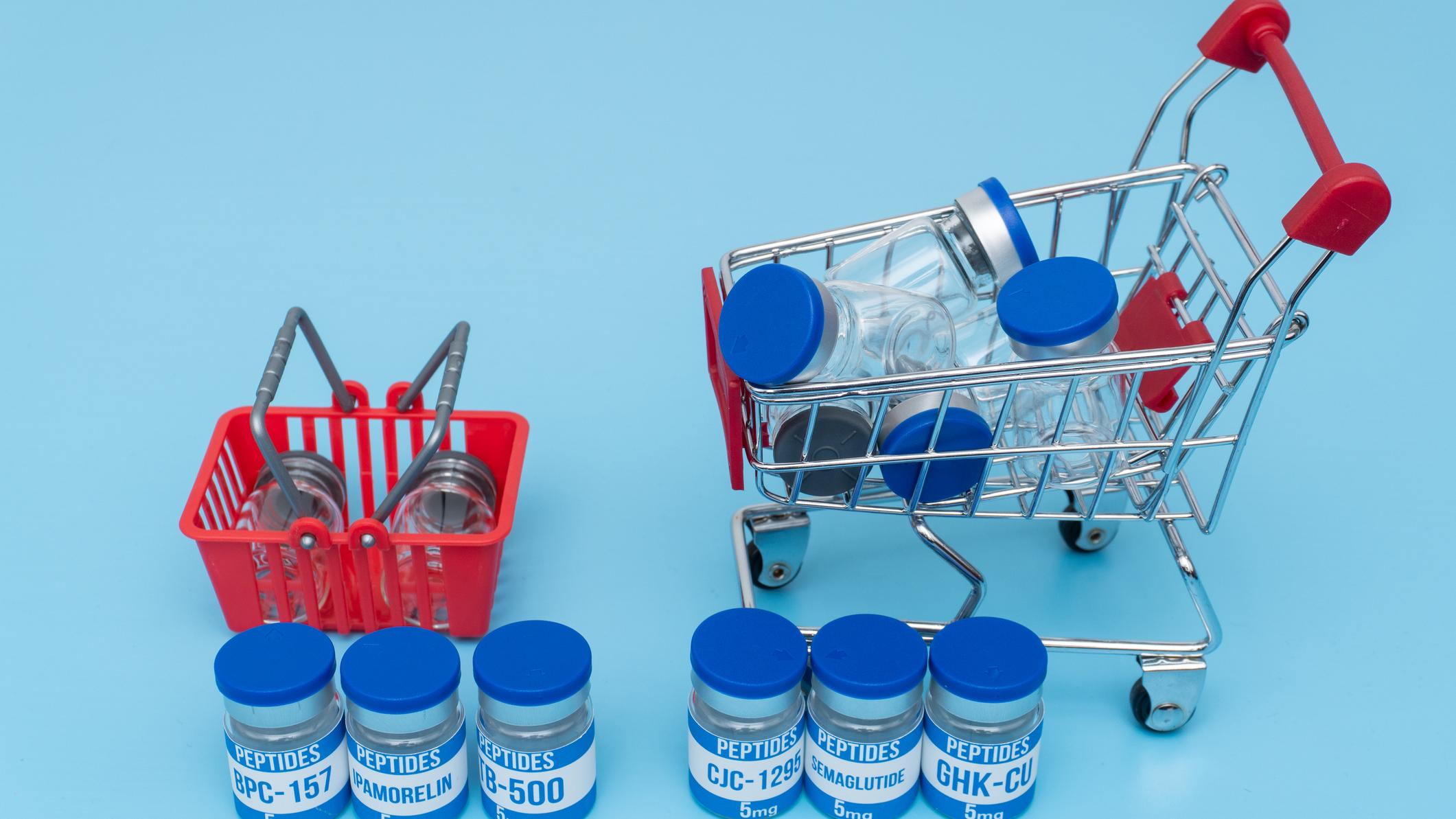
Trump administration will allow pharmacies to make popular peptides

Read the original at NPR ↗
Cite

Lupkin, S. (2026, October 28). Trump administration will allow pharmacies to make popular peptides. NPR. https://www.npr.org/2026/10/28/nx-s1-6021030/peptides-compounding-enforcement

Dated from the outlet's own feed. Check the original for its byline.

NPR · collected 2026-10-29 · by Sydney Lupkin

Quick Summary

The Trump administration's Department of Health and Human Services plans to relax restrictions on six unproven peptides, allowing small compounding pharmacies to produce them despite lacking FDA approval. This policy change supports wellness influencers and some clinicians who promote these peptides for various health issues like ulcerative colitis and insomnia, though evidence of their safety and effectiveness is limited. The decision aims to provide a safer alternative than the current illicit market but may struggle with meeting consumer demand due to production limitations at small pharmacies.
Written by AI on 2026-10-29, from this article's own text only (the story summary below draws on all the coverage).

AI analysis

Story summary

The Trump administration, through Health Secretary Robert F. Kennedy Jr., will allow pharmacies to make popular but unapproved peptides despite concerns from the FDA's own scientists who recommended against their use due to safety issues and lack of evidence for efficacy. The policy involves six specific peptides: BPC-157, Epitalon, KPV, MOTS-c, Semax, and TB-500. Kennedy’s decision aims to provide patients with a "controlled alternative" while requiring patient-specific prescriptions, traceable ingredients, quality testing, and safety reporting from compounders. Critics argue this policy leaves Americans in a grey area regarding the safety of these peptides. The FDA advisory committee had previously recommended against allowing pharmacies to dispense these substances despite significant interest in their use. This move effectively brings unregulated injectables out of the shadows but raises concerns about contamination and other adverse effects, as advised by medical experts. Despite these risks, Kennedy maintains that his policy advances patient choice and freedom while appropriately safeguarding health through quality controls. The FDA's stance remains pivotal in addressing potential long-term impacts on public health from these peptides' widespread use.

Written for “RFK Jr Eases Unapproved Peptides Access” on 2026-10-29, grounded in this article and the 8 other(s) covering the same event.
Why this leaning score
The article's own words the score was based on. Each is quoted verbatim and was checked against the article text before being stored, so you can find it in the original.
Reading Leans right (beta estimate) Confidence high
Leaning: leans right for article 113269 (high confidence, 3 verified quotes) · logged 2026-10-29

Story

📰 RFK Jr Eases Unapproved Peptides Access
Politics · 9 article(s) covering the same event. Compare every outlet's account →

Compared with similar articles

This article reads leans right and hedges 13% of its claims. Each row says how that neighbour differs.
NBC News
Hedges 4 of 19 claims Outlet record 60/100
ABC News (US)
Hedges 2 of 14 claims Outlet record 70/100
CBS News
Hedges 3 of 22 claims Outlet record 66/100
BBC News
⚖️ Leans right Hedges 1 of 20 claims Outlet record 69/100
The Guardian
⚖️ Leans left further left than this Hedges 4 of 30 claims Outlet record 67/100
TIME
Hedges 3 of 28 claims Outlet record 59/100
The Independent
Hedges 1 of 12 claims Outlet record 59/100
Toronto Star
⚖️ Leans left further left than this Hedges 5 of 33 claims Outlet record 64/100
“Article A describes FDA scientists opposing the Trump administration's plan to ease peptide access, while Article B reports on the actual decision by the HHS to allow pharmacies to make peptides.”
How this article was measured signals, leaning charts, publisher record, byline, topics and claims

Signals How these are calculated →

Claims extracted
30
sentences that state something as happening or true
Uncertain
13%
4 of 30 hedged ("reportedly", "may", "according to")
Leaning
Leans right
of the writing, not the subject · beta estimate
Publisher signals
60/100
NPR's corrections and hedging, across everything collected from it. Not a measure of accuracy.
Outlets on this story
9
Politics
Same framing elsewhere
1
articles that frame the event the way this one does
Analyzed 2026-10-29 · how these are computed

How this is being covered How these are calculated →

Article leaning vs. publisher reliability
Source leaning vs. consistency

Publisher

NPR · 932 article(s) · 3 correction(s) detected
Running correction rate · 3 correction(s)

Who wrote this

Sydney Lupkin
2 article(s) here · 1 carrying a prediction
🔮 Trump administration will allow pharmacies to make popular peptides Unproven but popular peptides touted for wellness have been available on the gray market, despite an official ban.
🔮 Last year on Sept. 30, the president and his health officials gathered in the Oval Office to announce a major agreement with Pfizer — the first of what he said would be a series of deals with pharmaceutical companies.
Also by Sydney Lupkin
Nothing else under this byline is closely related to this article, so these are simply their most recent.

Topics

FDA HHS Health Olympia the Department of Health and Human Services

Subjects

FDA ORG · 4× HHS ORG · 2× Kennedy PERSON · 2× Olympia ORG · 2× Public Citizen ORG · 2× Health ORG · 1× Robert F. Kennedy Jr. PERSON · 1× Trump PERSON · 1× the Department of Health and Human Services ORG · 1× the Food and Drug Administration's ORG · 1×

Narrative

Steinbrook advised clinicians to talk to their patients and tell them about the risk of contamination and other adverse effects. The Partnership for Safe Medicines, which includes various pharmacy and pharmacist organizations around the country, filed a citizen petition last week, urging the FDA to ignore the recommendation from its advisory committee in July to allow compounding pharmacies to make the six peptides. "Today's decision leaves Americans in a grey area as to whether peptides are safe or not, even though the FDA's own scientists recommended against voting in favor of these substances due to concerns with evidence," its executive director Shabbir Safda wrote in a statement.
framing: assertive · carried by 1 article(s) · first seen 2026-10-29
🔮 Trump administration will allow pharmacies to make popular peptides Unproven but popular peptides touted for wellness have been available on the gray market, despite an official ban.

Claims (30 extracted, 4 hedged)

Trump administration will allow pharmacies to make popular peptides Unproven but popular peptides touted for wellness have been available on the gray market, despite an official ban. asserted
peptides → allow → ban
Now, the Department of Health and Human Services is looking to bring them out of the shadows. asserted
Department → look → shadows
HHS said in a new policy that it will exercise enforcement discretion for a half dozen peptides, essentially looking the other way when they're made by small compounding pharmacies. asserted
they → say → pharmacies
Health Secretary Robert F. Kennedy Jr. has been a vocal supporter of peptides, saying he has used some of them himself. Peptides are strings of amino acids, shorter than proteins, that can exert powerful effects in the body. asserted
that → say → body
Some occur naturally and others are synthetic variations. asserted
others → occur → ?
Wellness influencers and some clinicians have promoted unproven peptides for a wide range of uses, though the evidence for their safety and effectiveness is sparse. asserted
evidence → promote → safety
So even though these peptides have not been through the Food and Drug Administration's rigorous drug review and approval process, they could become easier to get. uncertain
they → become → process
But the policy's focus on smaller producers may mean that pharmacists will have a tough time meeting demand. uncertain
pharmacists → mean → demand
In July, a panel of advisers to the FDA voted in favor of expanded access to six peptides through compounding pharmacies. asserted
panel → vote → pharmacies
However, at the same meeting the FDA's own scientists recommended against unwinding the existing restrictions on them. asserted
scientists → recommend → them
The new policy says compounding is a safer alternative to illicit "research-use-only" peptides that are available online. asserted
that → say → peptides
They're often sourced from sketchy suppliers overseas. asserted
They → source → suppliers
The peptides, and some of their unproven uses, are: - BPC-157, ulcerative colitis - Epitalon, insomnia - KPV, wound healing - MOTS-c, metabolic health - Semax, migraine - TB-500, wound healing Joshua Fritzler, the president of Olympia and Wesley Pharmaceuticals in central Florida, says people have been asking about these peptides for years. asserted
people → say → years
But because they were illegal to compound, his company didn't make them. asserted
company → compound → them
The new policy doesn't change their legal status, but it does create a path for small compounders, called 503A compounding pharmacies. asserted
it → change → compounders
It doesn't apply to the larger ones, called 503Bs, that are outsourcing facilities producing higher volumes of medicines. asserted
that → apply → medicines
So at Fritzler's company, only its smaller compounding facility will be able to make the peptides – and only in small quantities, he says. asserted
he → compound → quantities
And that has implications for consumers. asserted
that → have → consumers
"We won't be able to meet demand," he says, explaining that Olympia will likely only compound one of the six peptides and needs to get its facility ready first. asserted
facility → meet → peptides
"I don't think all the [503]As in the country could meet the demand." uncertain
503]As → think → demand
The Alliance for Pharmacy Compounding's CEO Scott Brunner wrote in a statement that his group is pleased with the administration's decision to allow the peptides to be compounded because it offers a "more accountable alternative" for patients seeking gray market peptides. asserted
it → write → peptides
"It also brings patients into a system where pharmacy standards, regulatory oversight, and serious adverse event reporting apply," he says. asserted
he → bring → system
Brunner warned, however, that it may take some time for compounding pharmacies to begin dispensing these products to patients. uncertain
pharmacies → warn → patients
That's because ingredient suppliers need to make sure their active ingredients meet the policy's requirements — and pharmacies need to verify that, too. asserted
pharmacies → need → that
Several consumer advocacy groups say the policy puts patients at risk, however. asserted
policy → say → risk
The nonprofit Public Citizen noted that Kennedy seems to have acted unilaterally rather than through the typical rulemaking process. asserted
Kennedy → note → process
"By allowing unproven and potentially unsafe peptides to be manufactured, marketed and prescribed without concern about potential federal enforcement actions, Kennedy has undermined the FDA and threatened public health," Dr. Robert Steinbrook, Health Research Group Director at Public Citizen wrote in a statement. asserted
Steinbrook → allow → statement
"All peptide substances should go through the standard FDA approval process for new drugs. asserted
substances → go → drugs
The HHS Secretary should support, not sabotage, needed FDA enforcement actions to protect consumers. asserted
Secretary → support → consumers
Steinbrook advised clinicians to talk to their patients and tell them about the risk of contamination and other adverse effects. The Partnership for Safe Medicines, which includes various pharmacy and pharmacist organizations around the country, filed a citizen petition last week, urging the FDA to ignore the recommendation from its advisory committee in July to allow compounding pharmacies to make the six peptides. "Today's decision leaves Americans in a grey area as to whether peptides are safe or not, even though the FDA's own scientists recommended against voting in favor of these substances due to concerns with evidence," its executive director Shabbir Safda wrote in a statement. asserted
director → advise → statement

💬Give feedback
🕘History 🎫Support