FDA scientists opposed the Trump administration's move to ease peptides access

Read the original at Toronto Star ↗
Cite

Perrone, M. (2026, October 28). FDA scientists opposed the Trump administration's move to ease peptides access. Toronto Star. https://www.thestar.com/news/world/fda-scientists-opposed-the-trump-administration-s-effort-to-ease-peptides-access/article_7398fabb-7fd5-5464-a7ef-f2d95bbd4c91.html

Dated from the outlet's own feed. Check the original for its byline.

Toronto Star · collected 2026-10-28 · by Matthew Perrone

Quick Summary

FDA scientific staff largely opposed a Trump administration plan aimed at easing access to unproven peptide drugs, despite pushback from Health Secretary Robert F. Kennedy Jr. This policy would allow specialty pharmacies to sell peptides without the FDA's rigorous safety and effectiveness review process, which are currently considered illegal drugs. Most FDA drug staffers warned that this could undermine the agency’s mission of keeping unproven health products off the market. The plan is still under regulatory review at the White House before potential publication.
Written by AI on 2026-10-29, from this article's own text only (the story summary below draws on all the coverage).

AI analysis

Story summary

Robert F. Kennedy Jr., the U.S. Health Secretary, pushed for a plan to allow easier access to unapproved peptide drugs, despite opposition from FDA scientific staff who warned it could compromise public safety. The policy, published on October 28, instructs the FDA not to take legal action against compounding pharmacies that produce six specific peptides—BPC-157, epitalon, KPV, MOTS-c, semax, and TB-500—even though these substances have not undergone rigorous safety reviews. The FDA staff had limited input in drafting this policy, which is now under regulatory review at the White House before final publication. Critics, including experts from the Partnership for Safe Medicines, argue that allowing access to untested peptides could expose Americans to dangerous health risks and undermine the FDA's mission of ensuring product safety.

Written for “FDA Scientists Oppose Peptide Access Ease” on 2026-10-29, grounded in this article and the 3 other(s) covering the same event.
Why this leaning score
The article's own words the score was based on. Each is quoted verbatim and was checked against the article text before being stored, so you can find it in the original.
Reading Leans left (beta estimate) Confidence high
Leaning: leans left for article 112735 (high confidence, 1 verified quote) · logged 2026-10-29

Story

📰 FDA Scientists Oppose Peptide Access Ease
Health · 4 article(s) covering the same event. See how they differ ↓

Compared with similar articles

This article reads leans left and hedges 15% of its claims. Each row says how that neighbour differs.
The Guardian
⚖️ Leans left Hedges 4 of 30 claims Outlet record 67/100
NBC News
Hedges 4 of 19 claims Outlet record 95/100
The Peptide Rush Has Begun Different event
TIME
Hedges 3 of 28 claims Outlet record 59/100
“While both articles discuss a policy change related to peptide access, Article A focuses on the opposition from FDA scientists and the plan by HHS, whereas Article B reports the actual publication of the new policy in the Federal Register. These describe different stages of the same general topic but not the exact same specific event.”
How this article was measured signals, leaning charts, publisher record, byline, topics and claims

Signals How these are calculated →

Claims extracted
33
sentences that state something as happening or true
Uncertain
15%
5 of 33 hedged ("reportedly", "may", "according to")
Leaning
Leans left
of the writing, not the subject · beta estimate
Publisher signals
64/100
Toronto Star's corrections and hedging, across everything collected from it. Not a measure of accuracy.
Outlets on this story
4
Health
Same framing elsewhere
1
articles that frame the event the way this one does
Analyzed 2026-10-29 · how these are computed

How this is being covered How these are calculated →

Article leaning vs. publisher reliability
Source leaning vs. consistency

Publisher

Toronto Star · 10147 article(s) · 27 correction(s) detected
Running correction rate · 27 correction(s)
2026-10-26
Correction
2026-10-24
Correction
2026-10-07
Correction
2026-09-24
Correction

Who wrote this

Matthew Perrone
8 article(s) here · 1 carrying a prediction
🔮 The effort on peptides, driven by Kennedy’s Department of Health and Human Services, faced overwhelming pushback among FDA drug staffers who warned it could undermine the agency’s longstanding mission of keeping unproven health products off the U.S. market, according to the people familiar with its development.
🔮 The Food and Drug Administration says its ongoing safety review of the nation’s main abortion pill will continue into next year, a timeline that was quickly condemned by abortion opponents hoping to see the drug’s use curtailed.
🔮 At a MAHA summit featuring AI and Silicon Valley executives, Kennedy declared that the technology would free Americans from “medical tyranny” by allowing them to “fact check their own medical advice.”
🔮 WASHINGTON (AP) — President Donald Trump’s nominee to take over the Food and Drug Administration is set to answer questions Thursday, with Senate lawmakers likely to focus on her plans for vaccines, the abortion pill and other products that have come under new scrutiny at the regulatory agency.
🔮 Your data may be shared with advertisers, social media companies and others Americans often assume that any personal health information they share is protected by HIPAA, the federal privacy law that governs the handling of medical information.
🔮 The new clinical guidance, released late Thursday, outlines how the program would work.
🔮 The new clinical guidance, released late Thursday, outlines how this program will function.
Also by Matthew Perrone
Nothing else under this byline is closely related to this article, so these are simply their most recent.
All 8 articles by Matthew Perrone →

Topics

FDA HHS U.S. WASHINGTON the White House

Subjects

FDA ORG · 13× HHS ORG · 8× Americans NORP · 4× Kennedy PERSON · 3× U.S. GPE · 2× the White House ORG · 2× Food and Drug Administration ORG · 1× Health ORG · 1× Robert F. Kennedy Jr. PERSON · 1× WASHINGTON GPE · 1×

Narrative

Decisions over compounding have long rested with the FDA, not HHS Kennedy has said repeatedly that U.S. compounding pharmacies must be allowed to sell peptides because Americans are turning to “gray market” products imported from China and other countries.
framing: assertive · carried by 1 article(s) · first seen 2026-10-29
🔮 The effort on peptides, driven by Kennedy’s Department of Health and Human Services, faced overwhelming pushback among FDA drug staffers who warned it could undermine the agency’s longstanding mission of keeping unproven health products off the U.S. market, according to the people familiar with its development.

Claims (33 extracted, 5 hedged)

A plan to give Americans easier access to unproven peptide drugs favored by Health Secretary Robert F. Kennedy Jr. was opposed by most Food and Drug Administration scientific staff members, who had limited input in drafting the policy, according to six people familiar with the policy’s development. uncertain
who → give → development
The document, which covers certain injectable peptides popular within the wellness industry, recently underwent regulatory review at the White House, typically the final step before publication. asserted
which → cover → publication
The effort on peptides, driven by Kennedy’s Department of Health and Human Services, faced overwhelming pushback among FDA drug staffers who warned it could undermine the agency’s longstanding mission of keeping unproven health products off the U.S. market, according to the people familiar with its development. uncertain
it → drive → development
The policy would direct the FDA not to take action against specialty pharmacies that sell certain widely used peptides — substances that would otherwise be considered illegal drugs because they haven’t gone through the agency’s rigorous review process for safety and effectiveness, according to three of the people. uncertain
they → direct → people
The people spoke to The Associated Press on the condition of anonymity to discuss confidential government deliberations. asserted
people → speak → deliberations
An HHS spokesperson did not immediately respond to requests for comment. asserted
spokesperson → respond → comment
Some peptides occur naturally in the human body, where they trigger hormones needed for growth, metabolism and healing. asserted
they → occur → growth
Drug companies have brought several to market as medications, including mainstay treatments for diabetes and weight loss. asserted
companies → bring → diabetes
The chemicals subject to the new policy haven’t gone through that rigorous vetting process. asserted
chemicals → go → process
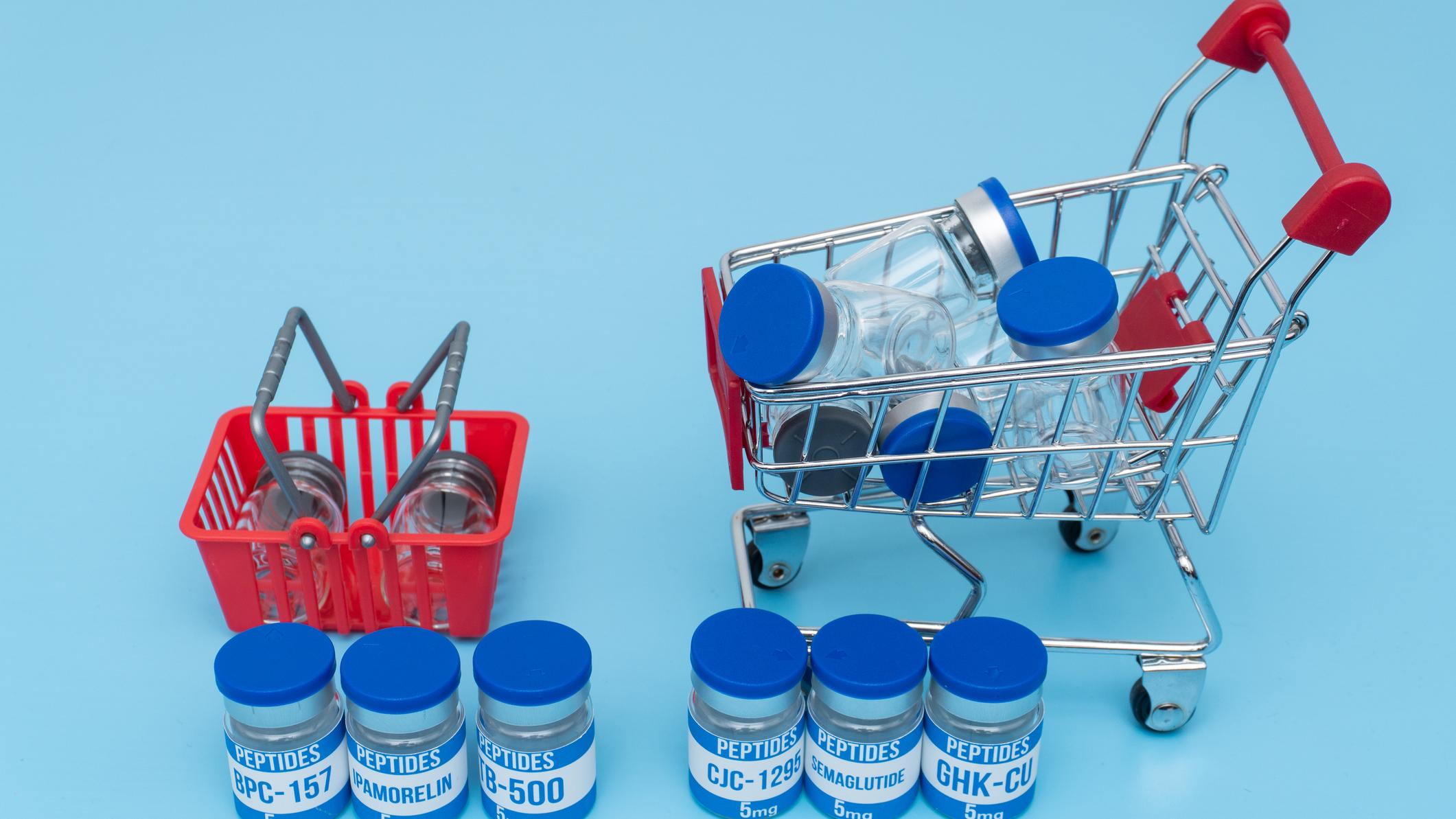
They include BPC-157 and TB-500, which are promoted to help heal injuries and build muscle. asserted
which → include → muscle
Both are considered doping substances by international sports authorities. asserted
Both → consider → authorities
Kennedy has called himself a “big fan” of peptides and recently described using BPC-157 to treat a muscle injury. asserted
Kennedy → call → injury
The guidance document reviewed by the White House represents a step back from HHS’ original plans, according to two of the people who discussed its development. uncertain
who → review → development
Initially, HHS officials wanted the FDA to draft an official regulation that would add BPC-157 and other peptides to a list of drug substances deemed safe for use by compounding pharmacies, specialty businesses that make customized medications. asserted
that → want → medications
But FDA officials warned that the agency’s scientific staffers had major safety concerns and wouldn’t support a regulation deeming them safe. asserted
them → warn → regulation
So HHS officials moved to a different approach that would direct the FDA not to enforce its rules against pharmacies that compound the substances. asserted
that → move → substances
Ultimately, FDA staffers provided technical assistance in drafting the HHS plan, including guardrails intended to improve safety, such as requiring pharmacies to use peptide ingredients from FDA-regulated factories. asserted
staffers → provide → factories
Decisions over compounding have long rested with the FDA, not HHS Kennedy has said repeatedly that U.S. compounding pharmacies must be allowed to sell peptides because Americans are turning to “gray market” products imported from China and other countries. asserted
Americans → rest → China
Decisions about regulating peptides and compounding pharmacies have almost always come from the FDA, which has an office dedicated to protecting Americans from unsafe or poor-quality compounded drugs. asserted
which → regulate → drugs
The issue of compounding safety became a greater focus for the FDA after a deadly outbreak of fungal meningitis in 2012 was linked to contaminated injections from a Massachusetts compounding pharmacy. asserted
outbreak → become → pharmacy
Once a niche business, compounding has grown into a multibillion-dollar industry, providing customized medications to doctors, clinics and hospitals. asserted
compounding → grow → doctors
It’s extremely rare that HHS would take the lead in drafting policies over the compounding industry, former FDA officials have said. asserted
officials → ’ → industry
However, federal law technically gives HHS authority over essentially all drug regulations, which are then delegated to the FDA. asserted
which → give → FDA
FDA has warned Americans about safety risks of unproven peptides Many Americans using peptides today don’t deal with a doctor or a pharmacy to get the injections. asserted
Americans → warn → injections
Instead, they often order vials online sold by chemical manufacturers based in China. asserted
they → order → China
Peptide sellers often try to skirt U.S. regulations by labeling their products as “for research use only,” since the FDA doesn’t regulate research chemicals. asserted
FDA → try → chemicals
In 2023, the FDA added more than a dozen peptides, including BPC-157 and TB-500, to its list of substances that should not be compounded due to risks of allergic reactions, kidney damage and tumor growth. asserted
that → add → reactions
At a meeting in July, FDA staffers reiterated that more than half a dozen peptides brought forward for reconsideration remained unproven in terms of safety and effectiveness. asserted
peptides → reiterate → safety
The policy pending at the White House avoids a direct confrontation with FDA staffers because it only directs the FDA not to enforce certain rules. asserted
it → pende → rules
HHS ultimately included several safety measures suggested by FDA staffers, according to two of the people. uncertain
HHS → include → people
Besides sourcing ingredients from FDA-registered facilities, compounders will be directed to collect information on side effects for safety analysis and verify the chemical identity of peptides. asserted
compounders → source → peptides
Those measures are supported by some industry groups, including the Alliance for Pharmacy Compounding, which recently met with White House officials about the proposal. asserted
which → support → proposal
The Associated Press’ health and science coverage receives financial support from the AP Fund for Journalism and private foundations. asserted
coverage → receive → Journalism

💬Give feedback
🕘History 🎫Support