A
estimating that nearly 75% of NFL players who died over a 15-year period had signs of CTE in their brains is raising concern, and experts say it demonstrates the need to collect more data on the condition.
asserted
it → A → condition
CTE, or chronic traumatic encephalopathy, is a
found in people who have suffered repeated blows to the head.
asserted
who → suffer → head
It can only be definitively diagnosed after death.
asserted
It → diagnose → death
It has also been found in the brains of , first responders and military members, but is rarely seen in the general population.
asserted
It → find → population
The Boston University research builds on data published in The British Medical Journal in August.
asserted
research → build → August
That data
to 98% of ex-NFL players who died between 2016 and 2021 had CTE.
asserted
who → die → CTE
The broad estimate reflected uncertainty about how representative brain donors studied were of the overall NFL population, since brain donors are more likely to have symptoms believed to be related to CTE.The Boston researchers
asserted
donors → reflect → researchers
looked for signs of the condition in brains donated by 387 players who died between 2008 and 2023 — a subset of the 2,362 former NFL players who died during that period.
asserted
who → look → period
Ninety-four percent of the donors had some form of CTE.
asserted
percent → have → CTE
The researchers estimated that former NFL players with cognitive symptoms were 5 times more likely to have their brains donated to science than others, and estimated from there that 74.5% of players had some form of CTE.
asserted
% → estimate → CTE
The research is published in JAMA Network Open.
asserted
research → publish → Open
CBS News chief medical correspondent Dr. Jon LaPook cautioned that that figure may be an overestimate.
uncertain
figure → caution → ?
He noted that the research looked at how many former players had signs of CTE in their brain — not how many showed actual symptoms of CTE.
asserted
many → note → CTE
Dr. Kristen Dams-O'Connor, director of the Brain Injury Research Center at Mount Sinai, said the results of the paper "cannot and should not be interpreted as being representative of current living athletes."
asserted
results → say → athletes
She pointed out that of those whose brains were studied, "many ... ended their careers long ago."
asserted
many → point → careers
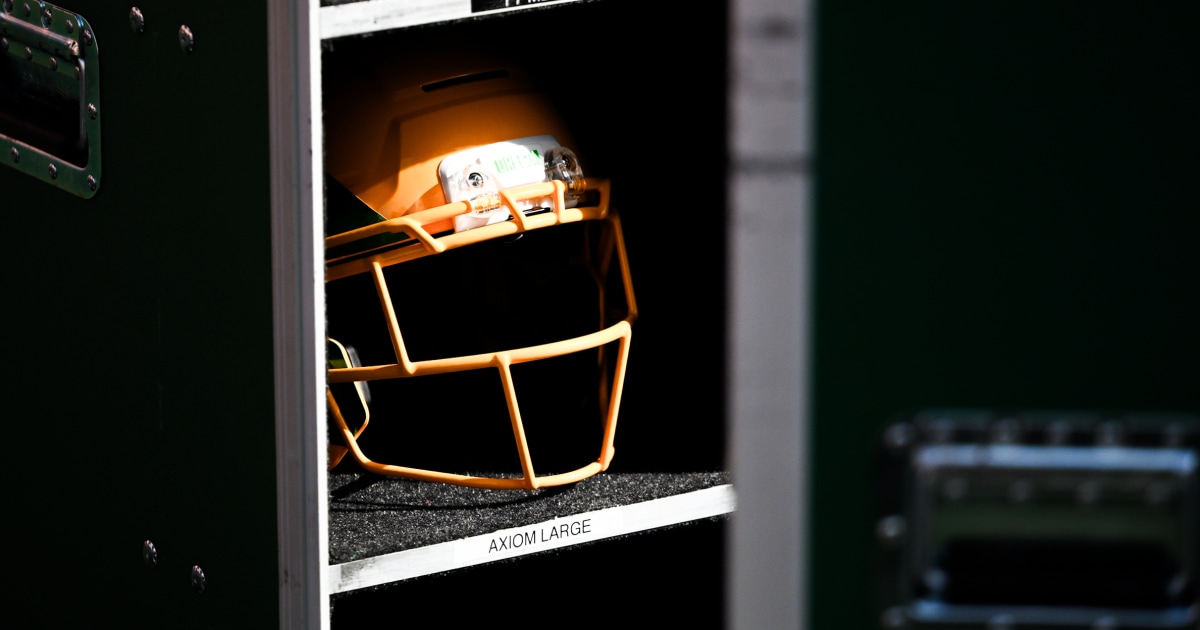
In recent years, the NFL has implemented rule changes that are designed to reduce concussions on the field, and introduced more protective equipment, including
."This should translate to lower CTE risk in recent generations of players, compared to those who played decades ago," Dams-O'Connor said.
asserted
O'Connor → implement → those
The NFL told CBS News in a statement that it "continuously strives to make the game of football safer, including by implementing strategies to reduce concussions and head impacts."
asserted
game → tell → concussions
Dams-O'Connor said that while Boston University used "strong methods" to adjust for selection bias in the data, there are still other gaps, such as accounting for the approximately 20,000 NFL players who could have died during the study's 15-year timeframe but did not.
uncertain
who → say → timeframe
She also said the results could not be applied to the "vast majority of people who played youth football" or other non-professional contact sports.
uncertain
who → say → football
"It's a helpful study in trying to look at the bigger picture, recognizing that those who donate their brain are more likely to have cognitive symptoms, and often are more likely to have had changes," said Dr. Jeremy Tanner, assistant professor of neurology at The Glenn Biggs Institute for Alzheimer's and Neurological Diseases at the UT San Antonio Health Science Center.
asserted
Tanner → try → Center
"Even taking that selection bias into account, when you look more broadly, it's at a minimum 20 to 25%, which is eye-opening and really shows the need to both advance the research.
asserted
which → take → research
"
Searching for CTE in its "silent phase"
Dr. Jay Alberts, director of the Cleveland Clinic Concussion Center, said the data shows the need to look for early warning signs of CTE.
asserted
data → search → CTE
"We often think about neurological disease, including CTE, as having a silent phase.
asserted
We → think → phase
These things are changing, and we can't detect them," Alberts said.
asserted
Alberts → change → them
"But I don't think it's silent, per se.
asserted
it → think → ?
I think what we need to do is listen more carefully and use better measurements to understand what those changes are."
asserted
changes → think → measurements
Those measurements could include studying a person's "instrumental activities of daily living," or IADLs, Alberts said.
uncertain
Alberts → include → living
That includes skills like driving a car or balancing a checkbook, where a person must use both cognitive function and motor function simultaneously.
asserted
person → include → function
In patients with Alzheimer's or Parkinson's disease, IADLs start to change between five and seven years before a diagnosis is made.
asserted
diagnosis → start → disease
He said CTE may be similar.
uncertain
CTE → say → ?
"Those types of activities are really insights into brain function, and I would argue those are things that would help us to listen more effectively," he said.
asserted
he → argue → function
Finding other signs of CTE
Understanding how a person's brain function may change during the early stages of CTE could make it easier to diagnose, Alberts said.
uncertain
Alberts → find → CTE
That could also lead to interventions that might "slow it or even potentially reverse it."
uncertain
that → lead → it
Alberts and Tanner also highlighted research focused on determining if there are biomarker changes that could be connected to CTE.
uncertain
that → highlight → CTE
Ongoing studies, including one that has a study site at UT Health San Antonio, follow current or former players throughout their life to see if there are any abnormal changes to the body or brain over the years.
asserted
that → include → years
Alberts called for even more long-term research, and Tanner said that such studies can benefit more than just former NFL players.
asserted
studies → call → players
"This has really been a rapid area of scientific advancement over the last 10 to 20 years, and has led to breakthroughs in the new therapies for Alzheimer's disease, and hopefully (will) for many other neurodegenerative diseases like CTE, Lewy body disease, and others in the years to come," Tanner said.
"Hopefully we can develop tools and biomarkers to detect these brain changes during life, which will enable us to study these diseases during life, and in the best case, learn ways to better prevent or treat these diseases."
asserted
which → lead → diseases
 The Aporia