- Published
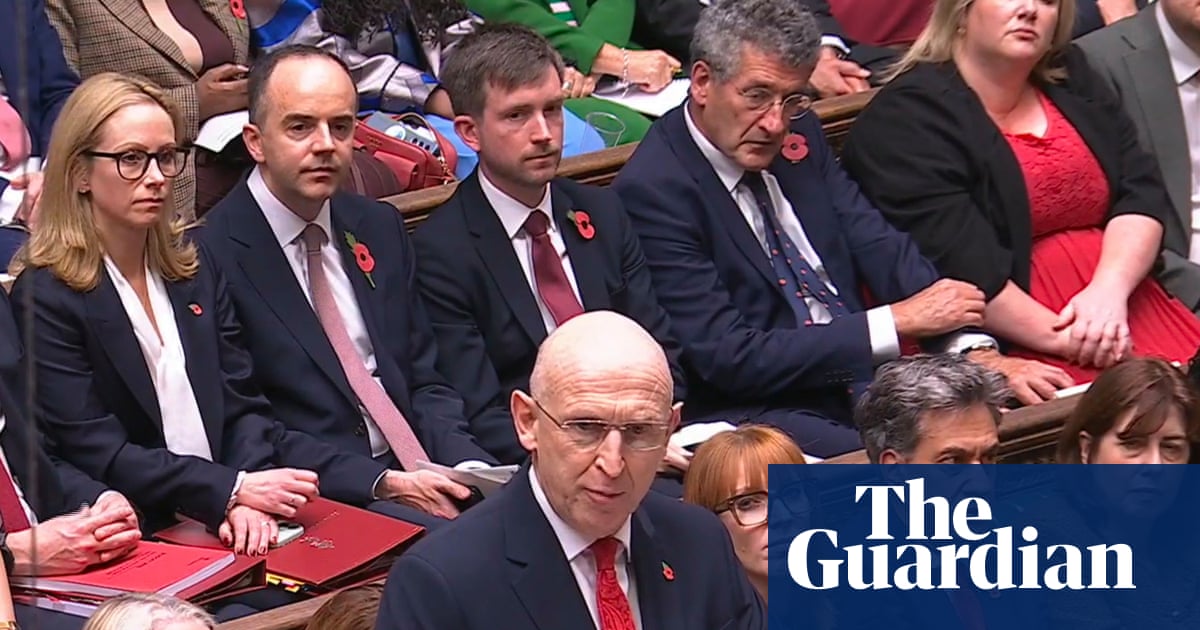
Chancellor John Healey has told every government department to find 1% cuts in their capital budgets to fill a £4.7bn hole in the funding of the Defence Investment Plan.
asserted
Healey → publish → Plan
The reductions come on top of the 1% cuts departments were asked to make earlier this year in order to pay for the initial £10.3bn of the plan's overall £15bn price tag.
asserted
departments → come → tag
The plan boosted defence spending; however the chancellor continues to come under pressure to explain how he will meet a further target of spending 3% of national income on defence by 2030.
asserted
he → boost → 2030
Conservative leader Kemi Badenoch accused the chancellor of only offering "a plan to have a plan" adding: "I bet [Vladimir] Putin's really scared now."
asserted
Putin → accuse → plan
Setting out his Budget, Healey hinted that meeting that goal would require further cuts, telling MPs it would involve "looking hard at public spending".
asserted
it → set → spending
He said he would set out how the UK would reach the 3% target by 2030, as well as 3.5% of GDP by 2035, at next year's spending review.
asserted
UK → say → review
Government departments have yet to decide what will be cut from their capital budgets.
asserted
what → have → budgets
Capital budgets are focused on long-term investments, rather than day-to-day spending.
asserted
budgets → focus → day
For example, earlier this year, when departments had to make capital budget cuts to fund the initial defence spending rise, a number of major road improvement schemes were scrapped.
asserted
number → have → schemes
Badenoch criticised Healey for not using his Budget to explain how he would boost defence funding to 3%.
asserted
he → criticise → %
"He is the man who is making our country less safe.
asserted
country → make → ?
He has failed his own test.
asserted
He → fail → test
This is on him, and no one will ever forget," she said.
asserted
she → forget → him
The Conservatives have previously urged the government to pay for defence by making cuts to the welfare budget.
asserted
Conservatives → urge → budget
Nato Secretary General Mark Rutte said the UK was on "a credible path towards meeting the commitment made by all Nato Allies in The Hague - to ensure we're all investing what's needed to remain ready & able to deter aggression and defend our freedom and security".
asserted
what → say → freedom
Chair of the Commons defence committee - and Labour MP - Tan Dhesi said "some of the key decisions on defence spending have lamentably been delayed until next year's spending review".
asserted
some → say → review
He added: "There is a cost to inaction.
asserted
He → add → inaction
Investment in our nation's defence and security cannot be kicked into the long grass."
asserted
Investment → kick → grass
Earlier this year, Healey resigned as defence secretary, accusing the then-Prime Minister Sir Keir Starmer of not providing enough money to keep the UK safe.
asserted
Healey → resign → UK
In a scathing resignation letter, he specifically emphasised his belief in the importance of reaching a 3% target by 2030.
asserted
he → emphasise → 2030
Now chancellor, Healey told the House of Commons on Wednesday: "At the spending review next year, I confirm that I will set out the details of how we will meet our NATO commitment to spend 3.5% of GDP on defence by 2035, with a target date for 3% in 2030.
asserted
we → tell → 2030
"And today, I am getting work under way to get there in a fiscally sustainable way."
asserted
work → get → way
In addition to looking at public spending, Healey said he also wanted to use "more innovative financing alongside the private sector and our international allies".
asserted
he → look → sector
The chancellor said this would include:
starting treaty negotiations with Finland, Poland and Netherlands to set up a "multilateral defence mechanism" which would allow allies to share resources
increasing the amount of private investment in defence through public-private partnerships
directing the National Wealth Fund and British Business Bank to put £5bn into "defence, dual-use technology and sovereign capability"
asserted
Fund → say → defence
The Office for Budget Responsibility estimates that the UK government's target to increase defence spending to 3.5% of GDP by 2035 will cost £35bn.
asserted
target → estimate → 35bn
Helen Millier, director of the Institute for Fiscal Studies, said: "Increasing investment in defence companies may contribute to the target but it is unclear how much this will lead to an increase in UK defence capabilities.
uncertain
this → say → capabilities
"There is much further to go to get to 3% of GDP on defence and it is hard to believe that this government will want to get there without topping up spending totals.
asserted
government → be → totals
In his Budget speech, Healey also announced £10bn of economic and military support for Ukraine, in the form of loans and export guarantees.
asserted
Healey → announce → loans
The funding includes £5.5bn of loans through World Bank guarantees and a grant contribution to the World Bank International Development Association's crisis facility.
asserted
funding → include → facility
A further £3bn will be made available to Ukraine through loans facilitated by UK Export Finance, a government export credit agency.
asserted
3bn → make → Finance
Healey told the House of Commons that the week had started with Russia launching a "brutal ballistic missile attack" and that the extra money would send "a clear message to Moscow".
asserted
money → tell → Moscow
He said that when he told the Ukrainian leader about the additional support in a phone call, President Volodymyr Zelensky had said: "You've made my day."
asserted
You → say → day
Later on social media, Zelensky welcomed the money, saying: "Every step to strengthen Ukraine brings Russia closer to realising that it must end this war of its own making."
The money comes on top of the UK's pledge to provide Ukraine with £3bn of military support until at least 2030-31.
asserted
money → welcome → 2030
 The Aporia