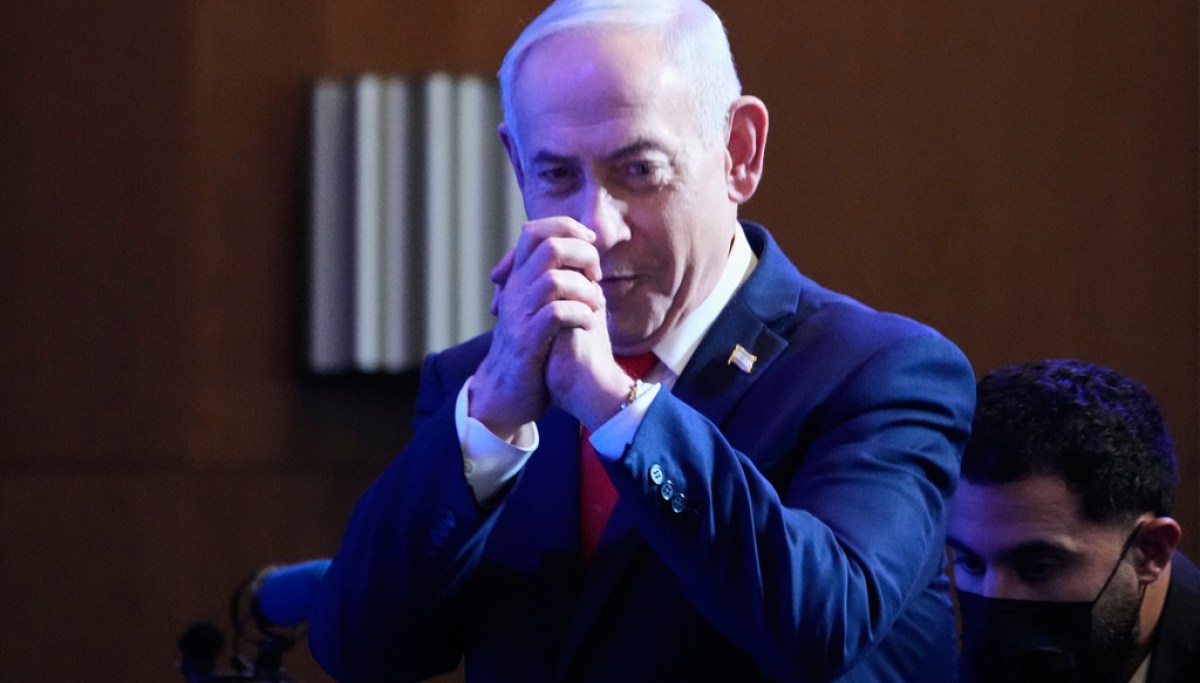
Photo via BBC News

Arab parties could hold key as Netanyahu and Eisenkot set to fall short of victory

Read the original at BBC News ↗
Cite

Knell, Y. (2026, October 28). Arab parties could hold key as Netanyahu and Eisenkot set to fall short of victory. BBC News. https://www.bbc.co.uk/news/articles/cjy561y4pl56o?at_medium=RSS&at_campaign=rss

Dated from the outlet's own feed. Check the original for its byline.

BBC News · collected 2026-10-28 · by Yolande Knell

Quick Summary

Israeli election results indicate that Benjamin Netanyahu’s Likud party is leading but falling short of a majority, with his right-wing bloc requiring support from Arab parties to form the next government. Turnout exceeded 77%, and early counts suggest Arab-led parties have achieved record numbers of seats, positioning them as potential kingmakers despite most Jewish opposition parties' reluctance to collaborate with them due to ideological differences. Netanyahu and his rival Gadi Eisenkot both claim they can form a stable government, but the final outcome remains uncertain until absentee ballots are counted.
Written by AI on 2026-10-30, from this article's own text only (the story summary below draws on all the coverage).

AI analysis

Story summary

On October 27, 2026, Israel held elections that could end Prime Minister Benjamin Netanyahu’s long-standing rule. The official results on October 30 showed Netanyahu's right-wing bloc securing 53 Knesset seats, while his main rival Gadi Eisenkot's opposition bloc gained 48 seats. Arab political parties, particularly Ra'am and the Joint List, have positioned themselves as key players but face challenges in forming a coalition due to Jewish-Israeli members' refusal to enter a government with Arab parties. Netanyahu’s continued leadership is now contingent on whether he can form a stable governing coalition without the support of these Arab-majority lists.

Written for “Israeli Election Results Unclear” on 2026-10-31, grounded in this article and the 215 other(s) covering the same event.
Why this leaning score
The article's own words the score was based on. Each is quoted verbatim and was checked against the article text before being stored, so you can find it in the original.
Reading Leans left (beta estimate) Confidence medium
Leaning: leans left for article 111351 (medium confidence, 2 verified quotes) · logged 2026-10-30

Story

📰 Israeli Election Results Unclear
Politics · 216 article(s) covering the same event. Compare every outlet's account →

Compared with similar articles

This article reads leans left and hedges 9% of its claims. Each row says how that neighbour differs.
The Hindu
Hedges 7 of 33 claims Outlet record 77/100
Washington Examiner
Hedges 1 of 3 claims Outlet record 70/100
BBC News
Hedges 4 of 30 claims Outlet record 69/100
The Straits Times
⚖️ Leans left Hedges 3 of 27 claims Outlet record 66/100
Fox News
⚖️ Leans left Hedges 14 of 65 claims Outlet record 70/100
Dawn
⚖️ Leans right further right than this Hedges 2 of 32 claims Outlet record 71/100
Fox News
⚖️ Leans right further right than this Hedges 6 of 37 claims Outlet record 70/100
Euronews
Hedges 3 of 18 claims Outlet record 60/100
BBC News
⚖️ Centre further right than this Hedges 0 of 4 claims Outlet record 69/100
Times of India
Hedges 2 of 22 claims Outlet record 59/100
How this article was measured signals, leaning charts, publisher record, byline, topics and claims

Signals How these are calculated →

Claims extracted
45
sentences that state something as happening or true
Uncertain
9%
4 of 45 hedged ("reportedly", "may", "according to")
Leaning
Leans left
of the writing, not the subject · beta estimate
Publisher signals
69/100
BBC News's corrections and hedging, across everything collected from it. Not a measure of accuracy.
Outlets on this story
216
Politics
Same framing elsewhere
1
articles that frame the event the way this one does
Analyzed 2026-10-30 · how these are computed

How this is being covered How these are calculated →

Article leaning vs. publisher reliability
Source leaning vs. consistency

Publisher

BBC News · 4716 article(s) · 6 correction(s) detected
Running correction rate · 6 correction(s)

Who wrote this

Yolande Knell
11 article(s) here · 1 carrying a prediction
🔮 - Published With results still trickling in, it currently appears that Israel's veteran Prime Minister, Benjamin Netanyahu, has done better than was widely predicted with his Likud emerging as the largest single party.
🔮 Polls indicate that Arab parties could be left holding a critical balance of power.
🔮 Overall, the number of people helped by the UN agency will drop by about a third - from 1.6 million to 1.1 million.
🔮 The couple point out where a teacher, Maya Goren, was killed while in the kindergarten and the makeshift memorials where three of the seven members of the kibbutz security team were killed after battling Hamas gunmen.
🔮 The army responded by firing tear gas at them, but there were so many settlers, more than 150, that the army could no longer control them," al-Tubasi told the BBC.
🔮 Another report presenting testimony from 230 women in crowded displacement camps in Gaza City and Khan Younis, external makes for a grim read, describing the violence they have experienced or witnessed. Some readers may find some of the details in this report distressing One displaced woman in a school-turned-shelter in Gaza highlights how rape victims are often married to their rapists to avoid shame and scandal.
🔮 The development would in effect divide the West Bank in two and isolate East Jerusalem.
🔮 In a statement, the Israel Defense Forces (IDF) said that it would open a criminal investigation into Hind, her family and the paramedics' killings, as well as the killing of 15 Palestinians, including medics and a UN worker, in March 2025.
🔮 The settlers had besieged residents in three homes in the area since Sunday, cutting off their power and water supplies. Qusra Mayor, Abdel Azim Wadi, told the BBC that his village had been declared a closed military zone - and Israeli forces were using some of the vacated Palestinian houses as barracks.
🔮 "On that day [of the strikes], the Civil Defence crews couldn't get to the site because it needed co-ordination [with Israel via a third party such as the ICRC] and there was great danger in reaching the area.
Also by Yolande Knell
Nothing else under this byline is closely related to this article, so these are simply their most recent.
All 11 articles by Yolande Knell →

Topics

Arab Israel Israeli Jewish Zionist

Subjects

Israel GPE · 7× Israeli NORP · 4× Jewish NORP · 4× Netanyahu PERSON · 4× Arab NORP · 3× Benjamin Netanyahu PERSON · 2× Eisenkot PERSON · 2× Israelis NORP · 2× Zionist NORP · 2× Likud ORG · 1×

Narrative

A huge caveat in all of the current analysis is that the high number of as-yet-uncounted absentee ballots – mostly representing the votes of Israeli soldiers – mean that we are not expecting to have a clear idea of the final results for another day or two.
framing: assertive · carried by 1 article(s) · first seen 2026-10-30
🔮 - Published With results still trickling in, it currently appears that Israel's veteran Prime Minister, Benjamin Netanyahu, has done better than was widely predicted with his Likud emerging as the largest single party.

Claims (45 extracted, 4 hedged)

- Published With results still trickling in, it currently appears that Israel's veteran Prime Minister, Benjamin Netanyahu, has done better than was widely predicted with his Likud emerging as the largest single party. asserted
Likud → publish → party
His existing bloc with ultra-nationalist and ultra-Orthodox Jewish parties appear to be just short of a 61-seat majority in the 120-seat parliament. asserted
bloc → exist → parliament
However, analysts caution that this is subject to change because the early count was skewed towards areas known to have strong right-wing support. asserted
count → caution → support
A dramatic deadlock had been widely forecast as Israelis surged to the polls – with turnout reaching more than 77%. asserted
turnout → forecast → %
In Israel's fragmented political system, the signs are that Netanyahu's main rival the former army chief, Gadi Eisenkot, would struggle to command a parliamentary majority without parties led by Israel's Arab minority. asserted
rival → struggle → minority
According to partial results, they have equalled or gained on their previous record number of seats. uncertain
they → accord → seats
On the campaign trail, most Jewish opposition parties pledged not to work with Arab-majority lists, citing a lack of shared values. asserted
parties → pledge → values
However, Israel's Arab-led parties could emerge as kingmakers if others were prepared to join forces with them. uncertain
others → lead → them
In this election, Arab Israelis – who often identify as Palestinian citizens of Israel and represent one-fifth of the population – appeared to turn out in unprecedented numbers. asserted
who → identify → numbers
Many saw this as a make-or-break election to defeat Israel's most right-wing-ever government, accusing it of stoking racism and hatred. asserted
Many → see → racism
A huge caveat in all of the current analysis is that the high number of as-yet-uncounted absentee ballots – mostly representing the votes of Israeli soldiers – mean that we are not expecting to have a clear idea of the final results for another day or two. asserted
we → uncounte → day
Overnight, both Netanyahu and Eisenkot addressed their supporters, pledging to form the next government. "The right-wing bloc has a clear, decisive majority among the Zionist public, among the Jewish public and all those who support the Jewish state. asserted
who → address → state
That is what has become clear. asserted
what → become → ?
A decisive majority," the PM told his celebrating supporters – although he stopped short of declaring victory. asserted
he → tell → victory
"We must form a strong, national, right-wing government. asserted
We → form → government
That is what must be done," he added. asserted
he → do → ?
"The public has chosen change," Eisenkot told his Yashar party after exit polls came out – most of which were initially more favourable to the opposition. asserted
most → choose → opposition
"The coalition of failure has lost the people's trust. asserted
coalition → lose → trust
The Israeli public voted against Benjamin Netanyahu continuing as prime minister. asserted
Netanyahu → vote → minister
" "I will work with my partners to ensure that the people's decision is translated into a Zionist government: stable and good for all of Israeli's citizens. asserted
decision → work → citizens
And quickly – because that is what this moment demands, and because the country needs to be brought back together." asserted
country → demand → what
There are deep divisions in Israeli society which have been underscored by this and previous elections. asserted
which → be → this
They have served not just as referenda on Netanyahu's leadership – as he faces a corruption trial on charges he denies – but also as votes on what kind of country Israel should be. asserted
Israel → serve → country
The PM and his current coalition partners have taken the country on a hardline religious, nationalist trajectory over the past four years. asserted
PM → take → years
There were mass protests over their plan for a judicial overhaul prior to the unprecedented Hamas-led attacks on 7 October 2023 which triggered a series of wars – in Gaza, Lebanon and Iran. asserted
which → be → Gaza
Many Israelis want to see their country more firmly anchored in liberal and secular values. asserted
country → want → values
Remarkably, the past four turbulent years do not appear to have significantly changed voting patterns. asserted
years → appear → patterns
"We see in the polls, that the relative weight of the two main sides: pro-Netanyahu and anti-Netanyahu is about the same," Professor Tamar Hermann, a pollster at the Israeli Democracy Institute told me, just prior to the election. asserted
Hermann → see → election
"People expected that after October 7th, Netanyahu will be down the drain or even toppled but it didn't happen." Already, overnight, the main Israeli parties will have begun their intense political wrangling to try to form a new coalition government. asserted
parties → expect → government
"Each side will try to pull over defectors, or will try to see if they can make a minority government and will try all these different political kinds of wizardry," is how veteran Israeli journalist and author, Yaakov Katz described the process to me. asserted
Katz → try → me
"But it might not work, and it could take weeks or months to see if someone is actually capable of forming a government." uncertain
someone → work → government
The leaders of the bigger parties typically try to win over smaller ones with promises of cabinet positions, budgets or specific policies. asserted
leaders → try → positions
It is key now to see if those in the main opposition "change bloc" are ready to break a taboo by seeking a political deal with the Arab parties. asserted
those → see → parties
On the campaign trail, one of the bloc's leaders, right-wing politician Avigdor Lieberman, went as far as to say that he would not sit in a minority government that relied on their support. asserted
that → go → support
It was a sign of the increased mistrust and hostility towards Arab citizens since the 7 October assault. asserted
It → increase → assault
When I recently met Mansour Abbas, head of Ra'am – the smaller of the two Arab lists – he told me that having been part of the diverse coalition that temporarily unseated Netanyahu between 2021 and 2022, he wanted to join the next government. asserted
he → meet → government
He believed that potential partners would be more open to an alliance after the election. asserted
partners → believe → election
"These are familiar and well-known party-political considerations. asserted
These → know → ?
All politicians in Israel say one thing before elections and speak a different language after elections," he said. asserted
he → say → elections
"We have experienced this before, and it does not concern us." asserted
it → experience → us
…and 5 more, not listed.

💬Give feedback
🕘History 🎫Support