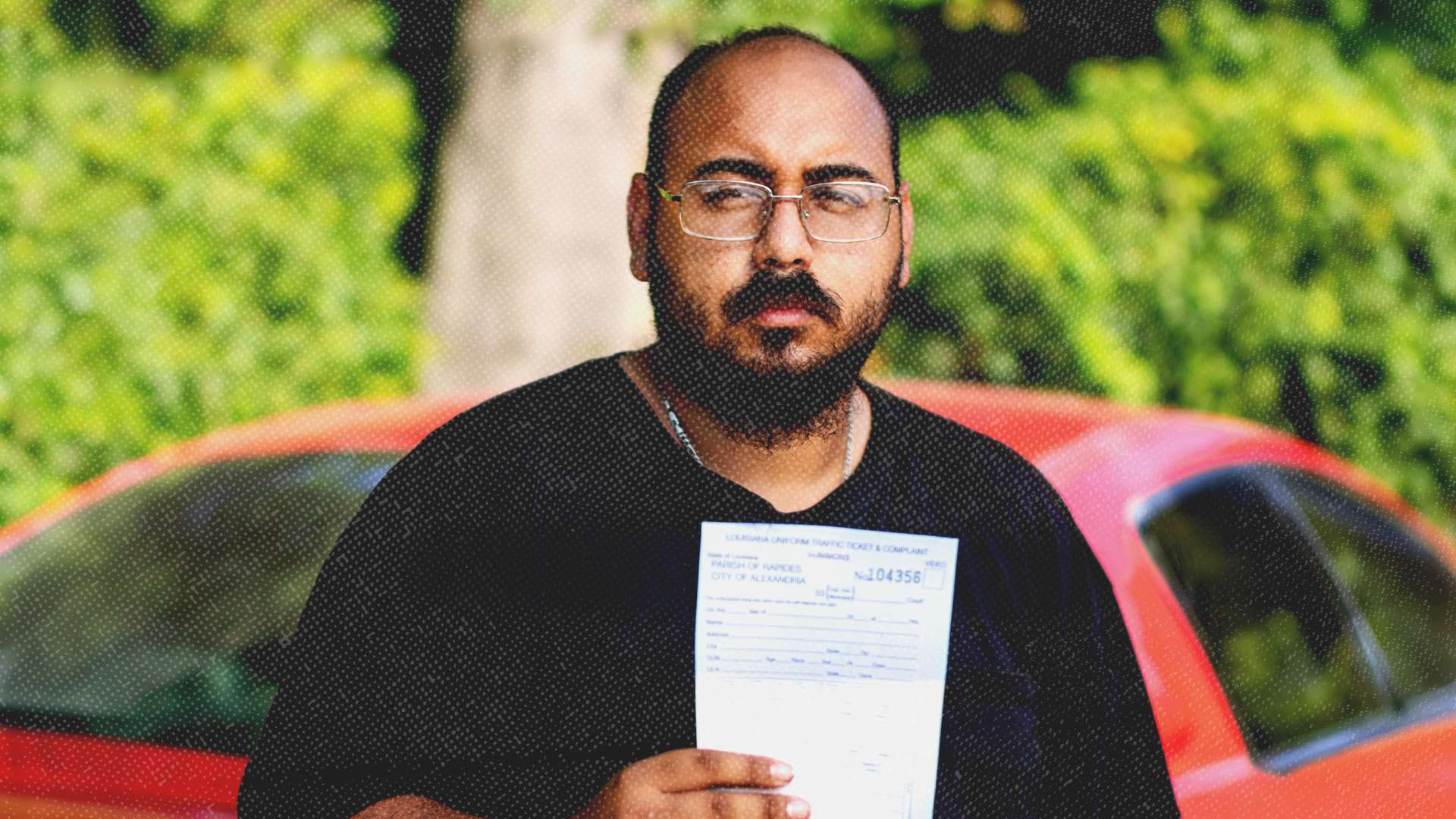
Photo via Reason

The Justice Department's 3rd Attempt To Imprison James Comey Stinks of Trump's Desperation for Revenge

Read the original at Reason ↗
Cite

Sullum, J. (2026, October 27). The Justice Department's 3rd Attempt To Imprison James Comey Stinks of Trump's Desperation for Revenge. Reason. https://reason.com/2026/10/27/the-justice-departments-3rd-attempt-to-imprison-james-comey-stinks-of-trumps-desperation-for-revenge/

Dated from the outlet's own feed. Check the original for its byline.

Reason · collected 2026-10-27 · by Jacob Sullum

Quick Summary

The Justice Department has filed a new criminal information against former FBI Director James Comey, alleging he illegally shared classified information with The New York Times in October 2016. This is seen as the third attempt by Trump administration officials and their successors to find charges against Comey since President Trump publicly pressured them to do so. Comey's legal team disputes the timing of the filing, arguing it misses a required deadline for obtaining a grand jury indictment. Comey himself dismisses the case as an abuse of justice department powers motivated by Trump’s personal vendetta, while critics view it as a political prosecution targeting one of Trump's longtime adversaries over his role in investigations during Trump's first term.
Written by AI on 2026-10-30, from this article's own text only (the story summary below draws on all the coverage).

AI analysis

Story summary

James Comey, former FBI director, faces his third federal prosecution by the Trump administration since 2017. The new charges accuse him of disclosing classified information and conspiring to transmit such information in a New York Times article a decade ago. Comey’s lawyers argue this is an abuse of power and have filed motions to dismiss the case. On October 30, U.S. District Judge Trevor grilled Comey's attorneys over their efforts to dismiss the charges, suggesting that further legal proceedings could become futile if a grand jury indicts him for more recent conduct. The relationship between Trump and Comey began straining when Trump took office in 2017, leading to Comey’s firing and subsequent legal battles.

Written for “Justice Department's Third Charges Against Comey” on 2026-10-31, grounded in this article and the 13 other(s) covering the same event.

Story

📰 Justice Department's Third Charges Against Comey
Crime & Law · 14 article(s) covering the same event. Compare every outlet's account →

Compared with similar articles

This article reads leans strongly left and hedges 24% of its claims. Each row says how that neighbour differs.
NBC News
⚖️ Leans left further right than this Hedges 0 of 15 claims Outlet record 60/100
“The articles discuss different legal actions involving different individuals from the DOJ and do not describe the same specific incident.”
Washington Examiner
⚖️ Leans left further right than this Hedges 0 of 4 claims Outlet record 70/100
“Article A discusses a federal judge ruling on Maurene Comey's firing, while Article B talks about repeated attempts by Trump and his administration to charge James Comey with crimes.”
Daily Mail
⚖️ Leans left further right than this Hedges 0 of 5 claims Outlet record 68/100
“The articles discuss different legal actions against James Comey and his daughter Maurene Comey, not the same specific incident.”
CBC News
Hedges 2 of 17 claims Outlet record 74/100
Times of India
Hedges 1 of 14 claims Outlet record 59/100
ABC News (US)
Hedges 2 of 4 claims Outlet record 70/100
NPR
⚖️ Leans left further right than this Hedges 1 of 35 claims Outlet record 60/100
BBC News
Hedges 2 of 18 claims Outlet record 68/100
Al Jazeera
Hedges 0 of 3 claims Outlet record 60/100
TIME
⚖️ Leans left further right than this Hedges 5 of 30 claims Outlet record 59/100
How this article was measured signals, leaning charts, publisher record, byline, topics and claims

Signals How these are calculated →

Claims extracted
37
sentences that state something as happening or true
Uncertain
24%
9 of 37 hedged ("reportedly", "may", "according to")
Leaning
Leans strongly left
of the writing, not the subject · beta estimate
Publisher signals
67/100
Reason's corrections and hedging, across everything collected from it. Not a measure of accuracy.
Outlets on this story
14
Crime & Law
Same framing elsewhere
1
articles that frame the event the way this one does
Analyzed 2026-10-30 · how these are computed

How this is being covered How these are calculated →

Article leaning vs. publisher reliability
Source leaning vs. consistency

Publisher

Reason · 1039 article(s) · 4 correction(s) detected
Running correction rate · 4 correction(s)

Who wrote this

Jacob Sullum
31 article(s) here · 1 carrying a prediction
🔮 In a July 16 letter to California Secretary of State Shirley Weber, the Department of Homeland Security (DHS) said a "preliminary review" suggested there "may be as many as 190,832 non-citizens registered to vote" in her state.
🔮 But the Justice Department's manual for prosecutors says they should not pursue criminal charges unless "the admissible evidence will probably be sufficient" to meet the latter test.
🔮 I would tell you what I did with it, but I don't want to implicate myself in a federal felony.
🔮 The new case "would almost be funny if it weren't such an appalling abuse of the Department of Justice," Comey said in an online video on Monday.
🔮 But as two recent cases illustrate, there are limits to this license for misconduct, meaning officials may still be held accountable when they flout longstanding constitutional principles, even when they do so in novel ways.
🔮 Their divorced parents, Bart Rockett and Kami Ballard, agreed that Ballard, who at that point lived in Missouri, would have primary custody of the children, while Rockett, who was living in California, would be "responsible for them at the beginning of each month and 'during TV pilot season.'"
🔮 But in a decision that could signal a shift in the legal treatment of Flock cameras, a federal judge in Oklahoma recently recognized that they enable "a type of indiscriminate mass surveillance."
🔮 According to the Department of Justice (DOJ), which last Friday demanded network communications regarding the TV pool, that show of solidarity may have violated the Sherman Antitrust Act.
🔮 Although the relevance of those precedents might seem obvious, state and federal courts generally have perceived important differences between cellphone tracking and police use of roadside cameras that record images of passing cars.
🔮 Less concretely, the White House says Trump has "backed law enforcement," which would seem to fall into the category of "presidential public safety signals," another potential factor that the crime experts considered.
Also by Jacob Sullum
Nothing else under this byline is closely related to this article, so these are simply their most recent.
All 31 articles by Jacob Sullum →

Topics

Congress FBI The Justice Department's The New York Times U.S.

Subjects

Comey PERSON · 11× Trump PERSON · 6× FBI ORG · 4× U.S. GPE · 3× Durham PERSON · 2× Farahnak PERSON · 2× Congress ORG · 1× Donald Trump PERSON · 1× James Comey PERSON · 1× Pam Bondi PERSON · 1×

Narrative

In the New York Times story at the center of the case, Charlie Savage and Nicole Perloth reported that Yahoo had adapted "a system intended to scan emails for child pornography" to comply with a Foreign Intelligence Surveillance Court order seeking "messages containing a computer 'signature' tied to the communications of a state-sponsored terrorist organization."
framing: mixed · carried by 1 article(s) · first seen 2026-10-30
🔮 The new case "would almost be funny if it weren't such an appalling abuse of the Department of Justice," Comey said in an online video on Monday.

Claims (37 extracted, 9 hedged)

ago, President Donald Trump publicly demanded that Pam Bondi, then the attorney general, find a crime to pin on former FBI Director James Comey. asserted
Bondi → demand → Comey
Trump's underlings have repeatedly tried to do that, first charging Comey with lying to Congress and then accusing him of threatening to assassinate the president. asserted
underlings → try → president
But the first indictment was dismissed because Trump had illegally appointed the prosecutor who obtained it, and the second was doomed right out of the gate because it aimed to punish constitutionally protected political speech. asserted
it → dismiss → speech
The Justice Department's latest attempt to follow Trump's marching orders was revealed on Monday, when U.S. District Judge Trevor McFadden unsealed a "criminal information" that claims Comey illegally shared classified information with The New York Times on October 5, 2016. uncertain
Comey → follow → October
In an attempt to meet the statutory deadline for that charge, prosecutors filed it exactly 10 years after the alleged disclosure. asserted
prosecutors → meet → disclosure
But Comey's lawyers argue that federal law required the government to obtain a grand jury indictment within 10 years of the alleged offense, which it failed to do. asserted
it → argue → which
Whatever you make of that dispute, the president has made it clear that he wants to imprison Comey, a longtime nemesis because of his role in the "Russiagate hoax" during Trump's first term, and does not much care about exactly how that happens. asserted
that → make → term
Justice Department officials, meanwhile, are keen to pursue Trump's personal vendetta by using their prosecutorial powers as an instrument of his revenge. asserted
officials → pursue → revenge
The new case "would almost be funny if it weren't such an appalling abuse of the Department of Justice," Comey said in an online video on Monday. asserted
Comey → say → Monday
I'm still not afraid of these people, and I still believe in the independent federal judiciary." asserted
I → believe → judiciary
In the New York Times story at the center of the case, Charlie Savage and Nicole Perloth reported that Yahoo had adapted "a system intended to scan emails for child pornography" to comply with a Foreign Intelligence Surveillance Court order seeking "messages containing a computer 'signature' tied to the communications of a state-sponsored terrorist organization." asserted
Yahoo → report → organization
Savage and Perloth cited "two government officials who spoke on the condition of anonymity." asserted
who → cite → anonymity
Dustin Farahnak, a special U.S. attorney for the District of Columbia, says that story included "first-time disclosures of classified information not intended for the public domain." asserted
story → say → domain
According to Farahnak, the government has evidence that Comey "directed staff" to discuss "specific accuracy concerns" about a prior Reuters report on the same subject with Savage. uncertain
Comey → accord → Savage
In the process of doing that, Farahnak says, those FBI officials "illegally transferred classified information." asserted
officials → do → information
Comey's attempt to set the record straight, according to Trump's henchmen, was a felony punishable by up to 10 years in prison under 18 USC 793(d), an Espionage Act provision that applies to an official who "willfully" shares "information relating to the national defense" with an unauthorized recipient when he "has reason to believe" it "could be used to the injury of the United States." uncertain
it → set → States
Comey also faces a charge of conspiring to violate Section 793, which likewise carries a maximum 10-year sentence. asserted
which → face → sentence
If Comey's alleged disclosure was such a grave crime, you might wonder, why did it take a decade to charge him? uncertain
it → allege → him
Because two prior investigations of the same incident concluded that criminal charges were not warranted. asserted
charges → conclude → incident
Beginning in March 2017, John Durham, the U.S. attorney for the District of Connecticut, looked into the genesis of the Times article. asserted
Durham → begin → article
The investigation found that James Baker, then the FBI's general counsel, was one of the anonymous sources. asserted
Baker → find → sources
Baker said he had acted under instructions from FBI Chief of Staff James Rybacki, whom he understood to be conveying Comey's wishes. asserted
he → say → wishes
Durham's investigation included interviews, emails, phone records, and consideration of the relevant statutes. asserted
investigation → include → statutes
In December 2018, Comey's lawyers note, Durham "wrote a classified memorandum outlining the investigation and recommending 'NO prosecution for Baker or anyone else.' asserted
Durham → note → Baker
" The following month, the U.S. Attorney's Office for the District of Columbia "opened an investigation into the same subject matter," Comey's lawyers say. asserted
lawyers → open → matter
That investigation "was closed without any charges in February 2020" after the office "declined to prosecute." asserted
office → close → February
Given the outcomes of those two investigations, the decision to charge Comey now stinks of desperation to slake Trump's thirst for revenge. asserted
decision → give → revenge
According to Comey's lawyers, the tardiness of the charges also fatally undermines the case. uncertain
tardiness → accord → case
Federal law generally requires that prosecutors file charges within five years of the alleged crime. asserted
prosecutors → require → crime
But the Internal Security Act of 1950 made an exception for Section 793, saying "an indictment for any violation" of that provision "may be found at any time within ten years next after such violation shall have been committed." uncertain
violation → make → years
The charges against Comey "should be dismissed as time barred," his lawyers argue: "Section 19 of the Internal Security Act gives the government an extended ten-year limitations period in which to charge Section 793 offenses. asserted
Section → dismiss → offenses
But as Section 19 unambiguously states, the government may invoke that extended period only by obtaining a grand jury indictment. uncertain
government → state → indictment
A criminal information—which the government can issue unilaterally without grand jury involvement—does not suffice. asserted
government → issue → involvement
Because the default five-year statute of limitations for federal felonies has long since elapsed on the alleged offenses, and the government's information does not meet the express statutory requirement for an extended ten-year limitations period, the information is untimely and must be dismissed. asserted
information → elapse → period
" Whichever side prevails on that issue, no one should have any illusions that the Justice Department is pursuing the mission suggested by its name. " uncertain
Department → prevail → name
It remains unclear what [McFadden] will do with the matter and whether DOJ will even be able to secure an indictment—as required by the Constitution," Cato Institute legal fellow Mike Fox says in an emailed press release. uncertain
Fox → remain → release
"Should the matter proceed, it is unequivocally clear that this case is a vindictive prosecution—a classic case of lawfare by a weaponized Justice Department." asserted
case → proceed → Department

💬Give feedback
🕘History 🎫Support