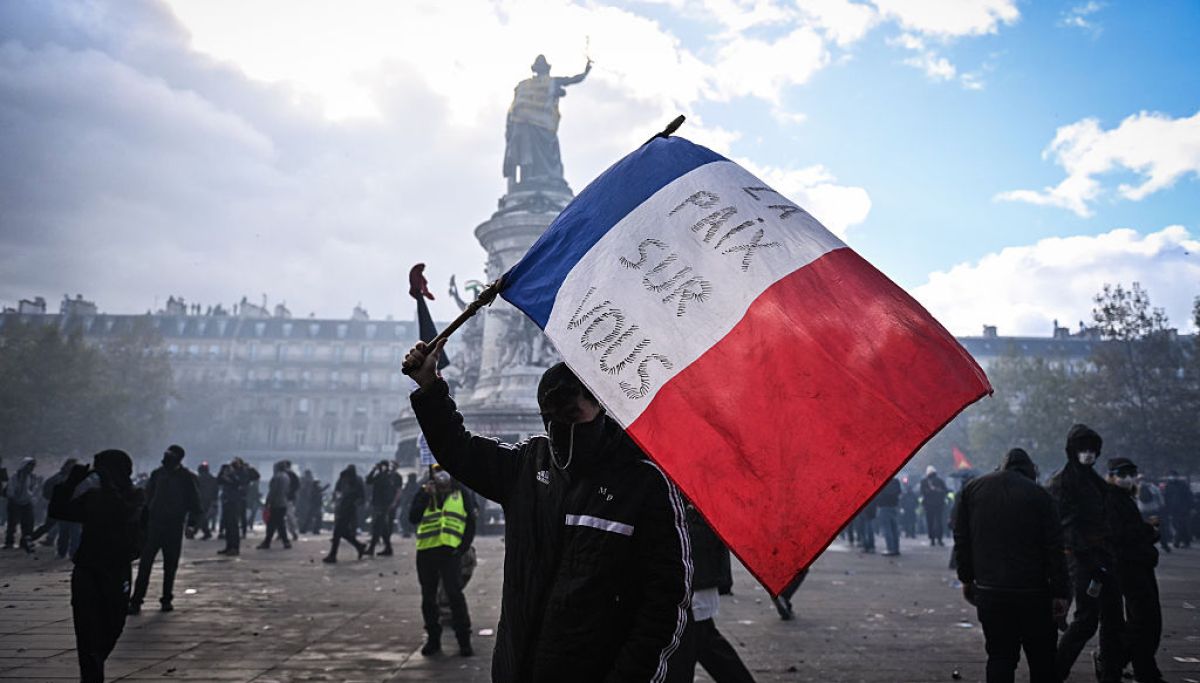
Bernard-Henri Lévy: The Riots in France and the Return of a Dangerous Idea

Read the original at The Free Press ↗
Cite

Lévy, B. H. (2026, October 26). Bernard-Henri Lévy: The Riots in France and the Return of a Dangerous Idea. The Free Press. https://www.thefp.com/p/bernard-henri-levy-the-riots-in-france-protest-maga-israel

Dated from the outlet's own feed. Check the original for its byline.

The Free Press · collected 2026-10-26 · by Bernard-Henri Lévy analysis

Quick Summary

Philosopher Bernard-Henri Lévy criticizes the recent riots in France, arguing that they echo historical justifications for violence as a form of resistance against systemic oppression. He traces this ideology back to figures like Jean-Paul Sartre and Frantz Fanon, noting its reappearance among supporters of leftist politician Jean-Luc Mélenchon. Lévy contends that such violent protests do not target the actual systems or individuals responsible for perceived injustices but instead harm ordinary citizens, further marginalizing those who are already disadvantaged.
Written locally by qwen2.5:14b on 2026-10-26, using this article's own text rather than the other coverage of the same event (that is the story summary below).

AI analysis runs on qwen2.5:14b, locally

Story summary

Bernard-Henri Lévy, a French philosopher and writer, recently published an article criticizing recent riots in France and the resurgence of an old ideology. He argues that leading figures within Jean-Luc Mélenchon’s extreme-left party, La France Insoumise (France Unbowed), are promoting the idea that systemic violence in democratic societies justifies violent protests. Lévy traces this concept back to philosophers like Jean-Paul Sartre, who defended revolutionary violence against colonial oppression, and Georges Sorel, who advocated for proletarian violence as a means of social change.

Lévy asserts that he thought this dangerous idea had been discredited after the post-May 1968 intellectual movement in France and following critiques by the New Philosophers regarding totalitarianism. He emphasizes that such justifications for violence are problematic given historical contexts like fascist, Nazi, and communist regimes where similar rationales were used to justify oppressive acts.

Written for “Bernard Henri Levy On French Riots” on 2026-10-26, grounded in this article and the 0 other(s) covering the same event.
Why this leaning score
The model judged this article politically coded and scored it -0.65, but every quote it verified points right, so the score is not published.
Written under an earlier scoring contract, which gave a paragraph rather than checkable quotes. Re-analysing this article replaces it.
Leaning score withheld for article 108477: score contradicts its own evidence · logged 2026-10-26

Story

📰 Bernard Henri Levy On French Riots
Politics · 1 article(s) covering the same event.

Compared with similar articles

This article reads unscored and hedges 23% of its claims. Each row says how that neighbour differs.
South China Morning Post
⚖️ leaning not scored 🔴 67% hedged 2 of 3 📰 publisher trust 64
“The articles discuss different aspects and perspectives on the French riots, with Article A focusing on Chinese analysts' views of potential political reshaping in Europe while Article B is a commentary by Bernard-Henri Lévy about the ideological context of the riots.”
France and the limits of liberalism different event · 95%
Noahpinion
⚖️ Leans strongly right 🔴 9% hedged 8 of 90
“The articles discuss the context and implications of riots in France but describe different aspects and analyses rather than the same specific incident.”
South China Morning Post
⚖️ Leans left 🔴 0% hedged 0 of 5 📰 publisher trust 64
“The articles describe different aspects of ongoing unrest in France; one focuses on current police tactics and preparations for upcoming protests, while the other discusses philosophical and historical context provided by a commentator.”
Washington Examiner
⚖️ Leans strongly right 🔴 0% hedged 0 of 3 📰 publisher trust 70
“The articles discuss different aspects and perspectives on the riots in France without clearly referring to the exact same incident at the same time.”
Fox News
⚖️ Leans right 🔴 0% hedged 1 of 328 📰 publisher trust 67
“The articles discuss different topics related to protests and political movements but describe distinct events and perspectives without overlapping on a single specific incident.”
Daily Mail
⚖️ Leans right 🔴 18% hedged 3 of 17 📰 publisher trust 66
“Article A reports on imminent protests and potential riots in France, while Article B discusses broader themes related to recent demonstrations and philosophical concepts, not a single specific event.”
New York Post
⚖️ Leans strongly right 🔴 0% hedged 0 of 15 📰 publisher trust 66
“Article A describes a personal account of a specific protest in Paris where tear gas was used, while Article B is an opinion piece discussing broader themes related to recent citizen demonstrations and the return of certain ideological concepts.”
The Guardian
⚖️ leaning not scored 🔴 16% hedged 4 of 25 📰 publisher trust 66
“The articles discuss different aspects and viewpoints regarding protests in France, but do not describe the same specific incident or occurrence.”
Washington Examiner
⚖️ leaning not scored 🔴 0% hedged 0 of 3 📰 publisher trust 70
“The articles discuss different perspectives on ongoing unrest in France but do not describe the exact same specific incident or time frame.”
Al Jazeera
⚖️ Leans strongly left 🔴 6% hedged 3 of 50 📰 publisher trust 60
“While both articles discuss unrest in France, Article A focuses on describing the violent incidents and their causes, whereas Article B is an opinion piece analyzing the ideological context of the demonstrations. They do not describe the same specific incident.”
How this article was measured signals, leaning charts, publisher record, byline, topics and claims

Signals How these are calculated →

Claims extracted
13
sentences that state something as happening or true
Uncertain
23%
3 of 13 hedged ("reportedly", "may", "according to")
Leaning
withheld
no quote in the article backed the model's score
Publisher signals
96/100
The Free Press's corrections and hedging, across everything collected from it. Not a measure of accuracy.
Outlets on this story
1
Politics
Same framing elsewhere
1
articles that frame the event the way this one does
Analyzed 2026-10-26 · how these are computed

How this is being covered How these are calculated →

Article leaning vs. publisher reliability
Source leaning vs. consistency

Publisher

The Free Press · 366 article(s) · 0 correction(s) detected
No corrections detected for this publisher. That may mean careful reporting, or simply that nothing has been checked.

Who wrote this

Bernard-Henri Lévy
1 article(s) here · 1 carrying a prediction
🔮 I thought this idea had been discredited by the post-May 1968 intellectual movement, the critique of totalitarianism by the New Philosophers movement which I led, and the reckoning with the fascist, Nazi, and communist catastrophes.
The only article under this byline in the corpus.

Topics

France France Unbowed Germany La France Insoumise Le Monde

Subjects

France GPE · 1× France Unbowed ORG · 1× Frantz Fanon PERSON · 1× Germany GPE · 1× Jean Genet PERSON · 1× Jean-Luc Mélenchon’s PERSON · 1× Jean-Paul Sartre’s PERSON · 1× La France Insoumise ORG · 1× Le Monde ORG · 1× Sartre PERSON · 1×

Narrative

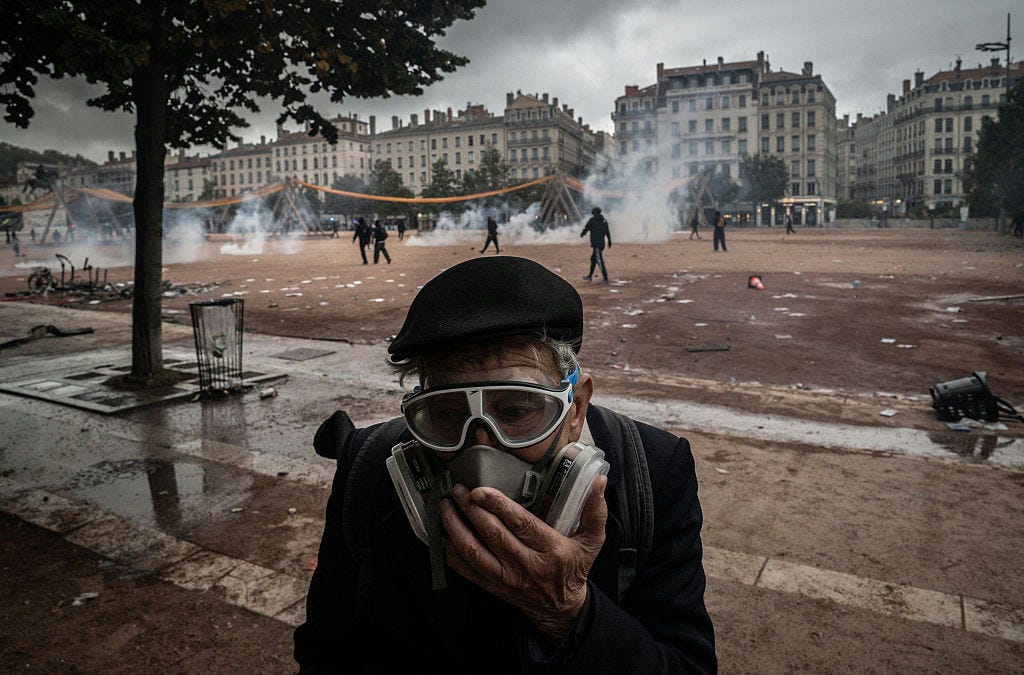
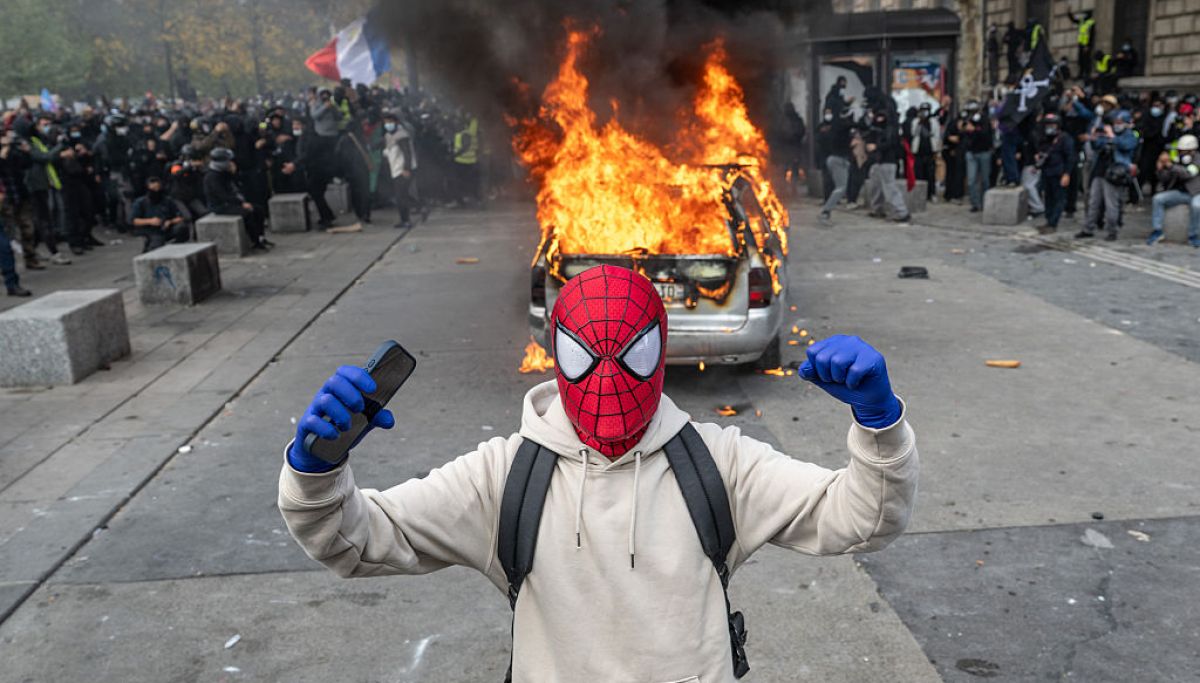
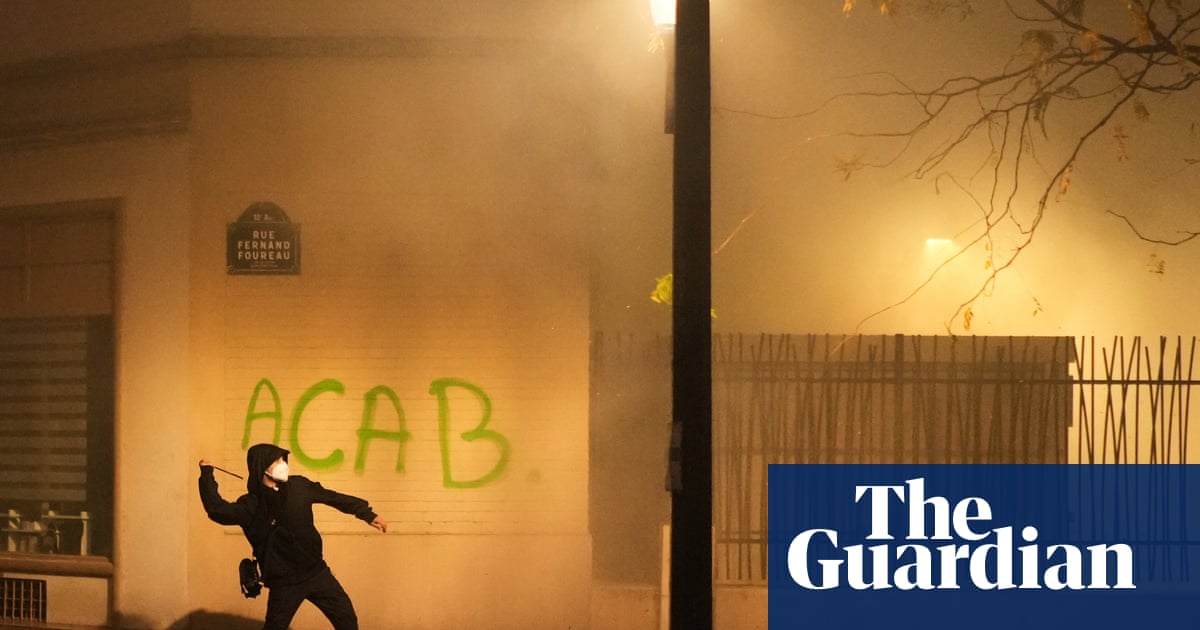
Amid the uproar of the citizen demonstrations of recent weeks in France, and under the influence of leading figures in Jean-Luc Mélenchon’s extreme-left party, France Unbowed (La France Insoumise), one theme is making a powerful comeback: the idea of an invisible, insidious, systemic violence supposedly exercised in democratic societies, which it is legitimate to oppose with the visible, direct, frank violence of the riot.
framing: mixed · carried by 1 article(s) · first seen 2026-10-26
🔮 I thought this idea had been discredited by the post-May 1968 intellectual movement, the critique of totalitarianism by the New Philosophers movement which I led, and the reckoning with the fascist, Nazi, and communist catastrophes.

Claims (13 extracted, 3 hedged)

Amid the uproar of the citizen demonstrations of recent weeks in France, and under the influence of leading figures in Jean-Luc Mélenchon’s extreme-left party, France Unbowed (La France Insoumise), one theme is making a powerful comeback: the idea of an invisible, insidious, systemic violence supposedly exercised in democratic societies, which it is legitimate to oppose with the visible, direct, frank violence of the riot. asserted
it → make → riot
I know this idea well. asserted
I → know → idea
It was Jean-Paul Sartre’s concept when, in his preface to The Wretched of the Earth by the anticolonialist ideologue Frantz Fanon, Sartre presented the murder of the colonizer as the response to the oppression of the colonial system. asserted
Sartre → present → system
It was the idea of the writer Jean Genet in a famous article, “Violence and Brutality,” published in Le Monde in 1977, in which he presented the terrorism of the Baader-Meinhof gang in Germany as a necessity dictated by the anti-imperialist struggle. asserted
he → publish → struggle
And it was already the idea of Georges Sorel who, at the very beginning of the 20th century in his Reflections on Violence, opposed the force of the “bourgeois state” with a “proletarian violence” endowed with supposedly regenerative virtues. asserted
who → oppose → virtues
I thought this idea had been discredited by the post-May 1968 intellectual movement, the critique of totalitarianism by the New Philosophers movement which I led, and the reckoning with the fascist, Nazi, and communist catastrophes. uncertain
I → think → catastrophes
And so, we must start all over again. asserted
we → start → ?
The first thing wrong with this notion of “counterviolence” is that it never strikes at the heart of the hated regime, but instead at the most exposed and most vulnerable people. asserted
it → strike → people
The police officer who earns 2,000 euros a month, works night shifts, and protects, at the risk of his life, property, people, and the right to demonstrate. asserted
who → earn → life
The shopkeeper who earns his gross profit on Saturdays and whose ransacked store was his only capital. asserted
store → earn → Saturdays
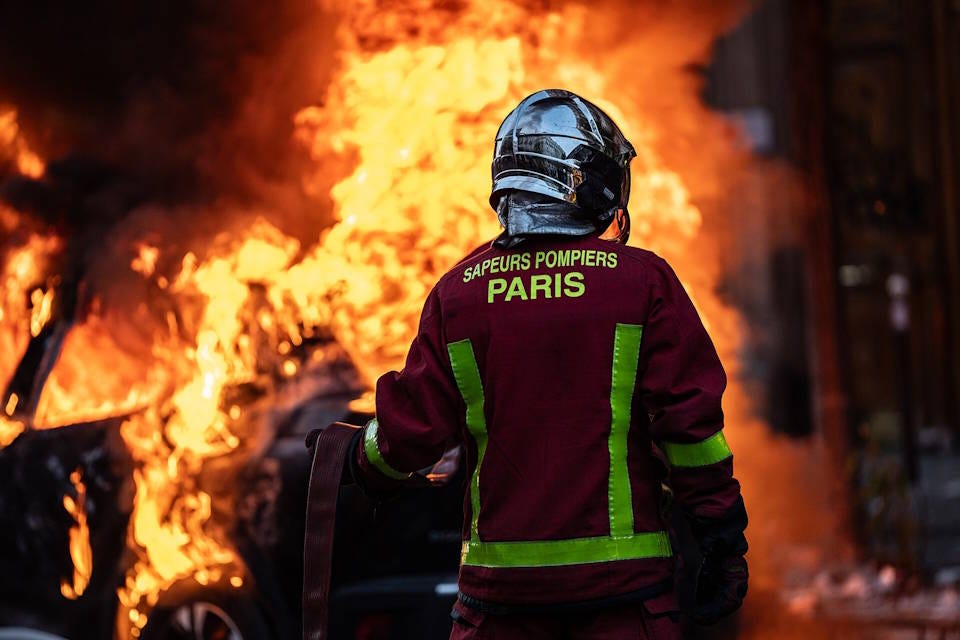
The owner of the burned-out car who already struggled to afford a tank of gas and who must now find the money to replace the vehicle or face the obstacle course of dealing with insurance companies. asserted
who → burn → companies
The riot claims to strike at “the system,” but it falls upon women and men who are neither its masters nor its beneficiaries, but its humblest subjects. uncertain
who → claim → women
It claims to avenge the humiliated, but it adds to their humiliation fear, ruin, and the feeling of having been abandoned. uncertain
it → claim → fear
💬Give feedback
🕘History 🎫Support