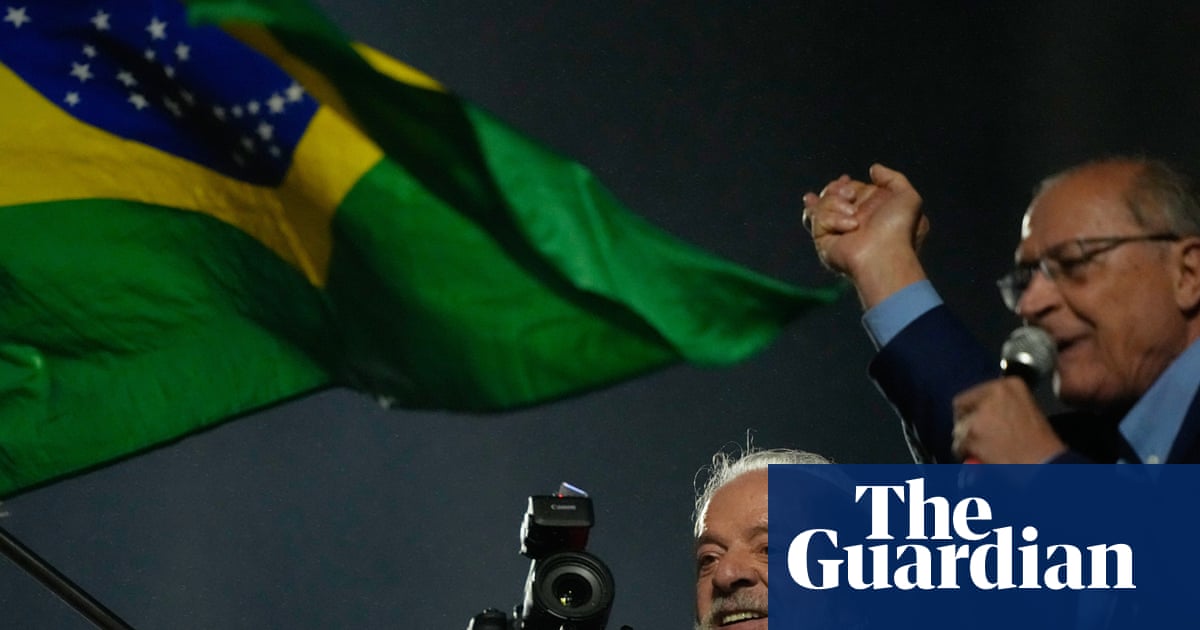
‘Democracy always’: Lula vows no return to dictatorship in Brazil after election win

Read the original at The Guardian ↗
Cite

Paulo, T. P. i. S., & Brasília, T. R. i. (2026, October 26). ‘Democracy always’: Lula vows no return to dictatorship in Brazil after election win. The Guardian. https://www.theguardian.com/world/2026/oct/26/brazil-lula-vow-democracy-always-election-win

Dated from the outlet's own feed. Check the original for its byline.

The Guardian · collected 2026-10-26 · by Tom Phillips in São Paulo, Tiago Rogero in Brasília

Quick Summary

Brazilian President Luiz Inácio Lula da Silva celebrated his fourth term victory over far-right opponent Flávio Bolsonaro by securing more than 64 million votes in the runoff election on Sunday. Addressing supporters in São Paulo, Lula emphasized the triumph of democracy and warned against the return to dictatorship or fascism. Despite losing the first round, Lula's decisive win, with a margin of over four million votes, marked a significant political comeback and was acknowledged by leaders worldwide as a victory for democratic values.
Written locally by qwen2.5:14b on 2026-10-26, using this article's own text rather than the other coverage of the same event (that is the story summary below).

AI analysis runs on qwen2.5:14b, locally

Story summary

Luiz Inácio Lula da Silva Wins Brazilian Presidential Election

On October 25, 2026, Luiz Inácio Lula da Silva secured his historic fourth term as President of Brazil by defeating right-wing opponent Flávio Bolsonaro in the runoff election. With 64.2 million votes (51.79% of the total), Lula triumphed over Bolsonaro's 59.8 million votes (48.21%), marking a significant political comeback after trailing by 2.2 million votes in the first round.

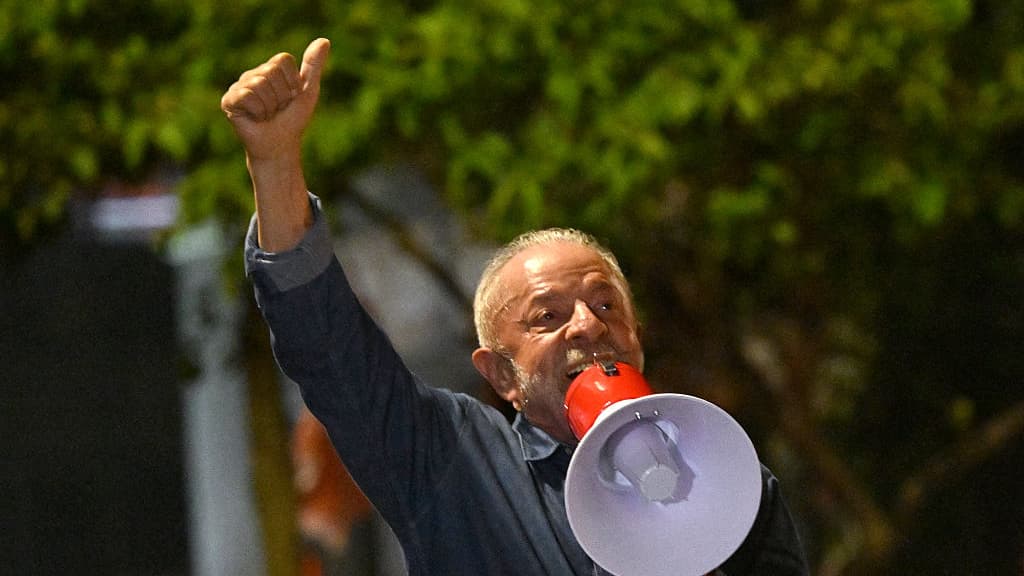
Lula, an 80-year-old left-wing leader, celebrated his victory with tens of thousands of supporters in São Paulo, declaring that "democracy always" and vowing to prevent any return to dictatorship or fascism. His win is seen as a major reversal for right-wing populism in Latin America, following a series of seven consecutive victories by conservative leaders.

Despite Flávio Bolsonaro's call to annul the election, Lula’s victory has sparked widespread celebration across Brazil and optimism globally about the resilience of democracy. The high abstention rate—21.08%—in the first round highlights broader political disengagement among Brazilians but did not deter Lula from securing a decisive win in the runoff.

This outcome is viewed as a significant setback for President Donald Trump's ambitions to align Latin American governments with his policies, underscoring a shift towards more centrist and progressive leadership in the region. (Sources: The Guardian, Washington Examiner, TIME)

Written for “Brazil Presidential Election Runoff” on 2026-10-26, grounded in this article and the 38 other(s) covering the same event.
Why this leaning score
The model judged this article politically coded and scored it -0.45, but 1 quote(s) could not be found in the article and the other 2 are attributed speech rather than the article's own narration, so the score is not published.
Written under an earlier scoring contract, which gave a paragraph rather than checkable quotes. Re-analysing this article replaces it.
Leaning score withheld for article 108226: no verified evidence · logged 2026-10-26

Story

📰 Brazil Presidential Election Runoff
Politics · 39 article(s) covering the same event. Compare every outlet's account →

Compared with similar articles

This article reads unscored and hedges 5% of its claims. Each row says how that neighbour differs.
The Guardian
⚖️ Leans left 🔴 10% hedged 9 of 91 📰 publisher trust 66
“Both articles describe Lula's victory in Brazil's presidential election on the same date, referencing the same opponent and celebration.”
Al Jazeera
⚖️ Leans left 🔴 10% hedged 5 of 50 📰 publisher trust 60
“Both articles describe Lula's victory over Flavio Bolsonaro in Brazil's presidential election on the same date.”
Global News
⚖️ Leans left 🔴 17% hedged 8 of 48 📰 publisher trust 63
“Both articles report on Luiz Inacio Lula da Silva's victory in Brazil's presidential election on the same date.”
The Straits Times
⚖️ leaning not scored 🔴 11% hedged 2 of 19 📰 publisher trust 68
“Both articles describe President Luiz Inácio Lula da Silva's victory in Brazil's presidential election on October 26, 2026.”
BBC News
⚖️ Leans left 🔴 4% hedged 1 of 26 📰 publisher trust 69
“Both articles describe Lula's win of his fourth term as President of Brazil on the same day, with similar details and outcomes.”
South China Morning Post
⚖️ Leans left 🔴 0% hedged 0 of 3 📰 publisher trust 64
“Both articles describe Lula's victory in Brazil's presidential election on the same day, with the same opponent and outcome.”
TIME
⚖️ Leans left 🔴 3% hedged 2 of 72 📰 publisher trust 59
“Both articles describe Luiz Inácio Lula da Silva's victory in Brazil's presidential election on October 25, 2026.”
Persuasion
⚖️ Leans strongly left 🔴 14% hedged 9 of 65
“Both articles describe Lula's victory over Flávio Bolsonaro in the Brazilian presidential election on the same day.”
The Straits Times
⚖️ leaning not scored 🔴 7% hedged 1 of 15 📰 publisher trust 68
“The articles describe different events: one is about the debate before the election and the other is about Lula's victory speech after winning the election.”
The Straits Times
⚖️ Leans strongly left 🔴 0% hedged 0 of 24 📰 publisher trust 68
“Article A describes the crowd celebration on Paulista Avenue with Lula joining the parade, while Article B reports on Lula's speech and vow to prevent dictatorship after his election win. While related, these describe different specific events.”
How this article was measured signals, leaning charts, publisher record, byline, topics and claims

Signals How these are calculated →

Claims extracted
40
sentences that state something as happening or true
Uncertain
5%
2 of 40 hedged ("reportedly", "may", "according to")
Leaning
withheld
no quote in the article backed the model's score
Publisher signals
66/100
The Guardian's corrections and hedging, across everything collected from it. Not a measure of accuracy.
Outlets on this story
39
Politics
Same framing elsewhere
1
articles that frame the event the way this one does
Analyzed 2026-10-26 · how these are computed

How this is being covered How these are calculated →

Article leaning vs. publisher reliability
Source leaning vs. consistency

Publisher

The Guardian · 2486 article(s) · 6 correction(s) detected
Running correction rate · 6 correction(s)

Who wrote this

Tom Phillips in São Paulo
1 article(s) here · 1 carrying a prediction
🔮 Luiz Inácio Lula da Silva, the Brazilian president, has vowed that dictatorship and fascism will never return to Brazil after winning a historic fourth term in power by defeating his far-right opponent, Flávio Bolsonaro.
The only article under this byline in the corpus.
Tiago Rogero in Brasília
1 article(s) here · 1 carrying a prediction
🔮 Luiz Inácio Lula da Silva, the Brazilian president, has vowed that dictatorship and fascism will never return to Brazil after winning a historic fourth term in power by defeating his far-right opponent, Flávio Bolsonaro.
The only article under this byline in the corpus.

Topics

Brazil Brazilian China Guardian São Paulo

Subjects

Lula PERSON · 13× Brazil GPE · 7× Brazilian NORP · 6× Bolsonaro PERSON · 5× São Paulo GPE · 3× China GPE · 2× Flávio Bolsonaro PERSON · 2× Alexandre Padilha PERSON · 1× Guardian ORG · 1× Luiz Inácio Lula da Silva PERSON · 1×

Narrative

Never, since the return of democracy after the 1964-85 military regime, had the first-round loser managed to win the second vote. But Lula did precisely that on Sunday, prompting joyous scenes on the streets of São Paulo and cities all across Brazil, where he won 64.2m votes to Bolsonaro’s 59.8m – a 51.79% to 48.21% victory.
framing: assertive · carried by 1 article(s) · first seen 2026-10-26
🔮 Luiz Inácio Lula da Silva, the Brazilian president, has vowed that dictatorship and fascism will never return to Brazil after winning a historic fourth term in power by defeating his far-right opponent, Flávio Bolsonaro.

Claims (40 extracted, 2 hedged)

Luiz Inácio Lula da Silva, the Brazilian president, has vowed that dictatorship and fascism will never return to Brazil after winning a historic fourth term in power by defeating his far-right opponent, Flávio Bolsonaro. asserted
dictatorship → vow → opponent
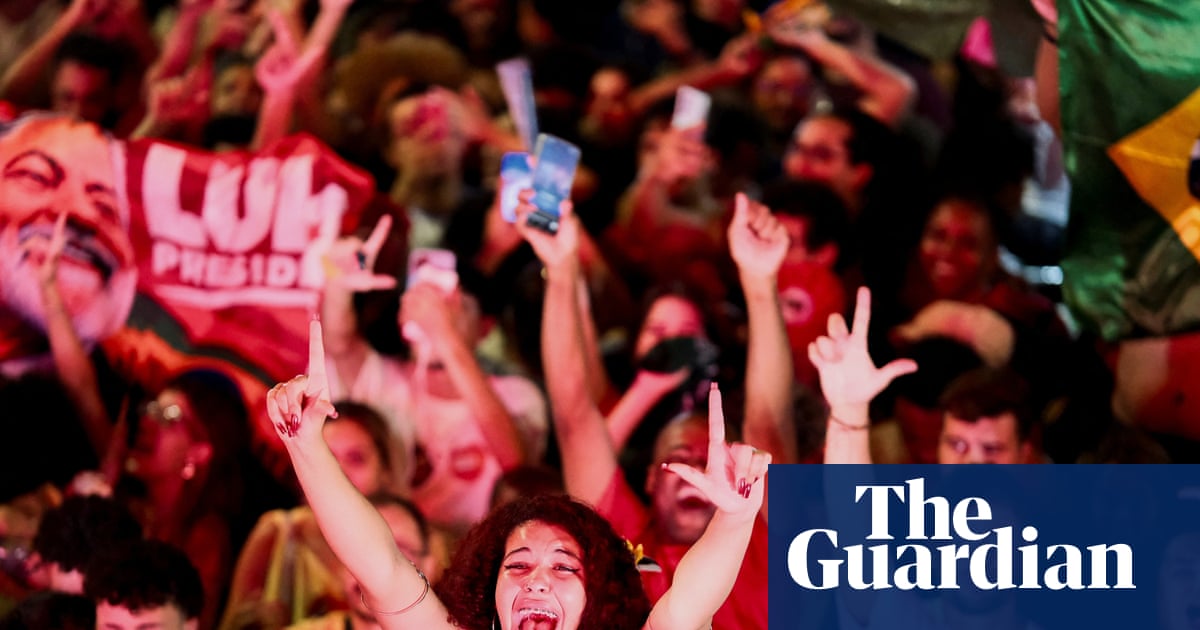
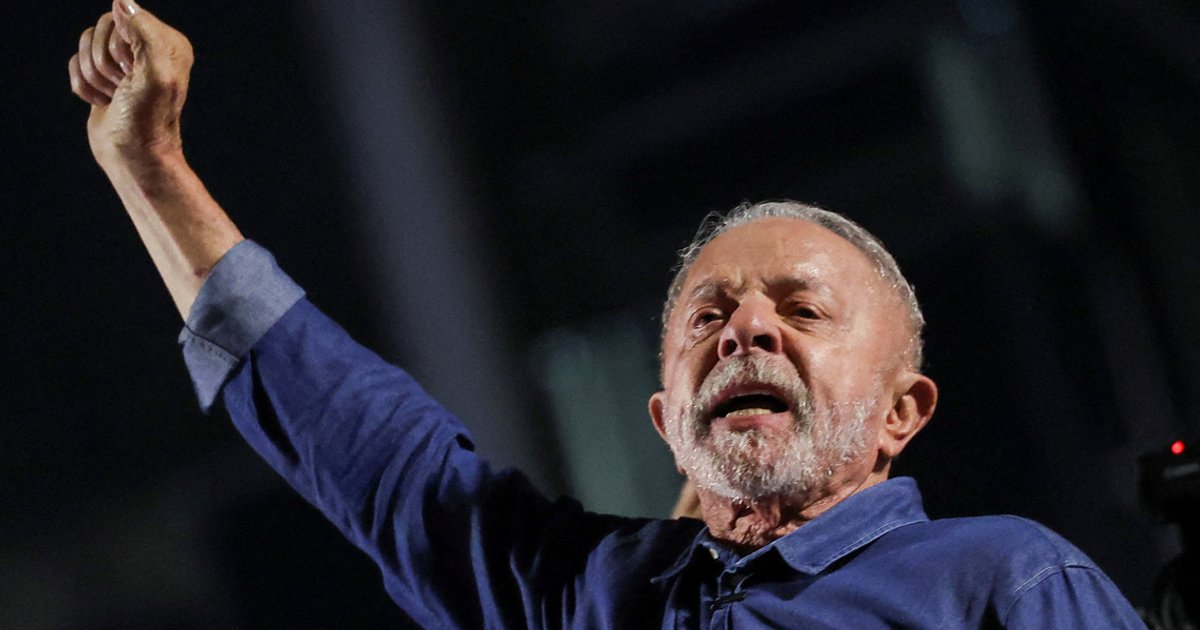
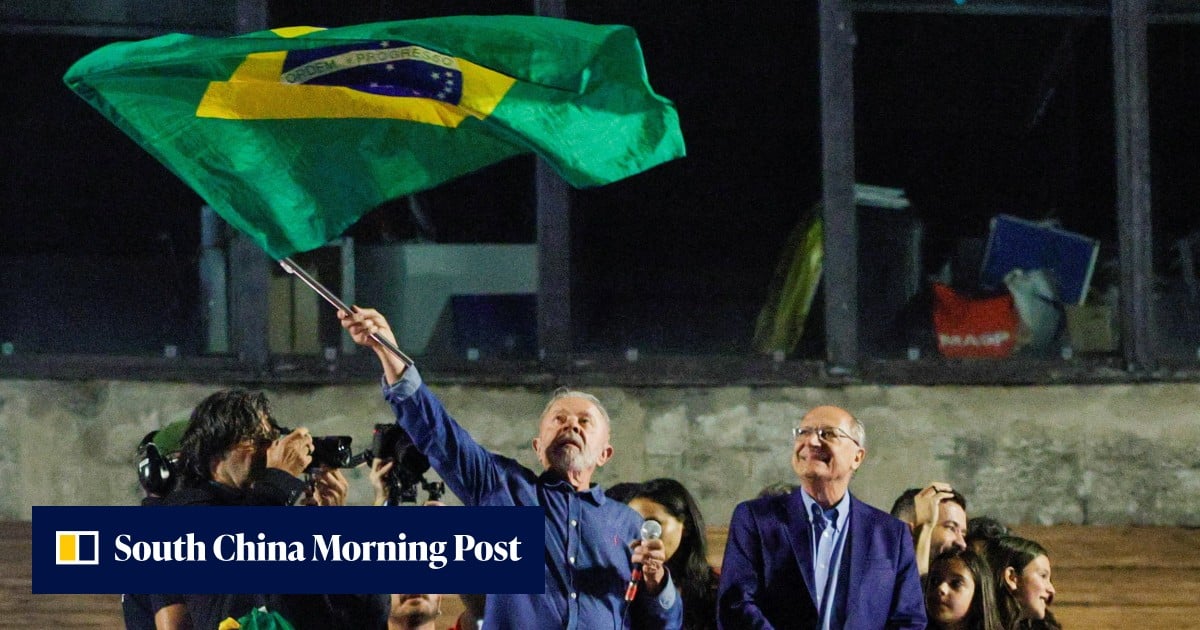
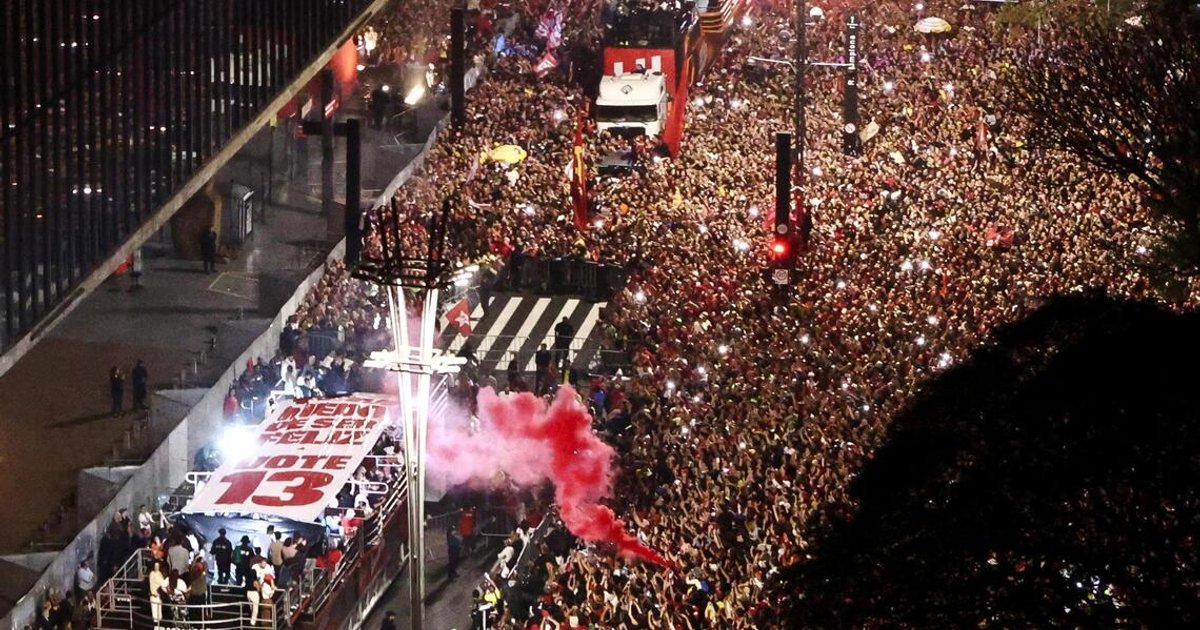
“This is God’s work – and it’s thanks to all of you,” Lula told tens of thousands of supporters who had gathered in central São Paulo in the early hours of Monday to celebrate his dramatic election comeback. asserted
who → ’ → comeback
A few hours earlier Lula pulled off the most stunning political fightback in modern Brazilian history, bouncing back from a first-round defeat in early October to trounce Bolsonaro by more than 4m votes in the runoff. asserted
Lula → pull → runoff
“Today is a historic day,” Lula declared, before telling a sea of elated supporters: “Democracy always, dictatorship never again. asserted
Lula → declare → Democracy
Never, since the return of democracy after the 1964-85 military regime, had the first-round loser managed to win the second vote. But Lula did precisely that on Sunday, prompting joyous scenes on the streets of São Paulo and cities all across Brazil, where he won 64.2m votes to Bolsonaro’s 59.8m – a 51.79% to 48.21% victory. asserted
he → manage → m
That was at least 10m more votes than Lula secured in the first round. asserted
Lula → secure → round
“This is a huge victory for the Brazilian people who in the second round had the chance to think about what President Lula means for the environment, for the defence of our national health service and our education system and the Brazilian constitution. asserted
Lula → have → service
And the risks that the extreme right candidate entailed,” Lula’s health minister, Alexandre Padilha, told the Guardian shortly after the result was confirmed at the hotel where the president’s team was following the count in São Paulo. asserted
team → entail → Paulo
“It’s a massive victory – not just for Brazil. asserted
It → ’ → Brazil
It’s also an important signal to the rest of Latin America and to the world,” Padilha added. asserted
Padilha → ’ → world
Following in the footsteps of his father, the former president Jair Bolsonaro, who refused to concede after losing the 2022 election to Lula and was later convicted of plotting a coup, Flávio Bolsonaro rejected the result. asserted
Bolsonaro → follow → result
Bolsonaro called Lula’s victory “sacanagem”, a Portuguese word which roughly translates as “bullshit”. asserted
which → call → bullshit
But political leaders and governments from across the spectrum were quick to recognise Lula’s victory. asserted
leaders → recognise → victory
“Long live democracy, the people of Brazil won,” tweeted Mexico’s leftwing president, Claudia Sheinbaum. asserted
president → live → Brazil
“The global progressive resurgence has just begun,” wrote Spain’s prime minister, Pedro Sánchez. asserted
minister → begin → ?
Rightwing South American leaders also recognised Lula’s victory, with Chile’s president, José Antonio Kast, calling Lula to offer congratulations and Peru’s president, Keiko Fujimori, saluting “the Brazilian people for this democratic day”. asserted
president → recognise → day
The European Commission president, Ursula von der Leyen, said: “Democracy and multilateralism have won in Brazil.” asserted
Democracy → say → Brazil
A spokesperson for China’s foreign ministry said: “China respects the choice of the Brazilian people.” asserted
China → say → people
There was silence from Donald Trump, whose administration had been rooting for a Bolsonaro victory that would have seen the so-called pro-Trump “orange wave” continue its sweep across the region into Latin America’s largest democracy. asserted
wave → be → democracy
In the lead-up to Sunday’s vote, the US had been accused of seeking to influence the result through a campaign of economic and diplomatic pressure. asserted
US → accuse → pressure
Erika Hilton, a transgender lawmaker who recently became the most voted woman in Brazil’s congress, said those efforts had failed. asserted
efforts → become → congress
“We have defeated the interference of the US government, which thought it could turn our country into its backyard. uncertain
it → defeat → backyard
Brazil and the Brazilians are too gigantic to be anybody’s backyard,” she said. asserted
she → say → ?
Lula’s victory will also have profound consequences for the environment and the Amazon rainforest in what is the world’s most biodiverse nation. asserted
what → have → environment
On the eve of the vote, the former environment minister Marina Silva had warned that, if elected, Bolsonaro would seek to finish the “perverse project” of rainforest destruction started by his father, whose 2019-2022 administration saw a surge in deforestation. asserted
administration → warn → deforestation
On Sunday night, Silva was in a buoyant mood, telling the Guardian: “My heart is happy and filled with gratitude to God and the Brazilian people.” “The thing I most feared was that our Indigenous territories would be invaded again [under another Bolsonaro government]. asserted
territories → tell → government
Now, I am certain that they will be preserved and that there is no risk of illegal miners returning to destroy these populations,” Silva added. asserted
Silva → preserve → populations
For Flávio Bolsonaro, the future looks bleak. asserted
future → look → Bolsonaro
As the scale of Lula’s victory became clear on Sunday night, the mood at the Brasília mansion where Bolsonaro was watching the count soured, with what had initially seemed like a lively birthday party turning into something resembling to a wake. asserted
seemed → become → wake
Like football supporters heading for the exits midway through the second half because their team is being thrashed, crestfallen guests began heading home. asserted
guests → head → half
One of them approached the dozens of journalists waiting for Bolsonaro’s speech to shout that it was the “north-east’s fault”, insulting the region where Lula has historically won most of his votes. asserted
Lula → approach → votes
One photograph circulated by Lula supporters showed a dejected Bolsonaro in tears, although it was taken on the eve of the vote. asserted
it → circulate → vote
Another image showed a red-faced Bolsonaro flanked by visibly mortified allies as they came to terms with their defeat. asserted
they → show → defeat
São Paulo’s pro-Bolsonaro governor, Tarcísio de Freitas, sits next to him covering his face with his hand. asserted
governor → sit → hand
On Paulista Avenue, where huge crowds had gathered to hear Lula speak, one reveller wore a costume of Flávio Bolsonaro behind bars. asserted
reveller → gather → bars
Some suspect the senator is likely to flee the country to the US once his term runs out in February and he loses parliamentary immunity. asserted
he → suspect → immunity
Bolsonaro is facing a series of federal police investigations over suspected misdeeds, including money laundering, although he maintains he is innocent. asserted
he → face → laundering
Lula supporters delighted in the idea that the far-right politician may soon join his father, who is serving a 27-year sentence for his coup attempt, in jail. uncertain
who → delight → jail
João Maluf, a 27-year-old psychologist, shouted sarcastically he held up his mobile phone to the crowd to show them a photograph of a visibly distraught Bolsonaro. asserted
he → shout → Bolsonaro
“We want rid of these fucking Bolsonaros,” Maluf said. asserted
Maluf → rid → Bolsonaros

💬Give feedback
🕘History 🎫Support